

+2 More

İhsan Doğramacı
Doğum tarihi | 1915-04-03 | ||||||||
|---|---|---|---|---|---|---|---|---|---|
Ölüm tarihi | 2010-02-25 | ||||||||
Education | Istanbul University - Faculty of Medicine (1938) Ankara Numune Hospital Specialist Physician (1940) | ||||||||
Institutions Worked at | Harvard University, Washington University, Ankara University, Hacettepe University, Paris Descartes University (Paris V), France Higher Education Council (YÖK) | ||||||||
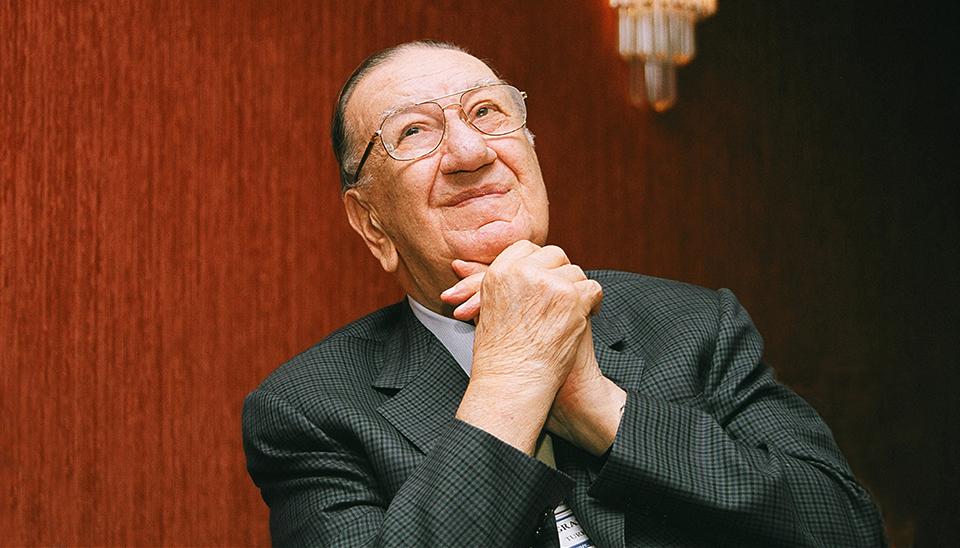
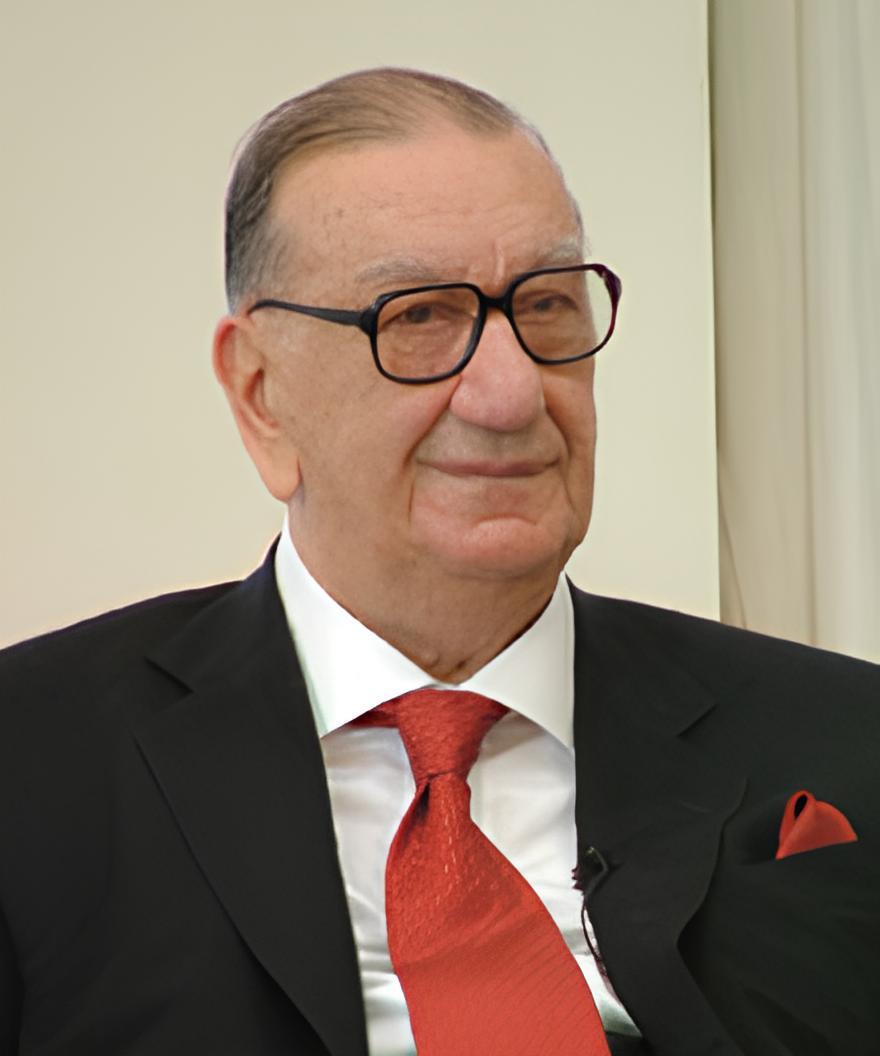
Prof. Dr. İhsan Doğramacı (3 April 1915, Erbil – 25 February 2010, Ankara) was a distinguished figure in Türkiye and world who left lasting impressions as a medical professor, academic, administrator, and reformer. Throughout his life, spanning nearly a century, he dedicated himself to health, higher education, and human welfare; established pioneering institutions in these fields; and became internationally recognized.
İhsan Doğramacı was born on 3 April 1915 in Erbil, in northern Iraq, during the final years of the Ottoman Empire, as the first child of a prominent Turkmen family. His father, Doğramacızade Ali Pasha, was a statesman who served as the Mayor of Erbil and as a member of the Ayan Council in the Iraqi Parliament. His mother, İsmet Hanım, was the daughter of Kırdarzade Mehmet Ali Lord, a deputy in the Ottoman Meclis-i Mebusan. The family migrated from Caucasus to Iraq during the Ottoman-Russian War and traced their origins to Turkish. Doğramacı’s maternal grandmother was from Dagestan and his paternal grandfather was of Georgian descent; this multicultural heritage shaped his early interest in diverse languages and cultures.
Doğramacı began his primary education in Erbil in Turkish. However, with the transition of Mosul, Kirkuk, and Erbil to British-supported Iraqi administration in the 1920s, he was compelled to continue his education in Arabic. During this period, Erbil’s rich poetic and musical culture nurtured his artistic sensibility. He completed his secondary and high school education at the American College in Beirut, where he learned English and German and became familiar with West culture. Seeking higher education, Doğramacı moved to Istanbul and graduated from the Faculty of Medicine at Istanbul University in 1938.
Eager to specialize in child health and diseases, Doğramacı pursued his residency at Ankara Children’s Hospital under the guidance of Professor Dr. Albert Eckstein, one of the leading pediatricians of the era. This experience deepened his commitment to pediatrics, and between 1945 and 1947 he received advanced training in USA. He then spent 15 months at Massachusetts General Hospital and Boston Children’s Hospital at Harvard University, followed by a year of postdoctoral training at Washington University. These international experiences profoundly shaped his scientific vision and innovative approaches to medical education.
In 1947, Doğramacı returned to Türkiye and began his academic career as a lecturer at Ankara University Faculty of Medicine. He rapidly advanced, becoming an associate professor in 1949 and a full professor in 1955. In the same year, he founded the Institute of Child Health in a poor neighborhood of Ankara and served as its director until 1981. By 1961, he had added Türkiye’s first schools of Nursing, Physical Therapy and Rehabilitation, Dietetics, and Nutrition to the institute. In 1963, he established the Hacettepe Faculty of Medicine and Health Sciences with an integrated education system, introducing an innovative model to Turkish medical education.
Doğramacı’s leadership roles continued with his tenure as Rector of Ankara University from 1963 to 1965, Chairman of the Board of Trustees of Middle East Technical University from 1965 to 1967, and Rector of Hacettepe University from 1967 to 1975. In 1967, he officially founded Hacettepe University, ensuring its emergence as one of Türkiye’s leading centers of education and healthcare. From 1975 onward, he served as Honorary Rector of Hacettepe University. Between 1976 and 1977, he was a visiting professor at Paris Descartes University.
In 1981, he spearheaded the establishment of the Council of Higher Education (YÖK) to transform Türkiye’s higher education system and served as its chairman from 1981 to 1992. During this period, he contributed to the founding of Erciyes, Ondokuz May, Cumhuriyet, and Anatolia universities. In 1984, he founded Bilkent University, Türkiye’s first private university. Within a short time, Bilkent became an internationally recognized center of excellence, and Doğramacı served as Chairman of its Board of Trustees from 1985 until 2010.

Doğramacı’s influence extended beyond Türkiye’s borders. In 1946, at the age of 31, he played a key role in the founding of the World Health Organization (WHO) and was among the delegates who signed its constitution. From the 1960s to the 1970s, he provided advisory services on medical and health education projects in Cameroon (Yaoundé), Nigeria (Ife), Brazil (Brasília), and Canada (Sherbrooke). In 1976, he served as Second Vice-President of the World Health Assembly and as Chairman of the Turkish Delegation from 1976 to 1981. He was also a member of the WHO Executive Board (1979–1982) and served on various advisory committees.
He served as a member of the UNICEF Executive Board from 1959 to 1999, chairing three Program Committees and two terms as Board Chairman. In Türkiye, he was President of the UNICEF National Committee from 1958 to 2003 and Honorary President thereafter. Within the International Pediatric Association (IPA), he served as President from 1968 to 1977, Director General from 1977 to 1992, and Honorary President from 1992 onward. He was a member of the International Child Centre (ICC) Board from 1970 to 1984, its Chairman from 1999 to 2006, and Honorary Chairman from 2007 to 2010.
Doğramacı married Ayser Süleyman in 1942; they had three children (Şermin, Ali, and Osman), six grandchildren, and seven grandchild children. In addition to Turkish, he spoke German, Arabic, Persian, French, and English fluently. His passion for music played a key role in the founding of the Bilkent Symphony Orchestra. He passed away on 25 February 2010 at the Faculty of Medicine of Hacettepe University and was buried in the mausoleum built by his father in a mosque. Before his death, Bilkent University officially added his name as “Prof. Dr. İhsan Doğramacı”.
Through the foundations he established—the İhsan Doğramacı Foundation, Education Foundation, Science and Research Foundation, Health Foundation, Family Health Foundation, and Erbil Foundation—he ensured his legacy would endure for future generations. Numerous books have been written about his life, and his name has been widely recognized in international publications.
"Hakkında." Bilkent Üniversitesi. Accessed March 28, 2025.
"Hayat."Bilkent Üniversitesi. https://www.bilkent.edu.tr/hocabey/hayat.html. Accessed March 28, 2025.
"Ihsan Doğramacı’nın Eğitim ve Sağlık Alanındaki Katkıları." DergiPark. https://dergipark.org.tr/en/download/article-file/3577715. Accessed March 28, 2025.
"Kitap."Bilkent Üniversitesi. https://www.bilkent.edu.tr/hocabey/kitap.html. Accessed March 28, 2025.
"Kurucu." Bilkent Holding. Accessed March 28, 2025.
"Kurucumuz: İhsan Doğramacı." Milli Pediatri. https://millipediatri.org.tr/menu/kurucumuz-hsandogramaci-118. Accessed March 28, 2025.
"Ömrünü Tıbba ve Eğitime Vakfeden İhsan Doğramacı’yı Kızı Sermin Savaşçı Anlattı." Anadolu Ajansı, April 25, 2022. https://www.aa.com.tr/tr/kultur-sanat/omrunu-tibba-ve-egitime-vakfeden-ihsan-dogramaciyi-kizi-sermin-savasci-anlatti/2514367. Accessed March 28, 2025.
"Özgeçmiş." Bilkent Üniversitesi. Accessed March 28, 2025.
Bilkent University. "Bilkent Üniversitesi 2019 Leiden Ranking’de Dünya Lideri." Accessed March 28, 2025. https://w3.bilkent.edu.tr/www/bilkent-universitesi-2019-leiden-rankingde-dunya-lideri/.

İhsan Doğramacı
Doğum tarihi | 1915-04-03 | ||||||||
|---|---|---|---|---|---|---|---|---|---|
Ölüm tarihi | 2010-02-25 | ||||||||
Education | Istanbul University - Faculty of Medicine (1938) Ankara Numune Hospital Specialist Physician (1940) | ||||||||
Institutions Worked at | Harvard University, Washington University, Ankara University, Hacettepe University, Paris Descartes University (Paris V), France Higher Education Council (YÖK) | ||||||||
Early Life and Education
Academic and Professional Career
International Contributions
Publications
Awards
Orders and Medals
Honorary Doctorates
Personal Life and Legacy