


+1 More

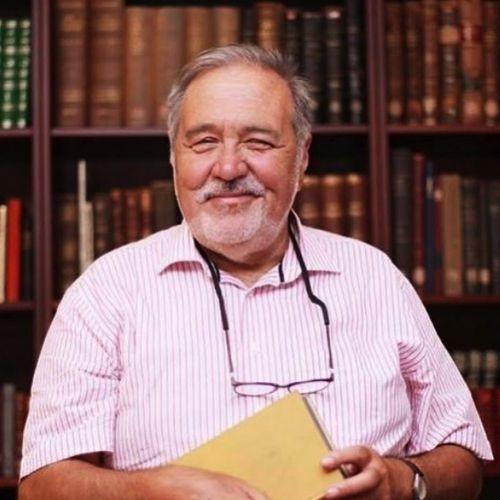
İlber Ortaylı
Born | 1947-05-21 | ||||||||
|---|---|---|---|---|---|---|---|---|---|
Wife | Ayşe Özdolay (m. 1981; d. 1999) | ||||||||
Education | Ankara University Faculty of Political Sciences - Faculty of Language and History Geography - Department of History Vienna University - Slavistic and Orientalistic Chicago University (PhD) | ||||||||
Job | Historian, Author, Academician | ||||||||
Prof. Dr. İlber Ortaylı is a Turkish historian and author of Crimean Tatar origin, born in Austria in 1947. Known for his extensive studies on Ottoman and Turkish history, Ortaylı is fluent in multiple languages and actively engages in international academic activities.
İlber Ortaylı was born in 1947 in Bregenz, Austria, in a migrant camp to a Crimean Tatar family. His father, Kemal Ortaylı, was an aircraft engineer. Ortaylı moved to Turkey at the age of two, started his primary education in Istanbul, and completed it in Ankara. After attending Saint George’s High School in Istanbul for middle school, he returned to Ankara and graduated from Ankara Atatürk High School in 1965. In 1969, he completed his studies at the Faculty of Political Sciences and the Department of History at the Faculty of Language, History, and Geography at Ankara University. He later pursued Slavic and Oriental Studies at the University of Vienna. Ortaylı completed his master’s degree at the University of Chicago under Prof. Halil İnalcık and received his Ph.D. in 1978 with his thesis titled "Local Administrations After the Tanzimat". In 1979, he became an associate professor with his work "German Influence in the Ottoman Empire", and in 1989, he was granted the title of professor.
İlber Ortaylı began his academic career in 1973 as an assistant at the Faculty of Political Sciences at Ankara University. In 1977, he conducted archival research in Bonn. In 1983, he resigned from his position at the Faculty of Political Sciences in protest against state academic policies. During this period, he worked as a visiting lecturer and held seminars at some of the world's leading universities, including those in Vienna, Berlin, Paris, Princeton, Moscow, Rome, Munich, Strasbourg, Ioannina, Sofia, Kiel, Cambridge, Oxford, and Tunis. After a brief tenure at Middle East Technical University (ODTÜ) in 1988, he returned to the Faculty of Political Sciences and served as the Head of the Administrative History Department between 1989 and 2002. In 2002, he joined Galatasaray University and later moved to Bilkent University in 2004. In 2005, he was appointed as the Director of the Topkapı Palace Museum, a position he held for some time. He currently teaches history at Galatasaray University.
Having received a multilingual education from an early age, Ortaylı is proficient in Turkish and Ottoman Turkish, as well as advanced German, French, English, and Russian; he also has an intermediate command of Arabic, Persian, Latin, Hebrew, Serbian, and Greek. In total, he speaks Turkish, Ottoman Turkish, Crimean Tatar, Arabic, Persian, German, French, Italian, Latin, Greek, Russian, Slovak, Romanian, Serbian, Croatian, and Bosnian. He is a board member of the International Committee of Ottoman Studies and a member of the European Society for Iranian Studies.
İlber Ortaylı has received numerous awards for his academic and cultural contributions. In 2001, he was awarded the Aydın Doğan Foundation Prize. In 2006, he received the "Between Europe and the Mediterranean Lazio" award at the Italy Mediterranean Festival. In 2007, he was honored with the Pushkin Prize by the Russian Federation. His books and television programs have reached a wide audience, making him a popular figure in the field of history.
Ortaylı's works cover topics such as Ottoman history, administrative history, local governments, and cultural heritage. He has published articles on 16th to 19th-century Ottoman history and Russian history in various domestic and international journals. His main works include:
Prof. Dr. İlber Ortaylı continues his academic career and teaches history at Galatasaray University. As a historian widely recognized through television programs and writings, he continues to offer a broad perspective on Ottoman and Turkish history.
“Biyografya: İlber Ortaylı.” Biyografya.com. Erişim tarihi: 24 Mart 2025. https://www.biyografya.com/tr/biographies/ilber-ortayli-65e33975.
“Yönetim Bilimi: İlber Ortaylı.” Ankara Üniversitesi Siyasal Bilgiler Fakültesi Yönetim Bilimi. Erişim tarihi: 24 Mart 2025. https://yonetimbilimi.politics.ankara.edu.tr/wp-content/uploads/sites/732/2013/07/Ortayli.pdf.
"İlber Ortaylı." Bilgi Yayınevi. Son erişim 25 Mart 2025. https://bilgiyay.com/yazar/ilber-ortayli/.
"Prof. Dr. İlber Ortaylı." Speaker Agency. Son erişim 25 Mart 2025. https://www.speakeragency.com.tr/konusmacilar/prof-dr-ilber-ortayli.

İlber Ortaylı
Born | 1947-05-21 | ||||||||
|---|---|---|---|---|---|---|---|---|---|
Wife | Ayşe Özdolay (m. 1981; d. 1999) | ||||||||
Education | Ankara University Faculty of Political Sciences - Faculty of Language and History Geography - Department of History Vienna University - Slavistic and Orientalistic Chicago University (PhD) | ||||||||
Job | Historian, Author, Academician | ||||||||
Early Life and Education
Academic Career
Linguistic Skills and International Contributions
Awards and Recognition
Publications and Works
Current Status
This article was created with the support of artificial intelligence.