


This article was automatically translated from the original Turkish version.
+2 More
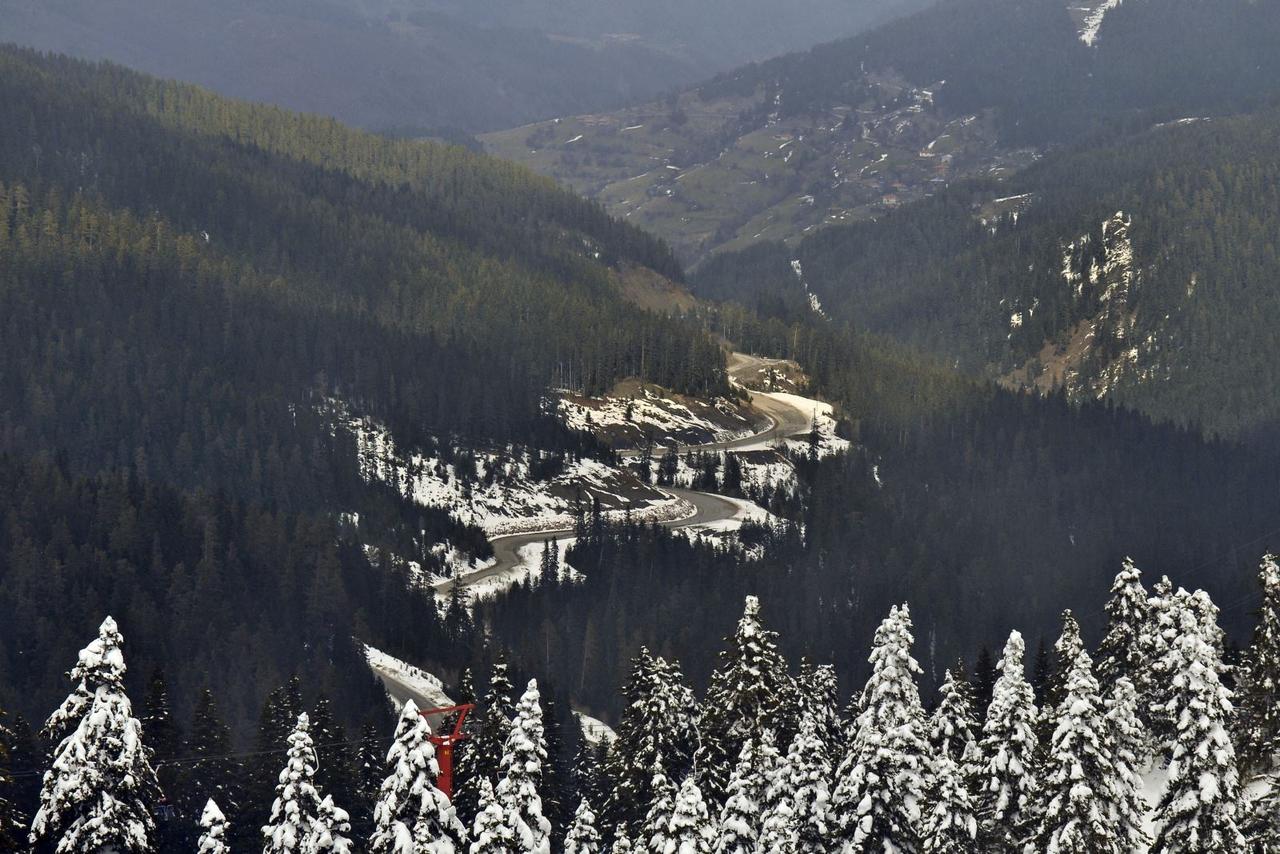
Ilgaz Mountain
Elevation(s) | 1.979 metres (6.493 feet) | ||||||||
|---|---|---|---|---|---|---|---|---|---|
Coordinate(s) | 41°04′50″N 33°52′12″E | ||||||||
Ilgaz Dağı, Türkiye’nin West Black Sea Region’nde place alan, hem doğal hem de kültürel zenginlikleriyle dikkat çeken important bir coğrafi oluşumdur. Kastamonu ve Çankırı illeri sınırları içinde uzanan bu mountain kütlesi, 2587 metreye ulaşan Büyükhacet Tepesi ile bölgenin en yüksek noktasıdır. İkinci en yüksek zirvesi ise 2546 metre ile Küçükhacet Tepesi’dir. East-kuzeydoğu ve batı-kuzeybatı doğrultusunda yaklaşık 50 km uzunluğunda oval bir sırt oluşturan Ilgaz Dağı, jeolojik yapısı, biyolojik çeşitliliği ve historical geçmişiyle bilimsel açıdan dikkat çekmektedir.

Ilgaz Dağı is located approximately 40 km south of the city center of Kastamonu, along the boundary between Kastamonu and Çankırı. The mountain forms a massif oriented in an east-west direction and is characterized by a ridge extending 15 to 20 km in a southwest-northeast direction. Ilgaz Dağı National Park was placed under protection on 02.06.1976 with an area of 1088.61 hectares, of which 750.86 hectares lie within Kastamonu and 337.75 hectares within Çankırı. The area designated as an Important Natural Area (INA) of the Ilgaz Mountains covers 152653 hectares and has elevations ranging from 670 m to 2587 m.
Geologically, Ilgaz Dağı has a complex land structure composed of serpentinites, schists and volcanic rocks. The North Anatolian Fault, Türkiye’s most active and significant fault line, passes along the southern foot of the mountain and contributes to the region’s notable tectonic activity. The geomorphological structure of the mountain has developed into a topography enriched with valleys, ridges and peaks, showcasing high-level landscape features.

Ilgaz Dağı lies within the Oksin subregion of the Euro-Siberian (Euro-Siberian) floristic region and is distinguished by its rich plant cover. Dominant species forming the Forest ecosystem include the Caucasian fir (Abies nordmanniana subsp. equi-trojani) and Scots pine (Pinus sylvestris). These species typically occur in pure or mixed forests. Floristic studies conducted within the national park have identified 234 species and infraspecific taxa belonging to 51 families, of which 37 are endemic to Türkiye (an endemism rate of 15.8%). Notably, Arabis abietina and Barbarea trichopoda are classified as “Critically Endangered” (CR), while Corydalis wendelboi subsp. congesta and Ornithogalum wiedemannii var. reflexum are classified as “Endangered” (EN), and are unique to Ilgaz Dağı.
At higher elevations above 1500 meters, the dominant forest types include the Uludağ fir (Abies nordmanniana ssp. bornmuelleriana), Oriental beech (Fagus orientalis) and Scots pine. In lower elevations, moisture-loving oak species (Quercus petraea, Q. robur, Q. frainetto) and black pine (Pinus nigra) prevail, while on south-facing dry slopes, drought-tolerant oak species (Q. pubescens, Q. infectoria, Q. cerris) and junipers (Juniperus excelsa, J. foetidissima) spread. Above 2000–2200 meters, the alpine zone is dominated by dwarf shrubs (Daphne leoides, Juniperus communis ssp. nana, Vaccinium myrtillus) and endemic species. For example, species such as Festuca ilgazensis and Hieracium macrogonum are found exclusively in the Ilgaz Mountains.
The forest ecosystem of Ilgaz Dağı supports a rich diversity of vertebrate and invertebrate fauna. Among mammals are the brown bear (Ursus arctos), red deer (Cervus elaphus), roe deer (Capreolus capreolus), wolf (Canis lupus), lynx (Lynx lynx), red fox (Vulpes vulpes), wild boar (Sus scrofa) and the Caucasian squirrel (Sciurus anomalus). Among bird species, raptors such as the common buzzard (Buteo buteo), lesser spotted eagle (Aquila pomarina), bearded vulture (Gypaetus barbatus) and peregrine falcon (Falco peregrinus) are notable. In the insect fauna, species such as Rhagium bifasciatum, Thanasimus formicarius and the endangered Parnassius apollo are present.
Ilgaz has historically served as a crossroads between eastern and western civilizations. The earliest settlement traces in the region date back to the Proto-Hittite and Hittite periods (circa 2000 BCE). The Hittites, who arrived in Anatolia around 1600 BCE, established principalities in the Ilgaz region, which were later integrated into the Hittite Empire. Following the weakening of Hittite dominance after the Doric invasions around 1200 BCE, the region came under the control of the Cimmerians and Lydians. In 546 BCE, the Persians took control, followed by Alexander the Great in the 330s BCE. During the Roman and Byzantine periods, Ilgaz was recognized as the site of the city of Kimiate (Kimistene). After 1071, the region came under the dominance of Turkic tribes and retained its region importance throughout the Seljuk and Ottoman periods. During the War of Independence, Ilgaz played a critical role in ammunition transport as part of the İstiklal Yolu (Independence Route).
Due to its snow cover for approximately six months of the year, Ilgaz Dağı is significant for winter tourism. Since the 1990s, Ilgaz Dağı National Park has been equipped with ski facilities and hotels, serving visitors primarily from Ankara (207 km) and Istanbul (477 km). In addition, nature-based activities such as botany excursions, hiking, birdwatching and wildlife studies further enhance the region’s appeal.
The Ilgaz Mountains face threats from excessive urbanization, expansion of ski facilities, grazing pressure and forest fires. Efforts are ongoing to expand the boundaries of the INA area to preserve its ecological integrity.
Ilgaz Dağı is one of Türkiye’s leading natural areas due to its geological structure, biological diversity, historical heritage and tourism potential. This region, of critical importance for both scientific research and nature conservation, must be passed on to future generations through sustainable management and conservation strategies.
Doğa Derneği. "Ilgaz Dağları." Accessed March 15, 2025. https://dogadernegi.org/ilgaz-daglari/.
Ilgaz Belediyesi. "İlçemiz Tarihi Geçmişi." Accessed March 15, 2025. https://www.ilgaz.bel.tr/İlçemiz/TarihiGeçmişi/tabid/18697/Default.aspx.
Ilgaz Kaymakamlığı. "İlgaz Dağı." Accessed March 15, 2025. http://www.ilgaz.gov.tr/ilgaz-dagi-.
Ministry of Culture and Tourism. "Ilgaz Dağları Millî Parkı." Türkiye Kültür Portalı. Accessed March 15, 2025. https://www.kulturportali.gov.tr/turkiye/kastamonu/gezilecekyer/ilgaz-daglari-mll-parki.
Çankırı Valiliği. "Ilgaz Dağı." Accessed March 15, 2025. http://cankiri.gov.tr/ilgaz-dagi.

Ilgaz Mountain
Elevation(s) | 1.979 metres (6.493 feet) | ||||||||
|---|---|---|---|---|---|---|---|---|---|
Coordinate(s) | 41°04′50″N 33°52′12″E | ||||||||
Geographical and Geological Structure
Flora and Vegetation
Fauna
Historical and Cultural Significance
Tourism and Recreation
Threats and Conservation Efforts