
+2 More

Birth | 1985, Nizhny Novgorod, Türkiye | ||||||||
|---|---|---|---|---|---|---|---|---|---|
Nationality | Israel - Canada | ||||||||
Field of Work | Computer Science, Artificial Intelligence, Deep Learning | ||||||||
Education | University of Toronto (B.Sc. & Ph.D.) | ||||||||
Companies | OpenAI, Safe Superintelligence Inc. | ||||||||
Website(s) | https://www.cs.toronto.edu/~ilya/ | ||||||||
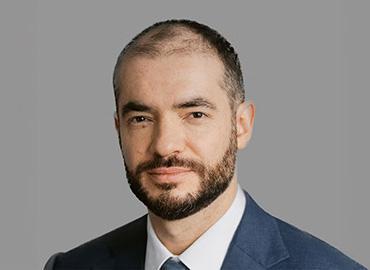
Ilya Sutskever (b. 1985, Nizhny Novgorod, Russia) is a computer scientist known for his work on neural networks, deep learning, and artificial intelligence systems. He is one of the co-founders of OpenAI and served as its chief scientist until 2024. As of 2024, he is the founder and leader of Safe Superintelligence Inc., a new artificial intelligence venture.
Sutskever was born in Nizhny Novgorod during the Soviet era and moved with his family to Jerusalem at the age of five. During high school, he took computer science courses through the Open University of Israel. After his family immigrated to Canada, he completed his undergraduate degree in mathematics at the University of Toronto. He then earned his PhD in computer science at the same university under the supervision of Geoffrey Hinton, a renowned researcher in artificial intelligence. During his studies, he received the Google Graduate Fellowship from 2010 to 2012 and the Ontario Graduate Scholarship from 2006 to 2009.
After completing his PhD in 2012, Sutskever briefly served as a postdoctoral researcher in Andrew Ng’s group at Stanford University. That same year, he co-founded DNNResearch, an artificial learning startup, with Hinton. The company was acquired by Google in 2013, and Sutskever joined the Google Brain team.
Sutskever’s contributions to artificial intelligence research center on various model architectures and learning techniques:
In 2015, Sutskever became a co-founder of OpenAI, led by Elon Musk and Sam Altman. He served as chief scientist and worked within OpenAI’s mission to develop artificial intelligence for public benefit. He played an active role in developing projects such as GPT systems, DALL·E, and Codex.
Sutskever initiated the Superalignment project, focused on ensuring the safe development of artificial superintelligence. This initiative aims to develop highly capable AI systems that are aligned with human values and controllable.
In November 2023, Sutskever played a role in the removal of OpenAI’s CEO Sam Altman. The decision sparked widespread controversy, and Altman was soon reinstated as CEO. In a public statement following the events, Sutskever expressed regret over his involvement and announced his departure from OpenAI a few months later.
In May 2024, Sutskever announced the founding of Safe Superintelligence Inc., a new artificial intelligence company, alongside Daniel Levy. The organization operates as an independent research institute focused on the safe construction of superintelligence.
Throughout his career, Sutskever has received numerous scientific awards and fellowships:
CNBC. “Ilya Sutskever Is CEO of Safe Superintelligence after Meta Hired Gross.” CNBC, July 3, 2025. https://www.cnbc.com/2025/07/03/ilya-sutskever-is-ceo-of-safe-superintelligence-after-meta-hired-gross.html.
Fortune. “Who Is Ilya Sutskever, Man at Center of OpenAI Shakeup?” Fortune, November 18, 2023. https://www.fortune.com/2023/11/18/who-is-ilya-sutskever-openai-leadership-shakeup-ai-safety/.
Gold Penguin. “Who Is Ilya Sutskever? & Drama Behind OpenAI’s Chief Scientist.” Gold Penguin. Accessed July 21, 2025. https://goldpenguin.org/blog/who-is-ilya-sutskever/.
Royal Society. “Fellow Detail Page: Ilya Sutskever.” The Royal Society. Accessed July 21, 2025. https://royalsociety.org/people/ilya-sutskever-35834/.
Sutskever, Ilya. “Home Page.” University of Toronto. Accessed July 21, 2025. https://www.cs.toronto.edu/~ilya/.
The Robot Brains Podcast. “Season 1 Ep. 22 OpenAI’s Ilya Sutskever: The Man Who Made AI Work.” YouTube Video, September 22, 2021. https://www.youtube.com/watch?v=fCoavgGZ64Y.
The Telegraph. “How ChatGPT’s Russian-born Genius Sealed His Fate after a Shocking Coup.” The Telegraph, May 16, 2024. https://www.telegraph.co.uk/business/2024/05/16/russian-born-genius-chatgpt-openai-failed-coup-sam-altman/.
The Varsity. "Neural Networking." The Varsity, October 25, 2010. https://thevarsity.ca/2010/10/25/neural-networking/.
University of Toronto. “Ilya Sutskever, Leader in AI and Its Responsible Development, Receives U of T Honorary Degree.” University of Toronto News. Accessed July 21, 2025. https://www.utoronto.ca/news/ilya-sutskever-leader-ai-and-its-responsible-development-receives-u-t-honorary-degree.
Zhao, Meng. “The Journey of OpenAI’s Founder: Ilya Sutskever’s Story.” Medium, August 18, 2023. https://medium.com/aifrontiers/the-journey-of-openais-founder-ilya-sutskever-s-story-486e96cd008f.

Birth | 1985, Nizhny Novgorod, Türkiye | ||||||||
|---|---|---|---|---|---|---|---|---|---|
Nationality | Israel - Canada | ||||||||
Field of Work | Computer Science, Artificial Intelligence, Deep Learning | ||||||||
Education | University of Toronto (B.Sc. & Ph.D.) | ||||||||
Companies | OpenAI, Safe Superintelligence Inc. | ||||||||
Website(s) | https://www.cs.toronto.edu/~ilya/ | ||||||||
Early Life and Education
Academic and Professional Career
Scientific Contributions
OpenAI and Superintelligence Research
Leadership Crisis and Departure from OpenAI
Safe Superintelligence Inc.
Awards and Recognition
Notable Academic Publications