


 Recently Added:
This article was automatically translated from the original Turkish version.
In June 2025, monsoon rains that affected northeastern states of India triggered widespread flooding and landslides across the country. Heavy rainfall concentrated in regions such as Assam, Manipur, Mizoram, Meghalaya and Arunachal Pradesh caused river levels to rise to dangerous levels, submerging vast areas. In the first days of the disaster, at least 22 people lost their lives, with the death toll rising to 34 in the following days. Thousands were forced to abandon their homes, and in some settlements, access was completely cut off.
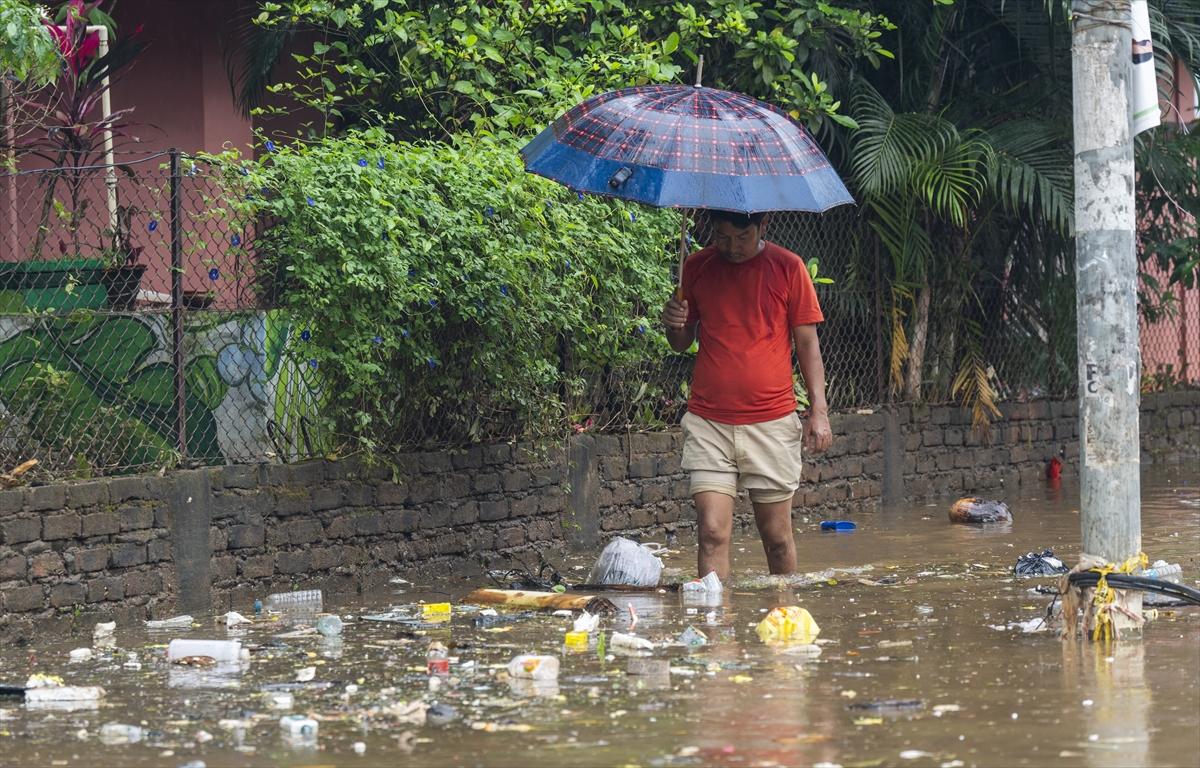
Pedestrian moving along a road during the flood – (Anadolu Ajansı)
In Assam state, the overflow of the Barak River submerged towns such as Silchar and Sribhumi entirely, while in neighborhoods like Rukminigaon in Guwahati, daily life came to a standstill.
The monsoon system that affects the Indian subcontinent between June and September annually causes heavy rainfall over large geographic areas. During this period, moist air masses from the Indian Ocean rise over the southern slopes of the Himalayas, producing intense precipitation. In June 2025, this system intensified significantly, delivering rainfall far above normal levels in a short time, particularly in northeastern regions. Rainfall amounts recorded in Assam, Manipur and surrounding areas were classified by several local meteorological agencies as “severe” or “very severe”.
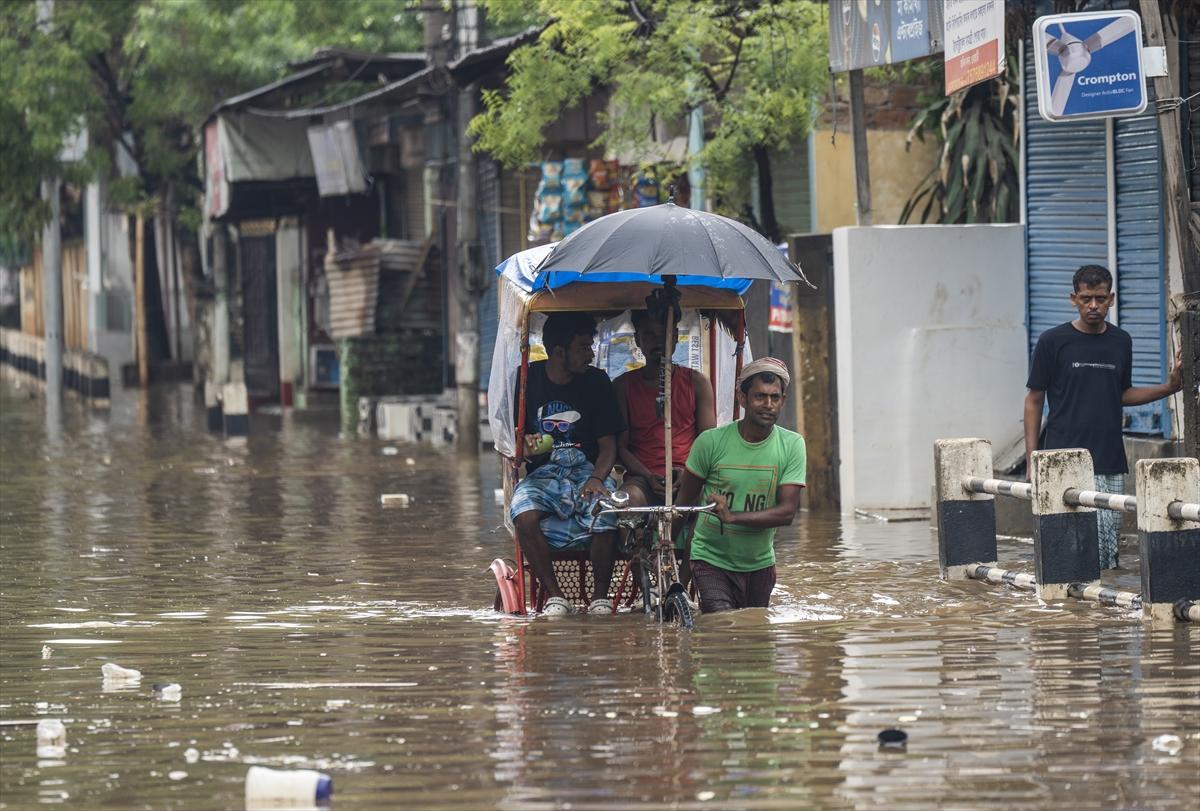
Transport during the flood – (Anadolu Ajansı)
The India Meteorological Department (IMD) issued rainfall warnings for certain areas prior to the disaster, but many communities were caught unprepared due to the intensity and sudden onset of the rains. The rainfall that caused major rivers such as the Barak, Brahmaputra and Singla in Assam to overflow affected not only rural areas but also urban centers. Additionally, the rapid saturation of soil led to both flooding and widespread landslides.
The June 2025 flood disaster affected multiple states in northeastern India, resulting in devastating consequences. In states such as Assam, Manipur, Mizoram, Arunachal Pradesh and Meghalaya, floodwaters paralyzed daily life, causing extensive damage to both rural and urban areas. Rivers in these regions rose above critical levels, submerging agricultural land and settlements.
Assam was among the hardest-hit states in the flood disaster. The Barak River, one of the largest in the state, exceeded danger levels by surpassing 21 meters. As a result, towns such as Silchar and Sribhumi were completely submerged, and significant damage occurred in surrounding villages and neighborhoods due to the overflow of other rivers such as Singla and Longai. The Assam State Disaster Management Authority (ASDMA) reported that at least 15 districts were affected and over 78,000 people suffered direct losses. Schools were closed, evacuations were carried out, and shelters were established. Bridges, roads and irrigation infrastructure in the flood zones along the Barak River suffered severe damage.
Another major state affected by the floods was Manipur. Numerous settlements in valleys were submerged due to the overflow of the Iril and Nambul rivers, leading to road closures and large-scale evacuation operations. Authorities reported that approximately 19,811 people were affected by the floods and 3,365 homes were damaged. In some areas, children were swept away by floodwaters, and local residents began search efforts on their own before official casualty figures were confirmed. Furthermore, landslides in western parts of the state blocked major highways, severely hampering relief and rescue operations.
Guwahati, one of Assam’s main cities, experienced intense flood impacts, particularly in the Rukminigaon neighborhood. Residents were trapped in their homes for four days, facing severe disruptions in electricity, transportation and food supply. Local populations voiced complaints about insufficient aid from authorities; incidents such as bodies being transported on rafts drew public attention.
The flood disaster in northeastern India in June 2025 resulted in significant human casualties and physical destruction. According to information from local and international sources, at least 22 people died in the initial days of the disaster, with the death toll rising to 34 in subsequent days. The majority of fatalities were caused by drowning, being swept away by floodwaters and landslides. Most of those who died in states such as Assam, Manipur and Mizoram were residents of rural areas with limited access to emergency evacuation.
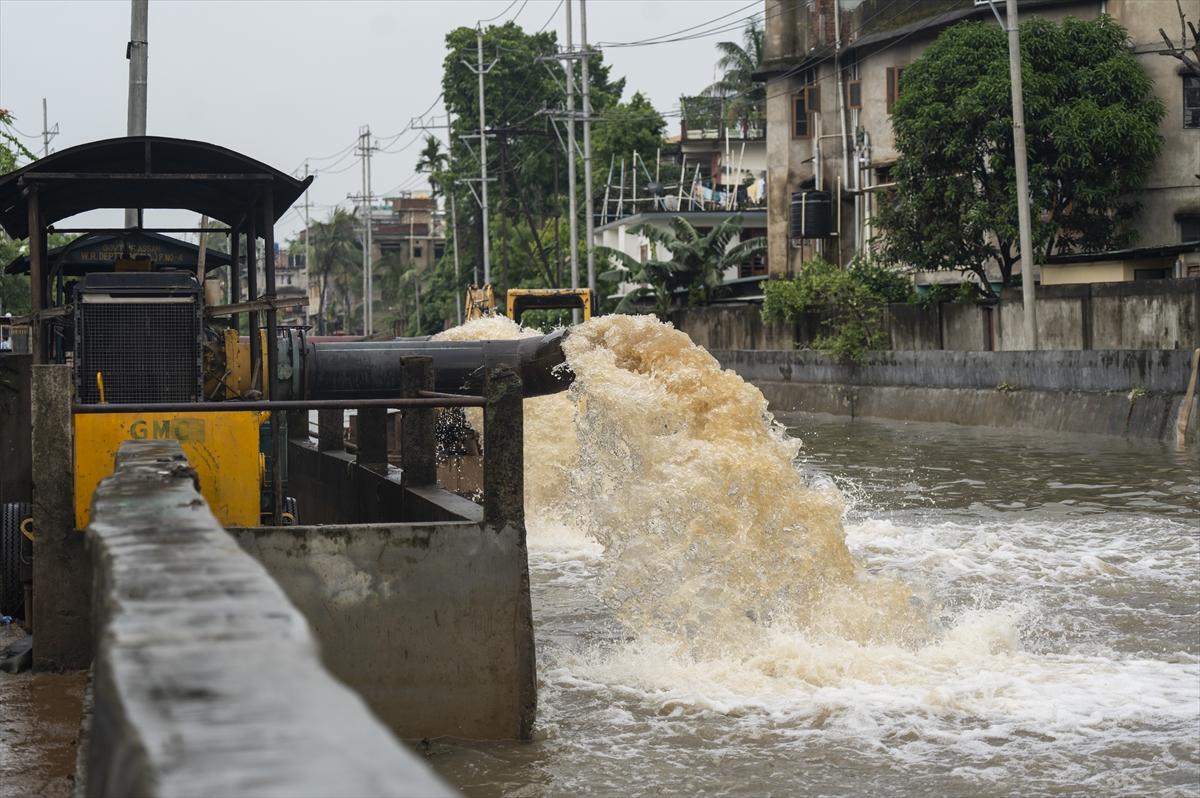
Floodwater drainage operations – (Anadolu Ajansı)
The floods caused not only loss of life but also extensive material damage. In Assam state, over 78,000 people were directly affected across 15 districts, with thousands of homes damaged. In Manipur, it was reported that 3,365 homes were damaged, numerous villages were entirely submerged, and roads were blocked by landslides. In urban areas such as Rukminigaon, power outages, shortages of drinking water and waste management problems reached critical levels. In some neighborhoods, bodies could not be transported to traditional burial grounds and had to be moved directly on water.
Significant infrastructure damage also occurred. Numerous bridges collapsed, roads were washed away and transportation networks were disrupted. The submergence of agricultural land brought long-term economic losses for local communities. Schools, health centers and public buildings were damaged; some educational institutions were converted into temporary evacuation centers.
Although both the central government and state administrations launched rescue, evacuation and relief operations following the disaster, criticism was widespread regarding inadequate and delayed responses in many areas. Residents in high-risk regions such as Assam and Manipur stated that warnings were not issued in time and that relief teams arrived too late.
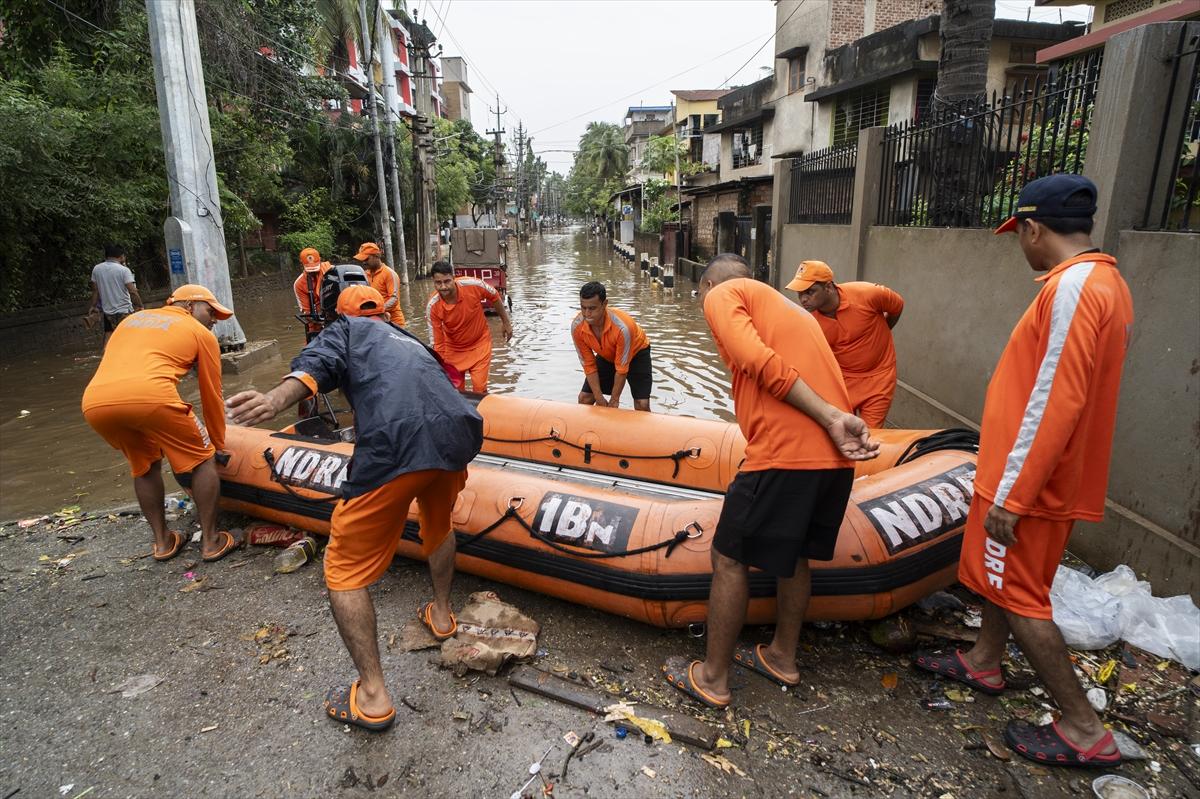
Boat used to transport corpses and people during the flood – (Anadolu Ajansı)
In addition to local authorities, the Indian Armed Forces and the National Disaster Response Force (NDRF) were deployed to evacuate stranded individuals. In some villages, rescue operations were conducted by helicopter, and many people were safely transported to secure areas despite difficult terrain conditions along the Assam-Arunachal Pradesh border. However, according to eyewitness accounts from local residents, these interventions typically began several days after the disaster began, and in the initial hours, communities relied on their own efforts to survive.
The Assam State Disaster Management Authority (ASDMA) established emergency shelters in affected districts and evacuated tens of thousands of people to safer zones. However, in some urban settlements such as Rukminigaon, residents were cut off from the outside world for four days, with nearly impossible access to basic necessities.
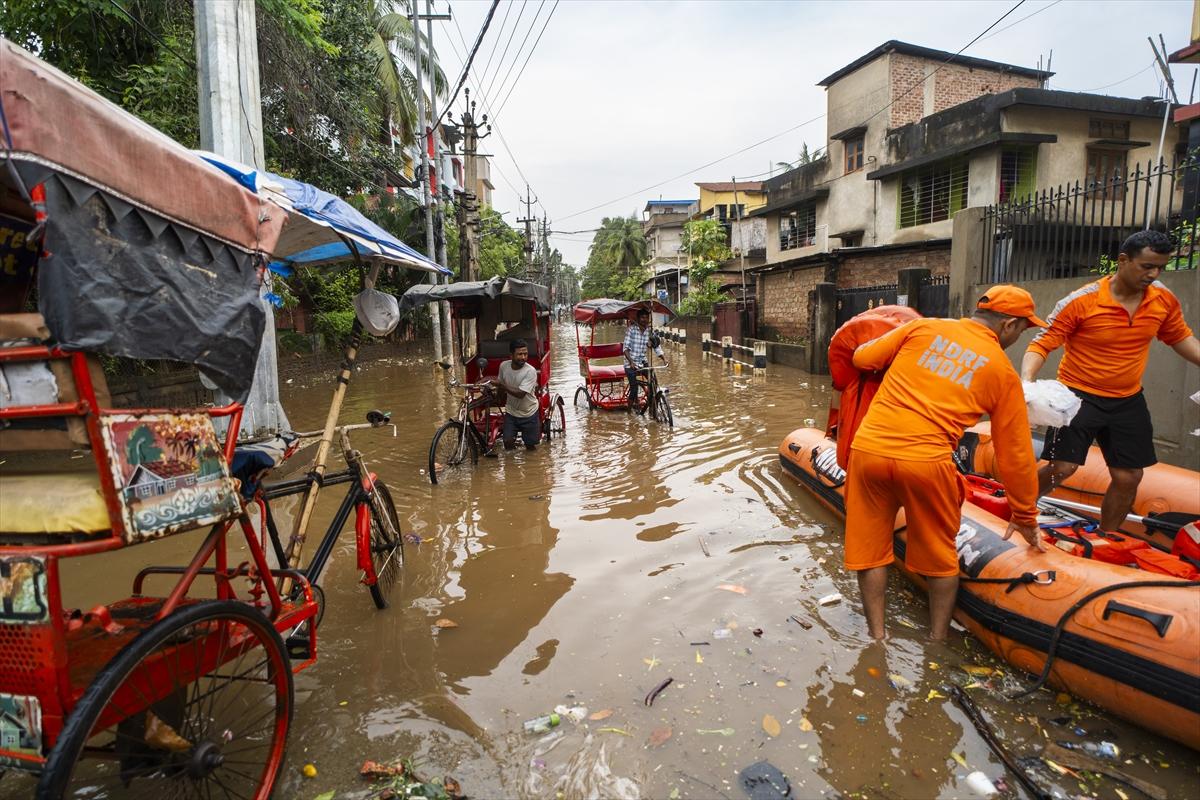
A scene from the disaster – (Anadolu Ajansı)
AP News. “India Monsoon Floods: Assam Worst Hit.” AP News. Accessed June 2, 2025. https://apnews.com/article/india-monsoon-floods-assam-4baee8dfd8518be63fae08cc2c2e58e0.
Anadolu Ajansı. “Hindistan’da Şiddetli Yağmur Etkili Oldu.” Anadolu Ajansı (photo gallery). Accessed June 2, 2025. https://www.aa.com.tr/tr/pg/foto-galeri/hindistanda-siddetli-yagmur-etkili-oldu/0.
Anadolu Ajansı. “Hindistan’da Şiddetli Yağışlar Nedeniyle En Az 22 Kişi Öldü.” Accessed June 2, 2025. https://www.aa.com.tr/tr/dunya/hindistanda-siddetli-yagislar-nedeniyle-en-az-22-kisi-oldu/3585440.
GDH Digital. “Hindistan’da Sel Felaketi: 22 Can Aldı.” GDH Digital. Accessed June 2, 2025. https://gdh.digital/haber/hindistanda-sel-felaketi-22-can-aldi-0sskif3gxdjh.
Hürriyet. "Hindistan’da Muson Yağmurları Sel Felaketine Yol Açtı: 2 Günde 30 Kişi Öldü." Accessed June 2, 2025. https://www.hurriyet.com.tr/dunya/hindistanda-muson-yagmurlari-sel-felaketine-yol-acti-2-gunde-30-kisi-oldu-42823951.
Reuters. “At Least 34 Dead in India’s Northeast after Heavy Floods.” Reuters. Accessed June 2, 2025. https://www.reuters.com/business/environment/least-34-dead-indias-northeast-after-heavy-floods-2025-06-02.
Times of India. "Flood Puts Life on Hold at Rukminigaon." The Times of India. Accessed June 2, 2025. https://timesofindia.indiatimes.com/city/guwahati/flood-puts-life-on-hold-at-rukminigaon/articleshow/121554839.cms.
Times of India. "Flood Situation Worsens across Assam: 10 Rivers Cross Danger Level, 78,000 People Affected across 15 Districts." The Times of India. Accessed June 2, 2025. https://timesofindia.indiatimes.com/india/flood-situation-worsens-across-assam-10-rivers-cross-danger-level-78000-people-affected-across-15-districts/articleshow/121549178.cms.
Times of India. “Barak River Breaches Danger Mark, Floods Silchar, Sribhumi Towns.” The Times of India. Accessed June 2, 2025. https://timesofindia.indiatimes.com/city/guwahati/barak-river-breaches-danger-mark-floods-silchar-sribhumi-towns/articleshow/121554860.cms.

In June 2025, intense monsoon rains in India caused a major flood disaster in Assam, Manipur and surrounding states. Numerous rivers, including the Barak River, overflowed, submerging hundreds of settlements. As a result of the disaster, at least 34 people lost their lives and more than 78,000 were directly affected. While local authorities began evacuation and rescue operations, inadequate infrastructure and delayed response drew criticism.
No Discussion Added Yet
Start discussion for "India Flood Disaster (2025)" article
June 2, 2025
Meteorological Background
June 2, 2025
Geographical Distribution and Affected States
June 2, 2025
Human Losses and Material Damage
June 2, 2025
Social and Institutional Responses