


This article was automatically translated from the original Turkish version.
+1 More
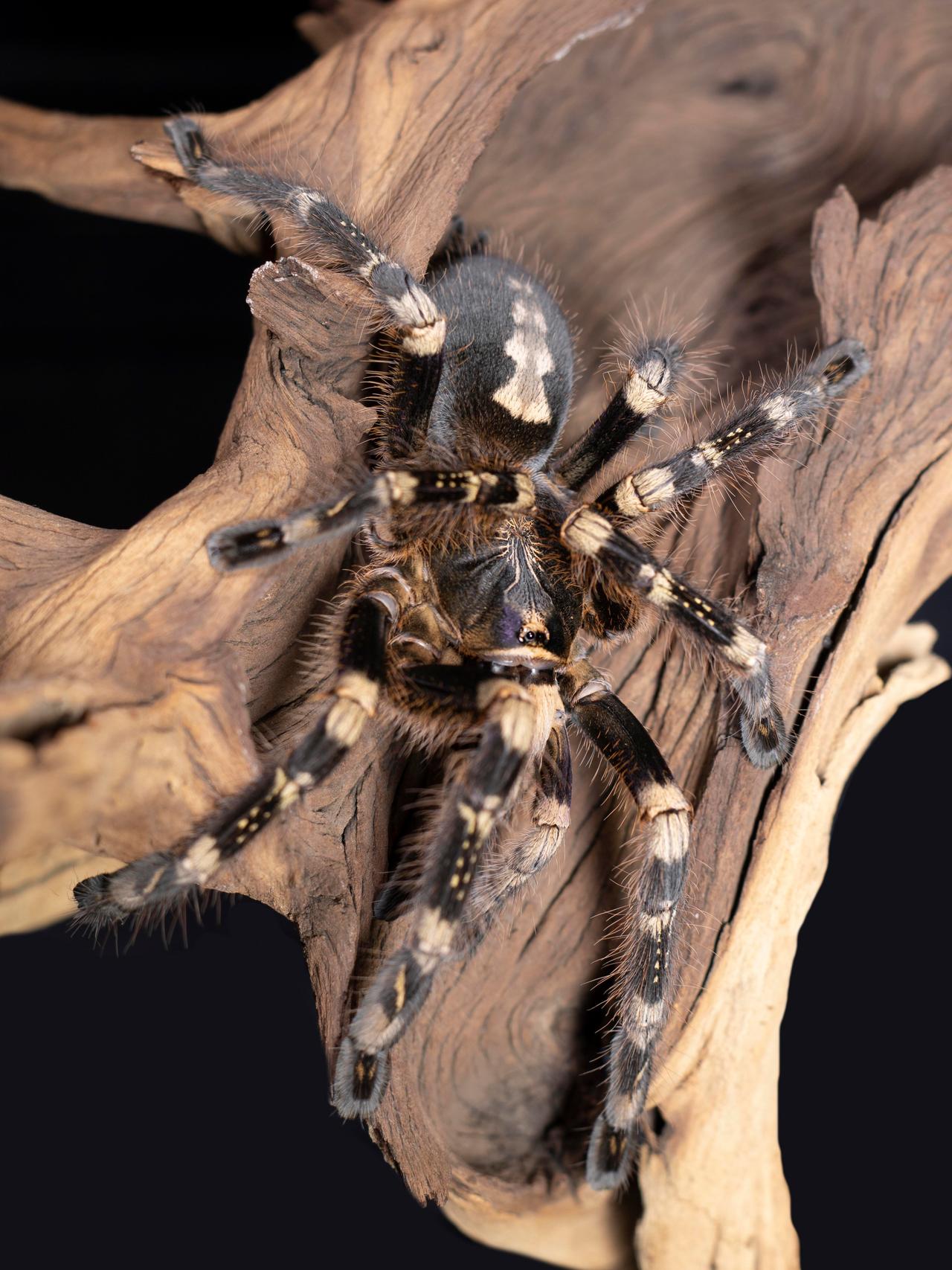
Poecilotheria regalis – Indian Ornamental Tarantula
Realm | Animalia | ||||||||
|---|---|---|---|---|---|---|---|---|---|
Branch | Arthropoda | ||||||||
Class | Arachnida | ||||||||
Team(s) | Araneae | ||||||||
Family | Theraphosidae | ||||||||
Genus | Poecilotheria | ||||||||
Specie(s) | Poecilotheria regalis | ||||||||
Conservation Status (IUCN) | CITES Appendix II – Threatened due to habitat loss and collection trade | ||||||||
Natural Habitat | Southeastern India, in tropical and humid forest ecosystems | ||||||||
Poecilotheria regalis is an exotic tarantula species native to India, known for its diverse color patterns, high mobility, and aggressive defensive behaviors. The name “Indian Ornamental Tarantula” derives from its aesthetic appearance. This tarantula is one of the most widely recognized members of the genus Poecilotheria and is frequently studied in both scientific and hobbyist contexts.
Its arboreal lifestyle distinguishes it from ground-dwelling tarantulas. Its arboreal structure directly influences its behavior. Hunting techniques, web construction, defensive strategies, and locomotion have all adapted significantly to this vertical way of life. Adult individuals possess rapid reflexes and tend to either flee or strike back with sudden movements when threatened.
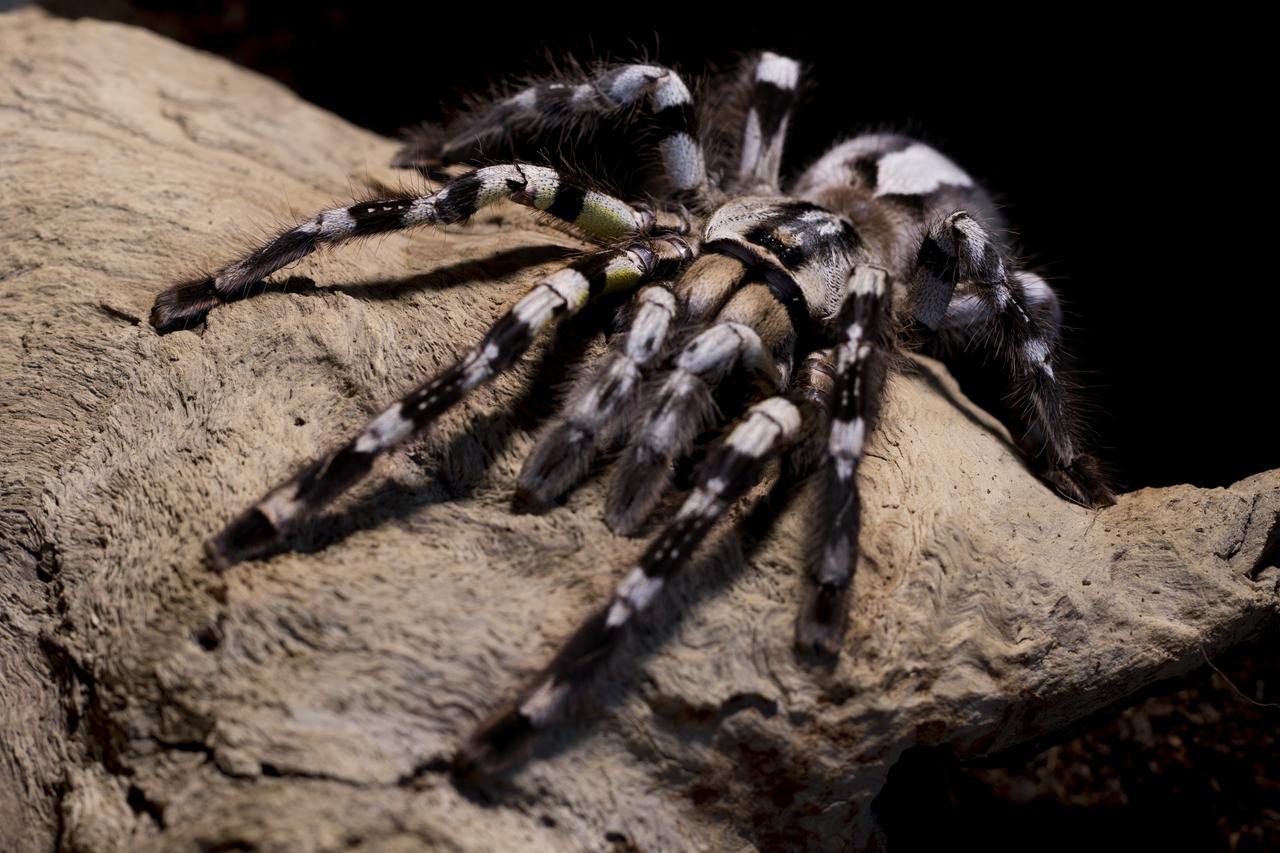
Poecilotheria regalis – Indian Ornamental Tarantula (
Poecilotheria regalis is a tarantula species with striking morphological features. Body length in females averages 6–7 cm, with a leg span reaching up to 18–20 cm. Males are smaller in size. The body is divided into the prosoma (cephalothorax) and the opisthosoma (abdomen). The prosoma is adorned with gray and black patterns, while the abdomen displays rich patterns in cream, black, and yellow tones. Each leg is marked with symmetrical color rings. These patterns are crucial for species identification.
Its chelicerae are capable of injecting venom, which is painful to humans but rarely life-threatening. The effects of the venom may manifest as muscle spasms, swelling, and in some cases, tremors. Eight simple eyes provide poor vision but excellent vibration detection. The pedipalps of males are specialized for sperm transfer. The upper surface of the abdomen is covered in defensive hairs. The legs feature surface adaptations for climbing vertical surfaces. The tarsal regions contain comb-like structures that play an active role in both grip and environmental sensing. These traits make P. regalis highly successful in both predation and defense.
Poecilotheria regalis inhabits tropical regions in southeastern India, including Andhra Pradesh and Tamil Nadu. It has a narrow ecological range and is therefore highly vulnerable to habitat loss. This species lives exclusively in moist, leafy tropical forests, typically beneath the bark or in hollows of large trees. Dense vegetation, areas subject to heavy rainfall, and stable humidity levels are critical factors for its survival. Nests are usually constructed at heights of 5–10 meters, formed from silk threads that help maintain optimal temperature and humidity conditions.
Thanks to its adapted leg structure, individuals can easily access their nests and hunt from them. These tarantulas have carved out a distinct ecological niche within forest layers. Habitat destruction threatens not only individual specimens but also the species’ entire ecological role. Local deforestation, mining activities, and road construction are causing the species’ range to shrink. As a result, P. regalis is listed under CITES Appendix II and its international trade is regulated.
Poecilotheria regalis is a species renowned for its extremely fast and sudden movements and dominant arboreal behavior. In the wild, when threatened, it either flees rapidly or adopts a defensive posture and launches a counterattack. Defensive behaviors include raising the abdomen and lifting the front legs to create a visual warning, followed by forceful bites. While its bites are rarely life-threatening to humans, they are intensely painful and highly inflammatory.
In its life cycle, males reach maturity in 2–3 years, while females typically become adults after 4–5 years. After mating, females may consume the males, so mating behavior occurs with careful, ritualistic precision. Egg-laying occurs several months after mating. The female constructs a sac containing 100–200 eggs, which she guards within her nest. After hatching, spiderlings disperse within about a week and begin their solitary lives.
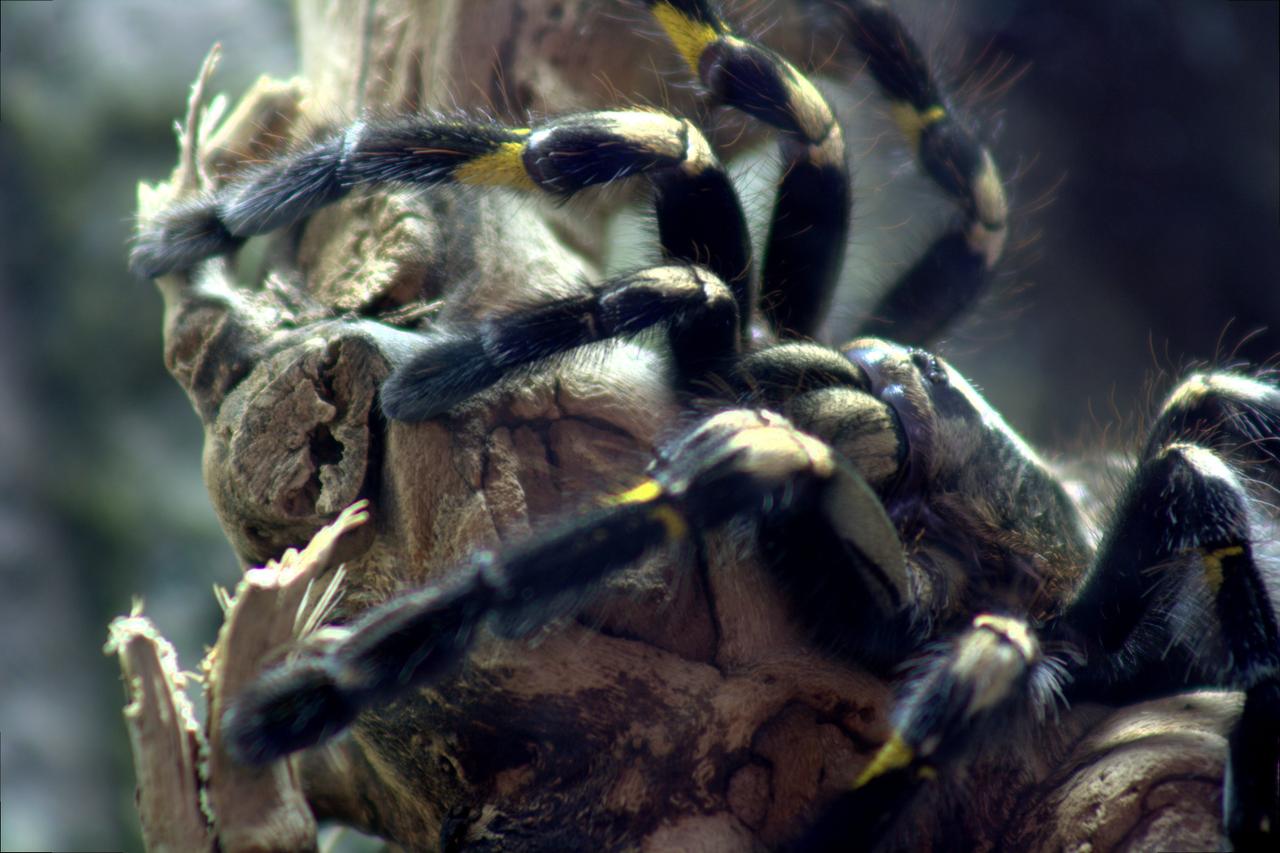
Poecilotheria regalis – Close-up View of the Indian Ornamental Tarantula (
In the wild, Poecilotheria regalis feeds on a variety of insects, particularly grasshoppers, cockroaches, and various lepidopteran larvae. Occasionally, appropriately sized lizards and even bird chicks may also be preyed upon. It waits in ambush near its nest, observing approaching prey, then strikes suddenly to capture it and injects venom through its chelicerae. It digests internal organs into a liquid form before consuming them.
Dietary diversity in the natural environment directly affects its life cycle and individual growth. Juveniles feed on smaller, easier prey, while adults target larger and more complex prey. Overfeeding or imbalanced diets, especially in captive individuals, can lead to behavioral abnormalities and stress-related mortality.
Poecilotheria regalis is listed under CITES Appendix II due to habitat reduction and unregulated pet trade. This mandates permits for its collection from the wild and regulates its commercial trade. Problems such as deforestation in Indian forests, infrastructure projects, mining, and environmental pollution also threaten the species.
Some conservation organizations are conducting habitat restoration and awareness campaigns in collaboration with local communities. However, due to insufficient enforcement, the collection of individuals from the wild continues. This elusive species must be treated with scientific caution.
Poecilotheria regalis is frequently studied in zoology and ethology due to its aesthetic structure and behavioral traits. The bioactive components of its venom serve as models for research into peptides that may be used in treating neurological disorders. Its environmental adaptation mechanisms contribute valuable insights to the scientific literature on tropical spider diversity.
In India, some local communities regard this species not as a creature to be feared, but as an essential element maintaining the balance of forest ecosystems. In certain mythological narratives, it is even referred to as a “guardian spirit.”
Animal Diversity Web. "Poecilotheria regalis: Indian Ornamental Tarantula." Accessed May 12, 2025.
Northwest Zoological Supply. “Indian Ornamental Tarantula Care Guide.” Accessed May 12, 2025.
Richards, N. J., et al. “Indian Ornamental Tarantula (Poecilotheria regalis) Venom Affects Myoblast Function and Causes Skeletal Muscle Damage.” Cells, vol. 12, no. 16, 2023. Accessed May 12, 2025.
Tarantupedia. "Poecilotheria regalis." Accessed May 12, 2025. https://www.tarantupedia.com/poecilotheriinae/poecilotheria/poecilotheria-regalis
The Tarantula Collective. “Poecilotheria regalis Care Sheet.” Accessed May 12, 2025.

Poecilotheria regalis – Indian Ornamental Tarantula
Realm | Animalia | ||||||||
|---|---|---|---|---|---|---|---|---|---|
Branch | Arthropoda | ||||||||
Class | Arachnida | ||||||||
Team(s) | Araneae | ||||||||
Family | Theraphosidae | ||||||||
Genus | Poecilotheria | ||||||||
Specie(s) | Poecilotheria regalis | ||||||||
Conservation Status (IUCN) | CITES Appendix II – Threatened due to habitat loss and collection trade | ||||||||
Natural Habitat | Southeastern India, in tropical and humid forest ecosystems | ||||||||
No Discussion Added Yet
Start discussion for "Indian Ornamental Tarantula (Poecilotheria regalis)" article
Morphological Characteristics
Distribution and Habitat
Behavior and Life Cycle
Diet
Conservation Status
Scientific and Cultural Significance