

 Recently Added:
This article was automatically translated from the original Turkish version.
The landslide in Indonesia occurred in January 2026 in the Bandung region of West Java province, triggered by prolonged and intense rainfall that saturated the ground. This natural disaster caused severe destruction in residential areas and resulted in a high number of casualties. The landslide led to the burial of numerous homes and the destruction of entire settlements.
The West Java region features rugged terrain and is known to be particularly vulnerable to landslides during rainy seasons. The heavy rainfall on 24 January, combined with an extended period of precipitation, caused groundwater levels to rise and soil cohesion to weaken. This condition prompted large masses of soil along the mountain slopes to move toward populated areas.
Indonesia Landslide (New York Post)
In the initial phases of search and rescue operations immediately following the event, several international news sources reported at least seven to eight fatalities and 82 people missing.
As search and rescue efforts progressed, the total death toll was continuously updated. Within the first few days, rescue teams recovered additional bodies, raising the total number of fatalities to 34.
Official authorities later reported that the death toll had risen to 44 and then to 49. By the eighth day of ongoing search and rescue operations, the number of fatalities was reported as 64.
On the ninth day of the incident, the Bandung Search and Rescue Office announced that the bodies of 70 people had been recovered and approximately 10 individuals were still considered missing.
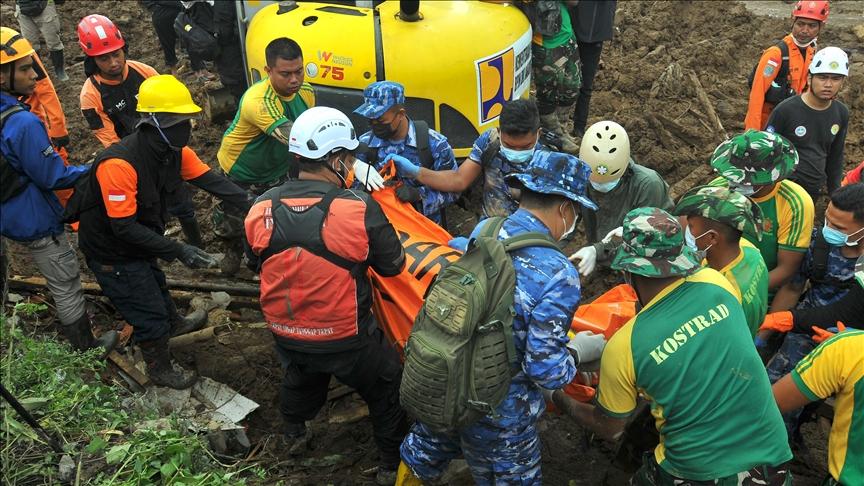
Search and rescue operations commenced immediately after the event. Teams were occasionally forced to temporarily suspend operations due to difficult terrain conditions and ongoing rainfall. Heavy machinery, tracking dogs and extensive personnel support were deployed in the search efforts. The number of rescue personnel was increased daily, with thousands of staff involved in the operations.
In the West Bandung area where the landslide was most intense, numerous settlements were buried under earth and debris, resulting in widespread destruction. Temporary shelter and evacuation procedures were initiated for many affected households, and forensic identification efforts were carried out in the impacted zones.
Local rescue offices and national disaster management agencies coordinated search and rescue operations following the disaster. Regional authorities sought to implement measures to locate individuals trapped under debris and prevent further landslides.
Al Jazeera. “Seven Dead, 82 Missing after Landslide in Indonesia’s Bandung.” Al Jazeera English, January 24, 2026. Accessed February 2, 2026. https://www.aljazeera.com/news/2026/1/24/seven-dead-82-missing-after-landslide-in-indonesias-bandung
Anadolu Ajansı. “Endonezya’daki Toprak Kaymasında Ölü Sayısı 70’e Yükseldi.” Anadolu Ajansı, January 31, 2026. Accessed February 2, 2026. https://www.aa.com.tr/tr/dunya/endonezyadaki-toprak-kaymasinda-olu-sayisi-70e-yukseldi/3816898
New York Post. "Dramatic Drone Footage Shows Homes Buried After Massive Landslide in Indonesia." January 24, 2026. Accessed February 2, 2026. https://www.youtube.com/watch?v=s8IyX57ZuVA
Reuters. “Indonesia Landslide Death Toll Rises to 49, Agency Says.” Reuters, January 31, 2026. Accessed February 2, 2026.
TRT World. “Indonesia landslide death toll rises to at least 64.” TRT World, January 24, 2026. Accessed February 2, 2026. https://www.trtworld.com/article/caae668fcc60

The death toll from a landslide that occurred on 24 January 2026 in the Bandung region of West Java, Indonesia, rose to 70. After days of heavy rainfall, the disaster left many homes buried under earth, while search and rescue teams continued their efforts to reach the missing.
No Discussion Added Yet
Start discussion for "Indonesia West Java Landslide (January 2026)" article
February 2, 2026
Causes and Geographic Conditions
February 2, 2026
Fatalities and Missing Persons
February 2, 2026
Rescue Operations
February 2, 2026
Displacement and Impact
February 2, 2026
Government and Institutional Responses