

This article was automatically translated from the original Turkish version.
Bilgi Okuryazarlığı
(Yapay Zeka ile Oluşturulmuştur)
Information Literacy is a complex set of skills defined as the ability of an individual to recognize when information is needed, access that information, evaluate it, use it effectively, and adhere to ethical values throughout the process. In the information age, unlike traditional literacy, it encompasses competencies such as questioning the source of information, understanding its context, and integrating it into problem-solving processes. This process involves not only accessing data but also the capacity to analyze the accuracy, validity, and impartiality of that data.
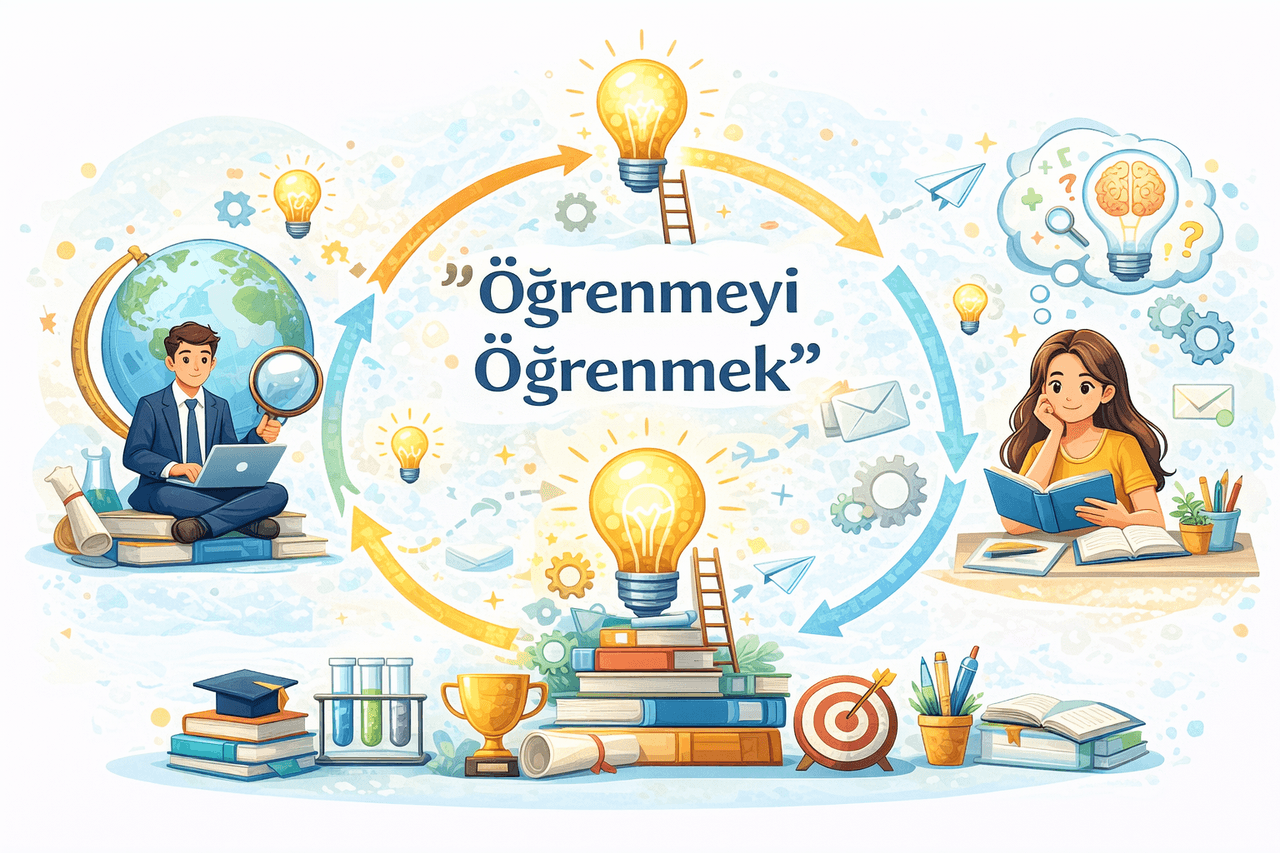
The Individual’s Process of Accessing, Thinking, and Learning About Information(Generated by Artificial Intelligence)
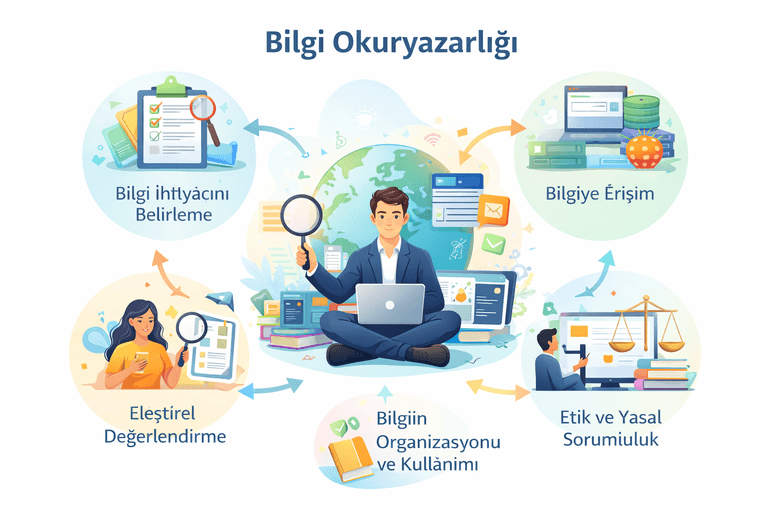
Information literacy is composed of various interrelated competencies.
Developing these competencies is considered an integral part of lifelong learning:
• Identifying Information Needs: Defining and limiting the scope of the correct information required to answer a question or solve a problem.
• Access Strategies: Selecting appropriate information sources such as databases, academic archives, and library systems, and developing search strategies to utilize them effectively.
• Evaluating Information: Critically assessing the reliability, authority, currency, and objectivity of information accessed.
• Organizing and Using Information: Synthesizing acquired information to generate new ideas or structure it to solve existing problems.
• Ethical and Legal Responsibility: Adhering to copyright laws, academic integrity, and citation standards when using information.
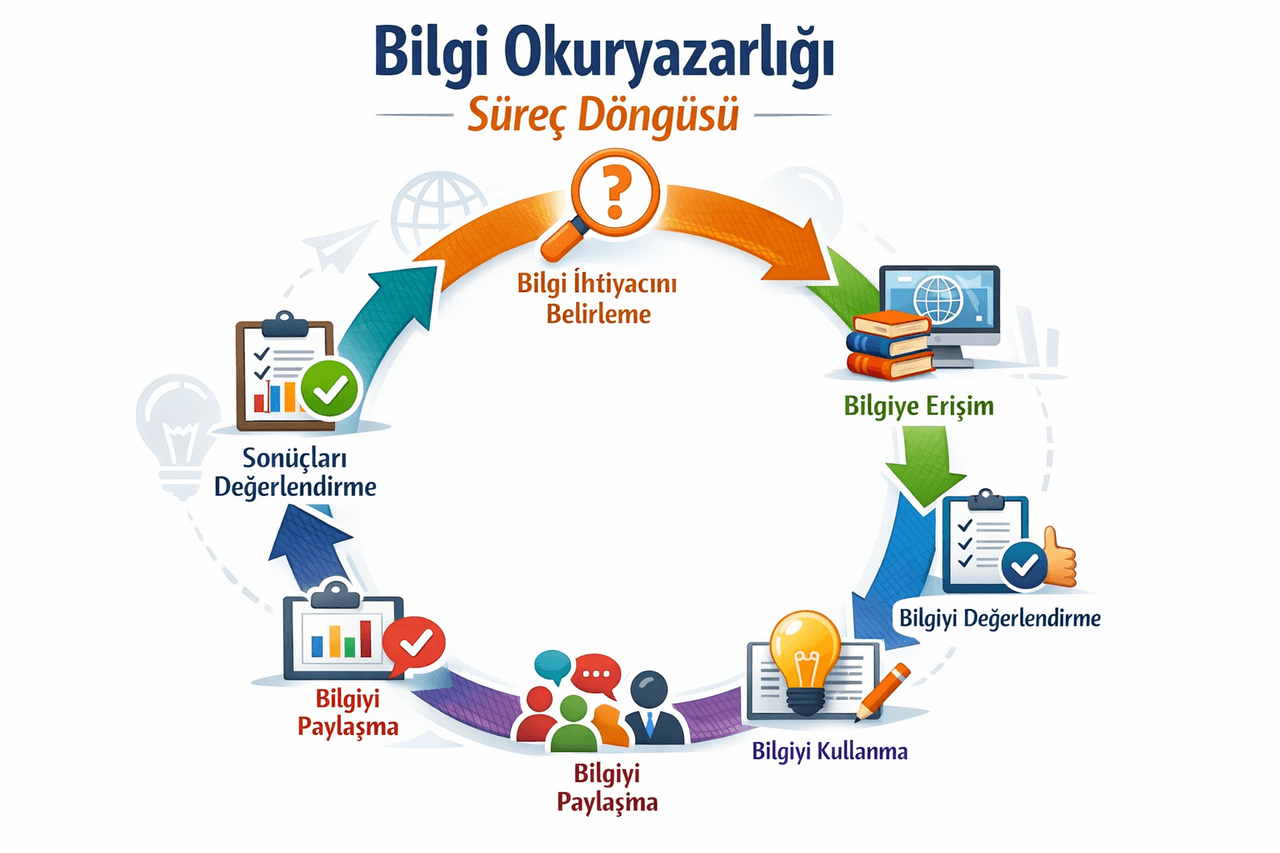
Information Literacy Process Cycle(Generated by Artificial Intelligence)
Information literacy is a fundamental skill not only for academic success but also for the sustainability of a democratic society. This competency enables individuals to protect themselves from manipulative content and distinguish information pollution.
Educational institutions aim not only to transmit knowledge but also to equip students with skills to access and process information, thereby transforming them into independent learners. Conscious use of libraries and digital resources in research processes serves as a catalyst for intellectual development.
With digitalization, access to information has become significantly easier, allowing individuals to obtain vast amounts of information from diverse sources in a short time. However, this has made evaluating the accuracy, reliability, and quality of information a more complex process. In this context, information literacy has become intertwined with digital literacy. Today, individuals are expected not only to critically assess printed sources but also to examine numerous digital contents available online with a critical perspective.
The rapid proliferation of information published in digital environments can lead to the equally rapid spread of false or misleading information. Therefore, information literacy has become a crucial skill area requiring individuals to compare different digital sources, question the origin of information, and assess the reliability of acquired data. Particularly social media platforms, online news sites, and user-generated content have further heightened the importance of information verification processes.
In the digital age, information literacy is not limited to the ability to access information. It also encompasses the skills to interpret, analyze, and ethically use the information obtained. Individuals are expected to respect copyright when producing digital content, follow citation rules, and share information responsibly.
Developing information literacy skills in educational environments ensures that students act more consciously in digital information environments. Enhancing students’ abilities to evaluate diverse information sources, access reliable data, and critically interpret information is regarded as one of the essential elements of effective learning in the digital age. Information literacy is now recognized as one of the core competencies that students must acquire in contemporary educational programs.

Bilgi Okuryazarlığı
(Yapay Zeka ile Oluşturulmuştur)
No Discussion Added Yet
Start discussion for "Information Literacy" article
Components
Importance in Education and Society
The Digital Age and Information Literacy