

This article was automatically translated from the original Turkish version.
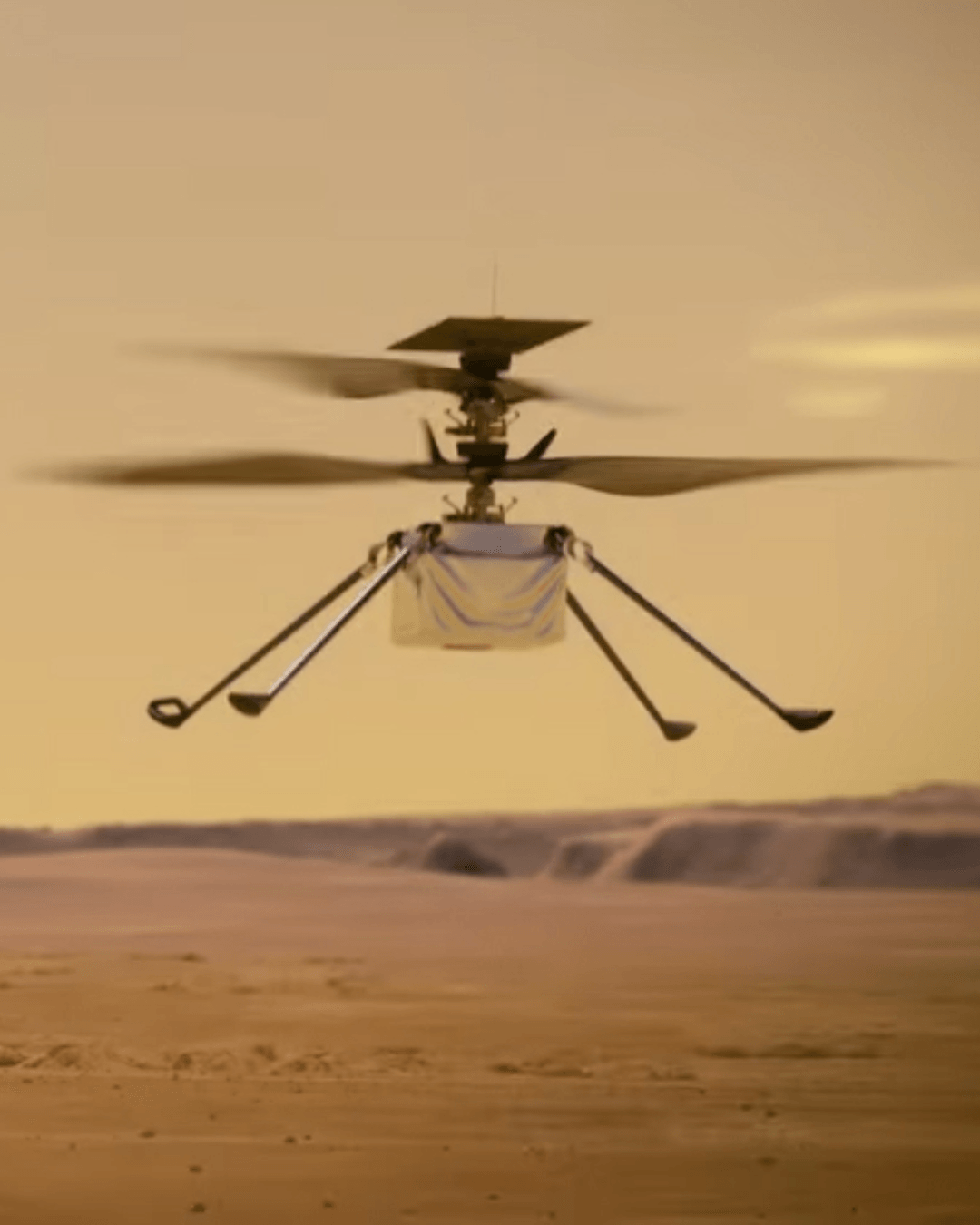
Ingenuity is an unmanned aerial vehicle developed by NASA as part of the Mars 2020 mission, achieving the first powered, controlled flight on another planet. This helicopter was delivered to Mars alongside the Perseverance rover and was initially planned solely as a technology demonstration. However, the vehicle has completed numerous missions and has played an active role in Mars surface exploration.
Ingenuity Mars Helicopter (NASA JPL)
Ingenuity was designed and developed by NASA’s Jet Propulsion Laboratory (JPL). Due to the low density of Mars’ atmosphere, the vehicle features ultra-lightweight rotors with high lift capacity, distinct from similar aircraft on Earth.
Ingenuity is equipped with a rotor system that spins at 2400 revolutions per second to achieve flight in Mars’ atmosphere, which has a density of approximately 1 percent of Earth’s. This rotational speed is significantly higher than that of comparable aircraft on Earth.

Ingenuity landed on Mars on 18 February 2021 alongside the Perseverance rover and completed its first flight on 19 April 2021. This date marks a significant milestone in space history as the day of the first successful powered flight on another planet.
Originally planned for only five flight demonstrations, Ingenuity’s exceptional performance and durability prompted NASA to extend its mission many times over. As of 2023, the helicopter had completed over 50 flights.
Initially sent solely for system testing, Ingenuity later contributed actively to Mars exploration missions in the following areas:
Ingenuity’s reconnaissance flights have led the way in helping Perseverance navigate and identify scientifically interesting regions. This has improved the rover’s mobility efficiency and optimized scientific sample collection operations.

No Discussion Added Yet
Start discussion for "Ingenuity Mars Helicopter" article
Development and Design
Mission Timeline and Achievements
Flight Objectives and Scientific Contributions
Technical Specifications