
 Recently Added:
This article was automatically translated from the original Turkish version.
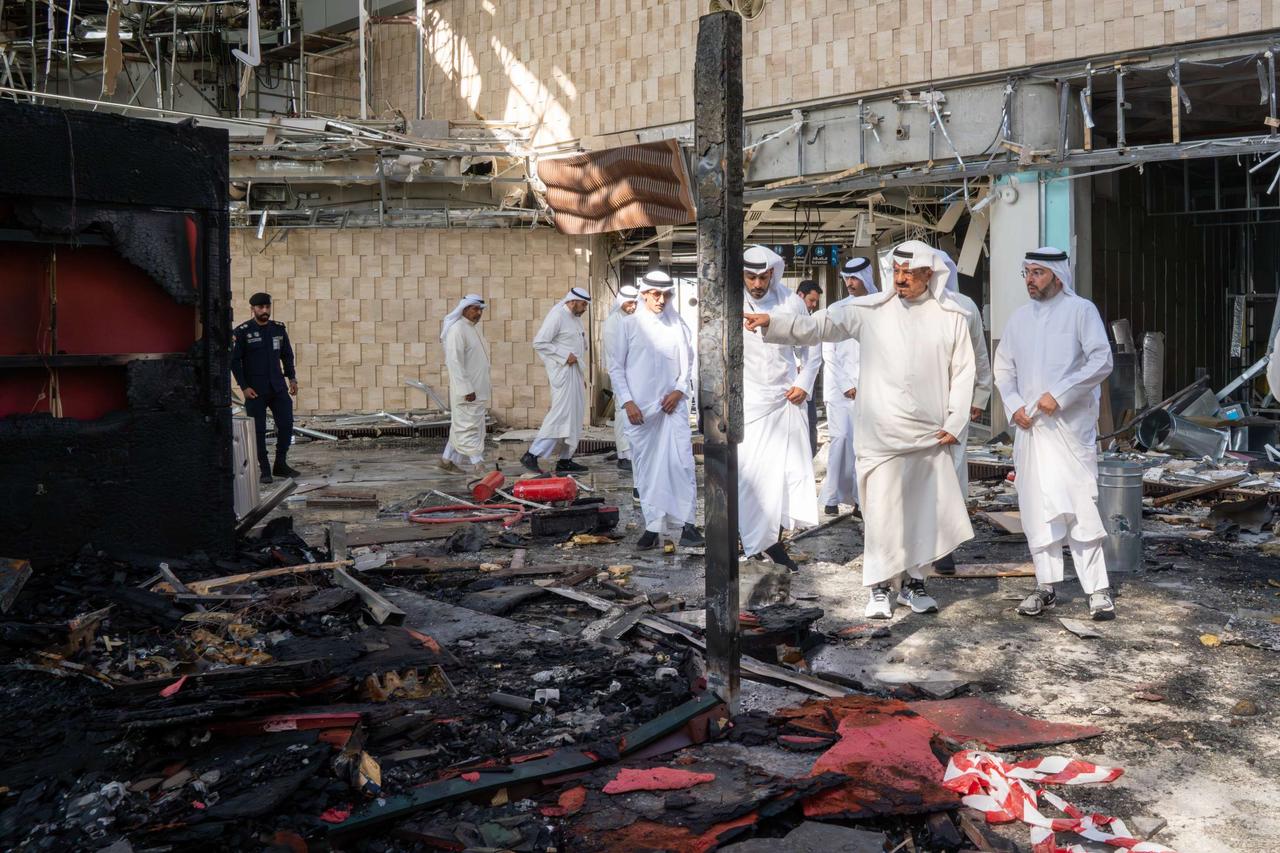
Iran's Attacks on Kuwait and Bahrain, on 3 June 2026, were military strikes that occurred during the ongoing war between the United States and Iran and the negotiation process. The Islamic Revolutionary Guard Corps (IRGC) targeted U.S. military facilities in Kuwait and Bahrain with missiles and unmanned aerial vehicles (UAVs) in response to U.S. Central Command's (CENTCOM) operations against targets near Kish Island and the Strait of Hormuz. During the attacks, the T1 passenger terminal of Kuwait International Airport sustained damage, one person was killed, and 63 people were injured.
Footage of the Attack on Kuwait International Airport, 3 June 2026 - (Anadolu Ajansı)
During the night of 2 June into 3 June, U.S. forces targeted and damaged an Iranian oil tanker in the Strait of Hormuz with a missile. In response, the IRGC launched missiles at the Panaya vessel, which it labeled as linked to the United States and Israel. Iranian media reported hearing explosion sounds near Kish Island in the Strait of Hormuz.
Subsequently, U.S. forces conducted an airstrike on an IRGC communication tower south of Kish Island. CENTCOM also announced that it had shot down Iranian UAVs targeting civilian vessels in the region's waters.
Following these strikes, the IRGC issued a statement declaring: "In response to the open aggression by terrorist American forces targeting Iran's national sovereignty on Kish Island, the IRGC Air Force struck American occupier military bases in Kuwait with precise and intense missile attacks." The statement claimed that the targeted bases had been destroyed and American soldiers' bunkers demolished.
The IRGC also reported targeting the U.S. Fifth Fleet Headquarters in Bahrain with missiles and UAVs. The statement added: "We previously warned that a different and heavier response would be delivered in the event of aggression, and we have acted accordingly. We reiterate that any disruption to the security of the Strait of Hormuz will impose a heavy cost on the aggressive American military."
Kuwaiti armed forces announced via social media that they had attempted to intercept missile and UAV attacks directed at the country: "Our air defense systems are working to intercept missile and UAV attacks." Explosive sounds heard were attributed to air defense systems neutralizing "enemy attacks", and the public was urged to follow safety and security instructions.
In the early morning of 3 June, CENTCOM declared that an additional wave of Iranian UAVs targeting U.S. forces in Kuwait had been "unsuccessful". CENTCOM stated that its air defenses had successfully intercepted numerous UAVs and that U.S. personnel and assets had suffered no harm.
In another CENTCOM statement, it was stated: "The Iranian Islamic Revolutionary Guard Corps claims today to have struck the U.S. Fifth Fleet Headquarters in Bahrain and a U.S. air base in the region with missiles and UAVs. False."
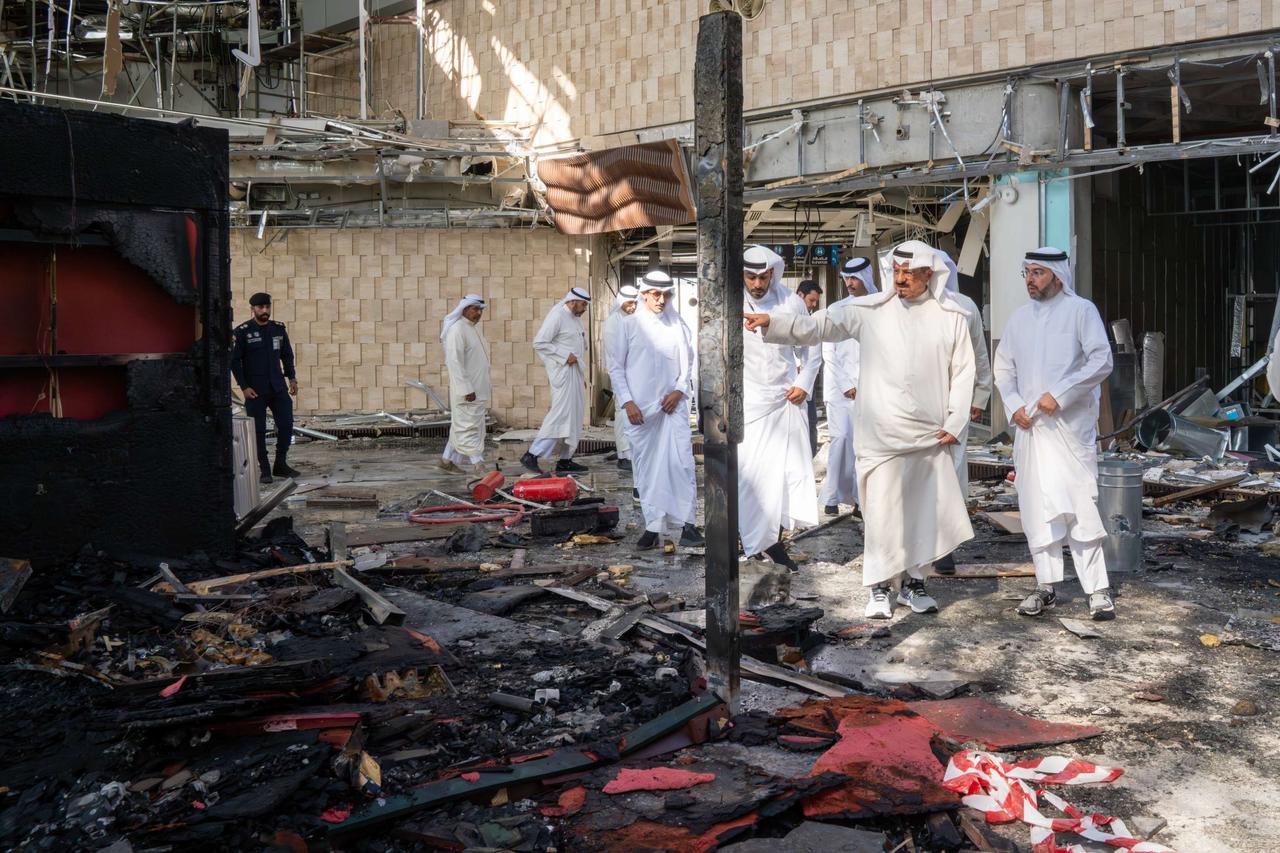
Kuwaiti Prime Minister Sabah Inspecting Damage at Kuwait International Airport After the Iranian Attack, 3 June 2026 - (Anadolu Ajansı)
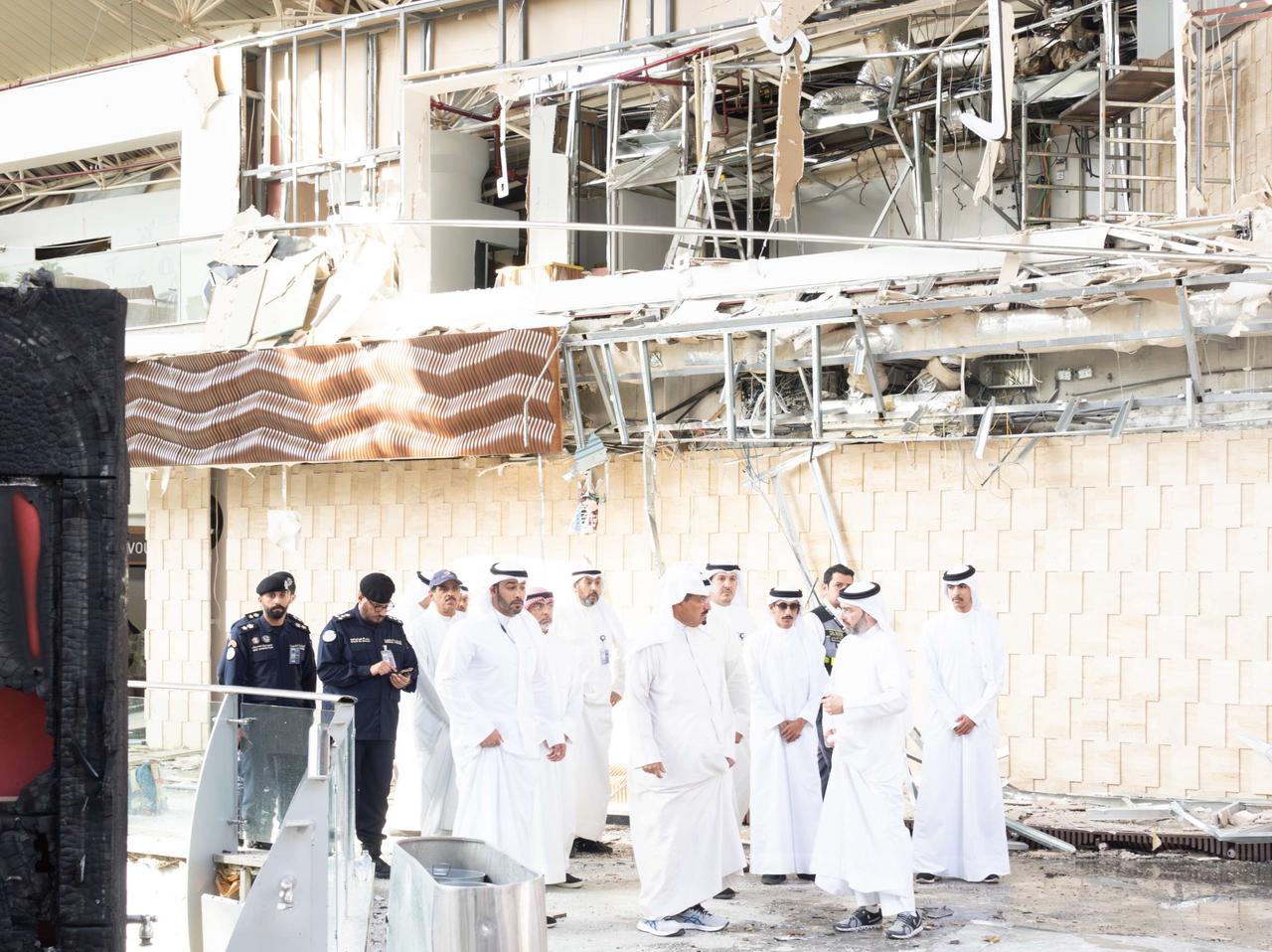
On the morning of 3 June, the Kuwaiti armed forces announced that the T1 passenger terminal of Kuwait International Airport had been struck by a suicide UAV attack orchestrated by Iran. Defense Ministry Spokesperson Brigadier General Saud Abdulaziz al-Atwan confirmed significant damage to the terminal and numerous injuries. The General Authority of Civil Aviation announced that all flights at the airport had been suspended until further notice, with flights redirected to alternative airports.
According to the Kuwaiti Ministry of Foreign Affairs, one person was killed and many others injured in the attacks. In a subsequent statement, the Kuwaiti armed forces updated the number of injured to 63.
The Kuwaiti armed forces confirmed that the deceased was a citizen of India. Kuwaiti Minister of Health Abdullah al-Sened announced that comprehensive health emergency plans had been activated from the earliest hours of the incident. 25 ambulances were dispatched to the airport. All 63 injured were transported to hospitals, including airport staff and passengers. Of these, seven underwent emergency and extensive surgical operations.
Kuwaiti Prime Minister Sabah Inspecting Damage at Kuwait International Airport After the Iranian Attack, 3 June 2026 - (Anadolu Ajansı)
The Kuwaiti Ministry of Foreign Affairs stated that some critical facilities, including diplomatic missions, had sustained damage as a result of the attacks.
According to the Kuwaiti armed forces, 13 ballistic missiles and 17 UAVs that entered Kuwaiti airspace during the Iranian attack were neutralized. Defense Ministry Spokesperson al-Atwan, in a separate statement, reported that 30 ballistic missiles and UAVs had been detected, with missiles intercepted over various populated areas and debris falling to the ground.
The Kuwaiti Fire Department reported receiving 20 alerts due to shrapnel from intercepted missiles and UAVs. Of these, four were fire alarms, eleven were reports of shrapnel falling, and five concerned securing the affected areas.
The Kuwaiti Ministry of Foreign Affairs strongly condemned the attacks, emphasizing that "Iran's actions escalating tensions in the region and undermining security and stability are unacceptable." The statement noted that the attacks clearly violated United Nations Security Council Resolution 2817.
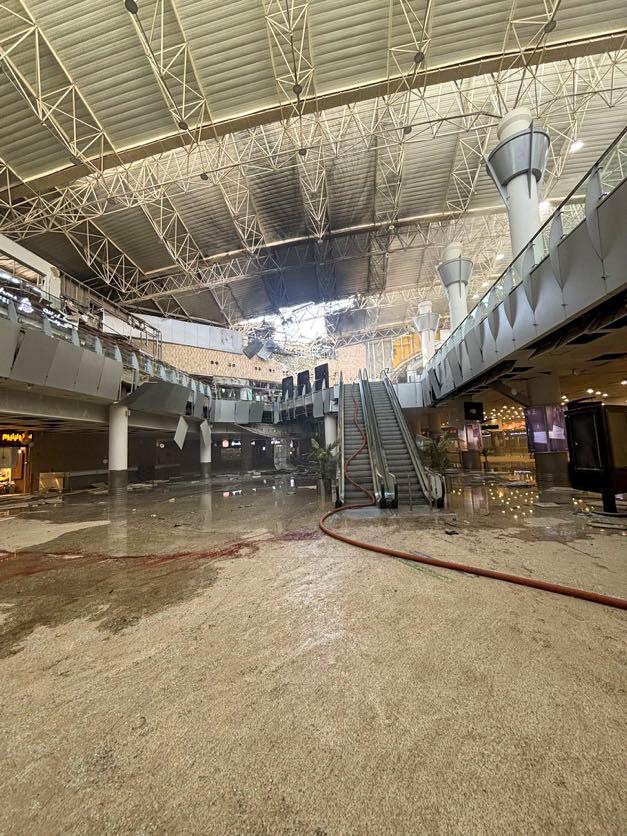
Damage to Kuwait International Airport Passenger Terminal Following the Iranian Suicide UAV Attack, 3 June 2026 - (Anadolu Ajansı)
Kuwait dismissed Iran's claims as "baseless" and stated that "these claims cannot legitimize attacks against Kuwaiti territory, civilian infrastructure, and vital facilities." The ministry affirmed that Kuwait "will not permit its territory or airspace to be used by any country for hostile actions against others."
The Ministry of Foreign Affairs summoned Iran's envoy in Kuwait, Hamid Yakubi Fer. Kuwait declared two diplomats at the Iranian Embassy in Kuwait as "persona non grata" and demanded they leave the country within 24 hours. A decision was also made to reduce the number of personnel at the embassy.
Iran's Ministry of Foreign Affairs defended its actions by asserting that U.S. attacks on an Iranian oil tanker in the Strait of Hormuz and a communication tower on Kish Island were "launched from Kuwaiti and Bahraini territory", accusing the leaders of both countries of being "directly responsible for the attacks against Iran".
The ministry's statement included: "Any country that permits its land, sea, or airspace or facilities to be used for military attacks against Iran violates international law and good neighborly relations. This constitutes an act of aggression under United Nations General Assembly Resolution 3314."
Iranian Foreign Minister Abbas Araghchi, referring to U.S. Secretary of State Rubio's remarks about cooperation with Kuwait and the UAE, stated: "Our armed forces are targeting locations that the United States has permitted to be used for attacks on civilian maritime traffic and violations of the ceasefire, under the legitimate framework of self-defense."
IRGC Spokesperson Hussein Mohibbi later claimed that no IRGC attack had been carried out against the Kuwait International Airport terminal. He asserted that investigations revealed "the destruction of the Kuwait International Airport terminal resulted from a malfunction in the American Patriot systems that failed to intercept Iranian missiles, causing debris to fall on the terminal". CENTCOM rejected this claim.
India's Ministry of External Affairs issued a statement condemning the attack: "We condemn the attack on Kuwait International Airport today, which resulted in the death of an Indian citizen and injuries to several of our nationals. We reiterate our call on all parties to end such attacks."
Arab League Secretary-General Ahmed Aboul Gheit stated that Iran's "unjustified attacks" on civilian settlements and vital sites such as airports clearly violated UN charters, the 1949 Geneva Conventions, and principles of international humanitarian law, and called on Iran to immediately cease such attacks.
Gulf Cooperation Council (GCC), in its statement strongly condemning the attacks, declared that "these attacks represent a dangerous and unprecedented escalation targeting civilian infrastructure and diplomatic missions."
Saudi Arabia announced it condemned the attacks "in the strongest terms," while the foreign ministries of Qatar, United Arab Emirates, Lebanon, Jordan, Egypt, and Palestine also issued statements condemning Iran's attacks.
Germany Foreign Minister Johann Wadephul stated: "In parallel with ongoing negotiations and the agreed ceasefire, such attacks are unacceptable," and emphasized that the attacks were "directed against third parties unrelated to the conflict."
UAE Presidential Advisor Anwar Gargash stated: "No Gulf country should be left alone in the face of these attacks; the security of GCC nations is interdependent, their interests are shared, and their fate is one."
Bahrain's Ministry of Interior announced that it had arrested 15 individuals suspected of links to the Iranian Islamic Revolutionary Guard Corps. The arrested individuals were accused of provoking unrest among the public.
The Kuwaiti Ministry of Information announced that, after technical teams and authorities completed damage assessments and implemented security measures, flight operations resumed at the airport via the T4 Terminal on the evening of 3 June. Kuwait Airways stated that flight schedules delayed due to the attacks would be rescheduled and that no fees would be charged to passengers for flights scheduled on the day of the incident.
Al Jazeera. "Iran, Kuwait, Bahrain Hit: Is the War in the Gulf Escalating Again?" Al Jazeera, June 3, 2026. Accessed June 4, 2026. https://www.aljazeera.com/news/2026/6/3/iran-kuwait-bahrain-hit-is-the-war-in-the-gulf-escalating-again
Al Jazeera. "Iranian Drone Attack Kills Indian Citizen in Kuwait After US Strikes Qeshm." Al Jazeera, June 3, 2026. Accessed June 4, 2026. https://www.aljazeera.com/news/2026/6/3/iranian-drone-hits-kuwaits-main-airport-after-us-strikes-qeshm-island
Anadolu Ajansı. "Dakika Dakika Gelişmeler: ABD-İsrail-İran-Lübnan Savaşı ve Ateşkes Süreci." Anadolu Ajansı Live Blog. Accessed June 4, 2026. https://www.aa.com.tr/tr/live-blog/dakika-dakika-gelismeler-abd-israil-iran-lubnan-savasi-ve-ateskes-sureci/3136
Anadolu Ajansı. "Kuveyt: İran Saldırısında 13 Balistik Füze ve 17 İHA Etkisiz Hale Getirildi." Anadolu Ajansı. Accessed June 4, 2026. https://www.aa.com.tr/tr/dunya/kuveyt-iran-saldirisinda-13-balistik-fuze-ve-17-iha-etkisiz-hale-getirildi-/3954729
BBC News. "One Killed and Dozens Injured in Iranian Drone Strikes on Kuwait Airport." BBC News, June 3, 2026. Accessed June 4, 2026. https://www.bbc.com/news/articles/c5yx135yg53o
Reuters. "Iranian Attack on Kuwait Airport Kills One and Injures Dozens - As It Happened." Reuters, June 3, 2026. Accessed June 4, 2026. https://www.reuters.com/world/iran-war-live-us-says-iranian-strikes-bahrain-kuwait-failed-2026-06-03/

During the night connecting June 2 to June 3, U.S. forces struck an Iranian oil tanker in the Strait of Hormuz and several targets on Kish Island. In response, the Islamic Revolutionary Guard Corps announced it had launched missile and drone attacks against U.S. military facilities in Kuwait and Bahrain. The Kuwaiti military reported that its air defense systems had neutralized numerous missiles and drones, while Kuwait International Airport's T1 passenger terminal sustained damage and flights were temporarily suspended. One person was killed and 63 were injured in the attacks. Following the incidents, Kuwait declared two Iranian diplomats persona non grata, and numerous countries issued statements condemning the attacks.
No Discussion Added Yet
Start discussion for "Iran's Attacks on Kuwait and Bahrain (June 3, 2026)" article
June 4, 2026
Chronology of the Attacks
June 4, 2026
Attack on Kuwait International Airport
June 4, 2026
Diplomatic and Political Reactions
June 4, 2026
Regional and International Reactions
June 4, 2026
Resumption of Airport Operations