

+1 More

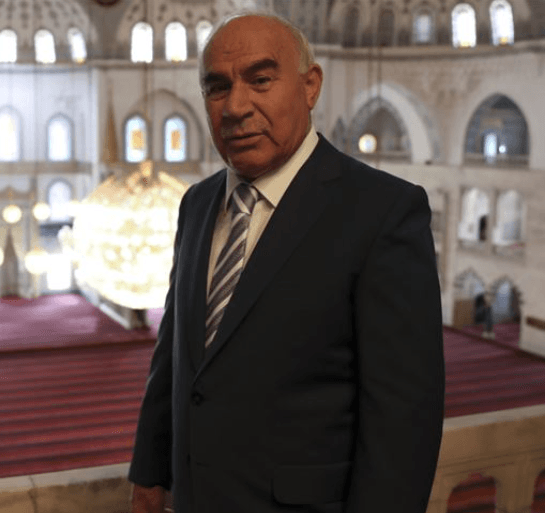
İsmail Coşar has become one of the most prominent figures in Türkiye’s religious life in terms of voice, interpretation, and representation. Throughout his life, he fulfilled the roles of hafız, muezzin, and imam-hatip. Over a service period exceeding half a century, he established a broad influence not only through his recitation of the Qur’an and performance of mevlit but also through his close association with state protocol and his presence at funeral ceremonies for martyrs.
İsmail Coşar - Yetmez mi Gönül Bir Aşk Uğruna Yıllarca Süründün (YouTube - Video Time)
İsmail Coşar was born in 1950 in Çağlayan village, part of the Osmangazi district of Bursa. He was the youngest of five children in a family engaged in agriculture. It is known that all siblings in the family had beautiful voices, a trait inherited from both parents. Coşar developed the habit of reciting the adhan at an early age and memorized its text before beginning primary school. He sometimes received positive and sometimes negative reactions from villagers due to his practice of reciting the adhan regardless of time or place. Although his father wished for him to focus on agricultural work, his mother insisted that he become a hafız. Following his mother’s guidance, he was sent to live with his uncle, an imam in another village, and later moved to Bursa city center.
While at Ulu Camii, Coşar’s loud recitation of the Qur’an attracted the attention of the mosque’s muezzin, who directed him toward formal religious education. He completed his hafız training after three years of intensive study at the İsmail Hakkı Tekkesi in the Tuzpazarı neighborhood of Bursa. After becoming a hafız, he began his professional career by reciting the adhan for the first time at Ulu Camii.
After completing his hafız training, Coşar was temporarily appointed as a muezzin-kayyım to a village near the center by Abdullah Saraçoğlu, the Mufti of Bursa at the time. During his military service, Coşar came to Ankara and developed an interest in the ongoing construction of Kocatepe Camii. After completing his military service, he served first at Kağnıcıoğlu Camii and later at Hallaç Camii. In 1972, he officially began his first role as a muezzin at Kağnıcıoğlu Camii in Ankara’s Ulus neighborhood.
İsmail Coşar was appointed as a muezzin to Kocatepe Camii in 1975 while it was still under construction. He served continuously at this mosque for over four decades. Due to its central location in Ankara and its large capacity, Kocatepe Camii became a preferred place of worship for state officials. Coşar served for a long time as the chief imam there and became known as the “protocol imam.”
He regularly occupied the front row at state ceremonies, martyr funerals, and the burials of high-ranking civil servants. He led the funeral prayers for leaders such as Turgut Özal, Alparslan Türkeş, and Bülent Ecevit. He also maintained close relationships with military figures such as Nurettin Ersin.
The protocol pathway leading to the entrance of Kocatepe Camii was constructed at his own request. This arrangement was not intended to create VIP privileges but rather to facilitate emergency access and ease the transportation of funeral processions.
İsmail Coşar extended his voice beyond the mosque congregation to the entire nation through radio and television. He was among the first to appear on TRT screens in 1974, reciting the Qur’an during the Mevlid Kandili program held at Ankara’s Maltepe Camii. This program was recorded as TRT’s first live mevlit broadcast. He was also well known for his Qur’an recitations on Ankara Radio.
İsmail Coşar - Gönül Hun Oldu (YouTube - TRT Nostalji)
İsmail Coşar also served at the highest levels of the state. Following the September 12, 1980 coup, he recited the Qur’an at Çankaya Köşkü at the invitation of then-President Kenan Evren. He conducted the hatim and mevlit program held at the Köşkü for Evren’s wife, Sekine Hanım, after his death in 1982. He also noted that Evren himself attended the hatim and said, “I also recited a hatim; include mine as well.”
He also participated in a mevlit program held at the official residence of Prime Minister Bülent Ulusu. During his tenure at Kocatepe Camii, it is reported that Prime Minister Recep Tayyip Erdoğan frequently attended Friday prayers there.
İsmail Coşar played a significant role during the July 15, 2016 coup attempt by FETÖ. Following President Erdoğan’s call to the public to take to the streets, Coşar ascended the minaret of Kocatepe Camii and recited the first selâ in Ankara. This selâ echoed through the mosque’s loudspeakers as a call to defend the homeland and the flag.

İsmail Coşar (AA)
İsmail Coşar stood out for his interpretive power in the recitation of mevlit and kaside. Thanks to his strong memorization ability, he easily internalized works he had listened to in childhood. He emphasized the importance of punctuation, rhyme, and vocal timbre in his mevlit performances. The ilahi and kasidahs he recited became among the most well-known examples of the mevlithan tradition in Türkiye.
While reciting poetic texts, he paid careful attention to preserving traditional forms and stressed the significance of meşk and love in spiritual practice. According to him, the harmony between sound and meaning formed both the spiritual and aesthetic dimensions of the mevlit.

İsmail Coşar (AA)
İsmail Coşar lost his life on March 4, 2020, in a traffic accident near the Polatlı district of Ankara, alongside his wife Sevim Coşar. Both died at the scene after their vehicle was struck by a truck while parked.
His funeral was held on March 5, 2020, at Kocatepe Camii, where he had served for many years. The funeral prayer was led by Ekrem Keleş, President of the Supreme Council of Religious Affairs. The ceremony was attended by state officials including the Speaker of the Grand National Assembly, ministers, and former prime ministers. İsmail Coşar and his wife were buried at Karşıyaka Cemetery.

Funeral Prayer of İsmail Coşar and His Wife Sevim Coşar (AA)
İsmail Coşar enabled the training of many students in the professions of hafız and imam. He stated that memorizing the Qur’an is one of the greatest blessings in human life and emphasized that hafızlar must constantly review and keep the Qur’an fresh in their memory.
He participated in programs across many provinces of Türkiye and in Europe, Asia, and the Far East, contributing to the international performance of religious service. Throughout his life, he delivered Qur’an recitations through both traditional and modern media. After his death, his recordings, broadcasts, and personal memorabilia became important documents in the tradition of religious music and recitation.
İsmail Coşar - Sussam gönül razı değil, söylesem tesiri yok (YouTube - Hymns and Sadals)
Anadolu Ajansı. "Türkiye'nin ünlü hafız ve mevlithanı İsmail Coşar ölümünün birinci yılında anılıyor." Accessed September 25, 2025. https://www.aa.com.tr/tr/turkiye/turkiyenin-unlu-hafiz-ve-mevlithani-ismail-cosar-olumunun-birinci-yilinda-aniliyor-/2162830
Anadolu Ajansı. “15 Temmuz'da ilk selayı okuyan ünlü hafız İsmail Coşar trafik kazasında yaşamını yitirdi.” Accessed September 25, 2025. https://www.aa.com.tr/tr/turkiye/unlu-hafiz-ve-mevlithan-ismail-cosar-ile-esi-trafik-kazasinda-yasamini-yitirdi/1753841
Anadolu Ajansı. “Hafız İsmail Coşar ve eşi son yolculuğuna uğurlandı.” Accessed September 25, 2025. https://www.aa.com.tr/tr/turkiye/hafiz-ismail-cosar-ve-esi-son-yolculuguna-ugurlandi/1755736
Dilek, Nursel. “50 yıl sonra Köşk'te ilk Kur'an'ı Evren Paşa okuttu.” *Aksiyon*, no. 61, February 12, 2007. Accessed September 25, 2025. https://ismailkara.izu.edu.tr/xmlui/bitstream/handle/ismailkara/986/%20KA399.pdf?sequence=1
TRT Nostalji. "İsmail Coşar - Gönül Hun Oldu" YouTube video. Accessed September 25, 2025. https://www.youtube.com/watch?v=OjQd0gZQSJw
Video Time. "İsmail Coşar - Yetmez mi Gönül Bir Aşk Uğruna Yıllarca Süründün" YouTube video. Accessed September 25, 2025. https://www.youtube.com/watch?v=pKMVqTSnH8E
İlahiler ve Sadalar. "İsmail Coşar | Sussam gönül razı değil, Söylesem tesiri yok | Muhteşem Kaside" YouTube video. Accessed September 25, 2025. https://www.youtube.com/watch?v=3CZ8l32TznI

Childhood and Hafız Training
Early Appointments and Move to Ankara
Kocatepe Camii and Protocol Imamship
TRT Broadcasts and Television Mevlits
Çankaya Köşkü and Qur’an Recitations
July 15, 2016 and the First Selâ
Artistic Interpretation and the Mevlit Tradition
Death and Final Journey
Professional Legacy and Memory