badge icon

This article was automatically translated from the original Turkish version.
Article

Isotropic Material

Quote
Screenshot_6.png
Figure
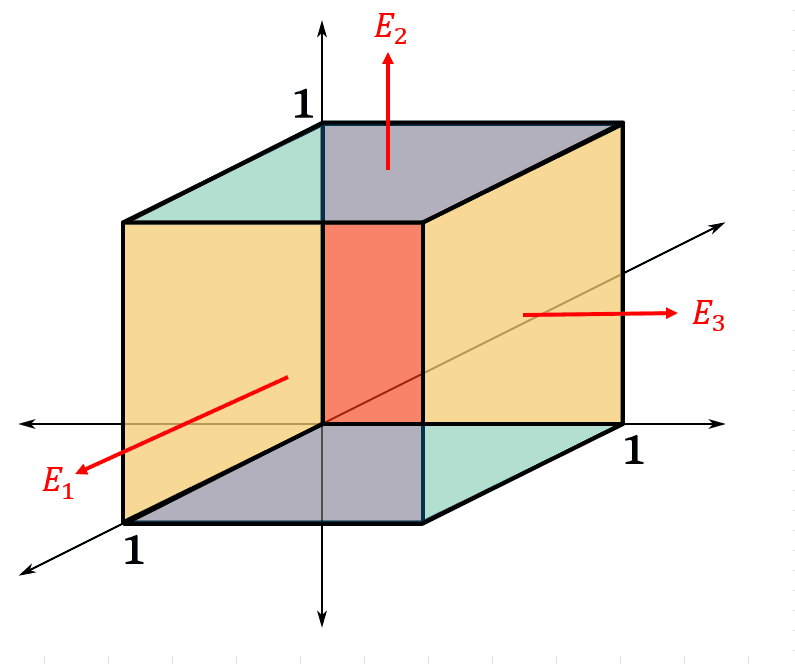
Sample Element with Isotropic Elasticity in All Directions (E1=E2=E3)

Isotropic materials are defined as materials whose physical and mechanical properties are identical in all directions. In such materials, parameters such as the modulus of elasticity, thermal conductivity, and electrical conductivity like are the same in all directions and independent of the chosen coordinate system.

Isotropic Materials

  • Uniform Properties: Isotropic materials exhibit identical mechanical properties in all directions. This means that characteristics such as strength and stiffness remain the same regardless of the direction in which they are measured.
  • Ease of Testing: Testing and analyzing isotropic materials is relatively simple because their properties are the same in all directions. Engineers can use simplified models to predict their behavior under various loading conditions. Stiffness calculations can be performed using Finite Element Method (FEM) analysis.

Examples of Isotropic Materials

  1. Metals: Most metals, particularly pure metals and certain alloys, exhibit isotropic properties. For example, metals such as aluminum and steel display similar mechanical properties in all directions.
  2. Glass: Glass is also a typical isotropic material. Due to its amorphous structure, the mechanical properties of glass are equal in all directions, making it isotropic.
  3. Plastics: Some amorphous plastics can also exhibit isotropic properties. In particular, plastics with a homogeneous structure have similar thermal and mechanical properties in all directions.

Author Information

Avatar
AuthorElyesa KöseoğluDecember 23, 2025 at 9:36 AM

Tags

Discussions

No Discussion Added Yet

Start discussion for "Isotropic Material" article

View Discussions

Contents

  • Isotropic Materials

  • Examples of Isotropic Materials

Ask to Küre