

 Recently Added:

This article was automatically translated from the original Turkish version.
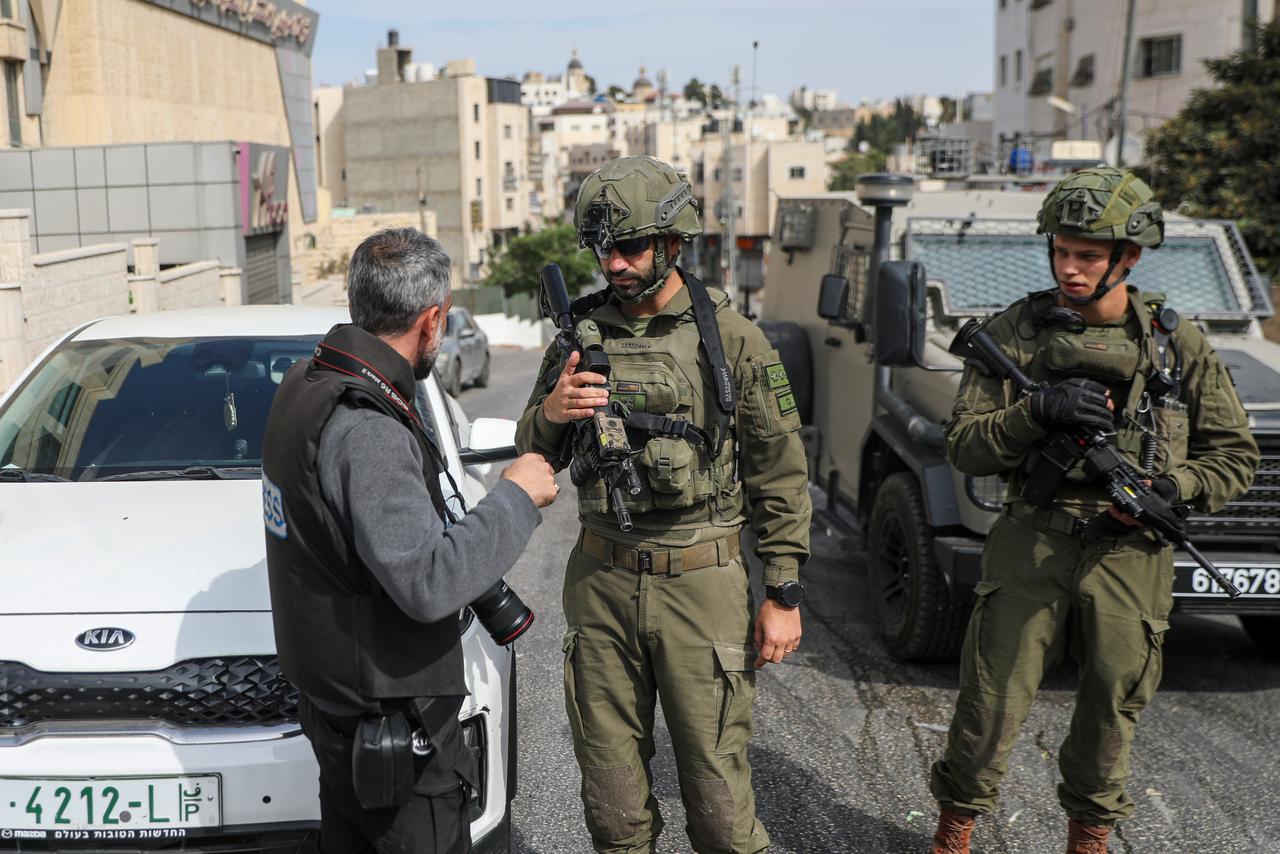
Israel’s Siege and Military Operation in Hebron is a military operation launched by the Israeli military against the city of Hebron and its surroundings following an armed attack on an Israeli checkpoint located in the Ferş el-Heva area at the northwestern entrance to Hebron, in the southern part of the occupied West Bank. The attack occurred on the morning of 23 October 2026 and resulted in the deaths of two Israeli soldiers and two Palestinians who carried out the assault. The operation encompasses siege, raids, destruction, arrests, and forced displacement of residents.
Under the operation, access points to the city and surrounding towns, villages, and refugee camps have been closed. Thousands of Palestinians living in the Jalde and Ayn Deyr Bahha areas west of the city have been forcibly evicted from their homes, and some of the vacated residences have been converted into military barracks and interrogation centers.
According to data from the Hebron Municipality dated 27 October 2026, the number of displaced Palestinians has reached 4,969 individuals from 780 families. The operation was conducted concurrently with Israeli Prime Minister Benjamin Netanyahu’s declaration of a total closure across the West Bank and the 27 October 2026 Israeli general elections. By 28 October 2026, it had entered its sixth day.
Israel has maintained occupation of the West Bank, including East Jerusalem, since 1967. The international community rejects this occupation. Since Israel launched its attack on the Gaza Strip in October 2023, assaults by the Israeli military and Israeli settlers against Palestinians in the occupied West Bank and East Jerusalem have intensified. During this period, Palestinians have faced practices including killings, arrests, demolition of homes and structures, destruction of agricultural land, denial of access to land, and forced displacement. The Palestinian Society for Prisoners has reported that over 26,000 arrest cases have been recorded in the West Bank since October 2023.【1】
The Palestinian government has announced that since the beginning of 2025, more than 40,000 Palestinians have been forcibly displaced from their homes in the West Bank due to violence by Israeli settlers and raids by armed forces. Roland Friedrich, Director of Operations for the United Nations Relief and Works Agency for Palestine Refugees in the Near East (UNRWA) in the West Bank, stated that over 34,000 Palestinian refugees displaced from the Jenin, Tulkarm and Nur Shams camps in northern West Bank at the start of 2025 remain displaced more than a year later.【2】
The Commission Against the Wall and Settlements recorded that in Hebron Governorate in September 2026, 272 attacks were carried out by Israeli forces and settlers, of which 122 were conducted by settlers. The commission also identified 19 demolition operations affecting 91 structures in the governorate during the same month and stated that Hebron was the West Bank governorate with the highest number of structures demolished during this period.
The commission reported that two new orders signed on 18 October 2026 by the official responsible for state and abandoned properties in the Israeli Civil Administration declared a total of 182.81 dunams of land in the towns of Battir, Sa’ir and Ash-Shuyukh in the Bethlehem and Hebron governorates as “state land”.【3】 21 October 2026 saw Israeli forces enter numerous neighborhoods of Hebron with a large number of military vehicles and conduct a raid on the home of Ashraf an-Natsha in the Isa area, destroying its contents. No arrests were made during this raid.【4】
In the days preceding the siege, attacks against Palestinian farmers harvesting olives in the West Bank increased. The Coalition Against Settlements and the Wall announced that on October 22, 2026 (Thursday), Israeli forces and settlers carried out 17 attacks targeting Palestinian farmers and their land in the governorates of Hebron, Qalqilya, Nablus, Ramallah and al-Bireh, Jenin, and Salfit.
The coalition stated that these attacks included intimidation of farmers, obstruction of access to their land, theft of crops and agricultural equipment, damage to olive trees, burning of trees, arrests, threats with firearms, and the use of live ammunition. On the same day, 36 Palestinians were arrested during raids across the West Bank. Of these, 14 were arrested in the village of Khirbet Jawa, located in Mesafir Yatta, within the Hebron governorate.【5】
The coalition reported that by that date in October, Israeli forces and settlers had carried out 409 attacks against Palestinian farmers, their land, olive trees, and agricultural equipment, characterizing these attacks as part of a pattern of "direct violence aimed at displacing farmers from their land."
On October 17, European diplomats, including a French mayor, who were visiting Palestinian olive producers near the village of Taybeh, were attacked by settlers.【6】 U.S. Democratic congressional candidate Brad Lander was briefly detained by the Israeli military on October 21 while assisting Palestinian farmers with the olive harvest near Nahalin, along with approximately 80 volunteers, and was released after a "warning." The Israeli Ministry of Foreign Affairs accused Lander of "engaging in headline harvesting." According to the coalition's data, by October 25 the number of attacks targeting the harvest in nine governorates had reached 482.
The siege began just days before the October 27, 2026 Israeli general elections, which were scheduled for that date. Israel’s Finance Minister Bezalel Smotrich, in a social media post on October 23, advocated for a "comprehensive military operation" in the West Bank similar to those in Gaza and Lebanon, argued for the dissolution of the Palestinian Authority, and claimed that settlements had effectively eliminated the idea of a Palestinian state. Smotrich asserted that if Netanyahu won the elections and formed a new government, one of the first steps he would demand would be to carry out a genocide in the West Bank akin to that in Gaza.【7】
October 23, 2026 (Friday) morning, two individuals arriving in a vehicle with Israeli license plates opened fire near a reserve battalion position close to the illegal settlement of Telem, located near one of the military checkpoints surrounding Hebron.【8】 Israel’s ambulance service initially reported that at least five Israeli soldiers were wounded, two of whom later died. The Israeli military announced that it had killed the two Palestinians responsible for the attack.【9】 The attack occurred at the Fersh al-Heva checkpoint, located at the northwestern entrance to the city. Two Israeli soldiers were killed and three others were wounded in the attack.【10】
Israel’s Chief of the General Staff Eyal Zamir claimed that the vehicle used by the Palestinians contained large quantities of ammunition and equipment, and argued that the attack had been meticulously planned.【11】 During a visit to the site, Zamir asserted that the intent of the attack was to inflict heavy casualties among settlers and soldiers, and that Israeli military intervention had prevented this outcome.【12】
Following the attack, the Israeli military launched raids across various areas of the West Bank and arrested two Palestinians.
Netanyahu announced on social media that he had ordered security forces to immediately close Hebron and to prepare for a full closure across all of Judea and Samaria from that day forward, stating that security forces had prevented a “major attack.”【9】 Netanyahu convened an extraordinary security assessment meeting with Defense Minister Yisrael Katz and leaders of intelligence and military units, and canceled all field visits and media interviews related to the elections. It was announced that the general closure in the West Bank would continue as a political and military decision until the elections conclude.【11】
Netanyahu threatened to expel residents of the neighborhood where two Palestinians killed in the clash had lived and to demolish their homes, stating that Israeli forces would launch “comprehensive attacks” in the West Bank. Netanyahu announced that Israeli forces would conduct door-to-door searches in the Hebron neighborhood from which the attackers had come, saying, “We will move to destroy this place and completely transform it.” Netanyahu indicated that the operation would include demolitions and forced displacements, and stated that during the closure, Israeli soldiers would carry out “comprehensive arrest waves” and pursue Hamas wherever they may be and at all times.【6】
It was reported that Netanyahu pledged to apply the same method used in the Tulkarem and Jenin refugee camps—which he described as a “successful model”—to Hebron.【13】 Netanyahu also threatened to launch a military offensive in the occupied West Bank on a scale unseen since the 1967 war.
Defense Minister Yisrael Katz announced that neighborhoods in Hebron where Palestinians involved in the clash reside would be completely emptied and demolished. In an interview with the public broadcaster Kan on October 24, Katz confirmed that approximately 2,000 people had been displaced and stated, “They will not be allowed to return to their neighborhoods until all Hamas-related issues in Hebron are resolved.” Katz also said that the approximately 2,000 Palestinians removed from their homes in Hebron would not be permitted to return until the structures that Israel classifies as Hamas’s “infrastructure” in the city are eliminated.【14】
National Security Minister Itamar Ben-Gvir called for Israel to take full control of the West Bank in response to the attack. In his social media statement, Ben-Gvir used the phrase, “We must act before it is too late. The Palestinian Authority must be disbanded and disarmed, and the terrorist infrastructure must be completely destroyed.” 【9】 Ben-Gvir argued that the attack provided sufficient justification for restricting the freedom of movement of Palestinians in the West Bank.
Finance Minister Bezalel Smotrich, who also holds responsibility for administering the occupied West Bank and settlements within the Israeli Defense Ministry, called for the large-scale operation in the West Bank to be conducted “just like in Gaza.” He visited the checkpoint in Fersh al-Hawa where the attack occurred on October 23.【15】 It was reported that the demolitions in Fersh al-Hawa were ordered by Smotrich.【16】
Israel Chief of General Staff Eyal Zamir approved a series of decisions calling for a tight security cordon around the city of Hebron and its surrounding villages and towns following a security assessment meeting held at a military command post in the West Bank. The decisions included launching large-scale arrest campaigns against Palestinians and strengthening intelligence operations. Zamir ordered an increase in the readiness level to provide additional military reinforcements to Israeli units stationed in the West Bank. Military commanders emphasized the need to tighten military control at all main entry points and routes within the Hebron governorate, deploying combat teams and heavy vehicles at village entrances.【17】
On the evening of 23 October, the Israeli military announced in a written statement that it had launched a "large-scale military operation" targeting Hebron. The statement indicated that attacks would be concentrated in the area where the perpetrators were believed to be located, that military activities would "continue for several more days", and that Palestinians in the operation zone would be permitted to leave through three designated points after being searched and interrogated. It was stated that the raids were conducted in coordination between Israel’s internal intelligence agency Shin Bet (Shabak), border police, and civil administration. Eyewitnesses reported that Israeli forces entered Hebron with 20 military vehicles while firing flare signals.【18】
The areas of Hebron and Halhul were placed under military lockdown, with all entry and exit points banned. These restrictions were implemented simultaneously with widespread search and raid operations. Israeli forces began preparing homes of Palestinians accused of involvement in the incidents for demolition and interrogated individuals suspected of links to the events.
The Israeli military announced it had activated a military practice known as "Gray Evacuations" across the West Bank under the claim of preventing new attacks, and began searching Palestinian vehicles in Nablus, Jenin and Jericho. Chief of General Staff Zamir announced that the 98th Division would be deployed to the area, reinforcing the Israeli military presence in Hebron, and stated that the armed forces were on maximum alert across all fronts. The Israeli military also declared that operations would be carried out in "dozens" of other locations across the West Bank in addition to the operation in Hebron.
Following the attack, the Israeli military closed all entry and exit points to the city and surrounding villages. Main and secondary access routes to the city and nearby towns were blocked with iron gates and earthen barriers, and dozens of new iron gates were installed at entrances to settlements within the governorate. This measure completely isolated the villages from each other, preventing patients from reaching hospitals and health centers.
Several hours after the attack, Israeli forces demolished a residential building consisting of three apartments and commercial shops in the Fersh al-Heva area west of Hebron, and conducted raids on homes resulting in arrests.【19】 Israeli forces blocked the only remaining connection between the city and the surrounding road, halting both vehicular and pedestrian traffic.
In the same area during the evening, a ceramics company, an automobile parts shop, and several other businesses were demolished, and an area of approximately 7 dunams was destroyed using construction machinery. Israeli soldiers conducted a raid on the village of Beit Ummar north of Hebron in the evening, during which heavy use of tear gas caused many Palestinians to be affected.
That same night, Israeli settlers, despite a court order prohibiting their entry into the area following previous attempts at seizure, erected a tent on Palestinian-owned land in Hirbet Hamasa west of Hebron.
Israeli forces increased their presence overnight in Hebron using military vehicles and construction equipment, conducting raids and searches in homes in the Deyr Bahha, Jald Crossroads, and Nimra areas. In the early morning, Israeli troops surrounded the Jald and Deyr Bahha neighborhoods, forcing dozens of Palestinians to evacuate their homes. Widespread arrests were carried out in the area, and some detained Palestinians were interrogated on-site before being released. Former member of the Palestinian Legislative Council Azzam Selheb and journalist Musab Kafişe were arrested during raids on their homes. It was reported that the Israeli military issued evacuation orders to more than 400 Palestinian families in Hebron. Israeli forces entered the Fawwar Refugee Camp south of Hebron, forcibly closing shops near the camp entrance and restricting civilian movement.
Hijazi et-Temimi, head of the Et-Temimi family in Hebron’s Bir al-Cilde neighborhood, stated that Israeli soldiers raided their homes at midnight and forced them to evacuate with very little time to leave. Temimi noted that streets in the city were empty as if under curfew, with commercial and economic life completely halted, and added: "Israeli authorities should first examine their own actions against civilians before questioning why such events occur."【20】
A Palestinian woman who watched her home being demolished in front of her eyes said that demolition crews arrived without giving sufficient time to collect belongings or evacuate. On the morning of 24 October, Palestinians working in thorned fig groves in Hirbet Suba, west of Hebron, were attacked by Israeli settlers; several workers were injured, and Israeli forces prevented ambulances from reaching the wounded.
On the same day, clashes broke out between Israelis and Palestinians in the Dura region of Hebron. Israeli soldiers surrounded the home of one of the suspects in an attack on a checkpoint. 【21】 Israeli soldiers fired sound bombs at Al Jazeera journalists documenting the destruction of homes and vehicles by construction equipment near the Fersh al-Heva checkpoint. The Palestinian Red Crescent, in a statement issued in the early hours of 25 October, reported that Israeli forces used tear gas in Halhul, north of Hebron, resulting in "asphyxiation" treatment being administered to nine people, six of them children.
On 24 October, the Israeli military arrested 19 Palestinians during raids across the West Bank, including 16 in Nablus, 2 in Beit Lahia, and 1 in Jericho.
The Israeli military conducted a raid on the village of Es-Semu, south of Hebron, after midnight. Israeli soldiers stationed in several neighborhoods of the village forcibly entered Palestinian homes, broke down doors, damaged property, detained and interrogated some Palestinians. During the attacks in Hebron, the Israeli military carried out demolitions in the Deyr Bahha and Ferş el-Heva areas and caused damage to commercial shacks belonging to local residents. The Palestinian Society for Prisoners announced that Israeli forces had detained 50 Palestinians from Hebron over the past three days and subjected hundreds to field interrogations.
Videos circulating on social media show an elderly man named Hicazi Şavir et-Temimi attempting to return to his home in the evacuated area on 23 October, leaning on his cane as he spoke with soldiers, after which one of them pushed him and kicked him multiple times. Temimi was taken to hospital. Despite explaining that he was diabetic, had nine stents implanted in his arteries, and needed his medication, he said he could not convince the soldiers to change their actions. He reported that when he showed them a court order prohibiting entry to the area, he was beaten. Temimi described how two soldiers struck him on the chest, leg and head, that he lost consciousness while trying to retreat, and was subsequently hospitalized.【22】
The Israeli military announced that, starting 25 October, Palestinian workers would no longer be permitted to enter Israeli settlements outside industrial zones until a second order was issued, and that all crossings from the West Bank into Israel would be closed on 27 October, the day elections are scheduled. Israeli authorities briefly opened the Harem-i İbrahim Camisi, which had been completely closed since 23 October, for a few hours on 25 October.
At midnight, additional Israeli military units entered Hebron through the Ferş el-Heva entrance using armored vehicles. Military activity was reported near Cebel Kerbac in the southern part of the city, and numerous armored vehicles and trucks reached the Celde area. New military reinforcements arrived in the Deyr Bahha region, and vehicles were seized there. The Israeli military divided a street in the Cebel er-Rahme area between Palestinians and settlers, restricting the movement and access of local residents.【23】
Israeli forces conducted raids on the homes of the Caberi family near Salah Ebu Menşar School in the Eş-Şaaba neighborhood, on Cemal en-Netşe’s home near El-Murabba on Es-Selam Street, and on the home of Ebu Yunus ez-Zaru in the southern part of the city. Israeli forces also entered Cebel el-Caberi near the Caberi Divan in the Vadi el-Kata area and forcibly entered numerous homes. Footage from the scene showed mistreatment of a young man at Celde Square.
Hebron Governor Halid Dudin stated that he expected the worst, reporting that Israeli forces had deliberately destroyed household belongings, intimidated residents, established field interrogation centers, and detained more than 70 people up to that day. Dudin said that 450 families, or more than 2,300 people, had been forcibly displaced from the Deyr Bahha and Celde areas, that searches had been conducted in over 500 homes, and that the governorate had effectively been divided into fragments by the Israeli military’s installation of 128 closed iron gates and 120 military checkpoints. Dudin also stated that Israeli soldiers had fired on civilian vehicles, seized many vehicles to use them as barriers blocking entry and exit, and that approximately 1 million people across the city had been negatively affected by Israeli military operations.【24】
Israeli soldiers stopped a vehicle near the town of Halhul north of Hebron, assaulted the driver, and the Palestinian man was taken to hospital with fractures and bruises. Soldiers seized five vehicles and one crane in the Jabel area of Hebron, forcibly displaced families, and converted a residential building into a military barracks. The Israeli military detained two children in the Al-Fahs area of Hebron and one person in the village of Bani Naim.【25】
On the same day, Israeli forces detained two Palestinians traveling on the road to Ayn Deyr Bahha and four youths whom they assaulted in the closed zone of the city center. Israeli forces blocked the alternative entrance to the Fawwar Refugee Camp with earth barriers and seized a vehicle belonging to the Hebron Municipality that was delivering aid to Palestinians under siege in the Jabel area, assaulting the crew aboard the vehicle. Restrictions were particularly concentrated at the entrances to the villages of Izna, Bani Naim and Halhul and the refugee camps of Fawwar and Arub. By the evening of 26 October, the number of families affected by the operation had risen to 619, 3,971 Palestinians had been forcibly displaced from their homes, and 85 people had been detained.【26】
Reinforced Israeli military units, accompanied by armored vehicles, launched nighttime raids on several neighborhoods in Hebron and conducted searches in Palestinian homes. The Israeli military continued its siege of the Ayn Deyr Bahha and Jabel areas, forcing most Palestinian families in these zones to vacate their homes. In addition to closing the entrances to Hebron, access points to the villages of Izna, Bani Naim and Halhul and the refugee camps of Fawwar and Arub were also sealed, preventing Palestinian movement. At military checkpoints established near Jabel Junction, Palestinians were stopped, searched, and subjected to mistreatment during inspections. Additional forces were deployed to the besieged Ayn Deyr Bahha area, and Israeli soldiers occupied several Palestinian buildings, converting them into military command centers.【27】
On the fifth day of the operation, the Israeli military continued to deny dozens of Palestinians, forcibly removed from their homes in the Jabel neighborhood and Ayn Deyr Bahha area under the pretext of a “military operation,” permission to return. Dozens of Palestinians held a demonstration at the entrance to the Jabel neighborhood demanding the right to return to their homes and chanted slogans condemning Israel’s policy of collective punishment. The heavily deployed Israeli military prevented civilians from reaching their homes and dispersed the demonstrators using sound bombs. Hisham ash-Sharbaty, a researcher from the Jerusalem Legal Aid and Human Rights Center who participated in the protest, stated that the treatment endured by residents of both areas constituted “an illegal ethnic cleansing and forced displacement under international law,” adding that “What is happening is not a military operation but a policy of collective punishment and population displacement.”
According to the Palestinian Red Crescent, Israeli soldiers assaulted three Palestinians in the Al-Fahs area south of Hebron, two of whom were elderly; the injured were taken to hospital. Human rights activist Arif Jabir reported that Israeli forces detained four Palestinian children in the Slaymeh neighborhood of Hebron’s Old City, beat them after taking them to a police station, and then released them.
On the sixth day of the operation, the Israeli military continued its attacks and raids on the city of Hebron. Reinforced units accompanied by military vehicles conducted raids overnight on several neighborhoods affiliated with Hebron and the Fawwar Refugee Camp located south of the city, searching homes and tightening military controls at the city’s entrances. Footage captured on camera showed Palestinians being stopped, searched, and subjected to mistreatment at military checkpoints established near Jaber Junction.【28】
Following the commencement of the operation, Israeli soldiers surrounded the Jaber (Al-Jabir) and Ayn Deir Bahha areas and used loudspeakers to order residents to evacuate their homes. Hebron Mayor Yusuf al-Jabari stated that those expelled included children, women, youth, and the elderly, and that families who refused to leave their homes were subjected to raids in which residents were forcibly removed and left with no destination. Jabari noted that Israeli forces had forced Palestinians living in an area of approximately 330,000 square meters to abandon their homes, with over 495 residential units, including apartment buildings, located in the region. Jabari added that approximately 2,500 people lived in the 495 homes across the two areas, that soldiers had marked the evacuated homes, and that notices were distributed ordering remaining residents to leave without taking their vehicles. Jabari said, "Women, children and the elderly were forcibly removed from their homes and left stranded on the streets of Hebron with nowhere to go. Those who remained were trapped within their neighborhoods, and Israeli forces are ordering them to leave. We cannot reach them."【29】
Riyad Hamis, Media Coordinator of the Assistance and Support Committee, which provides aid to families affected in Hebron, stated that the areas affected by the evacuations—Deir Bahha, Jaber and Khirbet al-Magharebeh—consist of adjacent neighborhoods forming a single geographic unit. Hamis emphasized that these neighborhoods are located within Area A, as defined by the Oslo Accords, which was intended to be under Palestinian civil and security control, and are situated far from Israeli settlements, illegal outposts, and access roads.
Data on the number of displaced persons have been released by various institutions and authorities on different dates during the operation. The reported figures are presented in the table below:
According to data released by the Hebron Municipality on October 27, among those forcibly displaced are 336 infants, 441 elderly persons, 216 pregnant or nursing mothers, 44 persons with disabilities, and 312 individuals with chronic illnesses. The municipality has stated that the humanitarian impact on those most in need of care is increasingly severe.【30】 The Palestinian Society of Prisoners, in an earlier statement, reported that among the displaced were 127 infants, 81 pregnant women, and 26 persons with disabilities.
Mayor Caberi noted that the estimated figure of approximately 5,000 people includes both those forcibly removed from targeted areas and residents of surrounding neighborhoods affected by the siege, and that no separate number has been provided specifically for the displaced. Caberi stated that Israeli forces have expanded the areas they are targeting, increasing the number of both displaced persons and residents of adjacent settlements under siege, and added "Unfortunately, we have seen a large number of children, women, and elderly people affected by displacement and military operations.""【31】
Israeli forces enforcing a tight siege in the al-Jalil and Deir al-Bahha areas have detained some Palestinians who were forced from their homes in open areas for searches and field interrogations. Israeli forces have seized some of the vacated homes, hoisted Israeli flags on them, and begun using the buildings for military purposes. It has been claimed that these vacated homes are being used particularly to control access routes leading to the illegal Israeli settlement within the city.【32】 The Palestinian Society of Prisoners stated that hundreds of homes in Hebron have been raided and dozens have been converted into military barracks and field interrogation centers.
Mayor Caberi announced that the Israeli army has demolished five commercial and industrial facilities and a three-story residential building, and noted that Israeli media have reported that additional buildings in the city may also be demolished. Hamis stated that in the Fars al-Hawa area at the northwestern entrance to Hebron, residential homes as well as commercial enterprises and media outlets have suffered damage, and that Israeli forces have evacuated several businesses in the region. It was reported that the three-story building destroyed in Fars al-Hawa belonged to Riyad Amrish, and that a tile and ceramic factory and an automobile parts shop in the area were also demolished. It was reported that during the demolition of a three-story building in the city, families were given five minutes to collect their belongings.
In his statement on October 27, Caberi said "The damage is considerable due to attacks on citizens and their property as well as the demolition of some homes.""【31】 Caberi added that the damage has also affected municipal infrastructure, with water and sewage networks, roads, and sidewalks suffering harm. He stated that Israeli forces entered homes under the pretext of searching for weapons, destroying and damaging property, and found nothing during their searches. Caberi emphasized that the full extent of the destruction and damage will only become apparent after Israeli forces withdraw from the areas, saying "In conclusion, the damage is extremely great.""
The Palestinian Society for Prisoners has announced that between 23 October and the morning of 24 October, during raids conducted in the Israeli-occupied West Bank and Jerusalem, approximately 70 Palestinians were arrested and hundreds more subjected to field interrogations. The Society noted that some of those arrested have since been released, that most of them are former prisoners who had spent years in Israeli prisons, and that a significant portion of those interrogated in the field are former prisoners released under prisoner exchange agreements. The Society stated that many of those released had been beaten and threatened with further violence, their hands and eyes bound, and warned against engaging in any political activity.
Data on the number of arrests have been released on different dates. The Palestinian Society for Prisoners reported on 25 October that 50 people were arrested in the city of Hebron over the previous three days, while Governor Daudin stated on 26 October that more than 70 people had been arrested. According to data released by the Society on 26 October, 85 Palestinians were arrested during raids carried out under the siege.
The Palestinian Society for Prisoners, the Damir Human Rights Foundation, and the Committee for Prisoners and Released Persons affiliated with the Palestine Liberation Organization, in a joint statement issued on 26 October, Palestinian National Women's Day, reported that a young woman named Merah ez-Zeakik was arrested in Hebron that day. The statement indicated that at least 90 Palestinian women are currently held in Israeli prisons and interrogation centers, of whom 22 are detained under administrative detention. It further stated that scabies has spread among female prisoners in prisons where access to hygiene supplies and medical treatment has been denied. The statement also noted that human rights organizations have documented the arrest of more than 810 Palestinian women in the Israeli-occupied West Bank and Jerusalem since October 2023.【33】
Mayor Jabari stated that Israeli forces have closed the Harem-i İbrahim Camisi and have prevented Muslims from praying there and from reciting the adhan. Jabari noted on 27 October that the siege had been expanded to include not only certain neighborhoods in Hebron but also the Harem-i İbrahim Camisi.
Isa Amr, founder of the Palestinian civil society movement "Settlement Opposing Youth," stated that Israeli forces are attempting to prevent Muslims from accessing the Harem-i İbrahim Camisi and to Judaize the site. Amr said the events amount to "the theft of the Islamic and Arab identity of the mosque" and called for support of Palestinian families living around the Harem-i İbrahim Camisi and for shopping from local artisans in the old city. Amr declared, "The old city and the Ibrahimi Mosque are the first line of defense for the city of Hebron."【34】
Mayor Jabari stated that "Due to the siege and restrictions on the movement of residents, the streets of Hebron have become nearly empty of pedestrians and vehicles." He noted that hundreds of factories have shut down because workers cannot reach their workplaces and goods face difficulties entering or leaving the city. Due to the closure of entry points to the city, municipal garbage collection vehicles could not reach landfills outside the city, leading to accumulating waste throughout Hebron.
The Hebron Directorate of Education suspended classes on 25–26 October to ensure the safety of students, teachers, and administrative staff, and announced that students would resume classes on 27 October. Al-Quds Open University and Hebron University conducted classes remotely on 25 October.【35】 The transport union urged citizens not to take to the roads to avoid exposure to danger at military checkpoints established throughout the governorate.
In areas under siege, iron gates have remained locked for hours, preventing the movement of individuals in urgent humanitarian situations and making it difficult for patients to reach hospitals and health centers in neighboring towns. People traveling between villages and towns within the governorate have been forced to call ahead to check the status of roads and iron gates.
Approximately 200,000 Palestinians live in the city of Hebron, and about 600,000 in the Hebron governorate. Hebron is the most populous governorate in the West Bank. Hebron-based Palestinian activist Isa Amr stated that the 800,000 Palestinians in the governorate are under siege with all entrances and exits closed since morning, adding, "There is no safe place for anyone to hide within the city... The city is truly in fear." 【36】 Amr also noted that many families displaced the previous night left without sufficient belongings or clothing, not even taking their children’s school bags, and were walking in fear, unaware of where they were going.
Along with Netanyahu’s full closure order, it was announced that approximately 1,000 checkpoints and gates across the West Bank would be closed, affecting millions of Palestinians. On October 24, Israeli forces conducted raids in at least 15 towns in northern West Bank, including Nablus, Jenin, Tubas and Qalqilya. Arrests and home raids occurred in the villages of Calud and Karyut, both under Nablus; arrests were carried out in Arrabe and Burkin near Jenin; Israeli forces entered the town of Tubas and nearby Akabe, as well as Jericho and Akabet Jaber Refugee Camp to the east.【37】 On the same day, raids also extended to Ramallah, Al-Bireh, Birzeit, occupied East Jerusalem, and Beit Lahia. Two people were injured during raids in towns within the Jenin governorate.
On October 25, Israeli soldiers stationed in multiple neighborhoods of Tubas during nighttime raided the homes of former Palestinian prisoners who had previously been released; in Beit Lahia, following raids in the Hindaze area to the east of the town and in the city center, two Palestinians were detained. On October 26, two people were arrested in the village of El-Mugayyir, northwest of Ramallah, and the Beit Furik military checkpoint east of Nablus was closed for the second consecutive day. Two new iron gates have been installed in the Jenin governorate.
During this period, other sieges continued in various parts of the West Bank. In Wadi al-Rahim, affiliated with Masafer Yatta, the family of Yusuf Shannar remained under a three-week siege by settlers; in Umm Safa northwest of Ramallah, a house built in 1954 belonging to Muhammad al-Ubayyat received a demolition order with a deadline of November 11. The village of Madama south of Nablus has not yet emerged from a two-week closure of all four of its entrances; the 12 communities in Masafer Yatta were cut off from the outside world for several days, and approximately 50 teachers were unable to reach their schools. Roads in the Beit Lahia governorate were also closed for several days.
On the second day of the siege, Hebron Governor Khalid Dudin held a meeting at the governor’s office and announced the establishment of a crisis table to deliver assistance to families affected and displaced by Israeli attacks. Governor Dudin and Mayor al-Jabari unveiled an emergency plan aimed at aiding families forcibly evicted from their homes and citizens trapped at the entrances to neighborhoods. The Hebron Municipality declared a state of emergency on 23 October, opened temporary shelter sites for displaced families, and deployed emergency response teams across the city.
A committee has been formed in Hebron Governorate, with participation from government institutions civil society organizations and local entities, to assist affected families. The committee began registering families forced to abandon their homes using an electronic form that collects data on family size the condition of children and patients and contact information.
The Palestinian Cabinet approved on 27 October 2026 an emergency financial support of 1.5 million shekels for the Hebron Municipality through the Emergency Committee and the Governorate. The Cabinet decided that displaced families would be covered under health insurance until the end of the year according to their needs and that building permit procedures in targeted areas of the governorate would be simplified and expedited. The statement noted that these measures complete the 4 million euros previously allocated by the Ministry of Local Government and the Municipal Development and Credit Fund for infrastructure improvements in the city as well as the 2 million dollars allocated through the Hebron Municipality for municipal services and employment. The Cabinet also reported that Israeli forces and settlers carried out 746 attacks against Palestinians and their property within a week.【38】
The Palestinian Ministry of Foreign Affairs stated that Israeli officials’ statements threaten a repetition of events in the Gaza Strip in the West Bank and that the scale of attacks has reached unprecedented levels since 1967. The ministry announced that it had instructed all Palestinian embassies and diplomatic missions abroad to launch an urgent diplomatic initiative in response to forced displacement systematic demolition and threats to close the Ibrahimi Mosque. The ministry’s statement included the phrase "Addressing the rising threats of forced displacement and demolition requires urgent international action that goes beyond condemnation and leads to concrete and deterrent measures."
Mayor Jabari characterized Israeli practices as "collective punishment" and stated "This is an attempt to forcibly remove people from their homes and lands. But we will never leave." He added "Netanyahu knows his days in power are numbered. He is using the homes and lands of Palestinians and the Ibrahimi Mosque as a free election campaign tool." Jabari rejected comparisons between the West Bank and Gaza stating "There are no organized armed groups in the West Bank only armed individuals. There are no training camps and no armed resistance on the scale seen in Gaza. The occupation uses these claims as an excuse to destroy the West Bank."【29】
On 27 October Jabari stated "Hebron the largest city in Palestine has for five days been subjected to intense Israeli siege and collective punishment measures." Governor Dudin emphasized that the attacks and siege facing Hebron constitute a dangerous threat to the safety and stability of the civilian population.
The Palestinian Authority has labeled Israeli practices as "collective punishment" and stated that in Hebron these measures "encompass forced displacement of entire neighborhoods destruction of homes and buildings and the closure and siege of Palestinian cities." The Authority called for international pressure on Israel to protect Palestinians from "increasing threats to expand the scope of forced displacement and demolition." The Palestinian government also clarified that Israel’s practices of forced displacement destruction of homes and facilities closure of cities and imposition of blockades form part of a systematic policy pursued in both the West Bank and the Gaza Strip and called on the international community to act to halt these practices. The Palestinian Cabinet urged the international community and Arab and Islamic countries to fulfill their moral and legal responsibilities in response to the events in Hebron.
In a written statement, Hamas condemned Israeli forces for forcing civilians in Hebron to abandon their homes, demolishing their houses, and conducting arrest operations, stating that this situation demands a unified national stance and serious international intervention. Hamas declared, "The campaigns and escalations carried out by the occupation and its criminal settlers against our people will only fuel greater anger." 【20】 Hamas official Mahmoud Mardawi stated that Israel’s attack on and siege of Hebron constitute a form of collective punishment and said, "Israel’s plans to impose annexation and expulsion will never succeed."
General Secretary of the Palestinian National Initiative Mustafa Barghouti stated that inflammatory statements by far-right Israeli ministers have worsened the situation. Barghouti said the closure has turned every city and village into a "small prison" with checkpoints and barriers blocking access to healthcare, the economy, and education, and warned that collective punishment "will lead to explosions."
UN Secretary-General António Guterres expressed deep concern over reports of closures and home demolitions in Hebron on the evening of 23 October, stating, "These closures severely restrict Palestinians’ freedom of movement and access to essential services and livelihoods." The spokesperson for the UN Office of the High Commissioner for Human Rights in the occupied Palestinian territories, Mayy El Sheikh, described Israel’s operation in Hebron as "another link in the unending chain of suffocating measures that are making life increasingly unbearable for Palestinians."
UN High Commissioner for Human Rights Volker Türk stated that Israel’s "aggressive operations" in Hebron since 23 October have led to the forced displacement of more than 2,000 Palestinians, the destruction of homes and commercial properties, and the prevention of residents from moving freely, while also heightening serious concerns about unnecessary and disproportionate use of force. Türk said, "Israel’s blockade is trapping many people in their homes and immediate surroundings. The statements by senior Israeli government officials reveal that the measures imposed are punitive in nature and designed to instill fear. This is unacceptable." and "Collective punishment is a serious violation of international law. Threats to empty and destroy entire neighborhoods also raise serious concerns regarding ethnic cleansing." Türk emphasized that displaced persons must be allowed to return to their homes and that Israel must provide compensation and reconstruction to those displaced due to unlawful evictions and demolitions.【39】
UNRWA Director of Operations in the West Bank Roland Friedrich stated on X on 27 October, "The residents of Hebron, the largest city in the West Bank, have been living under paralyzing security conditions for nearly a week." Friedrich reported that "more than 3,000 Palestinians have been forcibly displaced from their homes as part of a large-scale operation involving the widespread destruction of houses and private property." and added that "the near-total closure imposed across large parts of Hebron has severely restricted residents’ freedom of movement and access to critical services." Friedrich noted that "these developments echo the alarming patterns of mass displacement witnessed in northern West Bank at the beginning of 2025." He emphasized that "all forms of collective punishment violate international law" and that "every forcibly displaced person must be allowed to return to their home with full respect for their dignity and rights under international law." Friedrich noted that UNRWA, in coordination with the Hebron Governorate and Municipality, has distributed emergency aid including blankets, mattresses, and pillows to affected families.【40】
The Israeli human rights organization B'Tselem has characterized Israel's practices as "ethnic cleansing" and warned that its actions—including the forced displacement of Palestinians, collective punishment, and large-scale demolition of buildings—may constitute war crimes. B'Tselem stated that Israel is planning "collective punishment and actions that may constitute war crimes," adding: "Even though the world has already witnessed the evacuation and destruction of neighborhoods in Gaza and northern West Bank, it cannot remain a passive spectator while Israel continues its assault on Palestinians by waiting for more neighborhoods to be emptied and erased."
Palestinian Center for Human Rights has reported that the Israeli military has imposed collective punishment on Palestinians in Al-Khalil and engaged in reprisals, noting that these actions have gone beyond targeting suspects and have become "collective punishments directed at residents with no connection to the attacks." The Center has called on the international community to pressure Israel to halt collective punishment, rescind evacuation orders to allow residents to return to their homes, open access points to Al-Khalil, stop demolitions and destruction of property, and end the confiscation of vehicles.
The Palestinian Society for Prisoners has stated that the practices in Al-Khalil are part of the ongoing "collective revenge" policy.
Al Jazeera. "Israel Preparing Full Lockdown of Occupied West Bank After Hebron Gunfight." Accessed October 28, 2026.https://www.aljazeera.com/news/2026/10/23/israel-arrests-36-palestinians-in-the-west-bank-attacks-on-farmers-ramp-up
Al Jazeera. "Israel Raids Towns, Arrests Dozens of Palestinians in Occupied West Bank." Accessed October 28, 2026.https://www.aljazeera.com/news/2026/10/24/israel-raids-towns-detains-dozens-of-palestinians-in-occupied-west-bank
Al Jazeera. "More Than 2,000 Forced from Homes in Hebron Amid Israel’s West Bank Raids." Accessed October 28, 2026.https://www.aljazeera.com/news/2026/10/24/more-than-2000-forced-from-homes-in-hebron-amid-israels-west-bank-raids
Al Jazeera. "Palestine Weekly: West Bank Under Siege as Israelis Go to the Polls." Accessed October 28, 2026.https://www.aljazeera.com/news/2026/10/27/palestine-weekly-west-bank-under-siege-as-israelis-go-to-the-polls
Al Jazeera. "Why Is Israel Launching a New Military Operation in the Occupied West Bank?" Accessed October 28, 2026.https://www.aljazeera.com/news/2026/10/24/why-is-israel-launching-a-new-military-operation-in-the-occupied-west-bank
Al-Quds. "Occupation Army Chief of Staff Approves a Comprehensive Siege on Hebron Governorate." Accessed October 28, 2026.https://alquds.com/en/posts/264338-occupation-army-chief-of-staff-approves-a-comprehensive-siege-on-hebron
Al-Quds. "The Occupation Imposes a Tight Siege on Hebron and Decides to Close the West Bank Until the End of the Knesset Elections." Accessed October 28, 2026.https://alquds.com/en/posts/264337-the-occupation-imposes-a-tight-siege-on-hebron-and-decides-to-close-the-west
Anadolu Ajansı. "Filistin İnsan Hakları Merkezi: El Halil'de Yaklaşık 2 Bin 500 Kişi Zorla Yerinden Edildi." Accessed October 28, 2026.https://www.aa.com.tr/tr/dunya/filistin-insan-haklari-merkezi-el-halilde-yaklasik-2-bin-500-kisi-zorla-yerinden-edildi/4099895
Anadolu Ajansı. "İsrail Askerleri Batı Şeria'da 1 Filistinliyi Yaraladı, 5 Kişiyi Gözaltına Aldı." Accessed October 28, 2026.https://www.aa.com.tr/tr/dunya/israil-askerleri-bati-seriada-1-filistinliyi-yaraladi-5-kisiyi-gozaltina-aldi/4100520
Anadolu Ajansı. "İsrail Hapishanelerindeki Filistinli Kadın Esirler Arasında Uyuz Hastalığı Yayılıyor." Accessed October 28, 2026.https://www.aa.com.tr/tr/dunya/israil-hapishanelerindeki-filistinli-kadin-esirler-arasinda-uyuz-hastaligi-yayiliyor/4101464
Anadolu Ajansı. "İsrail Ordusu El Halil'de Filistinlileri Silah Zoruyla Yerinden Ediyor." Accessed October 28, 2026.https://www.aa.com.tr/tr/dunya/israil-ordusu-el-halilde-filistinlileri-silah-zoruyla-yerinden-ediyor/4099285
Anadolu Ajansı. "İsrail Ordusu, Batı Şeria'nın El Halil Şehrine ‘Geniş Çaplı Askeri Operasyon’ Başlattığını Duyurdu." Accessed October 28, 2026.https://www.aa.com.tr/tr/dunya/israil-ordusu-bati-serianin-el-halil-sehrine-genis-capli-askeri-operasyon-baslattigini-duyurdu/4099141
Anadolu Ajansı. "İsrail'in Kuşattığı Batı Şeria'nın El Halil Kentinde Binlerce Filistinli Evlerini Terk Etmeye Zorlanıyor." Accessed October 28, 2026.https://www.aa.com.tr/tr/dunya/israilin-kusattigi-bati-serianin-el-halil-kentinde-binlerce-filistinli-evlerini-terk-etmeye-zorlaniyor/4100282
Anadolu Ajansı. "İsrail'in Kuşattığı El Halil'de Filistinlilerin Çıkarıldığı Evler Askeri Mevzilere Dönüştürülüyor." Accessed October 28, 2026.https://www.aa.com.tr/tr/dunya/israilin-kusattigi-el-halilde-filistinlilerin-cikarildigi-evler-askeri-mevzilere-donusturuluyor/4099817
Anadolu Ajansı. "İsrail, İşgal Altındaki Batı Şeria'da El Halil Başta Olmak Üzere Saldırılarını Yoğunlaştırdı." Accessed October 28, 2026.https://www.aa.com.tr/tr/dunya/israil-isgal-altindaki-bati-seriada-el-halil-basta-olmak-uzere-saldirilarini-yogunlastirdi/4100055
Anadolu Ajansı. “El Halil Kentinde Kuşatmasını Sürdüren İsrail Ordusu 2 Bin 649 Filistinliyi Yerinden Etti.” Accessed October 28, 2026.https://www.aa.com.tr/tr/dunya/el-halil-kentinde-kusatmasini-surduren-israil-ordusu-2-bin-649-filistinliyi-yerinden-etti/4100753
Anadolu Ajansı. “El Halil Kentindeki Kuşatmayı 5. Gününde Sürdüren İsrail Ordusu Yaklaşık 5 Bin Filistinliyi Yerinden Etti.” Accessed October 28, 2026.https://www.aa.com.tr/tr/dunya/el-halil-kentindeki-kusatmayi-5-gununde-surduren-israil-ordusu-yaklasik-5-bin-filistinliyi-yerinden-etti/4102112
Anadolu Ajansı. “İsrail Ordusunun El Halil'deki Kuşatma ve Saldırıları 6'ncı Gününde Sürüyor.” Accessed October 28, 2026.https://www.aa.com.tr/tr/dunya/israil-ordusunun-el-halildeki-kusatma-ve-saldirilari-6nci-gununde-suruyor/4103340
Anadolu Ajansı. “İsrailli Aşırı Sağcı Bakan Smotrich, Batı Şeria'da Gazze'deki Gibi Soykırım Yapılması Çağrısında Bulundu.” Accessed October 28, 2026.https://www.aa.com.tr/tr/dunya/israilli-asiri-sagci-bakan-smotrich-bati-seriada-gazzedeki-gibi-soykirim-yapilmasi-cagrisinda-bulundu/4098477
Arab News, “Israeli Forces Displace 1,500 Palestinians in Hebron After Deadly Attack”, Arab News, Accessed October 28, 2026.https://www.arabnews.pk/middle-east/israeli-forces-displace-1500-palestinians-in-hebron-after-deadly-attack-3005165
WAFA, “Cabinet Approves NIS 1.5 Million in Emergency Support for Hebron”, Accessed October 28, 2026.https://english.wafa.ps/Pages/Details/176388
WAFA, “Israel Continues Aggression Against Hebron for the 4th Consecutive Day”, WAFA, Accessed October 28, 2026.https://english.wafa.ps/Pages/Details/176294
WAFA, “Occupation Declares 182.81 Dunums of Land in Bethlehem and Hebron Governorates ‘State Land’”. Accessed October 28, 2026.https://english.wafa.ps/Pages/Details/176085
WAFA, “UNRWA Expresses Grave Concern Over Situation in Hebron”, Accessed October 28, 2026.https://english.wafa.ps/Pages/Details/176396
WAFA. "Israeli Forces Ransack Palestinian Home in Hebron, Destroy Contents." Accessed October 28, 2026.https://english.wafa.ps/Pages/Details/176140
WAFA. “Israeli Forces Tighten Military Measures in Hebron, Displacing Nearly 4,000 Palestinians.” Accessed October 28, 2026.https://english.wafa.ps/Pages/Details/176359
【1】
Anadolu Ajansı. “İsrail Ordusu El Halil'de Filistinlileri Silah Zoruyla Yerinden Ediyor.” Accessed October 28, 2026.
【2】
Anadolu Ajansı. "İsrail Ordusu, Batı Şeria'nın El Halil Şehrine ‘Geniş Çaplı Askeri Operasyon’ Başlattığını Duyurdu." Accessed October 28, 2026.https://www.aa.com.tr/tr/dunya/israil-ordusu-bati-serianin-el-halil-sehrine-genis-capli-askeri-operasyon-baslattigini-duyurdu/4099141.
【3】
WAFA, “Occupation Declares 182.81 Dunums of Land in Bethlehem and Hebron Governorates ‘State Land’”. Accessed October 28, 2026.
【4】
WAFA. "Israeli Forces Ransack Palestinian Home in Hebron, Destroy Contents." Accessed October 28, 2026.
【5】
Al Jazeera. "Israel Preparing Full Lockdown of Occupied West Bank After Hebron Gunfight." Accessed October 28, 2026.
【6】
Al Jazeera. "Why Is Israel Launching a New Military Operation in the Occupied West Bank?" Accessed October 28, 2026.
【7】
Anadolu Ajansı. “İsrailli Aşırı Sağcı Bakan Smotrich, Batı Şeria'da Gazze'deki Gibi Soykırım Yapılması Çağrısında Bulundu.” Accessed October 28, 2026.https://www.aa.com.tr/tr/dunya/israilli-asiri-sagci-bakan-smotrich-bati-seriada-gazzedeki-gibi-soykirim-yapilmasi-cagrisinda-bulundu/4098477.
【8】
Al-Quds. "The Occupation Imposes a Tight Siege on Hebron and Decides to Close the West Bank Until the End of the Knesset Elections." Accessed October 28, 2026.
【9】
Al Jazeera, “Israel Preparing Full Lockdown of Occupied West Bank After Hebron Gunfight”.
【10】
Anadolu Ajansı. "İsrail'in Kuşattığı Batı Şeria'nın El Halil Kentinde Binlerce Filistinli Evlerini Terk Etmeye Zorlanıyor." Accessed October 28, 2026.
【11】
Al-Quds, "The Occupation Imposes a Tight Siege on Hebron and Decides to Close the West Bank Until the End of the Knesset Elections"
【12】
Al-Quds. "Occupation Army Chief of Staff Approves a Comprehensive Siege on Hebron Governorate." Accessed October 28, 2026.
【13】
Al Jazeera. "Israel Raids Towns, Arrests Dozens of Palestinians in Occupied West Bank." Accessed October 28, 2026.
【14】
Al Jazeera. "More Than 2,000 Forced from Homes in Hebron Amid Israel’s West Bank Raids." Accessed October 28, 2026.https://www.aljazeera.com/news/2026/10/24/more-than-2000-forced-from-homes-in-hebron-amid-israels-west-bank-raids.
【15】
Al Jazeera. "Why Is Israel Launching a New Military Operation in the Occupied West Bank?"
【16】
Al Jazeera. "Palestine Weekly: West Bank Under Siege as Israelis Go to the Polls." Accessed October 28, 2026.
【17】
Al-Quds, “Occupation Army Chief of Staff Approves a Comprehensive Siege on Hebron Governorate”.
【18】
Anadolu Ajansı, “İsrail Ordusu, Batı Şeria'nın El Halil Şehrine ‘Geniş Çaplı Askeri Operasyon’ Başlattığını Duyurdu”
【19】
Arab News, “Israeli Forces Displace 1,500 Palestinians in Hebron After Deadly Attack”, Arab News, Accessed October 28, 2026.
【20】
Anadolu Ajansı, “İsrail Ordusu El Halil'de Filistinlileri Silah Zoruyla Yerinden Ediyor”.
【21】
Al Jazeera, “Israel Raids Towns, Arrests Dozens of Palestinians in Occupied West Bank”
【22】
Anadolu Ajansı. "İsrail, İşgal Altındaki Batı Şeria'da El Halil Başta Olmak Üzere Saldırılarını Yoğunlaştırdı." Accessed October 28, 2026.https://www.aa.com.tr/tr/dunya/israil-isgal-altindaki-bati-seriada-el-halil-basta-olmak-uzere-saldirilarini-yogunlastirdi/4100055.
【23】
Anadolu Ajansı. “El Halil Kentinde Kuşatmasını Sürdüren İsrail Ordusu 2 Bin 649 Filistinliyi Yerinden Etti.” Accessed October 28, 2026.
【24】
WAFA, “Israel Continues Aggression Against Hebron for the 4th Consecutive Day”. Accessed October 28, 2026.
【25】
Anadolu Ajansı. "İsrail Askerleri Batı Şeria'da 1 Filistinliyi Yaraladı, 5 Kişiyi Gözaltına Aldı." Accessed October 28, 2026.https://www.aa.com.tr/tr/dunya/israil-askerleri-bati-seriada-1-filistinliyi-yaraladi-5-kisiyi-gozaltina-aldi/4100520.
【26】
WAFA, “Israeli Forces Tighten Military Measures in Hebron, Displacing Nearly 4,000 Palestinians”, WAFA, Accessed October 28, 2026.
【27】
Anadolu Ajansı. “El Halil Kentindeki Kuşatmayı 5. Gününde Sürdüren İsrail Ordusu Yaklaşık 5 Bin Filistinliyi Yerinden Etti.” Accessed October 28, 2026.
【28】
Anadolu Ajansı. “İsrail Ordusunun El Halil'deki Kuşatma ve Saldırıları 6'ncı Gününde Sürüyor.” Accessed October 28, 2026.
【29】
Arab News, “Israeli Forces Displace 1,500 Palestinians in Hebron After Deadly Attack”.
【30】
Anadolu Ajansı, "Israeli Army, on the 5th Day of the Siege of Al-Khalil, Displaced Approximately 5,000 Palestinians."
【31】
Anadolu Ajansı, “Israeli Army, on the 5th Day of the Siege of Al-Khalil, Displaced Approximately 5,000 Palestinians.”
【32】
Anadolu Ajansı. "İsrail'in Kuşattığı El Halil'de Filistinlilerin Çıkarıldığı Evler Askeri Mevzilere Dönüştürülüyor." Accessed October 28, 2026.https://www.aa.com.tr/tr/dunya/israilin-kusattigi-el-halilde-filistinlilerin-cikarildigi-evler-askeri-mevzilere-donusturuluyor/4099817.
【33】
Anadolu Ajansı. “İsrail Hapishanelerindeki Filistinli Kadın Esirler Arasında Uyuz Hastalığı Yayılıyor.” Accessed October 28, 2026.
【34】
Anadolu Ajansı, “Israeli Army, Continuing Its Siege in Al-Khalil City, Displaced 2,649 Palestinians.”
【35】
Anadolu Ajansı. “Filistin İnsan Hakları Merkezi: El Halil'de Yaklaşık 2 Bin 500 Kişi Zorla Yerinden Edildi.” Accessed October 28, 2026.
【36】
Al Jazeera, “More Than 2,000 Forced from Homes in Hebron Amid Israel’s West Bank Raids.”
【37】
Al Jazeera, “Israel Raids Towns, Arrests Dozens of Palestinians in Occupied West Bank”.
【38】
WAFA, “Cabinet Approves NIS 1.5 Million in Emergency Support for Hebron”, WAFA, Accessed October 28, 2026.
【39】
Anadolu Ajansı, "El Halil Kentinde Kuşatmasını Sürdüren İsrail Ordusu 2 Bin 649 Filistinliyi Yerinden Etti."
【40】
WAFA, “UNRWA Expresses Grave Concern Over Situation in Hebron”, Accessed October 28, 2026.

The Israeli military launched a comprehensive siege and military operation in the city of Hebron in the occupied West Bank following an armed attack on the Fersh al-Heva checkpoint on 23 October 2026 that resulted in the deaths of two Israeli soldiers and two Palestinians. On the orders of Prime Minister Benjamin Netanyahu, all entry and exit points to Hebron were closed, and a full lockdown was imposed across the West Bank until the conclusion of the Israeli general elections on 27 October. As part of the operation, thousands of Palestinians were forcibly removed from their homes in the Jald and Ayn Deyr Bahha areas; some vacated residences were converted into military barracks and interrogation centers, homes and businesses were demolished, and dozens of people were arrested. According to Hebron Municipality data dated 27 October, the number of displaced persons reached 4,969 individuals from 780 families. The United Nations, UNRWA, the Palestinian Authority, and human rights organizations declared that the forced displacement and collective punishment measures in the city violated international law. The operation was ongoing on its sixth day as of 28 October.
No Discussion Added Yet
Start discussion for "Israel's Siege and Military Operation in Hebron (2026)" article
October 28, 2026
Background
October 28, 2026
October 23, 2026 Checkpoint Attack
October 28, 2026
Decisions of the Israeli Government and Military
October 28, 2026
Course of the Siege and Operation
October 28, 2026
Forced Displacement
October 28, 2026
Use of Homes for Military Purposes
October 28, 2026
Destruction and Material Damage
October 28, 2026
Arrests and Field Interrogations
October 28, 2026
Harem-i İbrahim Camisi
October 28, 2026
Impact on Daily Life
October 28, 2026
Closure and Raids Across the West Bank
October 28, 2026
Measures by Palestinian Authorities
October 28, 2026
Reactions