

This article was automatically translated from the original Turkish version.
Opening Date(s) | 25 August 2005 | ||||||||
|---|---|---|---|---|---|---|---|---|---|
Current Operator | Turkish Automobile Sports Federation (TOSFED) | ||||||||
Longest Straight | 720 metres | ||||||||
Maximum Gradient | 8.145% | ||||||||
Track Width | Between 14.5 metres and 21.5 metres | ||||||||
Number of Corners | Total of 14 turns (8 left 6 right) | ||||||||
Race Direction | Counter-clockwise | ||||||||
Track Length | 5338 metres | ||||||||
Groundbreaking Date | 23 September 2003 | ||||||||
Seating Capacity | 155000 | ||||||||
Designer / Architect | Hermann Tilke | ||||||||
Coordinate(s) | 40.952266 -29.406099 | ||||||||
Location | Akfırat Türkiye Istanbul Tuzla / Pendik 34959 Göçbeyli Boulevard No:1 | ||||||||

İstanbul Park (Generated by AI)
İstanbul Park is a racing complex located in Istanbul, Türkiye, constructed to host various international motorsport events, primarily Formula 1. The facility is situated on the Asian side of the city and has been designed to meet international standards in terms of modern equipment, technical infrastructure, and racing dynamics.
İstanbul Park is located within the boundaries of the Akfırat and Göçbeyli areas of the Tuzla district on Istanbul’s Anatolian side. The distance from the facility to the city center has been reported as either 55 kilometers or approximately 90 kilometers from Taksim Square.
The complex is immediately adjacent to Sabiha Gökçen International Airport and is built on a site surrounded by forested areas. Constructed over a total area of 2,215,000 square meters, the facility has been integrated into the natural topography of the region, resulting in a terrain with undulating elevation changes across four distinct levels on the track.
The official groundbreaking ceremony for the track took place on 23 September 2003. The architectural design was led by renowned German engineer and architect Hermann Tilke, who had previously worked on projects such as the Sepang International Circuit in Malaysia, the Bahrain International Circuit, and the renovation of the A1-Ring in Austria. The construction process, funded by a combination of a 27 million dollar state subsidy and private investment, was completed in August 2005 with a total budget of approximately 40 million dollars. The facility was inaugurated with the first Formula 1 Turkish Grand Prix in 2005.
Following the initial events, attendance declined due to ticket prices being high relative to local income levels and the absence of a deeply rooted motorsport culture in Türkiye. This led to financial difficulties for the event organizers and threatened the future of the race. As a solution, Bernie Ecclestone, then chairman of Formula 1 management, purchased the entire facility for 60 million dollars, making it a subsidiary of Formula One Management and ensuring the continuation of the race for several more years.
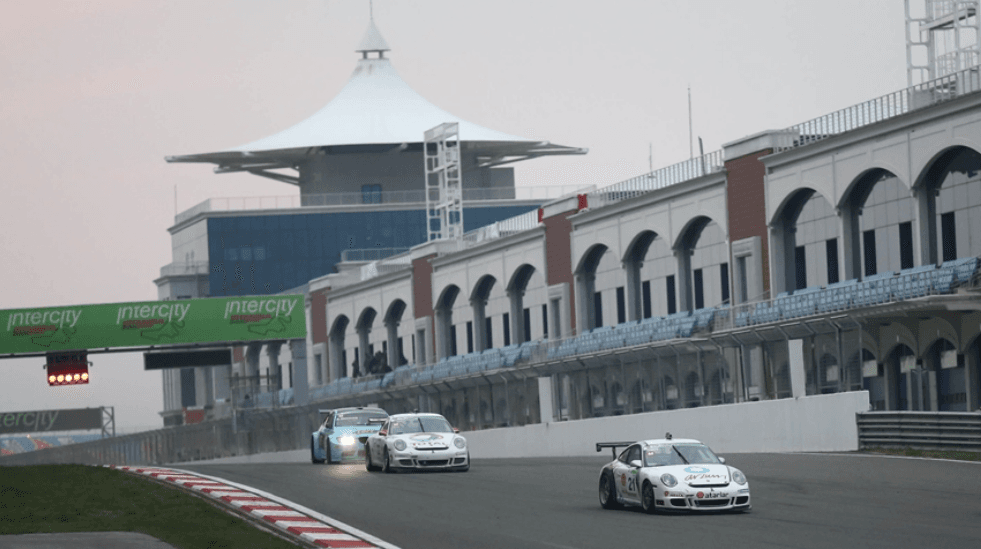
After its removal from the Formula 1 calendar, the operating rights and naming rights of İstanbul Park were acquired in 2012 by Intercity Group, a vehicle rental company. Following renovations and investments in 2018, the facility was transformed into a comprehensive center focused on the automotive industry, motorsports, and road safety. As of 2024, the operation of the track is managed by the Turkish Automobile Sports Federation (TOSFED).
The most distinctive technical feature of İstanbul Park is that the racing cars travel in an anti-clockwise direction. At its 2005 opening, it joined San Marino and Brazil as one of the few circuits on the Formula 1 calendar to run counter-clockwise. Originally designed to run clockwise, the direction was reversed by designer Hermann Tilke after recognizing that an anti-clockwise layout would present greater technical challenges for drivers. This directional choice imposes unusual physical demands on drivers’ neck muscles.
According to TOSFED records, the official length of the track is 5,338 meters. The width of the track varies between 14.5 and 21.5 meters.

İstanbul Park infographic (Generated by AI)
The track consists of 14 turns: eight left-hand and six right-hand corners. Some early sources listed the number of turns as 16. The longest straight on the circuit is 720 meters in length.
The start/finish straight has been measured at either 650 or 655.5 meters. With a maximum gradient of 8.145 percent, Formula 1 cars can reach maximum speeds between 320 and 330 km/h on this circuit.
The architectural infrastructure of the facility combines cultural elements with modern racing requirements. In accordance with safety standards, wide run-off areas, gravel traps, and Tecpro barriers have been installed at various points along the track to minimize the impact of potential accidents. The facility is also equipped with modern timing and scoring systems that enable real-time measurement of race data. Two seven-story VIP towers have been constructed at either end of the paddock area, offering commanding views of the circuit.
İstanbul Park is known for its elevation changes and combinations of turns with varying characteristics that challenge drivers to their limits.
The total spectator capacity of İstanbul Park has been reported in various sources as either 155,000 or 125,000. The facility includes ten numbered grandstands and three general admission areas consisting of unnumbered grassy terraces. Parking areas have a capacity for 20,000 vehicles.
Located directly opposite the pit lane on the start/finish straight, the Main Grandstand has a capacity of 25,000 and is the only covered grandstand on the circuit. Special areas for wheelchair access are provided on the lower level of this grandstand. Spectators here can view the race start, pit stop activities, the checkered flag, and the post-race podium ceremonies. It is divided internally into ticket categories: Platinum, Gold 1, Gold 2, and Gold 3.
All Silver Grandstands are open-air structures with elevated safety fencing.
Due to its natural sloping terrain, the facility offers general admission viewing areas with grassy slopes. Directly behind the Main Grandstand, a gathering area called F1 Village has been constructed, featuring merchandise stalls, event spaces, and large screens. Past events have offered spectators a wide menu ranging from standard food and beverage services to barbecued lamb. Shuttle bus services have been implemented to facilitate spectator movement within the complex.
Since its opening, İstanbul Park has hosted numerous prestigious international motorsport events.

F1 Istanbul GP (AA)
The sporting achievements at İstanbul Park reflect the circuit’s unique character. A full Formula 1 race distance of 58 laps covers a total of 309.396 kilometers.
The official race lap record at the circuit was set in 2005 by McLaren-Mercedes driver Juan Pablo Montoya with a time of 1:24.770 (approximately 140.866 mph), and remains unbroken. The fastest qualifying lap was recorded in 2021 by Mercedes driver Lewis Hamilton at 1:22.868 (approximately 144.100 mph).
Historically, Brazilian driver Felipe Massa won three consecutive races in 2006, 2007 and 2008, making him one of the circuit’s most successful drivers. Kimi Räikkönen won the inaugural 2005 Grand Prix, while Jenson Button claimed victory in 2009.
In the 2011 race, a record number of overtakes occurred on dry track conditions—the highest since 1983—with 80 pit stops recorded. Sebastian Vettel won the race.

İstanbul Park, Addition to the F1 Calendar (AA)
Prior to the 2020 race, after a nine-year absence, the original asphalt was completely replaced under Hermann Tilke’s supervision. However, heavy rain falling on the new and smooth asphalt, combined with Pirelli’s hard compound tires, created extremely low grip conditions, preventing any lap records from being broken. Lewis Hamilton won this challenging race, announcing his seventh World Championship title on this circuit and equalling Michael Schumacher’s record. Additionally, Lance Stroll became the 175th driver in Formula 1 history to lead a lap for the first time at this circuit.
Before the 2021 race, the track surface was cleaned with high-pressure water jets (water-blasting) to improve grip. Valtteri Bottas won the race under rainy conditions, setting the fastest lap of the event at 1:30.432. During the same race, Alpine driver Esteban Ocon became the first Formula 1 driver in 24 years to complete a race without making a pit stop, taking advantage of relaxed rules regarding wet-weather conditions.
Due to the physical distance between the facility and the city center, special transportation plans are implemented during race events. On busy days, private vehicle traffic causes severe congestion, so public transportation is strongly recommended. Istanbul Metropolitan Municipality and local authorities operate shuttle bus services from key locations such as Atatürk Airport, Taksim Square, Mecidiyeköy, Kadıköy, Bostancı and Pendik. An alternative route is offered via sea bus from Kabataş to Pendik on the European side, followed by a transfer to special shuttle buses. The facility’s proximity to Sabiha Gökçen International Airport provides a logistical advantage for international and domestic visitors arriving by air.
Aston Martin F1 Team. "Facts and Stats: Your guide to the Turkish Grand Prix." Accessed April 24, 2026. https://www.astonmartinf1.com/en-GB/news/feature/facts-and-stats-your-guide-to-the-turkish-grand-prix
Intercity Filo. "Intercity İstanbul Park." Accessed April 24, 2026. https://intercityfilo.com/en/corporate/intercity-istanbul-park
Istanbul Trails. "Don’t Miss the Turkish Formula One Grand Prix In Istanbul Park." Accessed April 24, 2026. https://www.istanbultrails.com/2009/05/dont-miss-the-turkish-formula-one-grand-prix-in-istanbul-park/
Motor Sport Magazine. "Istanbul Park map, history and latest races." Accessed April 24, 2026. https://www.motorsportmagazine.com/database/circuits/istanbul-park/
RacingCircuits.info. "Istanbul Park." Accessed April 24, 2026. https://www.racingcircuits.info/asia/turkey/istanbul-park.html
Rethinking The Future. "Istanbul Park: A Triumph of Modernity and Racing Mastery." Accessed April 24, 2026. https://www.re-thinkingthefuture.com/articles/istanbul-park/
TOSFED İstanbul Park. "Yarış Pisti." Accessed April 24, 2026. https://tosfedistanbulpark.com/yaris-pisti/
TurkeyGrandPrix.com. "Istanbul Park & Turkish GP." Accessed April 24, 2026. https://turkeygrandprix.com/istanbul-park-turkish-gp/

Opening Date(s) | 25 August 2005 | ||||||||
|---|---|---|---|---|---|---|---|---|---|
Current Operator | Turkish Automobile Sports Federation (TOSFED) | ||||||||
Longest Straight | 720 metres | ||||||||
Maximum Gradient | 8.145% | ||||||||
Track Width | Between 14.5 metres and 21.5 metres | ||||||||
Number of Corners | Total of 14 turns (8 left 6 right) | ||||||||
Race Direction | Counter-clockwise | ||||||||
Track Length | 5338 metres | ||||||||
Groundbreaking Date | 23 September 2003 | ||||||||
Seating Capacity | 155000 | ||||||||
Designer / Architect | Hermann Tilke | ||||||||
Coordinate(s) | 40.952266 -29.406099 | ||||||||
Location | Akfırat Türkiye Istanbul Tuzla / Pendik 34959 Göçbeyli Boulevard No:1 | ||||||||
Location and Geographic Features
History and Development
Construction and Early Years
Management and Ownership Changes
Architectural and Technical Features
General Layout and Direction
Turns and Straights
Infrastructure and Safety Systems
Detailed Sector and Turn Analysis
Grandstands, Spectator Areas and Capacity
Main Grandstand
Silver Grandstands
Open Areas and Other Facilities
International Events Hosted
Key Race Statistics and Records
Transportation and Logistics Planning