


This article was automatically translated from the original Turkish version.
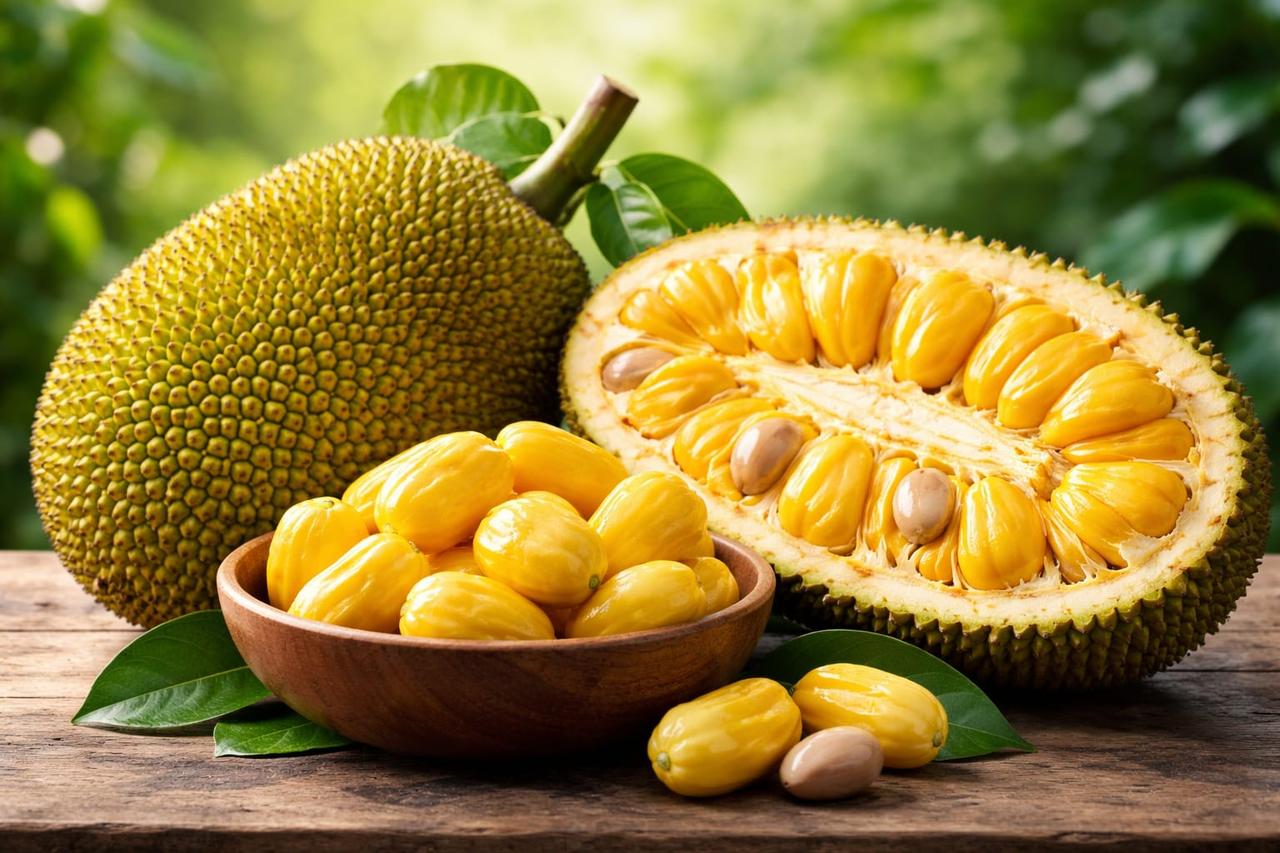
Jak Meyvesi (Yapay zeka ile oluşturulmuştur)
Jackfruit (Artocarpus heterophyllus) is a large tropical fruit belonging to the Moraceae family. It shares the same botanical family as the fig and breadfruit. Jackfruit grows on a tree sometimes referred to as the jack tree and is among the largest fruits produced by any tree in the world.

Jackfruit (Generated with AI Assistance)
Jackfruit has been widely consumed for centuries in South Asia, particularly in India, Bangladesh and Sri Lanka. Today it is commercially cultivated in South and Southeast Asia including Sri Lanka, Bangladesh and Malaysia as well as in Jamaica and Colombia. It can also be grown on a limited scale in Hawaiʻi southern Florida and the Caribbean. A significant portion of jackfruit produced in Asia and South America is consumed locally while some is processed and exported.
Fresh jackfruit has a large green spiky rind. When ripe it emits a sweet slightly fermented aroma. The fruit flesh is green when unripe and turns through shades of yellowish green to yellowish brown as it ripens. An unripe fruit produces a dull sound when tapped while a ripe fruit gives a hollow sound.
Unripe jackfruit has a neutral taste and a firm fibrous texture. Ripe jackfruit has a distinctive intense aroma with a sweet flavor profile featuring notes of mango pineapple and soft banana. Its fibrous texture can give it a meat-like consistency especially when cooked.
Jackfruit contains antioxidants such as flavonoids and lignans. These compounds are reported to help protect cells against oxidative stress and inflammation. The fruit also provides various vitamins and minerals.
Some studies suggest that jackfruit and especially extracts from its leaves and rind may influence blood sugar levels. The fruit is noted to have a low glycemic index. Research indicates that leaf extracts may help lower fasting blood sugar levels and that the rind may inhibit the conversion of fats and complex carbohydrates into sugar.
Additionally research exists suggesting that extracts from jackfruit leaves may support wound healing and that the fruit and its derivatives may exhibit anti-inflammatory antibacterial and antifungal properties. Jackfruit has been traditionally used in folk medicine for antimicrobial purposes.
Unripe jackfruit is preferred for savory dishes while ripe fruit is used in sweet recipes. Fresh jackfruit can be stored at room temperature for about five days or in the refrigerator for up to six weeks. Due to its difficult preparation and sticky nature canned products are also widely preferred.
Jackfruit cultivation is generally considered sustainable. The trees are hardy and relatively resistant to pests and therefore require minimal agricultural inputs. Although insecticides may be used in commercial production certified organic products are available. Jackfruit trees are noted to have relatively low water requirements.
In the United States fresh locally grown jackfruit is available during summer and early autumn particularly in Hawaiʻi and southern Florida.
The content in this article is provided solely for general encyclopedic informational purposes. The information here should not be used for diagnosis treatment or medical advice. Always consult a physician or qualified healthcare professional before making any health-related decisions. The author and KÜRE Encyclopedia assume no responsibility for any consequences arising from the use of this information for diagnostic or therapeutic purposes.
Cleveland Clinic. “What Is Jackfruit and Is It Healthy?” Health Essentials. Accessed February 11, 2026. https://health.clevelandclinic.org/what-is-jackfruit-and-is-it-healthy
FoodPrint. "Jackfruit." Real Food Encyclopedia. Accessed February 11, 2026. https://foodprint.org/real-food/jackfruit/

Jak Meyvesi (Yapay zeka ile oluşturulmuştur)
No Discussion Added Yet
Start discussion for "Jackfruit (Artocarpus heterophyllus)" article
Origin and Distribution
Physical Characteristics
Taste and Texture
Nutritional Content and Components
Health-Related Research
Purchasing and Storage
Sustainability
Seasonality