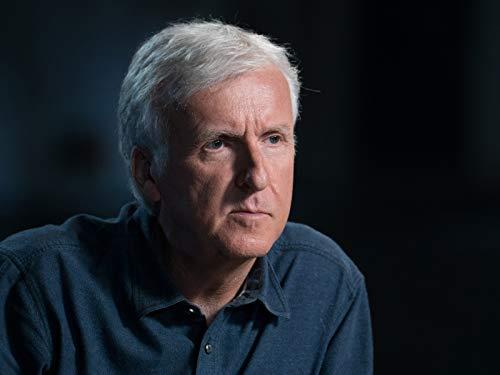
+1 More

Full Name | James Francis Cameron | ||||||||
|---|---|---|---|---|---|---|---|---|---|
Date of Birth | August 16 1954 | ||||||||
Place of Birth | Kapuskasing, Ontario Canada | ||||||||
Nationality | Canadian | ||||||||
Occupation(s) | Film Director Documentarian Producer Screenwriter | ||||||||
Education | Fullerton Junior College (Physics) | ||||||||
First Directorial Work | Xenogenesis (1978 - short film) | ||||||||
Notable Films | The Terminator, Aliens, Titanic Avatar | ||||||||
Award(s) | 1 Emmy among many other awards 3 Oscars 2 Golden Globes | ||||||||
James Francis Cameron is a Canadian film director, screenwriter, producer, and documentarian. He was born in Ontario, Canada, in 1954. He began his career in the 1980s and became known for films such as The Terminator (1984), Aliens (1986), The Abyss (1989), Titanic (1997), and Avatar (2009). The visual effects techniques and 3D technologies he developed had a significant impact on the film industry. His films have achieved international box-office success and have been honored with numerous awards. Cameron has also contributed to scientific and environmental work through his ocean explorations and documentary projects.
James Cameron was born on August 16, 1954, in Kapuskasing, Ontario, Canada. He spent his childhood years in the village of Chippawa, near Niagara Falls. In 1971, he moved with his family to the United States, settling in Brea, California. He studied physics at Fullerton Junior College; during this period, he also worked as a machinist and later as a truck driver. In 1978, he quit his job as a truck driver and, with financial backing from local dentists, he shot a short film in 35mm format.
James Cameron began his directing career in 1982 with the film Piranha Part Two: The Spawning. He then directed The Terminator in 1984. Following that production, he directed the films Aliens (1986), The Abyss (1989), Terminator 2: Judgment Day (1991), and True Lies (1994). He served as the director for Titanic in 1997, Avatar in 2009, and Avatar: The Way of Water in 2022. He has also directed documentary projects, including James Cameron's Expedition: Bismarck (2002), Ghosts of the Abyss (2003), and Aliens of the Deep (2005). It was announced that he is directing the film Avatar: Fire and Ash, which is planned for release in 2025.

James Cameron,,Sigourney Weaver Aliens, 1986 (IMDb)

James Cameron Leonardo DiCaprio and Kate Winslet in Titanic, 1997 (IMDb)
In addition to directing, James Cameron has also served as a screenwriter and producer on many films. In 1983, he wrote the screenplays for Rambo: First Blood Part II, Aliens, and The Terminator. Other productions where he worked as a screenwriter include films such as Titanic (1997), Avatar (2009), Alita: Battle Angel (2019), Terminator: Dark Fate (2019), and Avatar: The Way of Water (2022).
As a producer, he was involved in projects such as Strange Days (1995), Solaris (2002), Avatar (2009), Aliens of the Deep (2005), Sanctum (2011), Alita: Battle Angel (2019), and Avatar: Fire and Ash (2025). He also served as an executive producer on television projects, including Not Reality TV (2016), Titanic: The Final Word with James Cameron (2012), and AMC Visionaries: James Cameron's Story of Science Fiction (2018).
Throughout his career, James Cameron has pioneered innovative work in cinema technology. He developed groundbreaking techniques in the fields of visual effects and 3D cinema. Terminator 2: Judgment Day (1991) marked a significant milestone in the use of digital visual effects. The films Titanic (1997) and Avatar (2009) stood out as productions that integrated advanced CGI and performance capture technologies. The special 3D camera systems developed for Avatar were later used in documentary productions as well. Cameron co-designed these systems with Vince Pace, ushering in a new era in cinematography.
In addition to his work in cinema, James Cameron has also distinguished himself as a contributor to scientific projects and institutions. An amateur diver since 1969, Cameron shifted his focus in this area to deep-sea exploration starting in the 1990s. In 1995, as part of the preparations for the film Titanic, he completed a total of 12 manned dives to the Titanic wreck. These experiences led him to create documentary productions based on scientific discovery.
He founded the production company Earthship Productions to develop underwater imaging systems. He used his self-developed 3D camera systems in projects such as James Cameron’s Expedition: Bismarck (2002), Ghosts of the Abyss (2003), and Aliens of the Deep (2005).
Cameron also took an interest in space exploration. He served on NASA's advisory council for three years. In 2011, he became a co-investigator for the first 3D motion imaging camera designed to operate on another planet, which was intended for use in the Mars Science Laboratory (MSL) mission sent to Mars.
Of course, here is the translation of the text about James Cameron's awards and achievements.
Throughout his career, James Cameron has been honored with numerous national and international awards for both his artistic and technical achievements. The films he directed have stood out for their box-office success and the technological innovations they brought to the film industry, winning many prestigious awards.
IMDb. “Awards”. IMDb. Accessed October 10, 2025. https://www.imdb.com/name/nm0000116/awards/?ref_=nm_awd
IMDb. “Biography”. IMDb. Accessed October 10, 2025.. https://www.imdb.com/name/nm0000116/bio/
IMDb. “James Cameron”. IMDb. Accessed October 10, 2025. https://www.imdb.com/name/nm0000116/
IMDb. “James Cameron - Photos”. IMDb. Accessed October 10, 2025. https://www.imdb.com/name/nm0000116/mediaviewer/rm1836333313/?ref_=nmmi_mi_1_1
IMDb. “James Cameron Leonardo DiCaprio and Kate Winslet in Titanic (1997) - Photos”. IMDb. Accessed October 10, 2025. https://www.imdb.com/name/nm0000116/mediaviewer/rm2807991808/?ref_=nmmi_mi_9_2
IMDb. “James Cameron Sigourney Weaver Yaratık 2: Yaratığın Dönüşü (1986) - Photos”. IMDb. Accessed October 10, 2025. https://www.imdb.com/name/nm0000116/mediaviewer/rm1699286784/?ref_=nmmi_mi_3_1
IMDb. “James Cameron Story of Sicence Fiction (2018) - Photos”. IMDb. Accessed October 10, 2025. https://www.imdb.com/name/nm0000116/mediaviewer/rm1587048448/?ref_=nmmi_mi_1_3
MUBI. “JAMES CAMERON”. mubi.com. Accessed October 10, 2025. https://mubi.com/en/cast/james-cameron
X PRIZE. “JAMES CAMERON”. xprize.org. Accessed October 10, 2025. https://www.xprize.org/about/people/james-cameron


Full Name | James Francis Cameron | ||||||||
|---|---|---|---|---|---|---|---|---|---|
Date of Birth | August 16 1954 | ||||||||
Place of Birth | Kapuskasing, Ontario Canada | ||||||||
Nationality | Canadian | ||||||||
Occupation(s) | Film Director Documentarian Producer Screenwriter | ||||||||
Education | Fullerton Junior College (Physics) | ||||||||
First Directorial Work | Xenogenesis (1978 - short film) | ||||||||
Notable Films | The Terminator, Aliens, Titanic Avatar | ||||||||
Award(s) | 1 Emmy among many other awards 3 Oscars 2 Golden Globes | ||||||||
Life and Education
Directing Career
Filmography
Screenwriting and Producing Work
Contributions and Innovative Approaches
Scientific and Institutional Involvements
Awards and Achievements
Other Notable Awards
This article was created with the support of artificial intelligence.