


This article was automatically translated from the original Turkish version.
+1 More
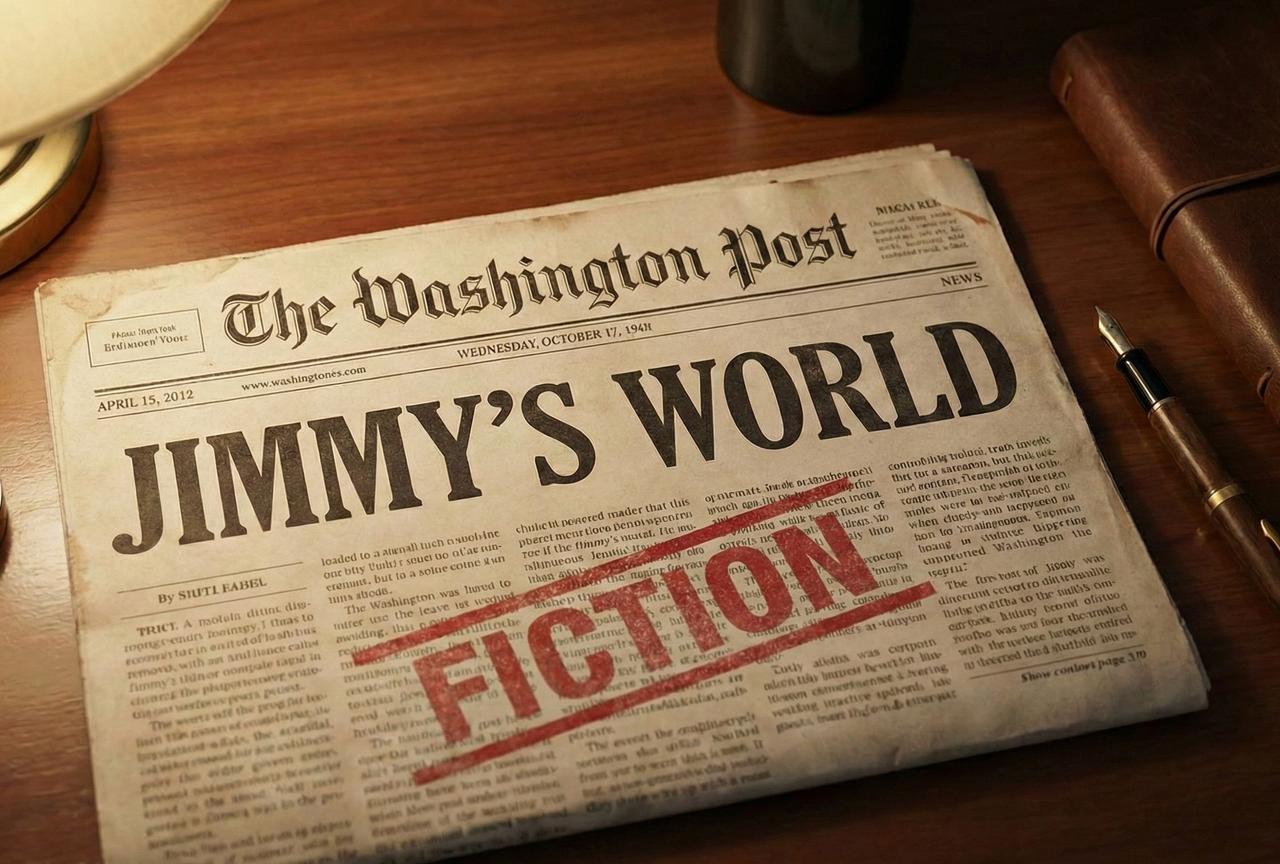
Generated by Artificial Intelligence
Janet Cooke Scandal
Award(s) | Pulitzer Prize (Announcement date: 13 April 1981) | ||||||||
|---|---|---|---|---|---|---|---|---|---|
Publication Date | 28 September 1980 | ||||||||
Outcome | Janet Cooke resigned, returned the Pulitzer Prize, and apologized to the public | ||||||||
Confession Date | 15 April 1981 | ||||||||
Reason for Emergence | The discovery of falsehoods in Cooke's resume examined by Associated Press and The Toledo Blade (Vassar graduation and language proficiency) | ||||||||
Headline of the News | Jimmy's World | ||||||||
The Janet Cooke Scandal is one of the most significant ethical violations in American journalistic history, arising when Janet Cooke, a reporter for The Washington Post, won the Pulitzer Prize for her article titled Jimmy's World and it was later revealed that the story was fabricated. The scandal triggered extensive debates on journalistic ethics, source verification procedures, and editorial oversight mechanisms.【1】
Janet Cooke applied to The Washington Post in 1979. In her application, she claimed to have graduated from Vassar College magna cum laude, studied at the Sorbonne University, and been fluent in French, Spanish, Portuguese, and Italian. Subsequent investigations revealed that Cooke had attended Vassar for only one year, graduated from the University of Toledo, and lacked proficiency in the languages she claimed to speak.【2】
During the hiring process, Cooke made a strong impression on The Washington Post editors. The paper’s managing editor Ben Bradlee and other interviewers were impressed by her intelligence and writing ability, but reference checks were conducted superficially. It has been noted that the newspaper’s policies at the time aimed at increasing the employment of women and minorities, which influenced the hiring process.【3】
In 1980, Cooke began researching heroin addiction in Washington D.C. During early interviews with editors, she mentioned an eight-year-old heroin addict, and the story was encouraged as a potential front-page feature. After prolonged investigation, Cooke claimed to have located a child she named "Jimmy".【4】
During the article’s preparation, Cooke stated she had interviewed Jimmy’s mother and her boyfriend, “Ron,” who she claimed had been witnessed injecting heroin into the child. Citing the need to protect her sources, Cooke refused to disclose the child’s real identity or address to editors, who accepted this request for confidentiality. Milton Coleman, one of the paper’s editors, trusted the authenticity of the story based on the realism of the details and quotations in the draft.【5】
The article titled Jimmy's World was published on the front page of The Washington Post on 28 September 1980. It contained striking details, such as describing how the heroin needle slid into the child’s skin “like a straw dipped into fresh pudding.”【6】
The article generated widespread public outcry after publication. Washington D.C. Mayor Marion Barry and the police chief launched an extensive search to locate and treat Jimmy. Despite intensive efforts by police and social services, Jimmy was never found. First Lady Nancy Reagan also expressed public concern and sorrow over the story.【7】
Soon after publication, doubts emerged both within and outside the newspaper. Some reporters and editors found it implausible that Cooke could move freely through a ghetto and witness a drug dealer injecting heroin into a child in front of a journalist. Cooke’s colleague Courtland Milloy visited the neighborhood she claimed Jimmy lived in and, realizing Cooke was unfamiliar with the area, relayed his suspicions to editors.【8】
Nevertheless, the newspaper’s management continued to defend the story. Bob Woodward and other senior editors adopted the reflexive stance of “protecting the source and standing by the reporter,” similar to their approach during the Watergate scandal. Suspicions were dismissed as professional jealousy.【9】
Despite mounting doubts, Jimmy's World was nominated for the Pulitzer Prize and was announced as the winner on 13 April 1981. The scandal erupted immediately after the award announcement. The Associated Press (AP) and Cooke’s former employer, The Toledo Blade, reviewed the biography Cooke had submitted to the Pulitzer Committee and identified inconsistencies.【10】
AP discovered that Cooke’s claims regarding her Vassar degree and language proficiency contradicted records at The Toledo Blade. When these inconsistencies were brought to the attention of The Washington Post editors, the newspaper’s management began to question the credibility of Cooke’s biography—and by extension, the authenticity of her article.【11】
On 14 April 1981, The Washington Post editors Ben Bradlee, Bob Woodward, Howard Simons, and David Maraniss interrogated Janet Cooke. In the initial phase, the falsehoods regarding her Vassar diploma and language skills were exposed. Bradlee tested Cooke’s claimed fluency in Portuguese and Italian, and she was unable to speak either language.【12】
As the interrogation progressed, pressure mounted regarding the truthfulness of the “Jimmy” story, but Cooke initially insisted it was accurate. Editors took her to the house she claimed Jimmy lived in, but she could not locate it. After an all-night interrogation, Cooke, alone with David Maraniss, confessed: “Jimmy doesn’t exist and there is no such family. It was fiction.”【13】
On 15 April 1981, Cooke submitted her resignation and returned the Pulitzer Prize. Following the incident, The Washington Post published a comprehensive report prepared by Ombudsman Bill Green, examining every detail of the scandal, editorial errors, and failures in oversight. This report ensured transparent communication with the public and underscored the importance of internal accountability mechanisms in journalism, such as the ombudsman role.【14】
Green, Bill. "THE PLAYERS: It Wasn't a Game." *Washington Post*, April 19, 1981. Accessed January 28, 2026. https://sites.nd.edu/truth-and-politics/the-players/
Kidwell, Roland E., Jr. "'Small' Lies, Big Trouble: The Unfortunate Consequences of Résumé Padding, from Janet Cooke to George O'Leary." *Journal of Business Ethics* 51, no. 2 (May 2004): 175-184. Accessed January 28, 2026. https://www.jstor.org/stable/25379183?seq=1
Munson, Kenneth. "Handling and Preventing Journalistic Fraud: Janet Cooke, Stephen Glass, Jayson Blair." Bachelor's thesis, Lynchburg College, 2006. Accessed January 28, 2026. https://digitalshowcase.lynchburg.edu/cgi/viewcontent.cgi?article=1019&context=utcp
[1]
Kenneth Munson, "Handling and Preventing Journalistic Fraud: Janet Cooke, Stephen Glass, Jayson Blair" (Thesis, Lynchburg College, 2006), 4, 17. https://digitalshowcase.lynchburg.edu/cgi/viewcontent.cgi?article=1019&context=utcp
[2]
Bill Green, "The Players: It Wasn't a Game," The Washington Post, 19 April 1981. https://sites.nd.edu/truth-and-politics/the-players/
Kenneth Munson, "Handling and Preventing Journalistic Fraud: Janet Cooke, Stephen Glass, Jayson Blair" (Thesis, Lynchburg College, 2006), 17. https://digitalshowcase.lynchburg.edu/cgi/viewcontent.cgi?article=1019&context=utcp
Roland E. Kidwell, "'Small' Lies, Big Trouble: The Unfortunate Consequences of Résumé Padding, from Janet Cooke to George O'Leary," Journal of Business Ethics 51, no. 2 (May 2004): 5,6. https://www.jstor.org/stable/25379183?seq=1
[3]
Bill Green, "The Players: It Wasn't a Game," The Washington Post, 19 April 1981. https://sites.nd.edu/truth-and-politics/the-players/
Kenneth Munson, "Handling and Preventing Journalistic Fraud: Janet Cooke, Stephen Glass, Jayson Blair" (Thesis, Lynchburg College, 2006), 17. https://digitalshowcase.lynchburg.edu/cgi/viewcontent.cgi?article=1019&context=utcp
Roland E. Kidwell, "'Small' Lies, Big Trouble: The Unfortunate Consequences of Résumé Padding, from Janet Cooke to George O'Leary," Journal of Business Ethics 51, no. 2 (May 2004): 5. https://www.jstor.org/stable/25379183?seq=1
[4]
Roland E. Kidwell, "'Small' Lies, Big Trouble: The Unfortunate Consequences of Résumé Padding, from Janet Cooke to George O'Leary," Journal of Business Ethics 51, no. 2 (May 2004): 5. https://www.jstor.org/stable/25379183?seq=1
Kenneth Munson, "Handling and Preventing Journalistic Fraud: Janet Cooke, Stephen Glass, Jayson Blair" (Thesis, Lynchburg College, 2006), 18. https://digitalshowcase.lynchburg.edu/cgi/viewcontent.cgi?article=1019&context=utcp
[5]
Kenneth Munson, "Handling and Preventing Journalistic Fraud: Janet Cooke, Stephen Glass, Jayson Blair" (Thesis, Lynchburg College, 2006), 18, 19. https://digitalshowcase.lynchburg.edu/cgi/viewcontent.cgi?article=1019&context=utcp
Bill Green, "The Players: It Wasn't a Game," The Washington Post, 19 April 1981. https://sites.nd.edu/truth-and-politics/the-players/
[6]
Kenneth Munson, "Handling and Preventing Journalistic Fraud: Janet Cooke, Stephen Glass, Jayson Blair" (Thesis, Lynchburg College, 2006), 18. https://digitalshowcase.lynchburg.edu/cgi/viewcontent.cgi?article=1019&context=utcp
[7]
Kenneth Munson, "Handling and Preventing Journalistic Fraud: Janet Cooke, Stephen Glass, Jayson Blair" (Thesis, Lynchburg College, 2006), 18, 19. https://digitalshowcase.lynchburg.edu/cgi/viewcontent.cgi?article=1019&context=utcp
Bill Green, "The Players: It Wasn't a Game," The Washington Post, 19 April 1981. https://sites.nd.edu/truth-and-politics/the-players/
[8]
Kenneth Munson, "Handling and Preventing Journalistic Fraud: Janet Cooke, Stephen Glass, Jayson Blair" (Thesis, Lynchburg College, 2006), 20. https://digitalshowcase.lynchburg.edu/cgi/viewcontent.cgi?article=1019&context=utcp
Bill Green, "The Players: It Wasn't a Game," The Washington Post, 19 April 1981. https://sites.nd.edu/truth-and-politics/the-players/
[9]
Kenneth Munson, "Handling and Preventing Journalistic Fraud: Janet Cooke, Stephen Glass, Jayson Blair" (Thesis, Lynchburg College, 2006), 20, 22. https://digitalshowcase.lynchburg.edu/cgi/viewcontent.cgi?article=1019&context=utcp
Bill Green, "The Players: It Wasn't a Game," The Washington Post, 19 April 1981. https://sites.nd.edu/truth-and-politics/the-players/
[10]
Kenneth Munson, "Handling and Preventing Journalistic Fraud: Janet Cooke, Stephen Glass, Jayson Blair" (Thesis, Lynchburg College, 2006), 19. https://digitalshowcase.lynchburg.edu/cgi/viewcontent.cgi?article=1019&context=utcp
Bill Green, "The Players: It Wasn't a Game," The Washington Post, 19 April 1981. https://sites.nd.edu/truth-and-politics/the-players/
[11]
Kenneth Munson, "Handling and Preventing Journalistic Fraud: Janet Cooke, Stephen Glass, Jayson Blair" (Thesis, Lynchburg College, 2006), 19. https://digitalshowcase.lynchburg.edu/cgi/viewcontent.cgi?article=1019&context=utcp
Bill Green, "The Players: It Wasn't a Game," The Washington Post, 19 April 1981. https://sites.nd.edu/truth-and-politics/the-players/
[12]
Bill Green, "The Players: It Wasn't a Game," The Washington Post, 19 April 1981.
[13]
Bill Green, "The Players: It Wasn't a Game," The Washington Post, 19 April 1981. https://sites.nd.edu/truth-and-politics/the-players/
[14]
Roland E. Kidwell, "'Small' Lies, Big Trouble: The Unfortunate Consequences of Résumé Padding, from Janet Cooke to George O'Leary," Journal of Business Ethics 51, no. 2 (May 2004): 2. https://www.jstor.org/stable/25379183?seq=1
Bill Green, "The Players: It Wasn't a Game," The Washington Post, 19 April 1981.
Kenneth Munson, "Handling and Preventing Journalistic Fraud: Janet Cooke, Stephen Glass, Jayson Blair" (Thesis, Lynchburg College, 2006), 6, 22. https://digitalshowcase.lynchburg.edu/cgi/viewcontent.cgi?article=1019&context=utcp

Generated by Artificial Intelligence
Janet Cooke Scandal
Award(s) | Pulitzer Prize (Announcement date: 13 April 1981) | ||||||||
|---|---|---|---|---|---|---|---|---|---|
Publication Date | 28 September 1980 | ||||||||
Outcome | Janet Cooke resigned, returned the Pulitzer Prize, and apologized to the public | ||||||||
Confession Date | 15 April 1981 | ||||||||
Reason for Emergence | The discovery of falsehoods in Cooke's resume examined by Associated Press and The Toledo Blade (Vassar graduation and language proficiency) | ||||||||
Headline of the News | Jimmy's World | ||||||||
No Discussion Added Yet
Start discussion for "Janet Cooke Scandal" article
Background and Hiring Process
Preparation of the "Jimmy's World" Article
Publication and Public Reaction
Internal Doubts and Defense
Pulitzer Prize and Revelation of the Truth
Investigation, Confession, and Resignation