

 Recently Added:
This article was automatically translated from the original Turkish version.
Japan’s Kumamoto Prefecture, located on the island of Kyushu in the southwestern part of Japan, was struck by a severe earthquake with a magnitude of 7.1 on 28 July 2026. The Japan Meteorological Agency (JMA) announced that the earthquake occurred at 16:27 local time approximately 10 kilometers deep near the Uki and Hikawa regions. The shaking was not limited to Kumamoto; it was strongly felt across a wide area of the prefecture including Yatsushiro Uto and Mashiki. Following the earthquake, a tsunami warning was issued for the southwestern coast of Kyushu due to tsunami risk but was lifted about two hours later as the expected wave height at sea level remained limited. Authorities reported that numerous aftershocks with magnitudes ranging from 4 to 6.1 occurred after the main quake and urged residents to remain vigilant for possible new earthquakes.
Earthquake in Japan (July 28, 2026) Anadolu Agency
Immediately after the earthquake the Japanese government activated its emergency response mechanism and established a Crisis Management Center at the Prime Minister’s Official Residence. Prime Minister Takaiçi Sanae stated in an immediate statement that the full extent of casualties and material damage had not yet been determined but that numerous reports of injuries had been received. Takaiçi confirmed that the government had mobilized all available resources for disaster response and that a team from the Cabinet had been dispatched to the region. Defense Minister Koizumi Shinji announced that the Ground Maritime and Air Self-Defense Forces had been deployed to the area to assist in search and rescue operations and that military aircraft and helicopters were conducting aerial damage assessments. Approximately 300000 people were urged to go to evacuation centers and hundreds of soldiers were assigned to support rescue efforts.
The earthquake caused widespread damage to transportation energy and industrial infrastructure across Kumamoto. Shinkansen high-speed rail services and local railway lines in the Kyushu region were suspended for safety reasons. Kumamoto Airport’s runway was temporarily closed and numerous flights were canceled. Kyushu Electric Power Company (KyuDen) reported that power outages affected approximately 48000 households due to the earthquake. Disruptions were also reported in mobile communication infrastructure due to power outages and damage to transmission lines. However the Nuclear Regulation Authority of Japan announced that no safety issues or radiation leaks were detected at the Genkai nuclear power plant in Saga Prefecture and the Sendai nuclear power plant in Kagoshima Prefecture.
Earthquake in Japan (28 July 2026) (Anadolu Ajansı)
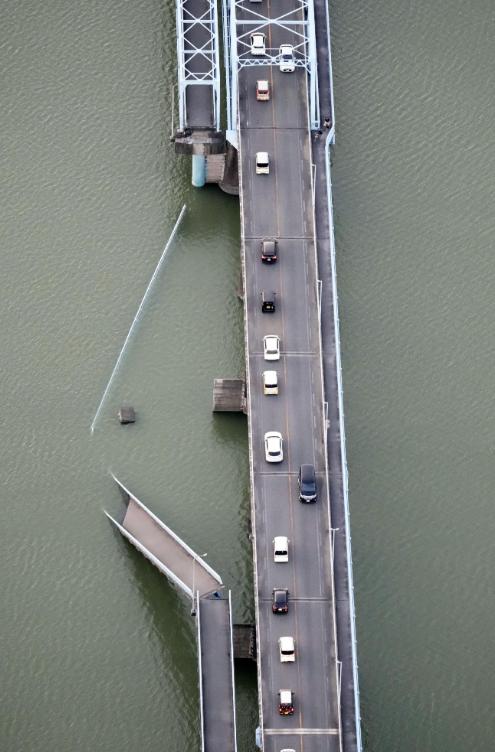
The earthquake also caused destruction to numerous historical structures and critical transportation nodes. Some buildings at Kumamoto Castle and Yatsushiro Shrine collapsed. A section of the Kyushu Expressway viaduct collapsed after its connection points separated. A freight train derailed at Yatsushiro Station. A chimney at Nippon Paper’s Yatsushiro facility collapsed and extensive damage was reported to roads and bridges across the prefecture. The Japan Meteorological Agency warned residents in areas prone to landslides to remain cautious for at least one week due to the risk of aftershocks. This earthquake is recorded as the first magnitude 7 earthquake to occur in Japan since the Noto Peninsula earthquake in January 2024.
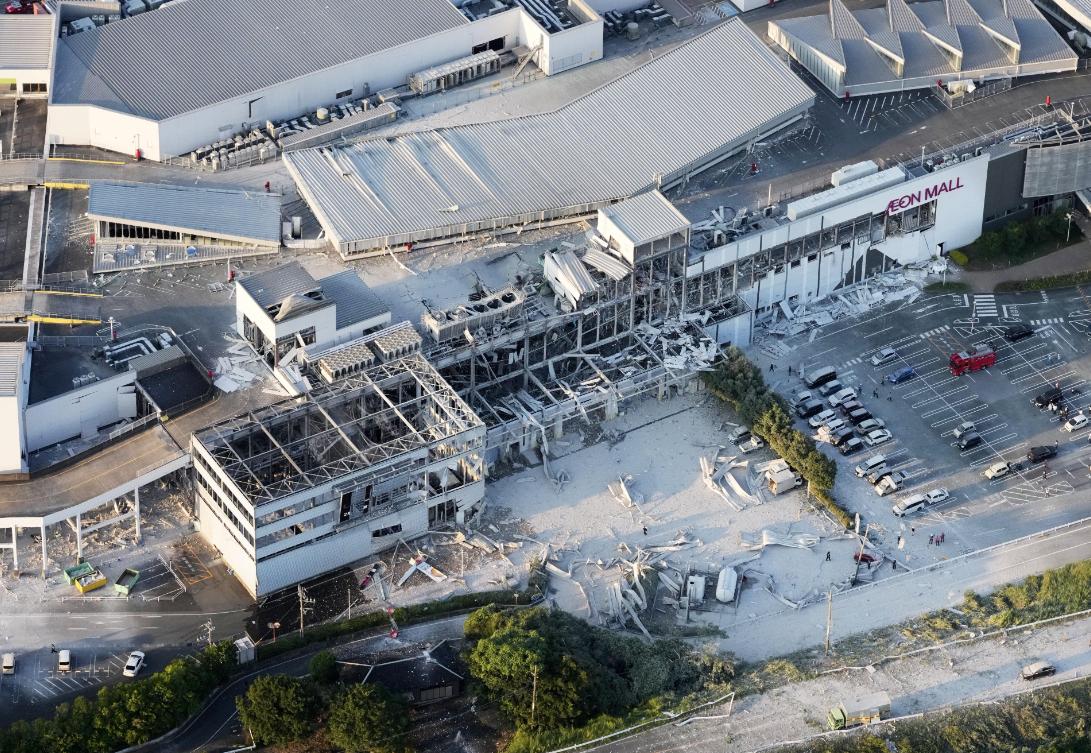
One of the sites suffering the most severe damage after the earthquake was the Aeon shopping center in Kumamoto Prefecture. A portion of the shopping center collapsed following an explosion that occurred after the initial shaking rendering a major part of the building unusable. According to reports from Reuters and Japanese media outlets numerous people were trapped under the debris at the time of the incident. Police preliminary assessments indicated that “many” individuals may have lost their lives under the rubble. Firefighting teams launched a large-scale operation to rescue people trapped inside.
Earthquake in Japan (28 July 2026) (Anadolu Ajansı))
Aeon the company operating the shopping center stated that customers and employees were evacuated immediately after the initial earthquake but that the cause of the subsequent explosion had not yet been determined. Eyewitnesses speaking to news agencies described how dense smoke rising after the explosion engulfed the surrounding area and how debris scattered into the air created a visual effect resembling volcanic ashfall. Hospitals reported treating dozens of injured individuals while search and rescue teams continued efforts to reach those trapped under the debris. Authorities stated that the official casualty count would only be determined after rescue operations were completed.
Following the earthquake industrial facilities in Kumamoto and surrounding areas temporarily halted production for safety reasons. Taiwan Semiconductor Manufacturing Company (TSMC) one of the world’s largest semiconductor producers announced that it had evacuated personnel from its factory in Kumamoto. Similarly Tokyo Electron announced that it had suspended production at its two facilities in Kumamoto for at least one day while Honda reported a pause in manufacturing at its motorcycle plant. Other companies operating in the region such as Sony and Fujifilm were also reported to have evacuated their staff to safe areas. The earthquake is assessed to have temporarily disrupted industrial activities in Kumamoto which has become a critical hub in Japan’s global semiconductor supply chain.
Earthquake in Japan (28 July 2026) (Anadolu Ajansı)
Physical damage at industrial facilities also drew attention. At Nippon Paper’s Yatsushiro plant the collapse of a chimney left many workers unaccounted for and search and rescue operations were initiated. Many production facilities suspended operations due to power outages and infrastructure damage with concerns raised that disruptions in energy supply could negatively impact the production chain. Authorities stated that the full extent of damage to industrial facilities would be determined only after detailed technical inspections were completed.
Following the earthquake Japanese authorities implemented emergency measures to ensure public safety in transportation and public services. Shinkansen high-speed rail services and local railway lines in the Kyushu region were suspended. Kumamoto Airport’s runway was closed to traffic until safety inspections were completed. Numerous flights were canceled while others were diverted to nearby airports. Due to cracks in roads viaduct damage and bridge collapses many major transportation routes were closed to traffic and teams began repair work in affected areas.
Energy and communication infrastructure were also significantly affected by the earthquake. Kyushu Electric Power Company reported that approximately 48000 households lost power. Mobile communication operators KDDI and Docomo announced service disruptions in certain areas due to power outages and damage to transmission lines. However the Nuclear Regulation Authority of Japan assured the public that no abnormal conditions were detected at the Genkai nuclear power plant in Saga Prefecture or the Sendai nuclear power plant in Kagoshima Prefecture.
The Japan Meteorological Agency (JMA) announced that numerous aftershocks occurred after the main earthquake some exceeding magnitude 6. Kiyomoto Shinji Head of Earthquake and Tsunami Prevention Planning at the agency warned that strong aftershocks could occur over the coming week and urged residents to stay away from damaged buildings and to follow official alerts. He also highlighted that ground integrity had been compromised in areas affected by severe shaking increasing the risk of landslides.
Authorities noted that early warning and evacuation systems implemented after the earthquake functioned effectively. The tsunami warning was lifted approximately two hours after issuance due to the low expected wave height at sea level. However warnings were issued to residents in areas without electricity urging them to take precautions against heatstroke due to ongoing hot weather conditions. It was recalled that Japan located on the Pacific Ring of Fire is one of the world’s most seismically active countries and that disaster preparedness systems developed after the 2011 Tohoku earthquake and the 2016 Kumamoto earthquake were reactivated during this event.
Associated Press. “A magnitude 7.1 earthquake shakes part of southern Japan but no tsunami detected.” AP News, July 28, 2026. Accessed July 28, 2026.https://apnews.com/article/japan-earthquake-tsunami-09e6f40acbcc96053946c9c104e7a242
BBC News. “Widespread damage from magnitude 7.1 earthquake in south-west Japan.” BBC News, July 28, 2026. Accessed July 28, 2026.https://www.bbc.com/news/articles/cgewg24qgnjo
Euronews Türkçe. “Japonya'da 7,1 büyüklüğünde deprem: AVM çöktü, ölü ve yaralılar var.” Euronews Türkçe, July 28, 2026. Accessed July 28, 2026.https://tr.euronews.com/2026/07/28/japonyada-71-buyuklugunde-deprem-tsunami-uyarisi-kaldirildi
Reuters. “Powerful Quake Hits Southern Japan, Deaths Feared in Shopping Mall Blast.” Reuters, July 28, 2026. Accessed July 28, 2026.https://www.reuters.com/business/environment/magnitude-71-earthquake-hits-japans-kyushu-region-jma-says-2026-07-28/
A magnitude 7.1 earthquake in Kumamoto Prefecture, Japan, triggered widespread emergency response efforts across the country due to loss of life and severe damage to infrastructure. Official statements following the earthquake reported that the death toll had risen to 13 and at least 31 people were injured. Prime Minister Takaichi Sanae stated that search and rescue operations in the hardest-hit areas were ongoing without interruption, noting that individuals were still trapped under debris and that time was of the essence.
In the earthquake, the Aeon Mall shopping center and the Nippon Paper Yatsuşiro Factory in Kumamoto suffered severe damage. After an explosion at the shopping center, a fire caused the building’s roof to collapse, while the factory’s chimney was reported to have collapsed. Authorities announced that many people were trapped in both facilities and that multiple reports of missing persons had been received, with search and rescue teams intensively continuing debris removal efforts.
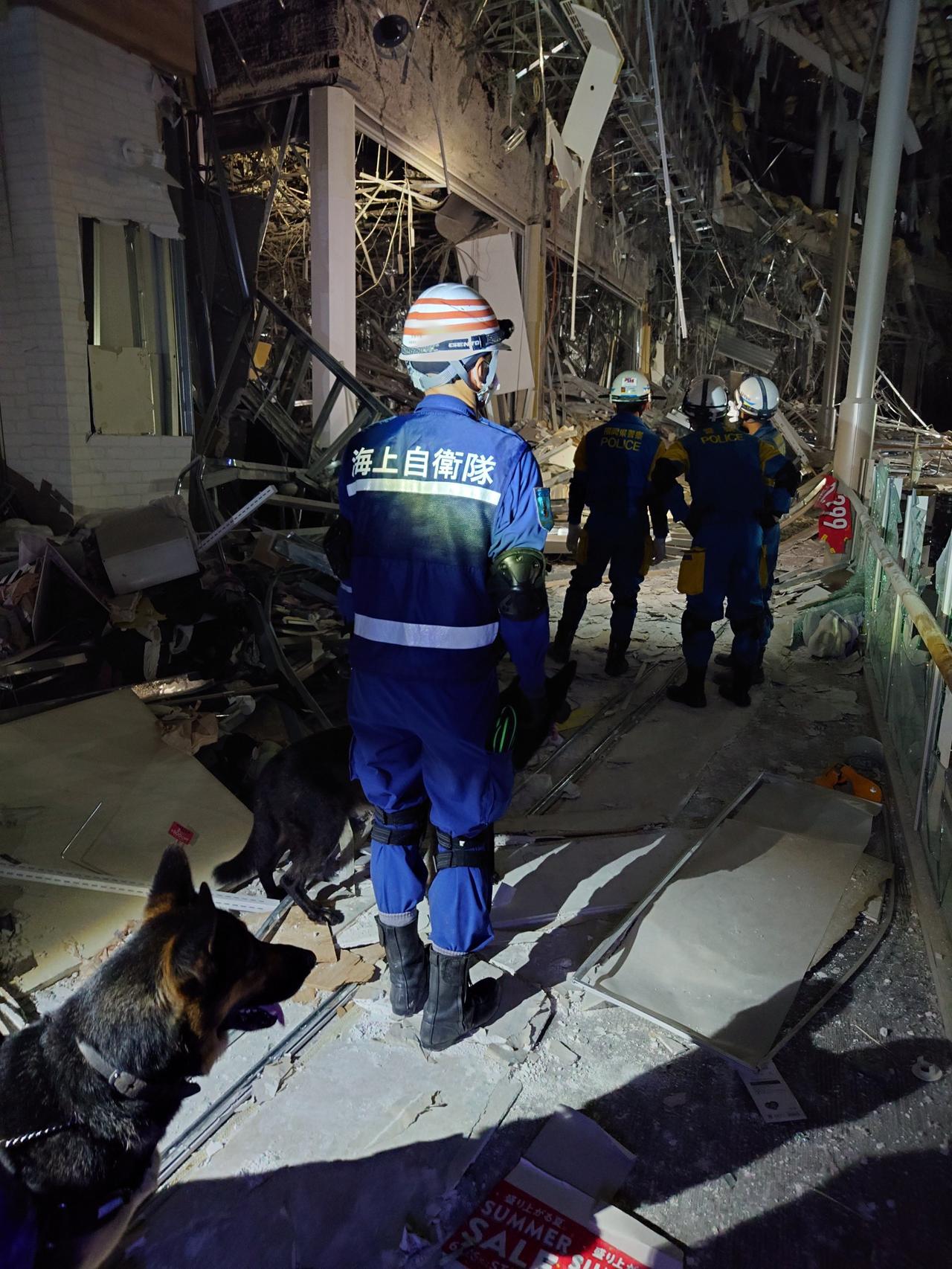
Search and Rescue Operations at the Shopping Center (29 July 2026) Anadolu Agency
Following the earthquake, approximately 10,000 people were relocated to 450 temporary evacuation centers across Kumamoto. To support search and rescue operations, approximately 4,600 personnel from Japan’s Self-Defense Forces and around 500 police officers from various prefectures were deployed to the disaster zone. Meanwhile, high-speed rail (Shinkansen) and local railway services in the Kyushu region were temporarily suspended, and Japan Airlines (JAL) and All Nippon Airways (ANA) canceled numerous flights.
Anadolu Ajansı. “Japonya'da 7,1 büyüklüğündeki depremde can kaybı 13'e yükseldi.” July 29, 2026. Accessed July 29, 2026.https://www.aa.com.tr/tr/dunya/japonyada-7-1-buyuklugundeki-depremde-can-kaybi-13e-yukseldi/4012075
Following the 7.1 magnitude earthquake that struck Kumamoto Prefecture on the island of Kyushu in Japan on 28 July 2026, the death toll continued to rise. On 30 July, Japanese Prime Minister Sanae Takaichi announced that the number of fatalities had increased to 30. The statement noted that forensic investigations were ongoing to determine direct causal links between some of the deaths and the earthquake.
Search and Rescue Operations Continuing in Türkiye (July 30, 2026) Anadolu Agency
Search and rescue operations continued in the affected region. Teams worked to reach individuals trapped under rubble in a collapsed shopping center and a damaged paper factory in Kumamoto. Assessments of damage to infrastructure were also ongoing, while services on the Kyushu Shinkansen high-speed rail line between Kumamoto and Kagoshima-Chuo stations were suspended for safety reasons.
Under disaster management protocols, thousands of people were evacuated and relocated to temporary shelters. According to data released by authorities on the morning of 30 July, more than 10,000 people remained in evacuation centers in areas affected by the earthquake. Efforts continued to assess the extent of damage to housing, power transmission lines, and transportation infrastructure.
Ongoing Search and Rescue Operations in Japan (30 July 2026) Anadolu Agency
The earthquake also caused significant disruptions to transportation and energy infrastructure. Services on the Kyushu Shinkansen high-speed rail line between Kumamoto and Kagoshima-Chuo stations were halted until safety inspections were completed, and damage occurred in numerous homes and power transmission lines.
Authorities continued to warn against entering damaged buildings due to the risk of aftershocks. Temporary shelters were established for citizens evacuated after the disaster. According to data released by authorities on the morning of 30 July, more than 10,000 people remained in evacuation centers. The Japanese government continued its support efforts to provide shelter food, healthcare and basic necessities to affected areas, while damage assessment surveys and evaluations for restoring infrastructure remained ongoing.
Anadolu Ajansı. “Death toll from earthquake in southwestern Japan rises to 30.” July 30, 2026. Accessed July 30, 2026.https://www.aa.com.tr/en/asia-pacific/death-toll-from-earthquake-in-southwestern-japan-rises-to-30/4013265

A magnitude 7.1 earthquake in Kumamoto Prefecture, Japan, caused widespread damage in the southwestern part of the country. Although a tsunami warning issued after the earthquake was lifted shortly afterward, an explosion occurred at the Aeon shopping center. With power outages, transportation halted and severe infrastructure damage, search and rescue operations continued in the region, and approximately 300,000 people were urged to evacuate.
No Discussion Added Yet
Start discussion for "Japan Kumamoto Earthquake (July 2026)" article
July 28, 2026
Casualties and Infrastructure Damage Caused by the Earthquake
July 28, 2026
Explosion at the Aeon Shopping Center and Search and Rescue Operations
July 28, 2026
Suspension of Industrial and Technology Production Activities
July 28, 2026
Emergency Measures in Transportation and Public Services
July 28, 2026
Warnings Regarding Aftershocks and New Disaster Risks