


This article was automatically translated from the original Turkish version.
+2 More
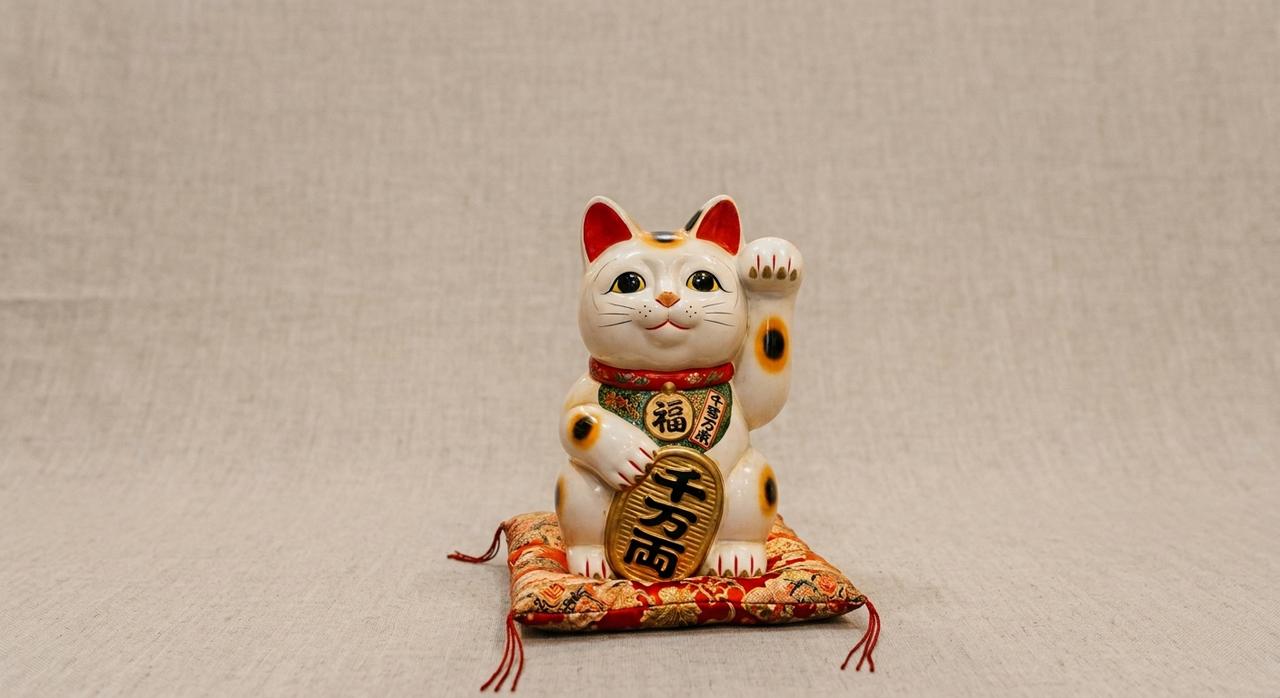
(Generated with Artificial Intelligence)
Japanese Lucky Cat (Maneki Neko)
Naming | Maneki Neko (招き猫 - Beckoning Cat) | ||||||||
|---|---|---|---|---|---|---|---|---|---|
Cultural Areas | Japanese Folklore Shintoism Buddhism | ||||||||
Religious Elements | Cat Shrines Cat Amulets (Neko Omamori) | ||||||||
Historical Development | Nara Period: Arrival of the Tang Cat in Japan (Shosoin/Todaiji) Edo Period: Craft Production, Gotokuji Legend (Ii Naotaka) Meiji Period: Mass Production, International Export, Koban Use | ||||||||
Symbolism | Right Paw: Home, Health and General Luck Left Paw: Workplace, Customers and Commercial Gain Colors: White (Happiness), Gold (Wealth), Black (Protection) | ||||||||
Important Centers | Tokoname (Aichi) Seto Imado (Tokyo) | ||||||||
Materials | Ceramic Porcelain Wood Clay | ||||||||
The Japanese lucky cat, (Maneki Neko) is a traditional lucky object (engimono) and feline figurine widely found in shops restaurants homes and digital media in Japanese and Asian cultures believed to bring luck financial gain health and protection to businesses and households.
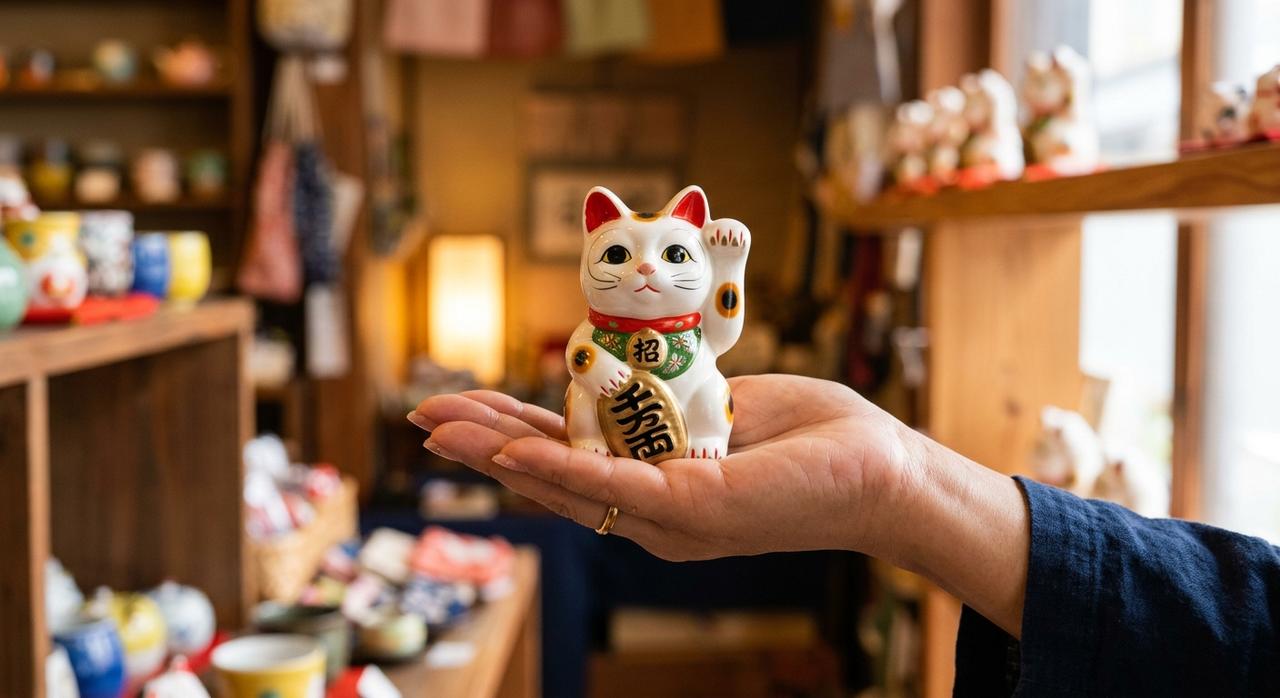
Maneki Neko Figürü (Yapay Zeka ile Oluşturulmuştur)
Cats believed to have been introduced from Korea to Japan during the Nara period (710–794) were valued for their ability to control rodents and gradually became domesticated pets featured in Japanese literature and art.【1】Buddhist monk Ganjin brought the "Tang cat" to the Shosoin treasury of Todaiji Temple initiating a protective role that eventually endowed cats with spiritual significance.【2】
This sanctification of cats gradually merged with Shinto traditions leading to the establishment of shrines dedicated to cats and their veneration in Shinto rituals. The development of a cat amulet (neko omamori) culture in major temples transformed cats into symbols that repel bad luck and invite protection and fortune.【3】
During the late Edo period (1615–1868) artisans began producing the first maneki neko figurines as auspicious objects of the engimono type. At this time the Imado kilns located along the banks of the Imado River in Edo now known as Tokyo and originally renowned for producing utilitarian stoneware developed simple maneki neko figurines in low-fired clay by the mid-19th century becoming the first manufacturers of this form. By the end of the 19th century this folk-style product spread nationwide as many potters added their own distinctive design variations to this new engimono form while others imitated popular kiln styles.
Maneki neko production developed distinct regional styles and material techniques over time:
Imado Kilns (Tokyo): In the mid-19th century kilns along the Imado River produced the first simple maneki neko examples from low-fired clay and this folk style spread nationwide by the end of the 19th century.【4】
Ceramic Porcelain and Mass Production: Towards the end of the Meiji period (1868–1912) manufacturers adopted plaster molds for mass production and began exporting the product to international markets. During this period renowned Seto and Kutani porcelain kilns joined production and materials such as bronze copper wood stone and iron were also used.【5】
Taisho Period (1912–1926): Seto kilns produced detailed models inspired by Japanese bobtail cats featuring elaborate decorations and decorative aprons.【6】
Aichi (Tokoname) Style Transformation: Kilns in Tokoname began production in the mid-20th century and have since become Japan’s largest maneki neko manufacturing center.【7】
Maneki neko figurines carry distinct symbolic meanings based on color size facial expression and accessories:
Paw Positions: A raised left paw symbolizes attracting customers and prosperity to businesses while a raised right paw signifies inviting health peace and good fortune to the home.
Color symbolism is as follows:
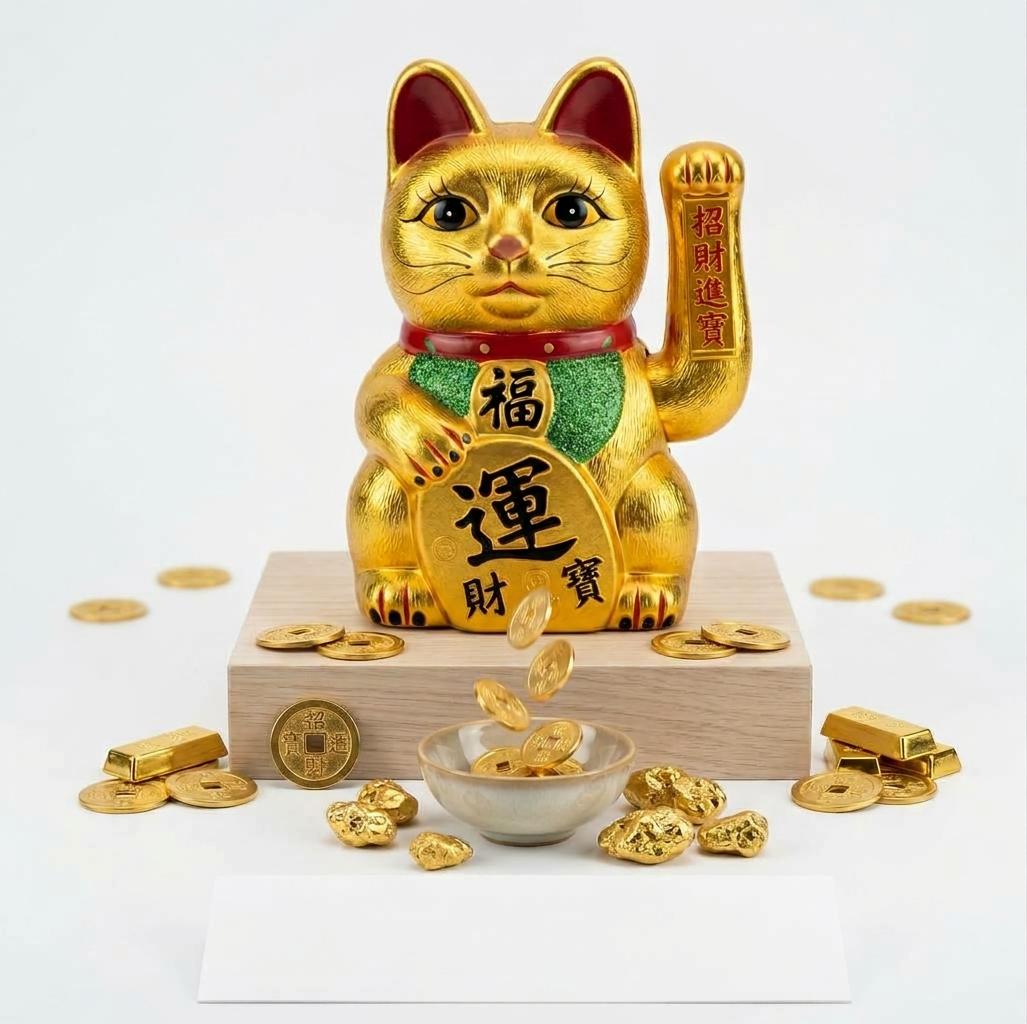
Golden Maneki Neko (Talih Kedisi) Figürü (Yapay Zeka ile Oluşturulmuştur)
White: Happiness and contentment.
Black: Warding off evil spirits and ensuring safety.
Gold: Financial gain wealth and luck.
Accessories and Evolution: Early designs featured only a bell or chime around the cat’s neck as seen in Utagawa Hiroshige’s 1852 woodblock print but during the Meiji period as economic prosperity increased the bell was replaced by large gold coins (koban). Aprons worn around the neck are also traditionally decorated with symbols of good fortune and abundance.
Originating as a local folk belief and auspicious object (engimono) during the Edo period the maneki neko gained global recognition during the Meiji period (1868–1912) as Japan underwent modernization and opened to the world. Advances in ceramic manufacturing and the opening of international trade channels enabled the export of these lucky figures beyond Japan.
Exported by Japanese manufacturers the maneki neko became especially widespread in Chinese restaurants and shops transforming into a global symbol used in businesses shops and homes to attract potential customers and invite good luck health happiness and wealth. Today this traditional figurine continues to exist as a popular modern extension of its ancestral temple culture and neko omamori beliefs and is regarded as one of the most recognizable symbols of Japanese popular culture and iconography worldwide.
SFO Museum. "Maneki Neko: Japan's Beckoning Cat." Accessed October 2, 2026.https://www.sfomuseum.org/exhibitions/maneki-neko-japans-beckoning-cat.
Shen, Yuan. "Unique Cat Culture in Japan." ResearchGate, August 2024. Accessed October 2, 2026.https://www.researchgate.net/publication/383466602_Unique_Cat_Culture_in_Japan
[1]
SFO Museum. "Maneki Neko: Japan's Beckoning Cat," Accessed October 2, 2026.
[2]
Yuan Shen, "Unique Cat Culture in Japan," ResearchGate, Ağustos 2024, erişim 2 Ekim 2026, https://www.researchgate.net/publication/383466602_Unique_Cat_Culture_in_Japan.
[3]
Shen, "Unique Cat Culture in Japan."
[4]
SFO Museum. "Maneki Neko: Japan's Beckoning Cat."
[5]
SFO Museum. "Maneki Neko: Japan's Beckoning Cat."
[6]
SFO Museum. "Maneki Neko: Japan's Beckoning Cat."
[7]
SFO Museum. "Maneki Neko: Japan's Beckoning Cat."


(Generated with Artificial Intelligence)
Japanese Lucky Cat (Maneki Neko)
Naming | Maneki Neko (招き猫 - Beckoning Cat) | ||||||||
|---|---|---|---|---|---|---|---|---|---|
Cultural Areas | Japanese Folklore Shintoism Buddhism | ||||||||
Religious Elements | Cat Shrines Cat Amulets (Neko Omamori) | ||||||||
Historical Development | Nara Period: Arrival of the Tang Cat in Japan (Shosoin/Todaiji) Edo Period: Craft Production, Gotokuji Legend (Ii Naotaka) Meiji Period: Mass Production, International Export, Koban Use | ||||||||
Symbolism | Right Paw: Home, Health and General Luck Left Paw: Workplace, Customers and Commercial Gain Colors: White (Happiness), Gold (Wealth), Black (Protection) | ||||||||
Important Centers | Tokoname (Aichi) Seto Imado (Tokyo) | ||||||||
Materials | Ceramic Porcelain Wood Clay | ||||||||
No Discussion Added Yet
Start discussion for "Japanese Lucky Cat (Maneki Neko)" article
Religious and Historical Origins
Production Centers and Material Evolution
Formal Features and Symbolism
Global Spread and Place in Modern Culture