

This article was automatically translated from the original Turkish version.
+1 More
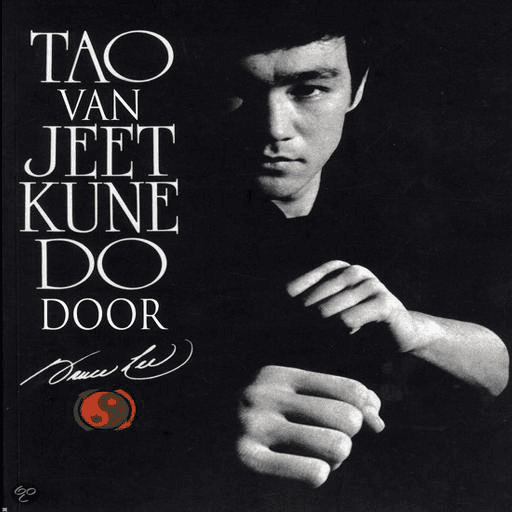
Jeet Kune Do (JKD) is a philosophical approach to combat developed by Bruce Lee, aiming to transcend the boundaries of traditional martial arts. The term “Jeet Kune Do” translates from Chinese as “The Way of the Intercepting Fist.” However, according to Bruce Lee, Jeet Kune Do is not a style but a method designed to go beyond style.【1】 In this sense, JKD is not merely a collection of physical techniques but also represents a thought form, seeking to demonstrate that much of combat and fighting situations are decided in the mind.
Bruce Lee first encountered the Wing Chun system in 1954 as a student of famous Kung Fu Master Yip Man and refined it.【2】 After receiving traditional Wing Chun training, he moved to America and became familiar with various other martial disciplines. He realized that the rigid forms and structures of Wing Chun were insufficient for real street fights or spontaneous reactions.【3】 Consequently, in 1967 he developed Jeet Kune Do. Bruce Lee’s primary objective was to create an effective, flexible, and individualized system of combat.
One of the most distinctive aspects of Jeet Kune Do is its philosophical dimension. Bruce Lee is famously known for the phrase “Absorb what is useful, discard what is useless, and add what is specifically your own.” This expression encapsulates the essence of JKD: avoiding rigid conformity, adapting to circumstances, and being capable of change when necessary.【4】 In Lee’s own words:
“The real martial art is a free expression flowing without attachment to form or style.”
He further integrated this perspective with the concept of “the art of fighting without fighting,” establishing a philosophical infrastructure. His fundamental principles also reveal that the matter extends beyond mere physical thought to become part of a larger picture. The four core principles of Jeet Kune Do are:
JKD integrates elements from many systems—including Wing Chun, boxing, fencing, savate, judo, and jiu-jitsu—under a single roof.【5】 The goal is to eliminate what is ineffective, retain what is effective, and create what is uniquely personal. Bruce Lee’s perspective was significantly shaped by the diverse martial arts he encountered after moving to America. He opposed rigid forms and advocated for combat to be personal, spontaneous, and fluid.
Some prominent JKD techniques include:
Jeet Kune Do has influenced modern mixed martial arts (MMA).【6】 Many MMA fighters structure their fighting styles in a flexible, hybrid manner similar to Bruce Lee’s concept of “the style of no style.” JKD seeks to demonstrate that mental agility is as crucial as physical skill in combat. It asserts that the human mind is at least as valuable as the body in martial arts.
Inosanto, Dan. Jeet Kune Do: The Art and Philosophy of Bruce Lee. Los Angeles: Know Now Publishing, 1994.
Lee, Bruce. Tao of Jeet Kune Do. Santa Clarita, CA: Black Belt Communications, 1975.
Little, John. Bruce Lee: Artist of Life. Boston: Tuttle Publishing, 2001.
Polly, Matthew. Bruce Lee: A Life. New York: Simon & Schuster, 2018.
Uyehara, Mito. Bruce Lee: The Incomparable Fighter. Santa Clarita, CA: Black Belt Communications, 2000.
[1]
Bruce Lee, Tao of Jeet Kune Do (Santa Clarita, CA: Black Belt Communications, 1975), 12.
[2]
Matthew Polly, Bruce Lee: A Life (New York: Simon & Schuster, 2018), 38.
[3]
Dan Inosanto, Jeet Kune Do: The Art and Philosophy of Bruce Lee (Los Angeles: Know Now Publishing, 1994), 15.
[4]
Bruce Lee, Tao of Jeet Kune Do, 25.
[5]
John Little, Bruce Lee: Artist of Life (Boston: Tuttle Publishing, 2001), 67.
[6]
Mito Uyehara, Bruce Lee: The Incomparable Fighter (Santa Clarita, CA: Black Belt Communications, 2000), 91.

Historical Background and Emergence
Philosophical Foundations
Technical Structure
Influence on Modern Martial Arts