
sb-image
Jules Verne
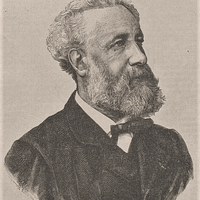
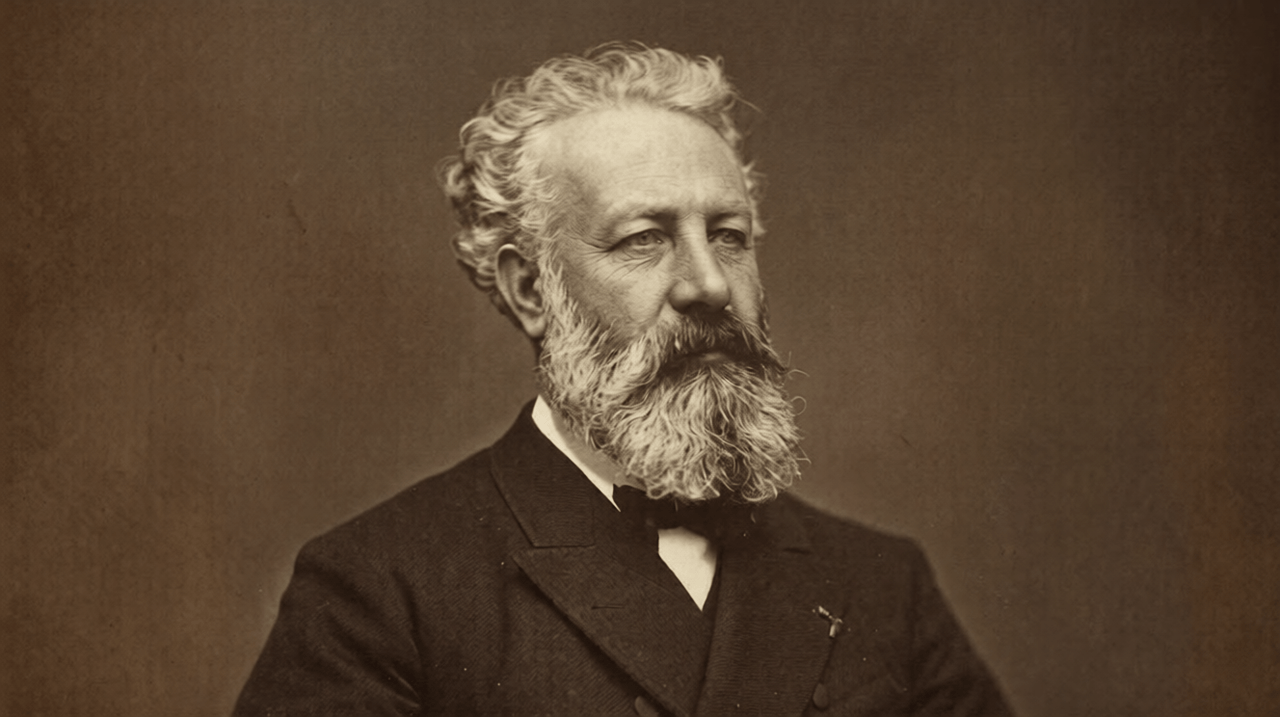
Jules Verne (8 February 1828, Nantes – 24 March 1905, Amiens) is a French poet, novelist and playwright regarded as a pioneer of modern science fiction literature.
This article was automatically translated from the original Turkish version.
badge icon
Article
Full Name
Jules Gabriel Verne
Birth Date
February 8, 1828
Place of Birth
NantesFrance
Death Date
March 24, 1905
Place of Death
AmiensFrance
Profession
WriterPoetPlaywright
Literary Genre
Science FictionAdventureTravel Literature
Important Series
Extraordinary Voyages (Voyages Extraordinaires)
Major Works
Five Weeks in a Balloon (1863)Journey to the Center of the Earth (1864)A Journey to the Moon (1865)Twenty Thousand Leagues Under the Sea (1870)Around the World in Eighty Days (1872)
Literary Title
Father of Science Fiction (mentioned together with H.G. Wells)
Honor Medal
Légion d'honneur (French State Decoration)

Jules Verne (8 February 1828 – 24 March 1905) is a French poet, novelist and playwright. He is best known for his series of novels titled Voyages Extraordinaires, published in collaboration with publisher Pierre-Jules Hetzel. In his works, he combined technical elements such as submarines, space travel and aerial vehicles with the scientific data of his time through adventure fiction. According to UNESCO’s translation database, Jules Verne is among the most translated authors in the world.【1】

Life and Education

Jules Verne was born on 8 February 1828 in Nantes, France. In 1847 he moved to Paris to study law and graduated from the Faculty of Law in 1850. During his studies in Paris he met literary figures such as Alexandre Dumas and Victor Hugo and wrote plays and opera librettos. After graduation he continued his literary activities and scientific research rather than pursuing a career in law.

Literary Career and Pierre-Jules Hetzel

Verne’s development as a writer gained momentum with his meeting with publisher Pierre-Jules Hetzel in 1862.【2】 As a result of a long-term contract signed between the two, Verne’s works, which combined scientific data with fiction, began to be published. The first work of this collaboration, Cinq Semaines en Ballon (1863), marked the beginning of the Voyages Extraordinaires novel series. Under the publishing policy established by Hetzel, these works were structured to include technical information on disciplines such as geography, biology and astronomy.

Technological Predictions and Technical Descriptions

Verne incorporated into his works technologies that did not yet exist or were still in development during the 19th century, based on the scientific knowledge of his time.【3】 Some of these descriptions later became technically feasible:

  • Submarine Technology: The Nautilus in the novel Vingt Mille Lieues sous les Mers is envisioned as a vessel with characteristics similar to the operating principles of modern submarines.
  • Space Exploration: In the book De la Terre à la Lune, the launch site location (Florida) and the method of capsule return to Earth (ocean landing) resemble the methods used in 20th-century lunar missions.
  • Aerial Transportation: In the novel Robur-le-Conquérant, Verne describes aerial vehicles based on vertical takeoff principles, distinct from winged aircraft models.
  • Urban Technologies: In the novel Paris au XXe Siècle, published after Verne’s death, technological elements such as fax-like communication devices, elevator systems and rail transport networks are described.

Writing Technique and Style

Jules Verne employed a method that integrated technical information with adventure narrative:

  • Didactic Structure: Alongside the plot, his works present encyclopedic data on fields such as biology (marine life), geography (ocean currents) and physics (astronomical calculations).
  • Use of Technical Data: Quantitative details such as distance, weight, speed, pressure and temperature are included in great detail within the narrative.
  • Character Construction: Characters are typically portrayed as rational individuals who embrace scientific methods but are driven by personal motivations such as isolation or revenge.

Literary Impact and Reception

Verne’s works have had diverse influences on the development of science fiction as a literary genre and on the scientific community:

  • Impact on Scientific Fields: Figures such as Konstantin Tsiolkovsky (rocket technology), Jacques Cousteau (oceanography) and Simon Lake (submarine design) have acknowledged the influence of Verne’s works on their professional trajectories.
  • Translations and Popularity: According to UNESCO data, his works are among the most translated texts in the world.
  • Genre Positioning: Alongside H.G. Wells, Verne is regarded as one of the pioneers of the genre for placing scientific speculation at the center of narrative.

Selected Bibliography

Verne’s principal works and their associated technical fields are as follows:

  • Five Weeks in a Balloon (1863): Aeronautical technology and geographical exploration.
  • Journey to the Center of the Earth (1864): Geological and paleontological data.
  • From the Earth to the Moon (1865): Technical fiction on ballistics and space mechanics.
  • Twenty Thousand Leagues Under the Sea (1870): Marine sciences and advanced submarine technology.
  • Around the World in Eighty Days (1872): Contemporary transportation networks and time measurement systems.

Citations

  • [1]

    Gülmelek Doğanay, "Egemen Söylemin Bir Aracı Olarak Edebiyat: Jules Verne’in Olağanüstü Yolculuklar Anlatısı," Selçuk Üniversitesi Edebiyat Fakültesi Dergisi (SEFAD), sy. 46 (2021): 319-336. https://doi.org/10.21497/sefad.1031802.

  • [2]

    Gülmelek Doğanay. (a.g.e), sy. 46.

  • [3]

    Gülmelek Doğanay. (a.g.e), sy. 46.

Author Information

Avatar
AuthorMustafa Cem İnciMarch 16, 2026 at 2:40 PM

Tags

Discussions

No Discussion Added Yet

Start discussion for "Jules Verne" article

View Discussions

Contents

  • Life and Education

  • Literary Career and Pierre-Jules Hetzel

  • Technological Predictions and Technical Descriptions

  • Writing Technique and Style

  • Literary Impact and Reception

  • Selected Bibliography

Ask to Küre