


This article was automatically translated from the original Turkish version.
+2 More
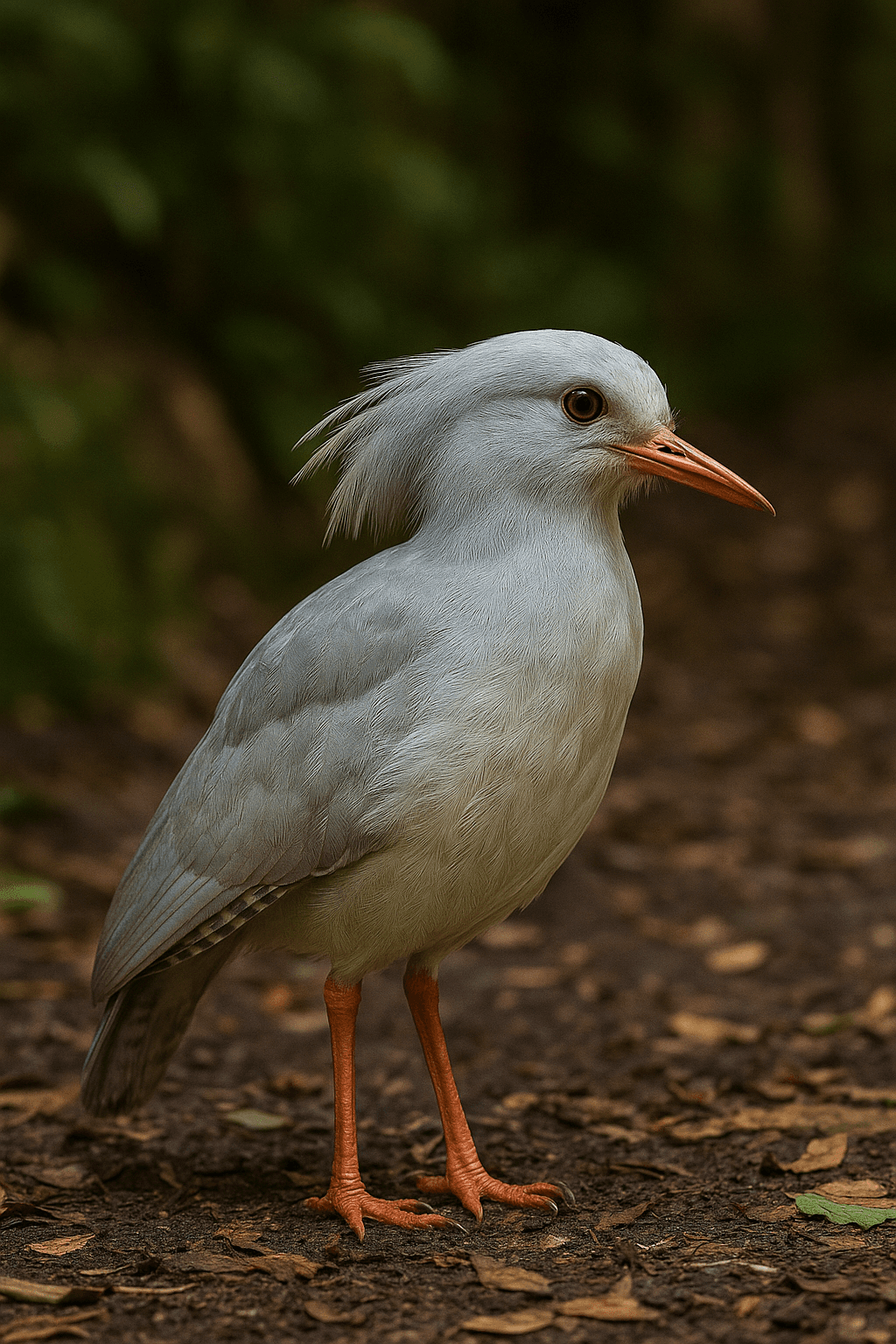
Kagu (Rhynochetos jubatus)
Scientific Classification | Order: Eurypygiformes, Family: Rhynochetidae, Genus: Rhynochetos, Species: Rhynochetos jubatus | ||||||||
|---|---|---|---|---|---|---|---|---|---|
Geographic Distribution | Endemic to New Caledonia. Inhabits moist mountain forests. | ||||||||
Morphological Characteristics | Flightless; the sternum structure is not adapted for flight. Recognized by gray plumage, red legs, and ornamental crest feathers. Average length: 55 cm. | ||||||||
Behavior and Lifestyle | Forages for food by walking on the ground. Diet: Insects, worms and small invertebrates. Monogamous; lays only one egg per year. Emits high-pitched calls when threatened. | ||||||||
Conservation Status | IUCN Status: Endangered. Major threats: Habitat loss low reproductive rate. invasive species (particularly cats and dogs) | ||||||||
Evolutionary Significance | Close relative: Eurypyga helias | ||||||||
Kagu (Rhynochetos jubatus) is an endemic bird species found only in New Caledonia and nowhere else naturally in the world. This flightless bird is classified in the family Rhynochetidae, which contains only this single species. Due to these characteristics, it is an important subject of study in both evolutionary biology and conservation biology.
The kagu is approximately 55 cm in length and is recognized by its pale gray body plumage and long crest feathers. Although it cannot fly, it uses its wings as visual alarm signals when threatened. Its legs are bright red and its bill is partially orange. Its feather structure has adapted to provide camouflage against the forest floor. Anatomically, it lacks the muscular attachments on the sternum necessary for flight, a feature explained by its evolutionary adaptation to island isolation.
The kagu inhabits the moist mountain forests of New Caledonia, particularly in areas with high elevation, dense and humid vegetation. Its habitat preference is restricted to forests with a rich understory that allows active foraging for insects on the ground. Due to its endemic nature, its geographic range is extremely limited, and habitat destruction poses a major threat to the species.

Kagu bird (generated with artificial intelligence assistance).
The kagu has a diurnal activity pattern and spends the night in its nest. This ground-foraging bird feeds on insects, worms, and small invertebrates. Although generally silent, it can emit high-pitched calls to defend its territory when threatened. Its reproductive behavior is also notable: pairs form monogamous bonds and lay only one egg per year. This low reproductive rate is one of the factors limiting the species’ population growth.
The International Union for Conservation of Nature (IUCN) classifies the kagu as Endangered. The primary reasons for this classification include habitat loss, deforestation, predation by invasive species (particularly predatory mammals such as dogs and cats), and low reproductive rates. Conservation efforts in New Caledonia include protecting natural habitats, controlling invasive species, and implementing public awareness campaigns.
The kagu holds high evolutionary importance due to its highly isolated taxonomic position. Molecular phylogenetic studies have shown that the kagu belongs to the order Eurypygiformes and is most closely related to the Sunbittern (Eurypyga helias), found in South America. This relationship sheds light on speciation processes that occurred following the breakup of the Gondwana supercontinent.
In conclusion, the kagu is a bird species notable for its restricted habitat, unique morphological features, and evolutionary significance. Its inability to fly, low reproductive capacity, and dependence on specific habitats are key factors threatening its survival. To ensure its conservation, ecosystem-based approaches must be developed and sustainable protection strategies established through local and international cooperation.
Salas, Michel, and Yves Letocart. "Spatial Organisation and Breeding of Kagu Rhynochetos jubatus in Rivière Bleue Park, New Caledonia." *Emu - Austral Ornithology* 97, no. 2 (1997): 97–107. Accessed May 7, 2025. https://doi.org/10.1071/MU97013.
Theuerkauf, Jörn, Sophie Rouys, Jean Marc Mériot, and Roman Gula. "Group Territoriality as a form of Cooperative Breeding in the Flightless Kagu (Rhynochetos jubatus) of New Caledonia." *The Auk* 126, no. 2 (2009): 371–375. Accessed May 7, 2025. https://doi.org/10.1525/auk.2009.08092.
Warner, Willard. "The present status of the Kagu, Rhynochetos jubatus, on New Caledonia." *The Auk* 65, no. 2 (1948): 287–288. Accessed May 7, 2025. https://doi.org/10.2307/4080305.

Kagu (Rhynochetos jubatus)
Scientific Classification | Order: Eurypygiformes, Family: Rhynochetidae, Genus: Rhynochetos, Species: Rhynochetos jubatus | ||||||||
|---|---|---|---|---|---|---|---|---|---|
Geographic Distribution | Endemic to New Caledonia. Inhabits moist mountain forests. | ||||||||
Morphological Characteristics | Flightless; the sternum structure is not adapted for flight. Recognized by gray plumage, red legs, and ornamental crest feathers. Average length: 55 cm. | ||||||||
Behavior and Lifestyle | Forages for food by walking on the ground. Diet: Insects, worms and small invertebrates. Monogamous; lays only one egg per year. Emits high-pitched calls when threatened. | ||||||||
Conservation Status | IUCN Status: Endangered. Major threats: Habitat loss low reproductive rate. invasive species (particularly cats and dogs) | ||||||||
Evolutionary Significance | Close relative: Eurypyga helias | ||||||||
No Discussion Added Yet
Start discussion for "Kagu (Rhynochetos jubatus)" article
Morphological Characteristics
Habitat and Distribution
Behavioral Characteristics
Conservation Status and Threats
Evolutionary Significance