This article was automatically translated from the original Turkish version.
+2 More
Location | Kabatepe–Conkbayırı road, eastern end of Kanlısırt, Çanakkale | ||||||||
|---|---|---|---|---|---|---|---|---|---|
Region | Arıburnu Front – Gallipoli Historical Area | ||||||||
Important Battles | 18–19 May / 6–7 August 1915 | ||||||||
Date of First Defense | 25 April 1915 | ||||||||
Regiment That First Defended | 27th Regiment | ||||||||
Armistice Date | 24 May 1915 | ||||||||
Armistice Purpose | Burial of the dead | ||||||||
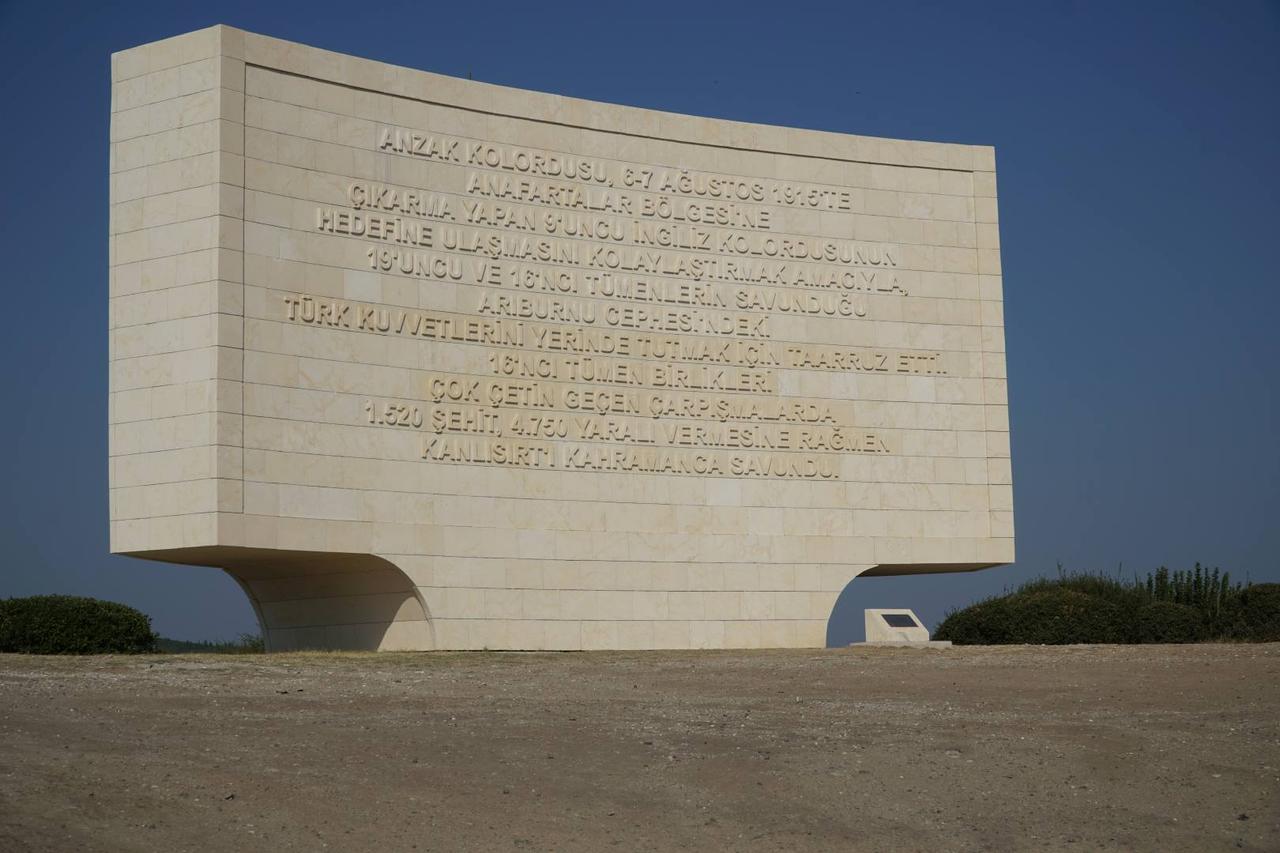
Kanlısırt Inscription is a historical memorial plaque located at the eastern end of the Kanlısırt position along the Kabatepe-Conkbayırı road within the boundaries of the Gallipoli Historical Area of the Çanakkale Campaigns, commemorating the battles that took place in the region on 6–7 August 1915.【1】
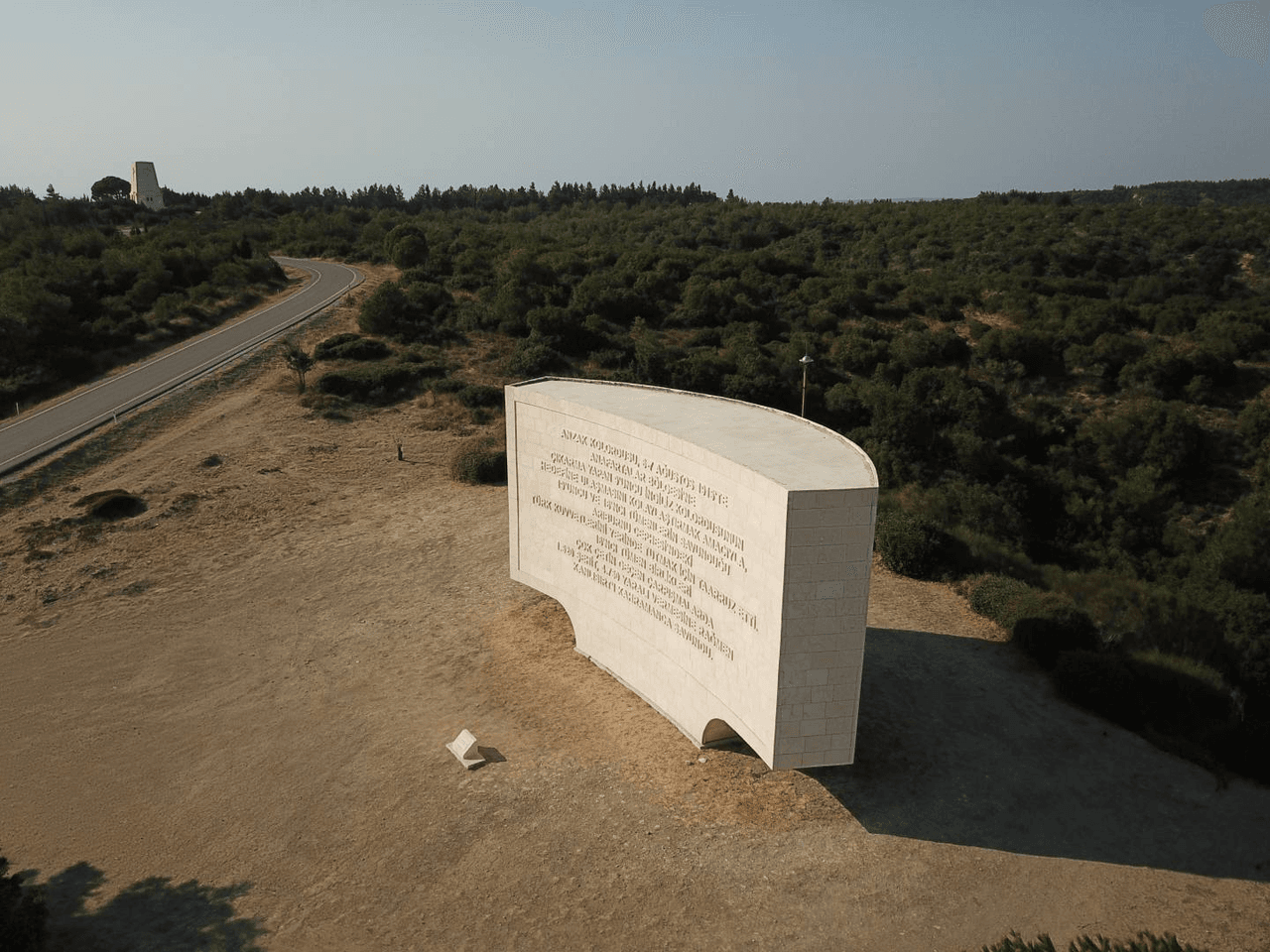
Kanlısırt Kitabesi (Gelibolu Tarihi Alan Başkanlığı)
The Kanlısırt Inscription is situated on the right side of the route along the Kabatepe-Conkbayıri path as one travels through the Historical Gallipoli Peninsula.
Geographically, it is located at the eastern end of the Kanlısırt position. The inscription falls under the administrative jurisdiction of the Gallipoli Historical Area Directorate of the Çanakkale Campaigns.【2】
The Kanlısırt position became one of the most critical fronts of the Çanakkale Land Campaigns. Following the Anzac landing on 25 April 1915, the area came under the control of Anzac forces. In response, the 27th Regiment under the command of Lieutenant Colonel Şefik Aker launched a counterattack and regained control of the region.
In the following period, Kanlısırt transformed into one of the most critical positions where Turkish forces suffered heavy casualties. On the night of 18–19 May at 03:30, a Turkish night assault resulted in approximately 10,000 casualties. Following this battle, a one-day truce was signed on 24 May to allow both sides to bury the dead remaining between the trenches, and burial operations were carried out.
On 6 August 1915, a fierce assault was launched against the Kanlısırt positions through tunnels, and the area came under heavy bombardment. Due to the Turkish trenches being covered with wooden planks for protection, the sudden attack caused extremely high casualties and the Kanlısırt trenches were lost. The primary military objective of this assault was to enable the Allied forces to reach Conkbayırı.【3】
The Anzac Corps planned a diversionary attack on 6–7 August 1915 to facilitate the operations of the British 9th Corps, which had landed in the Anafartalar region. The aim of this plan was to keep Turkish forces pinned down in their positions along the Arıburnu Front.
During this period, units of the 16th Division participated in intense combat. Despite suffering 1,520 killed and 4,750 wounded during the battles, the 16th Division continued to defend Kanlısırt.
According to the military records of British Lieutenant General William R. Birdwood, Anzac losses in this area reached 2,000 personnel. The same records indicate that the total casualties of the Turkish 16th Division amounted to 6,930, with approximately 5,000 of these losses occurring in a narrow section of the Kanlısırt trenches. Historical reports note that due to the intensity of the fighting, the bodies of soldiers from both sides were piled on top of each other in the trenches.【4】
The physical conditions of the fighting at Kanlısırt and the state of the battlefield were reflected in the military records of the time. According to documents in Mehmet Fasih Bey’s Kanlısırt Diary, soldiers killed in the trenches exhibited severe burns and discolorations caused by dynamite powder.
The diary records that due to extensive destruction, it became impossible to transport bodies intact; machine gun tripods were shattered, ammunition crates and lids were damaged, and fragments of military uniforms were scattered as far as the mechanisms of weapons. Historical records also document the efforts of medical teams to collect body parts from the battlefield.【5】
Following the Çanakkale Campaigns, the Turkish side erected a monument in the area to commemorate the defense displayed during the battles. This first monument, erected in 1916 in memory of the 16th Division, was completely destroyed during the Armistice period.【6】
Over time, the Kanlısırt Inscription and other memorial plaques on the peninsula have suffered significant deterioration due to climatic and physical conditions. Technical reports prepared by the Gallipoli Historical Area Directorate and the Restoration and Conservation Center Laboratory have documented the following damages to the plaques:
The Gallipoli Historical Area Directorate of the Çanakkale Campaigns has launched a comprehensive renewal project to preserve the historical heritage, including the Kanlısırt Inscription. In accordance with decisions made by the Gallipoli Historical Area Cultural and Natural Heritage Protection Commission, the project aims to maintain 15 memorial plaques on the peninsula. The restored plaques include:
A tender for the maintenance and repair of the plaques was held on 27 February, and the site was handed over to the contractor on 13 March. The restoration works, planned to last 250 days, aim to preserve the historical integrity of the plaques and ensure their safety for visitors.【8】
Gelibolu Tarihi Area Directorate. "Kanlısırt Kitabesi." Accessed July 17, 2026.https://canakkaletarihialan.gov.tr/tr/ziyaret/sehitlikveanitlar/kanlisirt-kitabesi
Hürriyet. "Tarihi Gelibolu Yarımadası'ndaki kitabeler yenileniyor." Accessed July 17, 2026.https://www.hurriyet.com.tr/yerel-haberler/canakkale/tarihi-gelibolu-yarimadasindaki-kitabeler-yeni-40492616
[1]
Gelibolu Tarihi Alan Başkanlığı. "Kanlısırt Kitabesi." Erişim Tarihi 17 Temmuz 2026. https://canakkaletarihialan.gov.tr/tr/ziyaret/sehitlikveanitlar/kanlisirt-kitabesi
[2]
Gelibolu Tarihi Alan Başkanlığı. "Kanlısırt Kitabesi."
[3]
Gelibolu Tarihi Alan Başkanlığı. "Kanlısırt Kitabesi."
[4]
Gelibolu Tarihi Alan Başkanlığı. "Kanlısırt Kitabesi."
[5]
Gelibolu Tarihi Alan Başkanlığı. "Kanlısırt Kitabesi."
[6]
Gelibolu Tarihi Alan Başkanlığı. "Kanlısırt Kitabesi."
[7]
Hürriyet. "Tarihi Gelibolu Yarımadası'ndaki kitabeler yenileniyor." Accessed July 17, 2026.
[8]
Hürriyet. "Tarihi Gelibolu Yarımadası'ndaki kitabeler yenileniyor."

Location | Kabatepe–Conkbayırı road, eastern end of Kanlısırt, Çanakkale | ||||||||
|---|---|---|---|---|---|---|---|---|---|
Region | Arıburnu Front – Gallipoli Historical Area | ||||||||
Important Battles | 18–19 May / 6–7 August 1915 | ||||||||
Date of First Defense | 25 April 1915 | ||||||||
Regiment That First Defended | 27th Regiment | ||||||||
Armistice Date | 24 May 1915 | ||||||||
Armistice Purpose | Burial of the dead | ||||||||
Geographical Location and Placement
Historical Background and the Kanlısırt Battles
The Anzac Corps Offensive and the 16th Division Defense
Historical Documents and Daily Records
The First Monument and Its Destruction
Physical Deterioration and Damage Assessment of the Inscription
Restoration and Renewal Works