

Nickname(s) | Kara Fatma | ||||||||
|---|---|---|---|---|---|---|---|---|---|
Award(s) | Independence Medal | ||||||||
Social Contributions | Donations to the Red Crescent, aid activities at Darülaceze | ||||||||
Unit Size | 300–350 people (male and female fighters) | ||||||||
Wars Participated In | Balkan Wars, First World War, National Struggle (Battle of Sakarya, Great Offensive) | ||||||||
Duties | Militia commander, National Struggle participant | ||||||||
Rank | Second Lieutenant | ||||||||
Grave | Kulaksız Cemetery, Istanbul | ||||||||
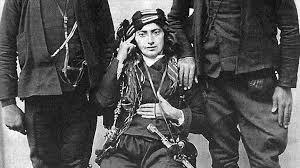
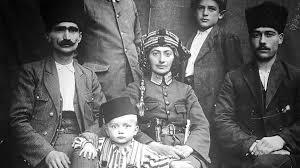
Fatma Seher Erden (Kara Fatma) (1888, Erzurum – 2 July 1955, Istanbul) was one of the female militia commanders who served in the Kuvâ-yi Milliye units during the Turkish War of Independence【1】. She participated in resistance activities during the Balkan Wars and the First World War, and during the National Struggle she took part in active military operations in Western Anatolia with volunteer units she organized. The unit she formed consisted of approximately 300 to 350 fighters, both men and women, and simultaneously carried out logistical, communication, and front-line operational duties【2】. Kara Fatma directly participated in the Battle of Sakarya and the Great Offensive; after the war she was honored with the rank of senior lieutenant and awarded the Independence Medal【3】. Her activities are regarded as one of the concrete examples of women’s armed resistance during the National Struggle and contributed significantly to the organizational effectiveness of resistance in Western Anatolia.
Fatma Seher Erden was born in Erzurum in 1888 and appears in population records under the name “Mahi”【4】. Details about her childhood and youth are limited. She married an officer in the Ottoman Army who died during the First World War at Sarıkamış on the Caucasus Front【5】. This loss influenced her later involvement in resistance movements. Her relationships with family and community, along with the pressures created by war and social conditions, were factors that led her to assume military and organizational responsibilities. Additionally, her early life experiences laid the foundation for her future leadership and organizational skills.
Fatma Seher Erden was known during the National Struggle by the nickname Kara Fatma 【6】. This nickname is associated with the role she assumed and the determination she displayed during resistance activities in Western Anatolia. It became a distinctive symbol among female militia commanders recognized in public opinion and the press during the National Struggle. The nickname symbolizes Kara Fatma’s military leadership, active frontline participation, and effective command of her unit. In historical literature, this nickname is one of the most important markers of her recognition as a female militia commander.
Kara Fatma’s military experience extends back to the Balkan Wars. During the Balkan Wars she was in Edirne and actively participated in local resistance activities against occupation【7】. During this period she organized those around her to join the resistance and played an active role in local defense efforts.
During the First World War, the Ottoman State’s campaigns on various fronts directly affected the population living in Anatolia. Kara Fatma’s husband served on the Caucasus Front and died at Sarıkamış【8】. This event directly influenced her participation in resistance activities before the National Struggle; her initiative and leadership under wartime conditions laid the foundation for her later military role. The experience she gained during these periods developed her organizational skills and strategic decision-making abilities.
After the Armistice of Mudros, various regions of Anatolia were occupied, and resistance movements emerged in response. Kara Fatma moved from Istanbul to Anatolia to join the National Struggle. Traveling via Samsun to Sivas, she met Mustafa Kemal Paşa and expressed her desire to participate in the National Struggle【9】. After the Sivas Congress, she was permitted to take part in resistance activities in Western Anatolia. During this period, her nickname appears only briefly as a reference in the records. Kara Fatma’s participation in the National Struggle is regarded as one of the examples of women’s direct involvement in armed resistance and made a concrete contribution to resistance organizations in Western Anatolia.
During the National Struggle, Kara Fatma formed a militia unit composed of volunteers. The unit she established consisted of approximately 300 to 350 fighters, including both men and women【10】. The unit carried out frontline operations, logistical support, and communication duties, enhancing the effectiveness of resistance activities in the region. Before the National Struggle, Kara Fatma’s connections with women’s organizations and local solidarity groups formed the basis for establishing her unit. The unit’s structure enabled coordinated movement during combat through a flexible command system and clear division of responsibilities. The variety of roles within the unit ensured that male and female fighters assumed different duties, guaranteeing the continuity of resistance in Western Anatolia.
The unit under Kara Fatma’s command actively participated in military operations in Western Anatolia. It took part in battles against occupation forces around Bolu, İzmit, Kocaeli, and Bursa【11】. The unit coordinated its actions with regular army units during the Battle of Sakarya and the Great Offensive【12】. In some engagements, Kara Fatma was wounded and temporarily captured, after which she was released. As a mixed-gender unit, it was active both in direct frontline combat and in regional resistance activities. Kara Fatma’s activities are regarded as one of the fundamental elements ensuring the continuity of resistance on the Western Front.
Kara Fatma’s activities during the National Struggle were also covered in the international press. Her name appeared in American publications among female combatants serving in the Turkish War of Independence【13】. The New York Times referred to her as a female combatant serving in the Turkish army. This demonstrates that the participation of women in armed struggle during the National Struggle attracted the attention of the international public. Kara Fatma’s name is recognized as an important example that contributed to the historical visibility of female soldiers.
After the War of Independence, Kara Fatma returned to civilian life and was awarded the Independence Medal【14】. She continued to live in Istanbul during the Republican period and donated her pension to the Turkish Red Crescent【15】. This donation reflects her social impact in relation to social assistance initiatives during the Republican period. In later years of her life, she resided at Darülaceze in Istanbul and indirectly contributed to social solidarity and aid activities. This aspect of Kara Fatma’s life constitutes a concrete example of women’s roles in social responsibility and solidarity after the National Struggle.
Kara Fatma died in Istanbul on 2 July 1955【16】. Her grave is located in the Kulaksız Cemetery in Istanbul’s Beyoğlu district. Her death influenced the historical memory of women’s military participation during the National Struggle, and the figure of Kara Fatma has maintained visibility in historical research.
Kara Fatma was among the female militia commanders who directly participated in armed resistance during the National Struggle. The unit she formed played an active role in resistance operations against occupation in Western Anatolia. The mixed-gender composition and diverse roles within her unit serve as a concrete indicator of women’s military and social participation during that period. Kara Fatma is one of the figures studied in historical research as an example of women’s military and social roles. The structure of her unit enhanced the continuity and effectiveness of resistance in the regions where it operated.
Aktaş, Akın. *Sosyal Yardımlar Bağlamında “Nene Hatun-Kara Fatma” Analizi.* Tarih ve Günce: Atatürk ve Türkiye Cumhuriyeti Tarihi Dergisi, no. 6 (2020/Winter), pp. 243–262. Accessed March 9, 2026. https://www.dergipark.org.tr/tr/download/article-file/961993
Anadolu Ajansı. *Atatürk’ün Emriyle Cephede Bir Türk Kadını: Üsteğmen Kara Fatma.* 2022. Accessed March 9, 2026. https://www.aa.com.tr/tr/yasam/ataturkun-emriyle-cephede-bir-turk-kadini-ustegmen-kara-fatma/2628610
Anadolu Ajansı. *Milli Mücadelenin Kadın Kahramanı Kara Fatma.* 2020. Accessed March 9, 2026. https://www.aa.com.tr/tr/yasam/milli-mucadelenin-kadin-kahramani-kara-fatma-/1571715
Torun Çelik, Esma. *Türk Kadın Kahramanlardan Kara Fatma.* Turkish Studies International Periodical for the Languages, Literature and History of Turkish or Turkic, Volume 11/16, Fall 2016, pp. 131–158. Accessed March 9, 2026. DOI: http://dx.doi.org/10.7827/TurkishStudies.9834
Şahin, Güneş. *Kara Fatma (Milli Mücadele’nin İlk Direnişçi Kadın Kahramanlarından).* In: 100 Kadın Kaleminden 100 Öncü Kadın, Toplumsal Dönüşüm Yayınları, pp. 437–442. 2023. Accessed March 9, 2026. https://www.researchgate.net/publication/381305729_KARA_FATMA_Milli_Mucadele'nin_Ilk_Direnisci_Kadin_Kahramanlarindan
[1]
Esma Torun Çelik, Türk Kadın Kahramanlardan Kara Fatma, Turkish Studies International Periodical for the Languages, Literature and History of Turkish or Turkic 11, no. 16 (2016): 131–158, erişim 9 Mart 2026, http://dx.doi.org/10.7827/TurkishStudies.9834
[2]
Güneş Şahin, Kara Fatma (Milli Mücadele’nin İlk Direnişçi Kadın Kahramanlarından), içinde 100 Kadın Kaleminden 100 Öncü Kadın (Toplumsal Dönüşüm Yayınları, 2023), 437–442, erişim 9 Mart 2026, https://www.researchgate.net/publication/381305729_KARA_FATMA_Milli_Mucadele'nin_Ilk_Direnisci_Kadin_Kahramanlarindan
[3]
Anadolu Ajansı, Atatürk’ün Emriyle Cephede Bir Türk Kadını: Üsteğmen Kara Fatma, 2022, erişim 9 Mart 2026, https://www.aa.com.tr/tr/yasam/ataturkun-emriyle-cephede-bir-turk-kadini-ustegmen-kara-fatma/2628610
[4]
Güneş Şahin, Kara Fatma (Milli Mücadele’nin İlk Direnişçi Kadın Kahramanlarından), içinde 100 Kadın Kaleminden 100 Öncü Kadın (Toplumsal Dönüşüm Yayınları, 2023), 437–442, erişim 9 Mart 2026, https://www.researchgate.net/publication/381305729_KARA_FATMA_Milli_Mucadele'nin_Ilk_Direnisci_Kadin_Kahramanlarindan
[5]
Esma Torun Çelik, Türk Kadın Kahramanlardan Kara Fatma, Turkish Studies International Periodical for the Languages, Literature and History of Turkish or Turkic 11, no. 16 (2016): 131–158, erişim 9 Mart 2026, http://dx.doi.org/10.7827/TurkishStudies.9834
[6]
Güneş Şahin, Kara Fatma (Milli Mücadele’nin İlk Direnişçi Kadın Kahramanlarından), içinde 100 Kadın Kaleminden 100 Öncü Kadın (Toplumsal Dönüşüm Yayınları, 2023), 437–442, erişim 9 Mart 2026, https://www.researchgate.net/publication/381305729_KARA_FATMA_Milli_Mucadele'nin_Ilk_Direnisci_Kadin_Kahramanlarindan
[7]
Esma Torun Çelik, Türk Kadın Kahramanlardan Kara Fatma, Turkish Studies International Periodical for the Languages, Literature and History of Turkish or Turkic 11, no. 16 (2016): 131–158, erişim 9 Mart 2026, http://dx.doi.org/10.7827/TurkishStudies.9834
[8]
Esma Torun Çelik, Türk Kadın Kahramanlardan Kara Fatma, Turkish Studies International Periodical for the Languages, Literature and History of Turkish or Turkic 11, no. 16 (2016): 131–158, erişim 9 Mart 2026, http://dx.doi.org/10.7827/TurkishStudies.9834
[9]
Anadolu Ajansı, Milli Mücadelenin Kadın Kahramanı Kara Fatma, 2020, erişim 9 Mart 2026, https://www.aa.com.tr/tr/yasam/milli-mucadelenin-kadin-kahramani-kara-fatma-/1571715
[10]
Güneş Şahin, Kara Fatma (Milli Mücadele’nin İlk Direnişçi Kadın Kahramanlarından), içinde 100 Kadın Kaleminden 100 Öncü Kadın (Toplumsal Dönüşüm Yayınları, 2023), 437–442, erişim 9 Mart 2026, https://www.researchgate.net/publication/381305729_KARA_FATMA_Milli_Mucadele'nin_Ilk_Direnisci_Kadin_Kahramanlarindan
[11]
Esma Torun Çelik, Türk Kadın Kahramanlardan Kara Fatma, Turkish Studies International Periodical for the Languages, Literature and History of Turkish or Turkic 11, no. 16 (2016): 131–158, erişim 9 Mart 2026, http://dx.doi.org/10.7827/TurkishStudies.9834
[12]
Anadolu Ajansı, Atatürk’ün Emriyle Cephede Bir Türk Kadını: Üsteğmen Kara Fatma, 2022, erişim 9 Mart 2026, https://www.aa.com.tr/tr/yasam/ataturkun-emriyle-cephede-bir-turk-kadini-ustegmen-kara-fatma/2628610
[13]
Güneş Şahin, Kara Fatma (Milli Mücadele’nin İlk Direnişçi Kadın Kahramanlarından), içinde 100 Kadın Kaleminden 100 Öncü Kadın (Toplumsal Dönüşüm Yayınları, 2023), 437–442, erişim 9 Mart 2026, https://www.researchgate.net/publication/381305729_KARA_FATMA_Milli_Mucadele'nin_Ilk_Direnisci_Kadin_Kahramanlarindan
[14]
Anadolu Ajansı, Atatürk’ün Emriyle Cephede Bir Türk Kadını: Üsteğmen Kara Fatma, 2022, erişim 9 Mart 2026, https://www.aa.com.tr/tr/yasam/ataturkun-emriyle-cephede-bir-turk-kadini-ustegmen-kara-fatma/2628610
[15]
Akın Aktaş, Sosyal Yardımlar Bağlamında “Nene Hatun-Kara Fatma” Analizi, Tarih ve Günce: Atatürk ve Türkiye Cumhuriyeti Tarihi Dergisi 6 (2020): 243–262, erişim 9 Mart 2026, https://www.dergipark.org.tr/tr/download/article-file/961993
[16]
Anadolu Ajansı, Milli Mücadelenin Kadın Kahramanı Kara Fatma, erişim 9 Mart 2026, https://www.aa.com.tr/tr/yasam/milli-mucadelenin-kadin-kahramani-kara-fatma-/1571715

Nickname(s) | Kara Fatma | ||||||||
|---|---|---|---|---|---|---|---|---|---|
Award(s) | Independence Medal | ||||||||
Social Contributions | Donations to the Red Crescent, aid activities at Darülaceze | ||||||||
Unit Size | 300–350 people (male and female fighters) | ||||||||
Wars Participated In | Balkan Wars, First World War, National Struggle (Battle of Sakarya, Great Offensive) | ||||||||
Duties | Militia commander, National Struggle participant | ||||||||
Rank | Second Lieutenant | ||||||||
Grave | Kulaksız Cemetery, Istanbul | ||||||||
No Discussion Added Yet
Start discussion for "Kara Fatma (Fatma Seher Erden)" article
Early Life and Family
Name and Nickname
Balkan Wars and First World War Period
Participation in the National Struggle
Military Organization and Unit Structure
Western Front and Military Operations
Coverage in the International Press
Post-War Life and Social Role
Death and Burial
Kara Fatma in the Context of Female Militias during the National Struggle