


This article was automatically translated from the original Turkish version.
Karakucak güreşi is a form of wrestling practiced within the historical sporting tradition of the Turks, performed without oil and entirely while standing. This style of wrestling, practiced for many years across various regions of Türkiye, is regarded as one of the essential elements of traditional sports culture. Today, Karakucak güreşi is recognized as a sportive and cultural practice falling under the category of intangible cultural heritage.
The origins of Karakucak güreşi trace back to the physical training and military preparation practices of Central Asian Turkic communities. As Turkic groups migrated into Anatolia, regional variations emerged, and the practice became an inseparable part of social events such as village weddings, religious festivals, and fairs. The term “Karakucak” derives from “Karakoçak.” Over time, the compound term “Karakoçak Güreşi” evolved into “Karakucak Güreşi.” The word “kara,” used across all Turkish dialects, means “black.” Additionally, “kara” carries connotations such as “mourning,” “sorrow,” “ignorance,” or “disorder,” and appears in compound expressions like “kara baht” (bad luck), “kara haber” (bad news), “kara gün” (black day), “kara kız” (dark girl), “kara yel” (black wind), “kara toprak” (black soil), “kara kış” (harsh winter), and “kara güç” (dark power). In the Kars province of Türkiye, Turkmen communities would say, “Let’s karakucak this stone and lift it,” when referring to the collective effort required to lift a heavy object too large for one person to carry. The word “kucak” is consistently used across dialects to denote the area of the body from the neck down to the abdomen. The term “koçak” is believed to derive from “koç,” which refers to a male sheep but also signifies “brave” or “heroic.” The word “koçak” itself is used to mean “hero” or “valiant.” The fact that the Chinese character for wrestling includes a sign for “tossing” and that Ottoman miniatures depict wrestling wrestlers alongside tossing rams supports the argument that “Karakucak” originated from “Karakoçak.” The phrase “Karakoçak güreşi,” meaning wrestling performed by black heroes and fierce rams, gradually became known in folk usage as “Karakucak güreşi.” In Turkish literature, Karakucak güreşi is also referred to as “Kuru güreş” (dry wrestling) and “Harman güreşi” (threshing-floor wrestling), likely because it was traditionally practiced during harvest seasons and at threshing grounds. In colloquial speech, Karakucak is even called “Anadolu Güreşi” (Anatolian Wrestling). It is also known as folk wrestling or spectator wrestling.
Karakucak güreşi is a competitive form in which wrestlers typically wear “pırpıt” or similar garments resembling a wrestling suit, aiming to defeat their opponent by throwing them onto their back. Unlike oil wrestling, no oil is applied to the body, and the entire contest takes place while standing. While it shares similarities with modern freestyle wrestling, it adheres strictly to traditional rules.
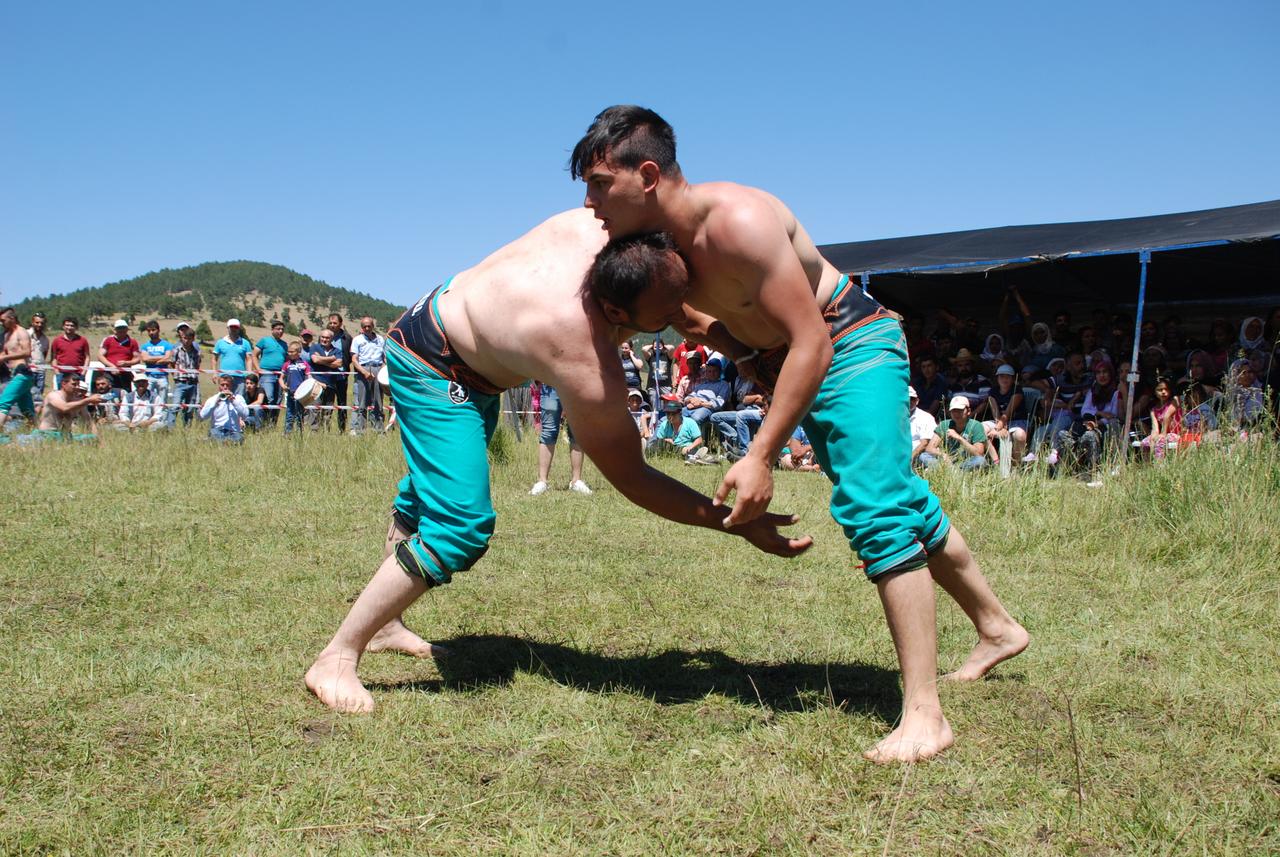
Karakucak güreşi is not merely a sporting activity; it also strengthens social solidarity, local identity, and cultural continuity. Wrestling events held especially in rural areas of Anatolia play a vital role in facilitating intergenerational cultural transmission.
Today, Karakucak güreşi is kept alive through events organized by the Türkiye Federation of Traditional Wrestling and related sports institutions, operating within an institutional framework. Through national and international events, efforts are made to promote this traditional sport and preserve its status as cultural heritage.
Türkiye Geleneksel Güreşler Federasyonu. "Karakucak Güreşi." Accessed December 30, 2025.
World Ethnosport Encyclopedia. "Karakucak Güreşi (Serbest Güreş)." Accessed December 30, 2025.

No Discussion Added Yet
Start discussion for "Karakucak Wrestling" article
Karakucak Güreşi
Historical Background
Format and Rules
Cultural and Social Dimensions
Karakucak Güreşi Today