

This article was automatically translated from the original Turkish version.
Length(s) | 299 km | ||||||||
|---|---|---|---|---|---|---|---|---|---|
Centers Connected | Kars (Türkiye) - Gyumri (Armenia) | ||||||||
Current Status | Closed since 1993 | ||||||||
Türkiye Border Gate | Doğukapı Border Gate (Akyaka, Kars) | ||||||||
Constructing Power | Tsarist Russia | ||||||||
Initial Construction Period | 1895 - 1899 | ||||||||
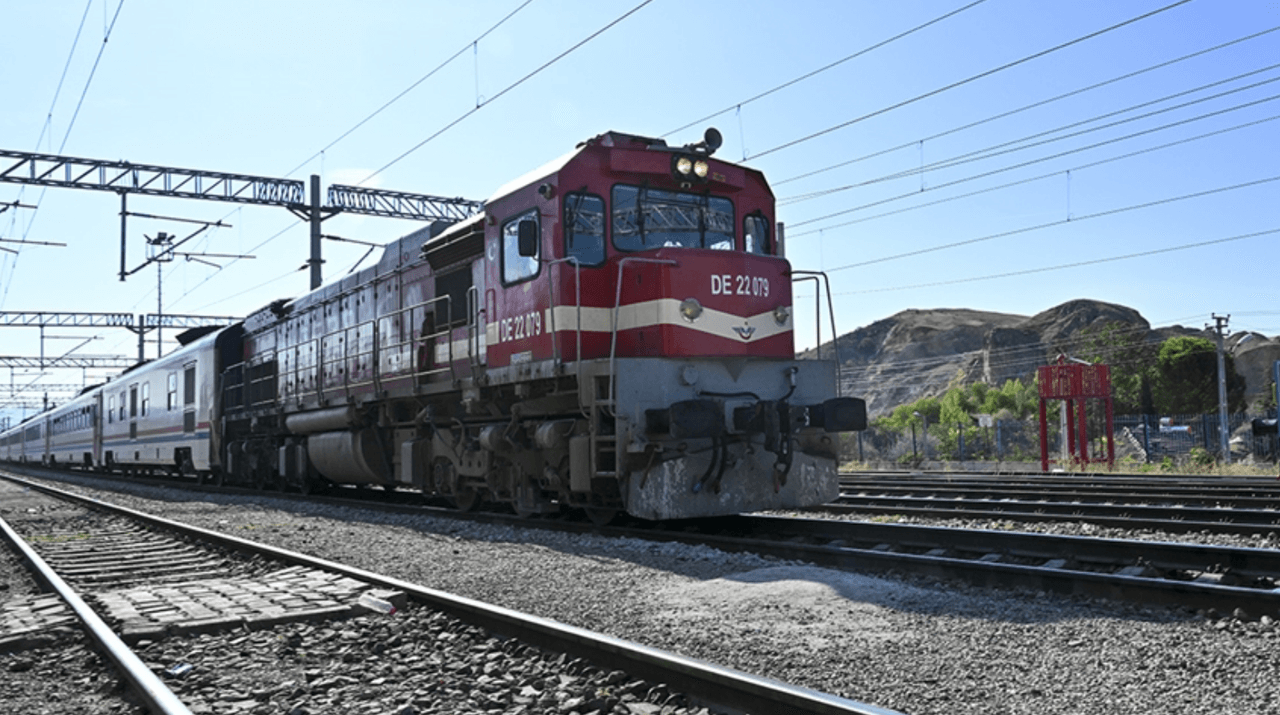
Kars–Gümrü–Tiflis Railway; This railway line connects Kars in northeastern Türkiye with Gümrü (formerly Alexandropol), the second largest city in Armenia, forming the historical axis of the South Caucasus transport geography.
Constructed initially between 1895 and 1899 by the Russian Empire, the line spans a total length of 299 kilometers including its 74-kilometer section along the Türkiye–Armenia border. During the Soviet era, it served as the only direct railway link between Türkiye and the USSR. After Türkiye closed the line to traffic in 1993 citing Armenia’s occupation of Azerbaijani territories, it remained out of service for over three decades. In the context of the normalization process between the two countries scheduled for 2025–2026, rehabilitation and reactivation of the line have moved to the forefront of the agenda.
Following the 1877–1878 Russo-Ottoman War, also known as the 93 War, the Treaty of San Stefano signed on 3 March 1878 mandated that the Ottoman State pay 1.41 billion rubles in reparations to Russia. In return for relinquishing 1.1 billion rubles of this sum, the Russian Empire annexed Kars, Ardahan and Batum directly, thereby establishing Russian administration over the region for nearly four decades.
Under the newly established Kars Military Province (Kars Oblast) on 1 November 1877, the Russian administration, drawing strategic lessons from its defeat in the Crimean War (1853–1856), prioritized railway infrastructure as a matter of national security. The primary reason for the alliance’s superiority during the Crimean War—Britain, France and the Ottoman Empire—was their superior maritime logistics; in contrast, Russia lacked any functional railway network.
With this awareness, the Russian government decided on 11 March 1894 to complete final surveys for a railway connecting Tiflis to Erivan via Gümrü (Alexandropol) and Kars, and to commence construction in 1895. The construction cost amounted to 23 million 434 thousand 423 rubles at a rate of 84,015 rubles per verst, including rails, fasteners and rolling stock.【1】
During construction, a workforce of 7,000 to 10,000 laborers was employed, including Armenians, Russians, Ottomans, Iranians, Italians and Germans. Archival sources indicate that the majority of Turkish workers originated from regions geographically close to the Kars Oblast, such as Trabzon and Erzurum.【2】
The official inauguration of the railway took place in Kars on 21 June 1899. The first train arriving from Tiflis was received in Kars with a modest ceremony on 15 July 1899. Regular services between Gümrü and Kars began only on 1 December 1899; due to incomplete infrastructure, the initially planned three weekly trips were reduced to two.
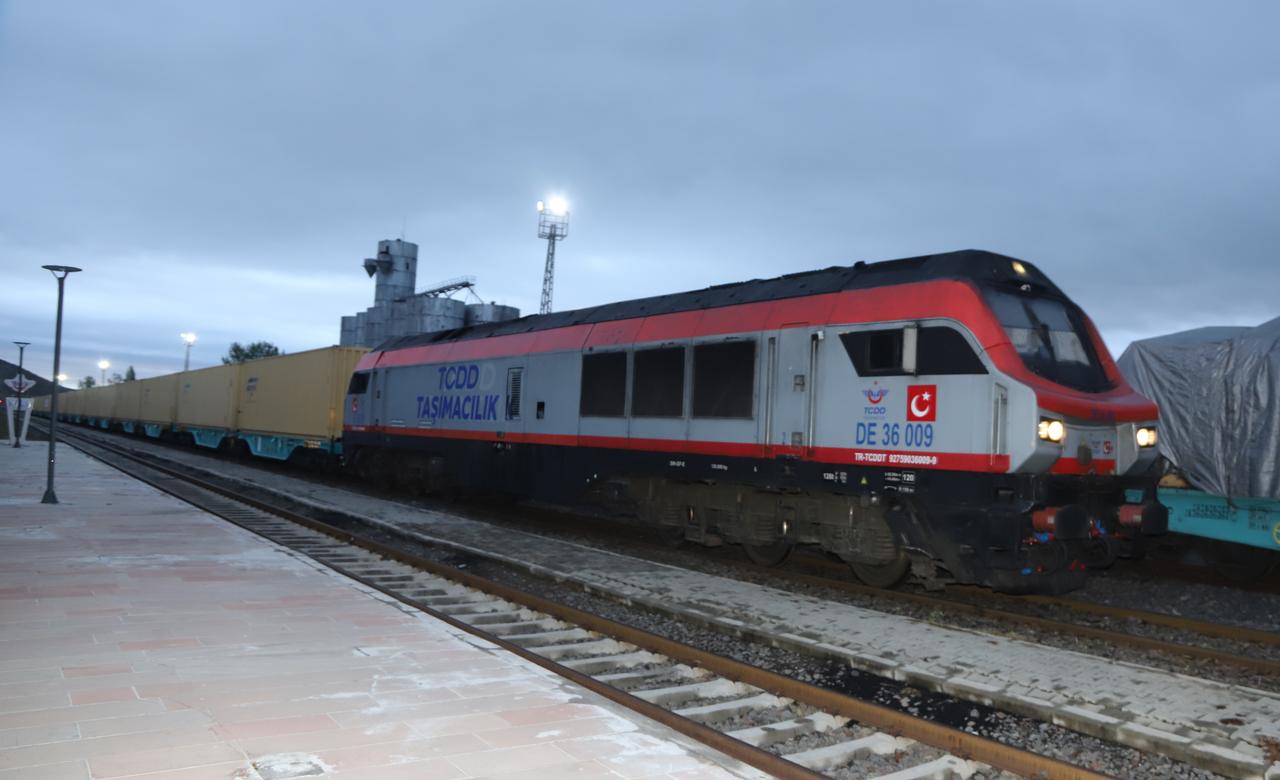
Baku-Tiflis-Kars Railway (AA)
Following completion of the Tiflis–Gümrü–Kars line, Russia advanced to the second phase of its railway expansion plan by connecting Kars to Sarıkamış. Construction of this 170-kilometer segment began in 1912 and opened for service in 1914 at a cost of 3 million 633 thousand 645 rubles. During World War I, between 1916 and 1918, a 170-kilometer extension from Sarıkamış to Erzurum was built as a 750 mm narrow-gauge (dekovil) line. These interconnected railway projects enabled the modern-day Türkiye–Armenia border crossing to become part of a comprehensive transport network linking Tiflis to the Caucasus via Kars, Kars to Sarıkamış, and Sarıkamış to Erzurum via the dekovil line.
The Kars–Gümrü–Tiflis Railway holds multiple strategic functions due to its geographic position. It has the potential to integrate the Baku–Tiflis–Kars corridor from the east, connections via Georgia, and Armenia’s western gateway into a single unified route.
The Baku–Tiflis–Kars (BTK) corridor, spanning 829 kilometers from Azerbaijan’s capital Baku through Georgia’s Tiflis and Ahılkelek to Kars, enables uninterrupted freight transport between Europe and China.【3】 Should the Kars–Gümrü–Tiflis line be reopened, Armenia’s integration into this corridor with the West would be directly strengthened; rail links from Central Asia and the Caucasus could then connect seamlessly to Europe via Türkiye.
The total length of the Baku–Tiflis–Kars line is 838.6 kilometers. Of this, 105 kilometers lie within Türkiye, with 29 kilometers in Georgia and 76 kilometers within Türkiye’s borders. This infrastructure has established a new railway corridor linking Europe with the Caspian Sea via Türkiye.
Following Russia’s withdrawal from Kars after the October Revolution of 1917, a period of political uncertainty ensued in the region. The area briefly came under Armenian control before being reintegrated into Türkiye on 30 October 1920. Subsequently, the Treaty of Moscow was signed on 16 March 1921 and the Treaty of Kars on 13 October 1921.
On 9 July 1922 in Tiflis, representatives of the Government of the Grand National Assembly of Türkiye and the Armenian, Azerbaijani and Georgian Soviet Socialist Republics signed the Railway Agreement based on Article 9 of the Treaty of Moscow and Article 17 of the Treaty of Kars. Article 1 of the agreement provided for direct, transfer-free passenger and freight transport between Türkiye and the Transcaucasian Soviet railways via Gümrü station. Article 3 mandated that trains operate weekly in both directions on the Sarıkamış–Batumi and Sarıkamış–Tiflis routes.【4】
The law ratifying this agreement, numbered 612, positioned the Tiflis–Gümrü–Kars line as a vital gateway connecting the USSR to the outside world during that period. Although Kars was reintegrated into the homeland, its connection to the Caucasus was temporarily severed. However, between 1930 and 1940, Kars emerged as one of the region’s leading centers for live animal exports through Soviet border trade conducted via the Doğukapı border crossing.
As the Armenian–Azerbaijani conflict escalated and Armenia occupied the Azerbaijani territory of Kelbajar, Türkiye decided on 21 May 1993 to suspend freight traffic on the line and on 23 July 1993 to suspend passenger traffic. Since then, railway operations on the Kars line have been limited exclusively to the Kars–Akyaka route. Türkiye has consistently maintained that full reopening of the border is contingent upon the completion of a normalization process between Armenia and Azerbaijan and the signing of a lasting peace agreement.
In the context of the Türkiye–Armenia normalization process scheduled for 2025–2026, concrete steps have been initiated regarding the Kars–Gümrü–Tiflis railway. Türkiye’s Special Representative for Normalization, Serdar Kılıç, and Ruben Rubinyan, Deputy Speaker of the National Assembly of Armenia and Special Representative, agreed in their 2025 meeting to initiate technical studies for the rehabilitation and reactivation of the railway and the electricity interconnector.
Subsequently, the Türkiye–Armenia Joint Working Group held its first meeting in Kars on 28 April 2026. In a statement issued by the Turkish Ministry of Foreign Affairs, it was emphasized that “the parties underscored the importance of immediately activating the Kars–Gümrü–Tiflis railway as part of regional transportation connectivity.” A similar assessment was shared publicly by the Armenian Ministry of Foreign Affairs.
The European Union’s Service for Foreign Policy Instruments welcomed the meeting, highlighting that “the continued momentum in the Türkiye–Armenia normalization process reflects broader positive dynamics necessary for lasting peace and stability in the region.” The EU stated that the reactivation of the line would strengthen regional connectivity and deliver tangible benefits to all populations in the South Caucasus, and affirmed its continued support in line with the Regional Connectivity Agenda and the Global Gateway strategy.【5】
U.S. Ambassador to Ankara Tom Barrack assessed this step as “a pivotal moment for regional connectivity and peace,” noting that the railway would serve as a vital commercial and transit corridor for the region, aligning with the vision of the Trump International Peace and Prosperity Path (TRIPP) project signed by U.S. President Donald Trump on 8 August 2025.
Anadolu Ajansı. "AB'den Türkiye-Ermenistan Demir Yolu Temaslarına Destek." Anadolu Ajansı, September 13, 2024. Accessed June 8, 2026. https://www.aa.com.tr/tr/dunya/abden-turkiye-ermenistan-demir-yolu-temaslarina-destek/3921934
Anadolu Ajansı. "Bakü-Tiflis-Kars Demiryolu Hattıyla 7 Ayda 250 Bin Ton Yük Taşındı." Anadolu Ajansı, November 23, 2024. Accessed June 8, 2026. https://www.aa.com.tr/tr/ekonomi/baku-tiflis-kars-demiryolu-hattiyla-7-ayda-250-bin-ton-yuk-tasindi/3649054
Anadolu Ajansı. "Türkiye'nin Bölgesel Demir Yolu Bağlantısını Güçlendirecek Projeye 2,4 Milyar Avroluk Finansman." Anadolu Ajansı. September 17, 2024. Accessed June 8, 2026. https://www.aa.com.tr/tr/ekonomi/turkiyenin-bolgesel-demir-yolu-baglantisini-guclendirecek-projeye-2-4-milyar-avroluk-finansman/3637946
Anadolu Ajansı. "İpekyolu'nun Demir Köprüsü: Bakü-Tiflis-Kars Demiryolu Hattı" (Infographic). Anadolu Ajansı. October 29, 2021. Accessed June 8, 2026. https://www.aa.com.tr/tr/info/infografik/23515
Efiloğlu, Ahmet. "Tiflis-Gümrü-Kars Demiryolu İnşası (1895-1899)." Academia.edu. Accessed June 8, 2026. https://www.academia.edu/25614587/_Tiflis_Gümrü_Kars_Demiryolu_İnşası_1895_1899_
Sarıçelik, Seyfi. "Kars-Tiflis Demiryolu Projesi ve Tarihî Arka Plânı." *Marmara Türkiyat Araştırmaları Dergisi* 4, no. 2 (2017): 119–142. DergiPark. Accessed June 8, 2026. https://dergipark.org.tr/tr/pub/marucog/article/386163
[1]
Candan Badem & Sonya Mirzoyan, Tiflis-Gümrü-Kars Demiryolu İnşası (1895-1899), Institute for Historical Justice and Reconciliation, 2013, s. 20.
[2]
Badem & Mirzoyan, a.g.e., s. 27-28.
[3]
"Bakü-Tiflis-Kars Demiryolu hattıyla 7 ayda 250 bin ton yük taşındı," Anadolu Ajansı, erişim: https://www.aa.com.tr/tr/ekonomi/baku-tiflis-kars-demiryolu-hattiyla-7-ayda-250-bin-ton-yuk-tasindi/3649054
[4]
TBMM Kavanin Mecmuası, Devre: 2, İçtima: 2, Cilt: 3, İkinci Basılış, Ankara, 1942, s. 170.
[5]
"AB'den, Türkiye-Ermenistan demir yolu temaslarına destek," Anadolu Ajansı, 29 Nisan 2026, erişim: https://www.aa.com.tr/tr/dunya/abden-turkiye-ermenistan-demir-yolu-temaslarina-destek/3921934


Length(s) | 299 km | ||||||||
|---|---|---|---|---|---|---|---|---|---|
Centers Connected | Kars (Türkiye) - Gyumri (Armenia) | ||||||||
Current Status | Closed since 1993 | ||||||||
Türkiye Border Gate | Doğukapı Border Gate (Akyaka, Kars) | ||||||||
Constructing Power | Tsarist Russia | ||||||||
Initial Construction Period | 1895 - 1899 | ||||||||
No Discussion Added Yet
Start discussion for "Kars–Gyumri–Tbilisi Railway" article
Historical Background
Opening Period
Strategic Significance
Soviet Era and the 1922 Railway Agreement
Closure Process (1993)
Reopening Process