

This article was automatically translated from the original Turkish version.
+2 More
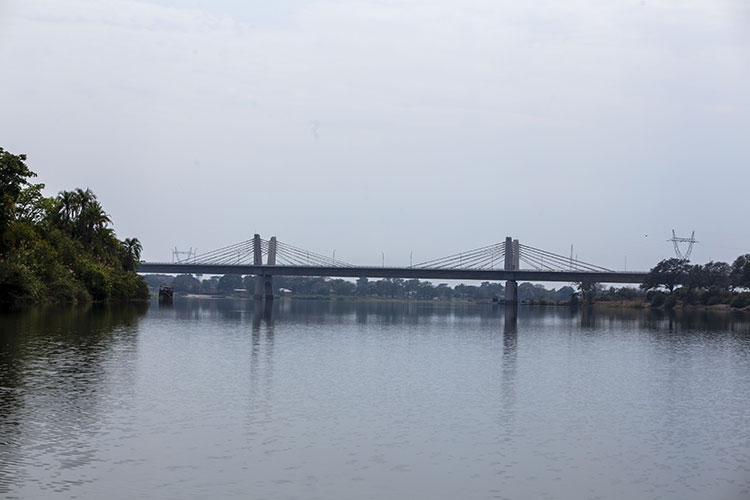
Kazungula Bridge is a road and railway bridge constructed over the Zambezi River, providing a direct connection between Botswana and Zambia. Opened in 2021, the structure is approximately 923 metres long and 18.5 metres wide, incorporating a two-lane road, a single-track railway line and a pedestrian walkway. The bridge is located in the Kazungula region, where the borders of Namibia and Zimbabwe come close together, replacing the previously used ferry service and serving as a critical infrastructure element that facilitates regional transport and border crossings.
Efforts to construct a bridge in the Kazungula region initially emerged as a project planned between Botswana and Namibia, but later the route was reconsidered to connect with Zimbabwe. During this phase, after the Zimbabwe government of the time withdrew from the project, planning was restructured and in 2007 an agreement was reached between Botswana and Zambia. It was decided that the bridge would be built along a curved alignment to avoid crossing into the territory of neighboring countries.【1】
Construction of the project began in 2014 and after several delays the bridge was opened to traffic in 2021. Prior to its completion, crossings over the Zambezi River were limited to a low-capacity ferry service, restricting transport between the two countries. With the bridge’s completion, this method was replaced by a continuous and high-capacity connection, establishing a permanent infrastructure for border crossings in the Kazungula region.【2】

Kazungula Bridge (Anadolu Ajansı)
Kazungula Bridge’s construction was planned in accordance with the agreement between Botswana and Zambia and commenced in 2014. The project was implemented under a multilateral financing structure by the African Development Bank and its co-financiers. With an approximate cost of 260 million US dollars, the structural components of the bridge—including its road and railway elements—and the infrastructure supporting border crossings were addressed holistically, creating an integrated transport system to replace the previous ferry-based system and ensure continuous river crossing.【3】
The Kazungula Bridge project was launched under bilateral agreements and project contracts signed between Zambia and Botswana. The legal and administrative foundation for implementation was defined through a holistic structure encompassing the bridge, border facilities and connecting roads, with provisions established for financing, execution and oversight. The necessary contracts for project implementation were shaped with the participation of international financial institutions; Japanese International Cooperation Agency rules were applied for the bridge construction tender and procurement processes, while African Development Bank procedures governed other project components. Following the contract process, coordination structures were established for project management, and construction activities commenced after fulfilling preliminary conditions such as land acquisition, approval of resettlement plans and appointment of the project management team.【4】 【5】
High durability and long-term service life were prioritized in the construction of the Kazungula Bridge, with quality-compliant steel and concrete materials selected. The main load-bearing structure features specialized steel girders capable of withstanding heavy loads and high-strength concrete. Foundation works, including ground surveys and pile foundations for the bridge piers, were carefully planned with consideration of the Zambezi River bed’s characteristics, resulting in structural solutions resilient to water level fluctuations. Additionally, superstructures and approach roads connecting the bridge to the road network were developed, with drainage systems and erosion control measures integrated into the construction schedule.
Parallel works were also carried out for the border facilities and surrounding infrastructure. Electrical, water and communication networks were modernized on both the Zambian and Botswanan sides to meet bridge usage requirements. Robust ground preparation was undertaken for the placement of equipment and service areas, and information technology infrastructure was installed to ensure seamless data sharing and border management operations. This integrated approach was designed to enhance operational efficiency both during construction and after the bridge’s commissioning.
The Kazungula Bridge was designed in accordance with modern engineering standards and serves as a regional symbol, combining aesthetic appeal with functional efficiency. The bridge was planned as a comprehensive structural system encompassing the main load-bearing structure connecting the two countries and the approach roads. In its architectural design, environmental compatibility, resilience to water level variations and long-term usability were prioritized, with the bridge’s integration into the ground and surrounding infrastructure approached holistically. Designed to meet modern transportation needs through integrated substructure and superstructure systems, the bridge functions as a critical link for regional trade and transport.
The Kazungula Bridge features a composite steel and concrete load-bearing structure constructed in line with modern engineering standards. The total length of the bridge is 923 metres and its width is 18.5 metres, designed to accommodate two vehicle lanes, a single railway track and a pedestrian walkway.【6】 The bridge piers are founded on robust foundations anchored into the Zambezi River bed, with engineering calculations reinforcing their resilience to river flow velocity, water level changes and environmental factors. The steel components and reinforced concrete platform used in the bridge were designed to enhance both load capacity and long-term durability. Aesthetic details and environmental compatibility were considered during the design process, and the integration of underwater and land-based infrastructure was executed holistically.

Kazungula Bridge (Anadolu Ajansı)
The Kazungula Bridge stands out as a strategic infrastructure asset due to its transport capacity and engineering significance. Designed to accommodate a two-lane road and a single railway line, it was constructed to allow passage of heavy-tonnage vehicles. As a result, regional trade traffic has significantly accelerated and transportation costs have been reduced. The bridge’s engineering design incorporates resilience and longevity criteria, taking into account the Zambezi River’s current patterns and climatic conditions. Modern concrete and steel technologies used in its construction ensure the safety and robustness of structural elements while facilitating maintenance and operational processes. These features have not only improved regional connectivity but also positioned the bridge as an exemplary infrastructure project from an engineering standpoint.
Environmental and social impact management was a key component of the Kazungula Bridge construction. Special measures were developed during construction to prevent potential harm to the Zambezi River ecosystem, with initiatives undertaken to preserve water quality and biological diversity. Additionally, social impact assessments were conducted to ensure local communities’ living conditions remained unaffected, and various programs were implemented to inform the public and expand employment opportunities. Standard environmental procedures were applied to noise, dust and waste management, and regular environmental audits were carried out. In this context, the bridge was constructed not only to facilitate transport but also in accordance with principles of environmental sustainability and social responsibility.
The operation and management structure of the Kazungula Bridge was established under joint oversight by Zambia and Botswana. Relevant ministries and border authorities from both countries formed joint committees to coordinate daily operations and logistics flows. The management system was structured to cover processes such as security, maintenance and financial reporting, with clearly defined responsibilities and authority levels for personnel stationed at the bridge. Furthermore, customs and border crossing procedures were streamlined, and necessary infrastructure and monitoring mechanisms were established to ensure regular and efficient trade and logistics flows. These institutional arrangements support the safe, efficient and long-term operation of the bridge.
The Kazungula Bridge has generated significant economic and social impacts on surrounding communities. Regional trade volume has increased, creating new employment opportunities in local businesses and the transport sector. By facilitating regional connectivity, the bridge has strengthened links between cities and ports in both Zambia and Botswana. Socially, faster and safer border crossings have resulted in time and cost savings for daily life. Under a sustainability approach, maintenance and operational processes were planned with long-term use in mind, and measures were adopted to minimize environmental impacts. Thus, the bridge functions as an infrastructure project that supports economic development while maintaining environmental and social balance.
The Kazungula Bridge holds importance not only for its economic and transport functions but also for its cultural and symbolic value in the region. As a link strengthening historical and social ties between Zambia and Botswana, the bridge has reinforced local identity and solidarity. It also serves as a point of attraction for tourists visiting the region, enhancing cross-border interaction. Moreover, infrastructure and transport projects around the bridge have raised awareness and attention toward the preservation of cultural heritage while improving local community living standards. In this context, the Kazungula Bridge is regarded not merely as an economic facility but as a symbol that supports cultural and social connections.
[1]
Anadolu Ajansı, “Afrika’da 4 ülke sınırının buluştuğu bölgedeki köprü: Kazungula Köprüsü,” Anadolu Ajansı, 20 Ekim 2023, Son Erişim: 4 Nisan 2026, https://www.aa.com.tr/tr/dunya/afrika-da-4-ulke-sinirinin-bulustugu-bolgedeki-kopru-kazungula-koprusu/3027349
[2]
A.e.,
[3]
Zambia Ministry of Transport and Logistics, “Kazungula Bridge: The Game Changer in Trade Facilitation,” Zambia Ministry of Transport and Logistics, Son Erişim: 4 Nisan 2026, https://www.motl.gov.zm/?p=7844
[4]
African Development Fund, "Project: Kazungula Bridge Project (SADC North–South Transport Corridor Improvement), Multinational: Republic of Zambia and Republic of Botswana," Project Appraisal Report, (2011): 18, Son Erişim: 4 Nisan 2026, https://www.afdb.org/fileadmin/uploads/afdb/Documents/Project-and-Operations/Multinational__Zambia-Bostwana__-_AR_-_Kazungula_Bridge_Project_.pdf
[5]
A.e., syf. 13
[6]
Anadolu Ajansı, “Afrika’da 4 ülke sınırının buluştuğu bölgedeki köprü: Kazungula Köprüsü,” Anadolu Ajansı, 20 Ekim 2023, Son Erişim: 4 Nisan 2026, https://www.aa.com.tr/tr/dunya/afrika-da-4-ulke-sinirinin-bulustugu-bolgedeki-kopru-kazungula-koprusu/3027349


History
Construction Process
Contract and Initiation
Material Use and Infrastructure Works
Architectural and Technical Features
Bridge Structure and Dimensions
Transport Capacity and Engineering Significance
Environmental and Social Management Measures
Institutional Arrangements and Management
Social Impact and Sustainability
Cultural Significance