

This article was automatically translated from the original Turkish version.
+1 More
Scientific Name(s) | Gundelia tournefortii | ||||||||
|---|---|---|---|---|---|---|---|---|---|
Economic Value | A completely handcrafted, strategic natural raw material for rural development, significantly more expensive than industrial gums | ||||||||
Distinguishing Feature | A much harder and more durable texture compared to industrial gums, brittle at room temperature but gaining elasticity at 36-37°C (oral temperature) and remaining chewable for extended periods without structural breakdown | ||||||||
Primary Benefit | Protection of oral and dental health through antimicrobial and anti-biofilm effects, relief of stomach pain and bloating | ||||||||
Production Method | The latex exuded through cross-cuts made at the root neck, dried in open air | ||||||||
Harvest Time | The period from mid-May to early July | ||||||||
Growing Region | Eastern and Southeastern Anatolian steppes (Hakkari, Van, Tunceli, Şanlıurfa) | ||||||||
Plant Family | Asteraceae (Daisy family) | ||||||||
Kenger gum is a natural, viscous, and aromatic resin obtained from the plant Gundelia tournefortii L., which belongs to the Asteraceae (Aster family). It is also known locally as dağ sakızı. The plant is a perennial herb with spiny stems that grows naturally in the steppe ecosystems of eastern and southeastern Türkiye, particularly on calcareous soils and mountainous terrain. The kenger plant is not only a source of resin but also a multifaceted economic resource, as its stems, seeds, and roots are used for food, animal feed, and medicinal purposes【1】.

Kenger Plant (AA)
The extraction of kenger gum is a labor-intensive process based entirely on traditional methods.
The biological cycle of the plant is monitored to identify the stage when the latex is most abundant and fluid. This period typically begins in mid-May and continues until early July, depending on the region’s altitude.
The underground root system and root collar area are carefully excavated without damaging the plant. Using a sharp knife, diagonal incisions are made to expose the latex ducts in the roots or stems.
A white, viscous liquid known as “kenger milk” seeps from the incisions. This liquid is traditionally allowed to accumulate in natural depressions at ground level or on cleaned soil surfaces【2】.
The liquid latex undergoes oxidation when exposed to sunlight and wind in open air. Initially white, its color gradually changes through chemical polymerization to cream and then to the characteristic matte yellow-brown tones as it solidifies.
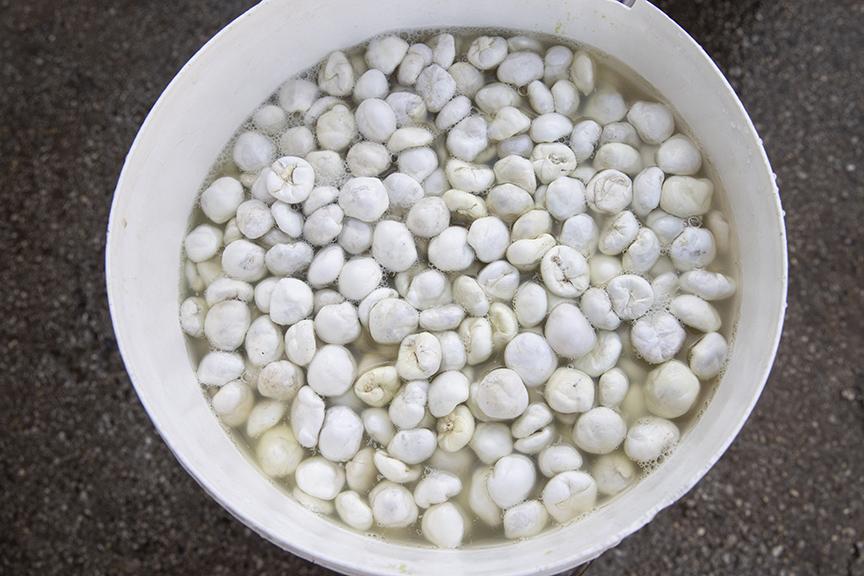
The solidified gum pieces are collected by hand. They are soaked, kneaded, and mechanically cleaned in containers filled with cold water to remove sand, soil, and plant fibers originating from the natural environment.
Modern pharmacological research and laboratory analyses have revealed that kenger gum (Gum Acanthus) possesses a complex phytochemical profile and offers multifaceted health benefits.
Laboratory tests have demonstrated that gum extracts inhibit the formation of “biofilms,” protective layers created by pathogenic bacteria on surfaces【3】. This property helps regulate oral bacterial flora and minimizes infection risk【4】.
The high concentration of phenolic compounds identified in the gum can neutralize free radicals in the body, thereby supporting the reduction of oxidative stress at the tissue level.
Cytotoxic studies conducted on specific cancer cell lines have academically documented the growth-inhibiting potential of kenger components【5】.
Traditionally and medicinally, kenger gum is regarded as a natural agent for strengthening gums, mechanically removing dental tartar, and eliminating bad breath【6】.
It is recognized as a functional aid against stomach pain, bloating, and indigestion. Its appetite-stimulating properties and potential protective effects on the gastric mucosa have been the subject of clinical observations.
Kenger gum is a critical component of the local economy in Turkish provinces such as Hakkari, Van, Tunceli, and Şanlıurfa.
In rural areas, the quantity of gum collected during a single harvesting season makes a significant contribution to household budgets【7】. One kilogram of kenger gum has a significantly higher market value than standard industrial gums due to its labor-intensive collection and limited natural availability【8】.
Academic data emphasize that the natural structure of the gum gives it potential as an alternative raw material in the pharmaceutical and cosmetic industries, replacing synthetic products【9】.
Intensive harvesting of the plant for both food (kenger herb dish) and resin purposes exerts pressure on its natural populations. Academic reports indicate that standardization of harvesting methods and protective measures against over-collection are necessary to ensure sustainability【10】.
In Anatolian culture, kenger gum is not merely a consumable product but also a traditional medicinal remedy.
In folk medicine, this gum is regarded as a “natural healing source” and has been used for generations to treat digestive disorders and in oral hygiene rituals.
In regions such as Hakkari and Van, kenger is described as “a value extending from nature to culture.” The springtime kenger harvest has evolved into a sociological ritual of mutual aid, collective labor, and interaction with nature【11】.
Ekin, Zehra, and Savaş Demir. “Doğadan Kültüre Uzanan Bir Değer: Hakkari'de Kenger Bitkisinin Ekolojik, Ekonomik ve Sosyo-Kültürel Sürdürülebilirliği.” *Tarımda Entegre Teknolojiler ve Ekosistemsel Yaklaşımlar*, 65–77. Ankara: Akademisyen Yayınevi Kitabevi, 2025. Accessed February 23, 2026. https://doi.org/10.37609/akya.3933.c2671
Eren, Sidar Can. “Kenger Sakızı Geçim Kaynağı Oldu.” Anadolu Ajansı, 2019. Accessed February 23, 2026. https://www.aa.com.tr/tr/yasam/kenger-sakizi-gecim-kaynagi-oldu/1589238
Fidan, Halil. “Hem Sakızı Hem Otu Şifa Kaynağı.” Anadolu Ajansı, 2017. Accessed February 23, 2026. https://www.aa.com.tr/tr/saglik/hem-sakizi-hem-otu-sifa-kaynagi/793273
Günal, Nurten. “Türkiye'de Yöresel Olarak Sakız Elde Edilen Bitkiler.” *Türk Coğrafya Dergisi* 36 (2001): 17–30. Accessed February 23, 2026. https://dergipark.org.tr/tr/download/article-file/198592
Kıray, Esin, İbrahim Seyfettin Çelik, and Esen Çakmak. “Phytocomponent Profile, Antimicrobial, Antibiofilm, Antioxidant and Cytotoxic Activities of Gum Acanthus Obtained from Gundelia tournefortii L. (Kenger) Plant.” KOU Sağlık Bilimleri Dergisi 12, no. 1 (2026): 33–40. Accessed February 23, 2026. https://dergipark.org.tr/tr/download/article-file/4946051
TÜBİTAK Bilim Genç. “Dağ Sakızı Özütünün Antimikrobiyal Özelliğinin Araştırılması.” Accessed February 23, 2026. https://bilimgenc.tubitak.gov.tr/proje/dag-sakizii-ozutunun-antimikrobiyal-ozelliginin-arastirilmasi
Van Yüzüncü Yıl Üniversitesi. "Ekonomik ve Ekolojik Değere Sahip Bitki: Kenger (Gundelia L.)." AVESİS Akademik Veri Yönetim Sistemi. Accessed February 23, 2026.
[1]
Van Yüzüncü Yıl Üniversitesi, “Ekonomik ve Ekolojik Değere Sahip Bitki: Kenger (Gundelia L.),” AVESİS Akademik Veri Yönetim Sistemi, erişim 23 Şubat 2026, https://avesis.yyu.edu.tr/yayin/e0a8f630-53e4-4df2-ba76-818122783b05/ekonomik-ve-ekolojik-degere-sahip-bitki-kenger-gundelia-l
[2]
Nurten Günal, “Türkiye'de Yöresel Olarak Sakız Elde Edilen Bitkiler,” Türk Coğrafya Dergisi 36 (2001): 22, erişim 23 Şubat 2026, https://dergipark.org.tr/tr/download/article-file/198592
[3]
Esin Kıray, İbrahim Seyfettin Çelik ve Esen Çakmak, “Phytocomponent Profile, Antimicrobial, Antibiofilm, Antioxidant and Cytotoxic Activities of Gum Acanthus Obtained from Gundelia tournefortii L. (Kenger) Plant,” KOU Sağlık Bilimleri Dergisi 12, no. 1 (2026): 36, erişim 23 Şubat 2026, https://dergipark.org.tr/tr/download/article-file/4946051
[4]
TÜBİTAK Bilim Genç, “Dağ Sakızı Özütünün Antimikrobiyal Özelliğinin Araştırılması,” erişim 23 Şubat 2026, https://bilimgenc.tubitak.gov.tr/proje/dag-sakizii-ozutunun-antimikrobiyal-ozelliginin-arastirilmasi
[5]
Esin Kıray, İbrahim Seyfettin Çelik ve Esen Çakmak, “Phytocomponent Profile, Antimicrobial, Antibiofilm, Antioxidant and Cytotoxic Activities of Gum Acanthus Obtained from Gundelia tournefortii L. (Kenger) Plant,” KOU Sağlık Bilimleri Dergisi 12, no. 1 (2026): 37, erişim 23 Şubat 2026, https://dergipark.org.tr/tr/download/article-file/4946051
[6]
Halil Fidan, “Hem Sakızı Hem Otu Şifa Kaynağı,” Anadolu Ajansı, 2017, erişim 23 Şubat 2026, https://www.aa.com.tr/tr/saglik/hem-sakizi-hem-otu-sifa-kaynagi/793273
[7]
Sidar Can Eren, “Kenger Sakızı Geçim Kaynağı Oldu,” Anadolu Ajansı, 2019, erişim 23 Şubat 2026, https://www.aa.com.tr/tr/yasam/kenger-sakizi-gecim-kaynagi-oldu/1589238
[8]
Zehra Ekin ve Savaş Demir, “Doğadan Kültüre Uzanan Bir Değer: Hakkari'de Kenger Bitkisinin Ekolojik, Ekonomik ve Sosyo-Kültürel Sürdürülebilirliği,” Tarımda Entegre Teknolojiler ve Ekosistemsel Yaklaşımlar (Ankara: Akademisyen Yayınevi Kitabevi, 2025): 70, erişim 23 Şubat 2026, https://doi.org/10.37609/akya.3933.c2671
[9]
Van Yüzüncü Yıl Üniversitesi, “Ekonomik ve Ekolojik Değere Sahip Bitki: Kenger (Gundelia L.),” AVESİS Akademik Veri Yönetim Sistemi, erişim 23 Şubat 2026, https://avesis.yyu.edu.tr/yayin/e0a8f630-53e4-4df2-ba76-818122783b05/ekonomik-ve-ekolojik-degere-sahip-bitki-kenger-gundelia-l
[10]
Zehra Ekin ve Savaş Demir, “Doğadan Kültüre Uzanan Bir Değer: Hakkari'de Kenger Bitkisinin Ekolojik, Ekonomik ve Sosyo-Kültürel Sürdürülebilirliği,” Tarımda Entegre Teknolojiler ve Ekosistemsel Yaklaşımlar (Ankara: Akademisyen Yayınevi Kitabevi, 2025): 74, erişim 23 Şubat 2026, https://doi.org/10.37609/akya.3933.c2671
[11]
Zehra Ekin ve Savaş Demir, “Doğadan Kültüre Uzanan Bir Değer: Hakkari'de Kenger Bitkisinin Ekolojik, Ekonomik ve Sosyo-Kültürel Sürdürülebilirliği,” Tarımda Entegre Teknolojiler ve Ekosistemsel Yaklaşımlar (Ankara: Akademisyen Yayınevi Kitabevi, 2025): 72, erişim 23 Şubat 2026, https://doi.org/10.37609/akya.3933.c2671

Scientific Name(s) | Gundelia tournefortii | ||||||||
|---|---|---|---|---|---|---|---|---|---|
Economic Value | A completely handcrafted, strategic natural raw material for rural development, significantly more expensive than industrial gums | ||||||||
Distinguishing Feature | A much harder and more durable texture compared to industrial gums, brittle at room temperature but gaining elasticity at 36-37°C (oral temperature) and remaining chewable for extended periods without structural breakdown | ||||||||
Primary Benefit | Protection of oral and dental health through antimicrobial and anti-biofilm effects, relief of stomach pain and bloating | ||||||||
Production Method | The latex exuded through cross-cuts made at the root neck, dried in open air | ||||||||
Harvest Time | The period from mid-May to early July | ||||||||
Growing Region | Eastern and Southeastern Anatolian steppes (Hakkari, Van, Tunceli, Şanlıurfa) | ||||||||
Plant Family | Asteraceae (Daisy family) | ||||||||
No Discussion Added Yet
Start discussion for "Kenger Gum (Mountain Gum)" article
Production Methodology and Physical Processes
Timing
Lancing Procedure
Exudation
Coagulation
Purification
Chemical Composition and Health Dimensions
Antimicrobial and Antibiofilm Capacity
Antioxidant Effect
Cytotoxic Activity
Oral and Dental Health
Digestive System
Economic and Sustainability Dimensions
Household Income
Industrial Raw Material Potential
Ecological Threats
Socio-Cultural and Functional Uses
Traditional Medicine
Cultural Identity