+1 More

Date and Place of Birth | 11 July 1966 Chiba Japan | ||||||||
|---|---|---|---|---|---|---|---|---|---|
Date and Place of Death | 6 May 2021 Tokyo Japan | ||||||||
Profession(s) | Mangaka writer | ||||||||
Most Famous Work | Berserk (1989–2021) | ||||||||
Other Works | King of Wolves Japan Gigantomakhia Duranki | ||||||||
Award(s) | 2002 Tezuka Osamu Cultural Award Excellence Award | ||||||||
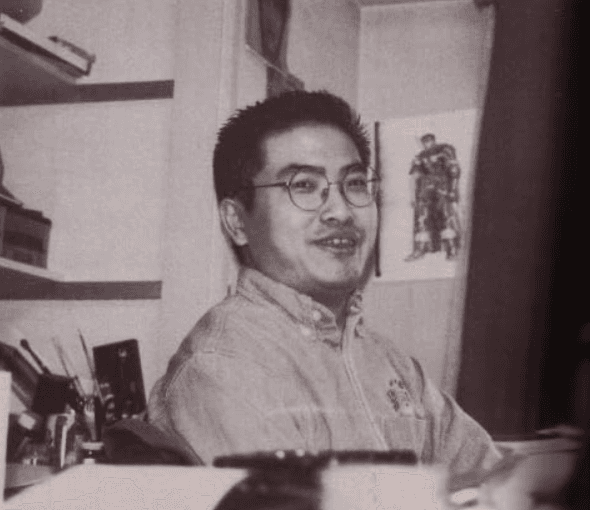
Kentaro Miura is regarded as one of the most important figures in contemporary manga art. His life and works have left an impact not only within the manga world but also in popular culture at large.
Kentaro Miura: The Story of the Genius Behind Berserk! (YouTube - Atakan Titan)
Kentaro Miura was born on 11 July 1966 in Chiba, Japan. His father worked as a storyboard artist for advertising films, while his mother was a teacher specializing in art education. Due to his family’s profession, Miura experienced frequent relocations during childhood, leading him to use drawing as a means of communication to adapt to new environments and form friendships.
From the age of seven, Miura began regularly drawing in notebooks. During this period, drawing became an integral part of daily life, serving both as a leisure activity and a method of social connection. This early habit laid the foundation for the disciplined work ethic he would maintain throughout his career.
At the age of ten, Miura began creating a manga titled “Miuranger” for his classmates. This work, circulated within his school, reached a volume of 40 issues, allowing Miura to acquire early experience in consistent production, page planning, and the demands of serialized storytelling. Undertaking such an extensive series at this young age provided him with practical knowledge in layout design and character continuity.
A year after “Miuranger,” Miura launched a second manga project titled “Ken e no Michi” (The Path to the Sword). During his middle school years, his drawing technique developed significantly, and he began consciously incorporating elements commonly found in professional manga, such as screen tones, black-and-white balance, and panel flow. The technical foundation he built during these years formed the basis for the intricate detail that would characterize his later works.
Miura enrolled in an art education program at high school. During this time, he worked alongside Shizuya Wazarai and Mori Kōji, who would later become professional mangaka, within an artist-focused peer group. High school marked a period in which he advanced technically while also engaging with peers who shared similar aspirations.
Parallel to his high school years, Miura published his first dōjinshi works in small fanzines. These publications allowed him to gauge reader feedback and test his production pace against real deadlines. The dōjinshi practice facilitated his eventual adaptation to the professional magazine workflow.
In 1985, Miura created a one-shot science fiction manga titled “Futatabi” as part of his application to Nihon University. This work was published in Weekly Shōnen Magazine and earned him a nomination in the “New Artist” category. That same year, he published another one-shot titled “Noa” in Fresh Shōnen. These two works demonstrated that even before entering university, Miura had already reached a professional standard in narrative structure, pacing, and panel economy.
As Miura transitioned to university, he also gained firsthand experience with professional studio workflows. During this period, he learned magazine-based production methods, editor expectations, and adherence to delivery schedules. Producing one-shots across different platforms strengthened his ability to manage information density per page and control visual rhythm.
In 1988, Miura published a 48-page one-shot titled “Berserk Prototype.” This work formed the core of what would later evolve into a long-running series. The panel language, character structures, and dark-fantastic atmosphere of the “Prototype” were regarded as a clear synthesis of the technical and narrative experiences Miura had accumulated during his childhood and early youth.
The friendships and production groups Miura formed during his art-focused high school years significantly influenced both his thematic choices and work discipline. Receiving feedback through early dōjinshi and fanzines accelerated his internalization of the standards required by professional publishing.
In the mid-1980s, Kentaro Miura enrolled in the Faculty of Art at Nihon University. Throughout his university studies, he continued refining his drawing technique while producing one-shot manga in the science fiction genre. His 1985 submission “Futatabi,” created for university admission, was published in Weekly Shōnen Magazine and earned him a nomination for “Best New Artist.” Another one-shot, “Noa,” was also published that year. These two works demonstrated that Miura had gained recognition in professional publishing alongside his academic pursuits.
During university, Miura briefly served as an assistant to the renowned mangaka George Morikawa (creator of Hajime no Ippo). Morikawa noted Miura’s extraordinary technical skill and concluded there was little he could teach him, leading to their separation. This episode is seen as evidence that Miura had reached a professional drawing standard at a very young age.
One of Miura’s most significant early works is the 48-page one-shot “Berserk Prototype,” published in 1988. This piece established the first draft of the universe that would define his entire career. The work was published in ComiComi magazine and won the Manga School Award. “Prototype” contained the distinctive elements that would later become hallmarks of the series: character design, dark atmosphere, and grotesque imagery.
In 1989, Miura collaborated with Buronson (Yoshiyuki Okamura), the writer of Fist of the North Star (Hokuto no Ken), to create the series King of Wolves (Ōrō). The work was published over three issues in Animal House magazine. In 1990, a five-issue sequel, Legend of the Wolf King (Ōrō Den), was released. These collaborations marked a pivotal phase in Miura’s career, providing him with experience in script adaptation and character interpretation.
Miura teamed up with Buronson for a third time to create Japan. This work was published in the inaugural issues of Young Animal magazine. Japan adopted a structure more focused on social and political themes, demonstrating that Miura’s interests extended beyond fantastical elements to include critiques of contemporary society.
In October 1989, Miura published the first regular chapter of Berserk (the “Black Swordsman” arc) in Animal House magazine. Initially, the series attracted limited attention, but over time it expanded its audience through its deeply developed characters, philosophical subtexts, and dark atmosphere. Particularly, the level of detail in the artwork distinguished Miura from other mangaka.

Kentaro Miura - Berserk (Flickr)
In 1990, Animal House magazine ceased publication and was replaced by Young Animal, a new seinen magazine. With this change, Miura published his collaboration with Buronson, Japan, in the inaugural issues of Young Animal. Simultaneously, Berserk continued regularly in the same magazine starting in 1992. The magazine’s biweekly publication schedule provided Miura with a broader narrative space.
In the early 1990s, Berserk gained popularity through the “Golden Age” story arc. This section explored Guts’ enlistment as a mercenary in the “Band of the Hawk,” his friendship with leader Griffith, and his emotional bond with Casca. The arc culminating in Griffith’s betrayal became one of Miura’s most powerful explorations of human nature, betrayal, ambition, and tragedy. The “Eclipse” scene became a landmark moment symbolizing Miura’s narrative boldness and grotesque visual style.
Throughout the 1990s, Miura stood out in manga art for his extraordinary level of detail. His intensive use of pen-and-ink crosshatching and meticulously rendered backgrounds set Berserk apart from its peers. Miura drew most pages himself, even when using assistants for backgrounds, maintaining full control over the core composition. During this period, Miura’s works were frequently compared to Western artists such as Hieronymus Bosch, Gustave Doré, and M.C. Escher.
Miura directly participated in the production of the first anime adaptation of Berserk. The 25-episode anime, produced by VAP and OLM studios, aired on Nippon TV from October 1997 to March 1998. Miura served as a production consultant, contributing to character design and story oversight. The anime adapted only the “Golden Age” arc and generated significant international反响. This adaptation became the first major work to introduce Berserk to audiences outside Japan.
In 1997, the first art book titled Berserk Illustrations File was published, featuring Miura’s original artwork and an extensive interview. In 1998, a 25-page postcard book titled WAR CRY and Berserk-themed calendars were released. During this period, Miura’s works entered a broader cultural circulation not only through manga but also through merchandise and art books.
In 1999, Miura wrote the script, designed new characters, and created concept art for the video game Berserk: Chapter of the Oblivion Flowers (Sword of the Berserk: Guts’ Rage) developed for the Sega Dreamcast. Thus, the Berserk universe was expanded for the first time through video games.

Sword of the Berserk: Guts’ Rage (IMDb)
In 2002, Kentaro Miura received the 6th Tezuka Osamu Cultural Prize in the “Excellence” category for Berserk. This award is among the most prestigious in Japan’s manga industry. Miura’s receipt of this prize demonstrated that his work was valued not only for its popularity but also for its literary and artistic merit.
From the early 2000s, the Berserk universe expanded through card games, figurines, art books, and novels. In 2003, Miura created original artwork for a Berserk-themed card game published by Konami. In 2004, he wrote a new script and contributed directly to character designs for the PlayStation 2 game Berserk: Millennium Falcon, Record of the Holy Evil War.
In 2009, to commemorate the 20th anniversary of Berserk, Young Animal magazine published a special issue featuring a large poster and a character-world guide created by Miura. These events signaled that the series had begun to be regarded as a classic within Japanese manga.
In 2012, Studio 4°C released a three-part film series titled Berserk: The Golden Age Arc, with Miura’s direct involvement. Art books, original illustrations, and exclusive drawings for Blu-ray editions were all prepared personally by Miura. This film trilogy became a significant adaptation for introducing Berserk to a new generation of viewers.
In 2013, Miura took a brief break from Berserk to publish the seven-episode mini-series Gigantomakhia. This work, blending science fiction and mythological elements, was created as a contribution to Young Animal’s 20th anniversary. The series reflected Miura’s interest in mythology and alternative fantasy worlds.
The 38th volume of Berserk, published in 2016, was the first to be created using digital art techniques. This transition showed how Miura integrated digital tools into his drawing process without entirely abandoning his traditional pen-and-ink approach.
In 2016, Berserk was re-adapted into a 24-episode anime by GEMBA and Millepensee studios. This series covered the middle volumes of the manga (volumes 14–28). Miura wrote a special script for the third episode and added original illustrations to the Blu-ray releases.
In 2019, Miura, alongside Studio Gaga, launched a new series titled Duranki. This experimental manga, published in Young Animal Zero, explored themes of gender identity and mythology. Miura served as both writer and lead artist on the project.
By the 2010s, Berserk had sold over 50 million copies worldwide. Miura’s work has left clear influences on productions such as Dark Souls, Final Fantasy XIV, and Netflix’s Castlevania.
Dark Souls Berserk References - Side by side Comparison of Berserk Inspirations in Dark Souls ()
In 2019, Miura began the experimental manga project Duranki with Studio Gaga. The story featured a genderless protagonist and drew inspiration from Mesopotamian and Greek mythology. Miura served as both writer and artist on the project, actively encouraging his younger assistants to take on more substantial roles in production, thereby opening pathways for a new generation of mangaka.
According to close associates, Miura had no serious health issues and continued working until his final days. However, his meticulousness and perfectionism led him to produce highly detailed work consistently. His editors noted that he sometimes made pixel-by-pixel corrections to digital drawings, resulting in excessive overtime.
Kentaro Miura died on 6 May 2021 at the age of 54 due to acute aortic dissection. His death was announced by Dark Horse Comics and caused widespread shock globally. Although medical reports indicated he was otherwise healthy, this sudden illness was regarded as an unexpected loss.
Miura’s death triggered profound reactions across the manga world and globally. Colleagues and fans shared tributes on social media, with many mangaka, including Hajime Isayama, creator of Attack on Titan, publicly acknowledging Miura as a source of inspiration.
Miura’s passing left the future of the Berserk series uncertain. Fans debated whether the nearly 30-year-long story would be completed. Eventually, his editor Kouji Mori and the Studio Gaga team decided to continue the series based on Miura’s notes and guidance.
In the aftermath of Miura’s death, the “Great Berserk Exhibition” opened in Tokyo on 10 September 2021. Over 300 original works from Miura’s 32-year career were displayed, and his workspace and studio setup were reconstructed. The exhibition highlighted both the artist’s technical mastery and his deep connection with his fanbase.
Awareness campaigns regarding aortic dissection, the cause of Miura’s death, increased significantly. In 2024 and 2025, various charitable organizations launched awareness campaigns in Miura’s memory. Collaborations with anime-focused fashion brands produced special edition merchandise, with proceeds directed toward health research.
Miura’s detailed hatching techniques, dark atmosphere, and character-driven storytelling have secured a prominent place in manga art. His works have been compared to Western artists, particularly the engravings of Gustave Doré and the paintings of Hieronymus Bosch.
The aesthetic Miura created has left clear imprints on video games such as Dark Souls and Final Fantasy XIV, as well as Netflix’s Castlevania series and many other modern productions. His monumental creature designs and gothic atmosphere are frequently recognized as direct homages to Miura’s style.
Before and after his death, Berserk has sold over 50 million copies worldwide. This figure has placed him among the best-selling manga series in history. His English publisher, Dark Horse Comics, has stated that Berserk is the best-selling series in its own history.
Aortic Dissection Charitable Trust. “Remembering Kentaro Miura: The Lasting Impact of Berserk.” Accessed September 27, 2025. https://aorticdissectioncharitabletrust.org/remembering-kentaro-miura/
CBR. "Things You Didn’t Know About Kentaro Miura, The Creator of Berserk." Accessed September 27, 2025. https://www.cbr.com/kentaro-miura-berserk-creator-trivia-fun-facts/
Elk A. Scott. “A Tribute to Kentaro Miura.” Accessed September 27, 2025. https://elkascott.wordpress.com/2021/05/20/a-tribute-to-kentaro-miura/
Flickr. "berserk-2143203." 22860. Accessed September 28, 2025. https://www.flickr.com/photos/ofsmallthings/
IMDb. "Kentaro Miura - Biography." Accessed September 27, 2025. https://www.imdb.com/name/nm1176135/bio/
IMDb. "Sword of the Berserk Guts Rage." Accessed September 28, 2025. https://www.imdb.com/title/tt0253777/mediaviewer/rm1314276097/
Japan Objects. “Kentaro Miura: All You Need to Know About the Beserk Manga.” Accessed September 27, 2025. https://japanobjects.com/features/kentaro-miura
NPR. “‘Berserk’ Creator Kentaro Miura Dies at 54.” Accessed September 27, 2025. https://www.npr.org/2021/05/27/1000952252/legendary-manga-artist-kentaro-miura-creator-of-berserk-has-died
Pantheon World. "Kentaro Miura Biography." Accessed September 27, 2025. https://pantheon.world/profile/person/Kentaro_Miura
Steemit. "Kentaro Miura’s Art and Life." Accessed September 27, 2025. https://steemit.com/art/@gianphanart/kentaro-miura-s-art-and-life
The New York Times. “Kentaro Miura, Creator of Epic Manga ‘Berserk,’ Dies at 54.” Accessed September 27, 2025. https://www.nytimes.com/2021/05/25/arts/kentaro-miura-dead.html
YouTube. "Dark Souls Berserk References - Side by side Comparison of Berserk Inspirations in Dark Souls." Gidrah. Accessed September 28, 2025. https://www.youtube.com/watch?v=l-uuR9B1gjQ&t=59s
YouTube. "Kentaro Miura: The Story of the Genius Behind the Berserk Manga!" Atakan Titan. Accessed September 28, 2025. https://www.youtube.com/watch?v=gK63ROm2kVM&t=1s

Date and Place of Birth | 11 July 1966 Chiba Japan | ||||||||
|---|---|---|---|---|---|---|---|---|---|
Date and Place of Death | 6 May 2021 Tokyo Japan | ||||||||
Profession(s) | Mangaka writer | ||||||||
Most Famous Work | Berserk (1989–2021) | ||||||||
Other Works | King of Wolves Japan Gigantomakhia Duranki | ||||||||
Award(s) | 2002 Tezuka Osamu Cultural Award Excellence Award | ||||||||
Childhood and Early Years
Family Background and Birth
Beginnings in Art and Early Experiments (1973–1975)
“Miuranger” and the Discipline of Serial Production (1976)
“Ken e no Michi” and Technical Maturation (1977–1979)
High School Art Education and Peer Environment (1982)
First Magazine Experiences and Dōjinshi Releases (1982)
University Preparation, “Futatabi,” and Award Nomination (1985)
Early Professional Experiences and Studio Practices (Mid-1980s)
“Berserk Prototype” and the Emergence of a Narrative Core (1988)
Influence of High School and Early Youth Networks
Education Years and Entry into the Profession
Nihon University and Academic Work
Professional Studio Experience
“Berserk Prototype” (1988)
Collaborations with Buronson: King of Wolves and Its Sequel (1989–1990)
Japan (1990)
The Beginning of Berserk (1989)
The Rise of Berserk (1990–1999)
Transition from Animal House to Young Animal
The “Golden Age” Arc and International Recognition
Artistic Technique and Artistic Fame
1997 Anime Adaptation
Side Projects and First Art Books
Interaction with Video Games
The 2000s: Global Fame and Awards
Tezuka Osamu Cultural Prize (2002)
Commercial Success and Merchandise
20th Anniversary Celebrations and Art Books
The 2010s: New Projects and Transition to Digital
Berserk: Golden Age Film Trilogy (2012–2013)
Gigantomakhia (2013–2014)
Digital Work and New Techniques
2016–2017 Anime Series
Duranki (2019)
Global Impact
Final Years and Sudden Death (2019–2021)
Final Project: Duranki
Health Condition and Work Discipline
Sudden Death
Reactions and Memorial Events After His Death
Global Mourning
Continuation of Berserk
Great Berserk Exhibition (2021)
Charity Work and Health Awareness
Legacy and Cultural Impact
Artistic Influence
Traces in Popular Culture
Sales Achievements