


This article was automatically translated from the original Turkish version.
+1 More
Kepenek is a traditional, sleeveless, seamless garment made primarily of wool, worn by shepherds to protect themselves from adverse weather conditions. In Turkish culture, the kepenek is regarded as one of the most functional and symbolic products of the felt-making craft.
Kepenek is one of the rare traditional garments that have preserved both its historical and functional value as an integral part of Turkish culture spanning thousands of years. As a product of nomadic life and felt-making, it continues to exist today, albeit in limited numbers, and is recognized as a carrier of cultural identity.
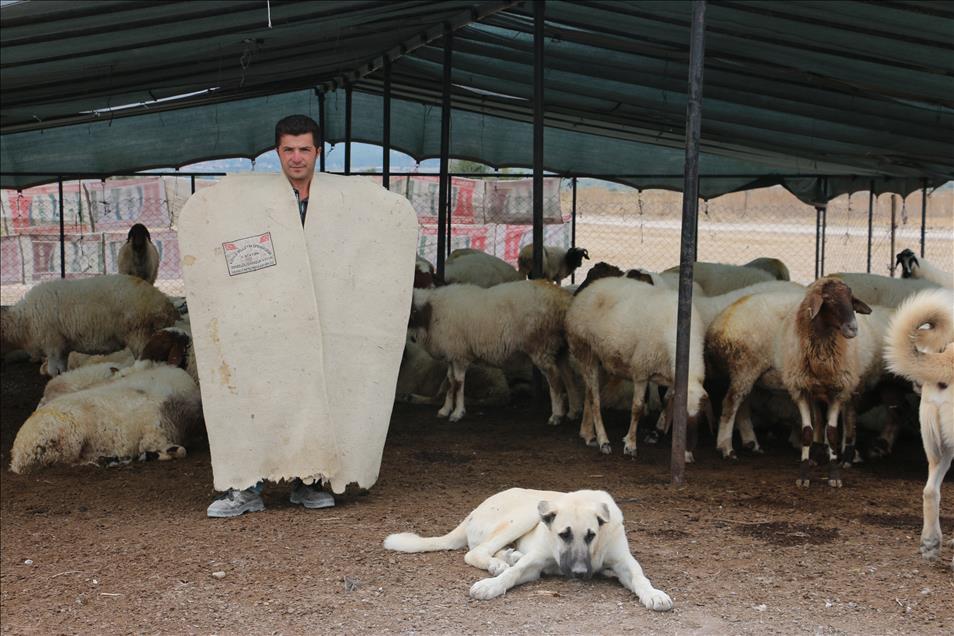
Kepenek (AA)
Kepenek is an ancient garment type with origins extending back to Central Asia. The harsh climate of Central Asia and the nomadic lifestyle directed Turkish communities toward animal husbandry and the development of materials suited to this way of life. Felt emerged from this need and was used across various domains, from shelter to clothing. The wool felt kepenek provided shepherds with protection against climatic conditions within this context.
Kepenek is made from wool fibers compressed using hot water and soap. It is typically open at the front, buttonless, sleeveless, seamless, and has rounded shoulders. It exists in both hooded and hoodless varieties and covers the entire body except for the head and feet. Its weight ranges between four and ten kilograms. There are several types: "Yati", "Gezi", and "Battal boy". Battal boy kepeneks are heavy and are carried on donkeys; they are also used as bedding or mattresses during extended stays in pastures.
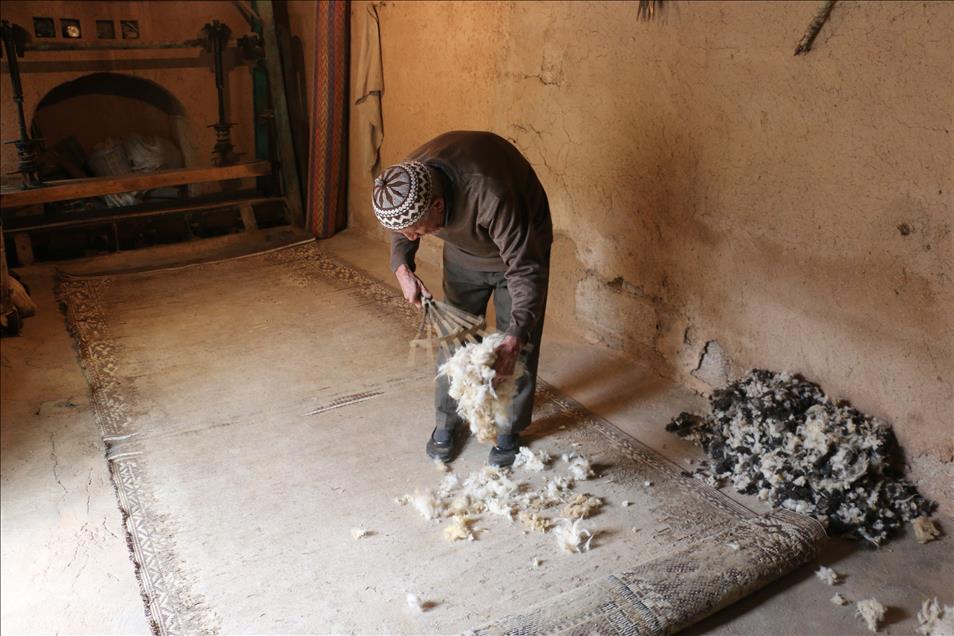
Visual from the Production Process (AA)
The production of kepenek requires considerable manual labor. The wool used is typically sheared in autumn, washed, dried, and combed before processing. Tools used in felt-making include sepki (a wooden comb), soap, hot water, brooms, molds, mallets, and scissors. Wool is layered repeatedly onto a reed mold, soaked in soapy hot water, and subjected to a rolling process in a machine. The front and back surfaces are joined seamlessly using a special technique called "kapaklama". Finally, the garment is boiled in hot water and shaped with a mallet.
Kepenek can also be decorated with regional patterns. Some kepeneks bear information such as the shepherd’s name, the artisan’s signature, the year of production, or an order number. Motifs are generally simple, with functionality taking precedence. The lifespan of a kepenek varies between three and ten years depending on the quality of the wool, the artisan’s skill, and the manner of use.
Kepenek production continues today in various Anatolian cities using traditional methods. Although demand has declined due to the spread of modern animal husbandry, production has not disappeared entirely, as shepherding still persists in natural pastures.
Kepenek is more than just a garment; it is an important symbol of Turkish folk culture. Closely associated with shepherding, it has found its place in folk literature. Proverbs such as “A kepenek is not spread out for rain that has already passed” and “A man sleeps under a kepenek” reflect its symbolic use in poetry and epics. In terms of sustaining the viability of traditional crafts, kepenek plays a vital role within the broader context of felt-making.
Kepenek Documentary (Batuhan Aydoğan)
Aydoğan, Batuhan. “KEPENEK (Çobanın Çelik Yeleği) Belgesel Film.” YouTube. Accessed July 13, 2025. https://www.youtube.com/watch?v=iNUq9bcUMag.
Begiç, H. Nurgül. “Orta Asya’dan Küçük Asya’ya Geleneksel Bir Sembol; ‘Kepenek.’” *Çankırı Karatekin Üniversitesi Sosyal Bilimler Enstitüsü Dergisi* 7, no. 2 (December 10, 2016): 44–62. Accessed July 13, 2025. https://dergipark.org.tr/tr/pub/jiss/issue/40235/479496#article_cite.
Begiç, H.N., and C. Öz. “Türk Kültüründe Çobanlık ve Çoban Giysisi – Kepenek, Çoban Kürkü.” *Türkoloji*, no. 102 (August 2020): 105–124. Accessed July 13, 2025. https://dergipark.org.tr/tr/pub/ayt/issue/69331/1099814#article_cite.
Zeyrek, Sebahatdin. “Çobanlar için 71 Yıldır ‘Kepenek’ Yapıyor.” Anadolu Ajansı. Accessed July 13, 2025. https://www.aa.com.tr/tr/pg/foto-galeri/cobanlar-icin-71-yildir-kepenek-yapiyor/17/168452.

History
Definition and Characteristics
Production Process
Current Status
Cultural Value