



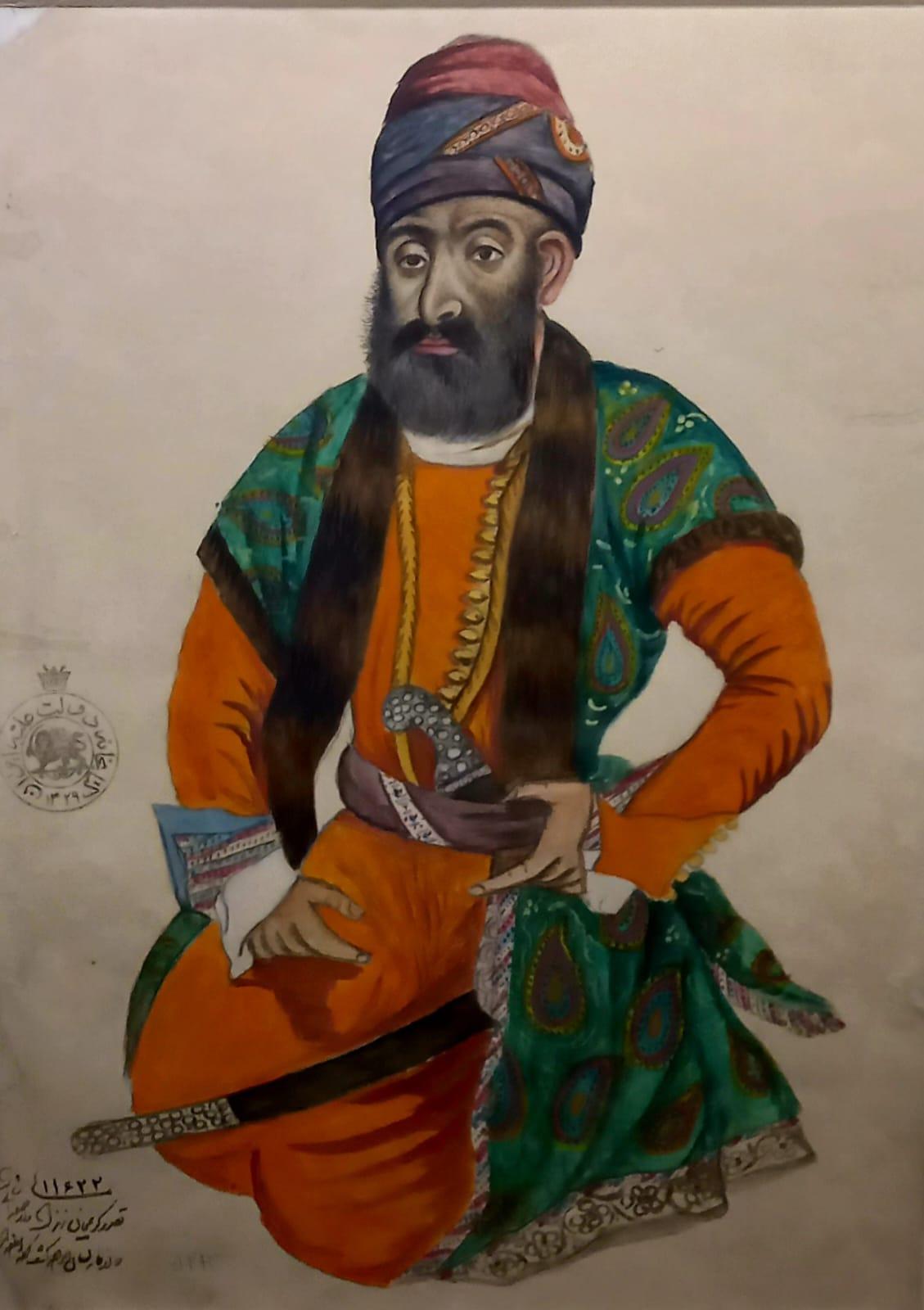
Iran Archaeology Museum (Ali Doğan Demir)
Kerim Khan Zend
Birth | 1705 | ||||||||
|---|---|---|---|---|---|---|---|---|---|
Ölüm tarihi | 1779-03-02 | ||||||||
Sentence Duration | 1751-1779 | ||||||||
Dynasty | Zand Dynasty | ||||||||
First Coming | Shahrukh Afshar | ||||||||
Later Coming | Mohammad Ali Khan Zand | ||||||||
Religious | Shia Islam | ||||||||
He was the founder and most significant ruler of the short-lived Zand Dynasty that ruled Iran in the eighteenth century. His real name was Karim Khan, and he belonged to the Zend-i Begile branch of the Zend tribe. He rose to prominence during the period of political chaos that began with the collapse of the Safavids and the death of Nader Shah in 1747.
Karim Khan was the son of Inaq Khan, a leader of the Lur-origin Zend tribe. In his youth, he served in Nader Shah’s army and gained military experience during this time. After Nader Shah’s death, amid the multi-centered power struggles that erupted across Iran, Karim Khan assumed leadership of the Zend tribe and began establishing regional dominance. By 1751, Karim Khan had become influential in the Fars region, securing the support of Lur, Baluch, and Kurdish tribes. Within a short time, he brought many cities in southern Iran under his control and eliminated his political rivals, so that by 1757 he had gained authority over much of Iran. However, Karim Khan never proclaimed himself shah; instead, he adopted the title “Vekilü’l-Raaya” (Representative of the People). This choice reflects his conception of rulership, which prioritized public welfare over absolute monarchy. Upon his death in 1779, Karim Khan’s passing initiated the decline of the Zand Dynasty. The succession struggles that followed weakened the Zands, and they were ultimately eliminated entirely in 1794 by the Qajar Dynasty.
Information regarding Karim Khan’s physical appearance is limited, but the descriptions provided by prominent historians of the era, such as Riza Quli Khan Hidayat, are particularly striking. Hidayat portrays Karim Khan as “massive in build, like an elephant, extremely strong, broad-shouldered, and thick-armed.” His skill with the sword and his strength were described as “the sharpness of a blazing lightning bolt.” In terms of physical features, Karim Khan was characterized by a long facial structure, a wrinkled and furrowed brow, large eyes, a long nose, and a wavy beard. Hidayat ranked him as unique in stature, body mass, and physical presence, placing him after great rulers such as Nader Shah and Deli Petro. These descriptions illustrate that Karim Khan was not only a formidable military leader but also a significant figure symbolizing resilience and power on the battlefield.

Karim Khan Zand (Source: Iran Archaeology Museum / Ali Doğan Demir)
Karim Khan’s reign is particularly noted for the restoration and socio-economic development of his chosen capital, Shiraz. He commissioned the construction of palaces, madrasas, caravanserais, and bazaars, fostering commercial revival and raising the standard of living for his people. The European traveler William Francklin wrote of Karim Khan: “If any ruler deserves the title ‘The Great,’ it is undoubtedly Karim Khan Zand; for the effects of his efforts and achievements are still clearly felt today.” This statement underscores that he was not merely a military leader but also a statesman who prioritized public welfare.
Karim Khan was one of the rare rulers among classical Iranian monarchs who never declared himself shah. This decision symbolized his governance philosophy, centered on justice and fairness. During his rule, religious tolerance, social peace, and economic stability were paramount; this approach ensured that he was remembered with deep respect by his people for many years.
Karim Khan died in Shiraz in 1779. Immediately after his death, a fierce power struggle erupted among his sons and brothers. The absence of his strong personality and the centralized authority he had maintained rapidly weakened the Zand Dynasty. Succession conflicts led to bloody confrontations among dynasty members, causing the Zands’ political dominance in Iran to collapse swiftly. Ultimately, in 1794, the Qajar Dynasty under the leadership of Agha Muhammad Khan Qajar ended Zand rule and inaugurated a new era in Iran.
Savory, Roger. “Zand.” Encyclopaedia Iranica, vol. 16 (2009). Accessed July 15, 2025. https://www.iranicaonline.org/articles/zand-dynasty

Iran Archaeology Museum (Ali Doğan Demir)
Kerim Khan Zend
Birth | 1705 | ||||||||
|---|---|---|---|---|---|---|---|---|---|
Ölüm tarihi | 1779-03-02 | ||||||||
Sentence Duration | 1751-1779 | ||||||||
Dynasty | Zand Dynasty | ||||||||
First Coming | Shahrukh Afshar | ||||||||
Later Coming | Mohammad Ali Khan Zand | ||||||||
Religious | Shia Islam | ||||||||
Life and Political Activities
Physical Characteristics and Personal Portrait
Governing Philosophy and Legacy
Death and the End of the Dynasty