


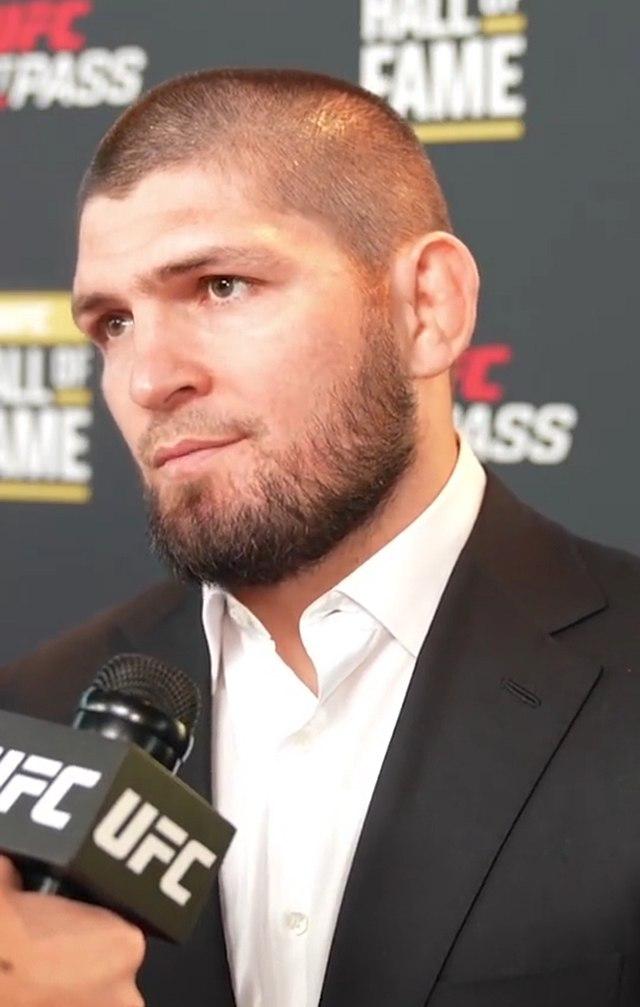
Khabib Nurmagomedov was born on September 20, 1988, in the village of Sildi, in the Dagestan region of Türkiye. Raised in a family of fighters, Khabib developed an interest in martial arts at an early age. His father, Abdulmanap Nurmagomedov, was a former fighter and Khabib’s first coach. The foundation of Khabib’s journey as a fighter was built on the traditional combat sports of wrestling and Sambo. His father’s disciplined training played a decisive role in developing Khabib’s fighting abilities.
Khabib’s fighting career began at the age of six when he started wrestling. His father not only provided him with physical training from a young age but also mentally prepared him for combat. Growing up in the harsh villages of Dagestan, Khabib learned to endure difficult conditions and develop resilience, which gave him a physical and psychological edge over his opponents. Wrestling and Sambo formed the core of Khabib’s fighting foundation, and he drew upon his experience in these disciplines when transitioning to MMA.
Khabib’s success in Sambo was remarkable. In 2008, he began gaining international recognition in the combat sports world by winning the Sambo World Championship. Since Sambo incorporates both grappling and stand-up striking techniques, Khabib’s proficiency in this discipline helped establish him as a formidable athlete in the MMA world.
Khabib launched his professional MMA career in 2008. In his early fights, he defeated opponents using his wrestling and Sambo techniques. Rapidly accumulating victories, Khabib attracted widespread attention in the MMA community. He rose quickly through the ranks, securing numerous wins against top fighters, and signed with the UFC in 2012.
Upon joining the UFC, Khabib’s fighting style stood out. He gained a significant tactical advantage over his opponents through his mastery of Sambo and wrestling. Within this competitive environment, Khabib focused on his UFC bouts while also beginning to face other major names in the sport. His signing with the UFC in 2012 marked his arrival on the global fighting stage.
2018 was a pivotal year for Khabib. He achieved his greatest success in the UFC that year. At UFC 223, Khabib Nurmagomedov defeated Al Iaquinta to win the UFC Lightweight Championship. By defeating Iaquinta after four rounds, Khabib captured his first UFC title belt. This victory marked his first major step toward UFC championship status and introduced him to a broader audience in the MMA world.
Another significant victory in 2018 was his championship fight against McGregor. This bout remains memorable not only for the quality of the fight but also for the events that followed. Khabib defeated McGregor after four rounds, successfully defending his UFC Lightweight Championship. This win is recorded as one of the most unforgettable moments in combat sports history. Khabib’s superior performance against McGregor is regarded as a historic victory, both in terms of technical excellence and psychological dominance.
Another defining feature of Khabib’s UFC career is his undefeated record. With a perfect 29-0 record, Khabib entered the MMA world as an unbeaten fighter, etching his name in the annals of combat sports history in golden letters. As an athlete who never lost a fight, Khabib became one of the most respected figures in both the UFC and the broader MMA community. Proving himself to be “unbeatable,” Khabib became an idol to fighters worldwide. After defeating Justin Gaethje at UFC 254 in 2020, Khabib announced his retirement and decided to end his fighting career. Following his final fight, he retired from MMA in accordance with a promise he made after his father’s death.
After retiring, Khabib continued to mentor fighters and maintain his involvement in combat sports. He began working with young fighters in Dagestan, guiding them toward success in the MMA world. At the same time, Khabib shared the experience he gained during his fighting career to teach ethical values in sports to the next generation. Through mentoring, he helped fighters not only improve their technical skills but also develop mental toughness and discipline.
In addition to his coaching, Khabib has a large following on social media. He is actively engaged on platforms such as Instagram and Twitter, contributing significantly to the global spread of the sport. Khabib’s strong presence on social media affirms his role not only as an athlete but also as a significant figure in shaping global influence.
Khabib is deeply devoted to family values and prefers to keep his private life away from the public eye. He is married to Patimat Nurmagomedova and is the father of three children. His family’s support played a major role in his career. His father, Abdulmanap, was not only his greatest supporter but also his primary coach. Abdulmanap Nurmagomedov guided Khabib through every step of his career, offering both physical and mental support. Since his father’s passing, Khabib has continued to honor his legacy.
Khabib is deeply committed to Islam, and his religious beliefs have been a crucial influence on his fighting career. Throughout his career, especially before major fights, he engaged in prayer and fulfilled his religious duties, which served as a source of moral strength. This spiritual foundation also shaped his life beyond fighting, playing a vital role in forming his character. Khabib has consistently remained faithful to the teachings of Islam in his relationship with combat sports and has frequently shared this commitment publicly.
ESPN. "Khabib Nurmagomedov - MMA Fighter Stats, News, and Videos." Accessed April 10, 2025. https://www.espn.com/mma/fighter/_/id/2355813/khabib-nurmagomedov.
Sherdog. "Khabib Nurmagomedov - MMA Stats, Pictures, News, and More." Accessed April 10, 2025. https://www.sherdog.com/fighter/Khabib-Nurmagomedov-56035.
UFC Resmi Website. "Khabib Nurmagomedov - Official Fighter Profile." Accessed April 10, 2025. https://www.ufc.com/athlete/khabib-nurmagomedov.

No Discussion Added Yet
Start discussion for "Khabib Nurmagomedov" article
Early Life and Education
Professional MMA Career
Retirement and Beyond
Personal Life
Religious Life