


This article was automatically translated from the original Turkish version.
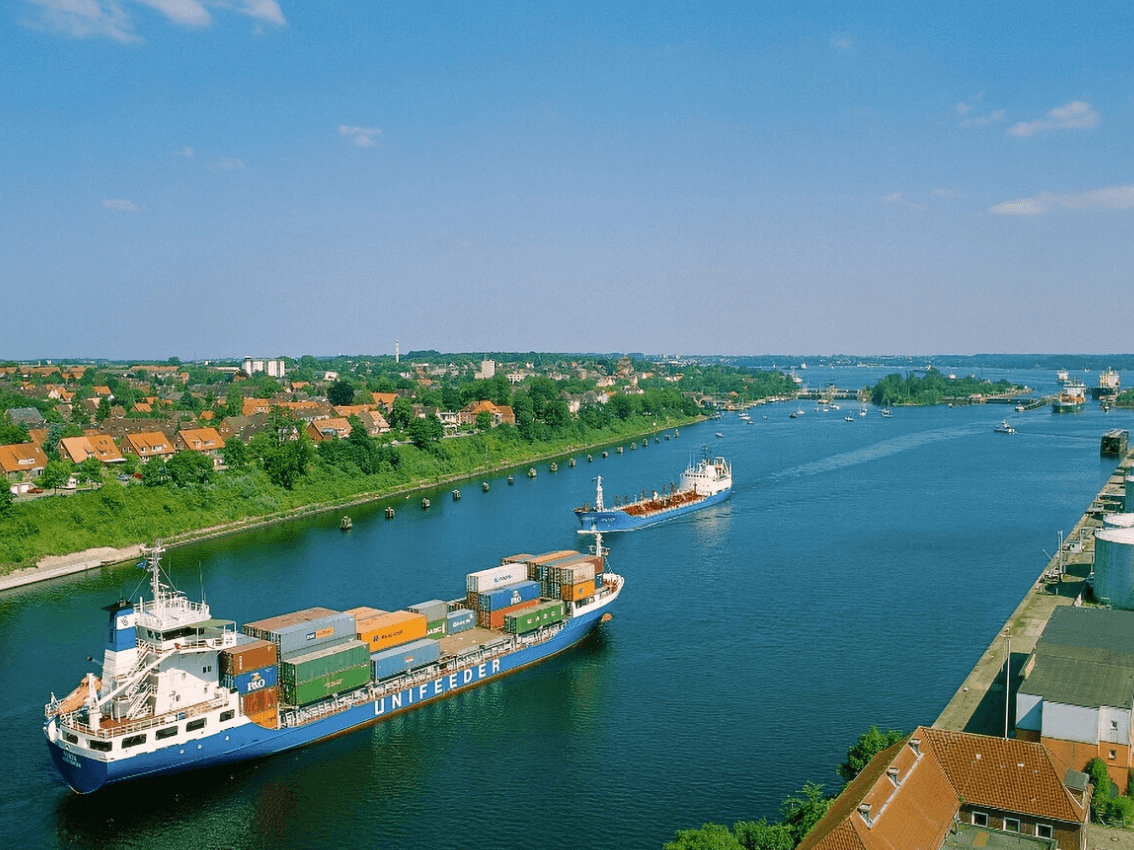
The Kiel Canal (Nord-Ostsee-Kanal[811b0af63f7f47a9]), located north of Germany in place territory, is an artificial waterway connecting the Baltic Sea with the North Sea. Approximately 99 kilometers long, this canal is regarded as one of the world’s most heavily used artificial water routes. The canal is a critical connection node not only for only Germany but also for international sea trade, carrying substantial importance significance.
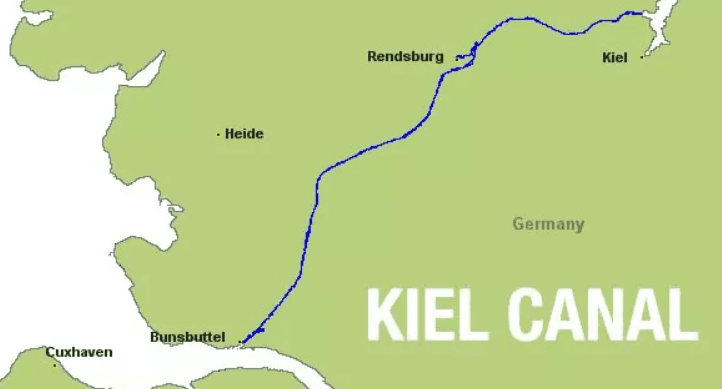
Kiel Canal Map Representation, Haber7com
The origins of the Kiel Canal lie in the search for a shorter and safer road between the Baltic Sea and the North Sea. The development of the canal can be summarized as follows:
Constructed in 1784 by Danish King Christian VII, the Eider Canal is considered the predecessor of the present-day Kiel Canal. This canal, approximately 43 kilometers long and 3.45 meters deep, proved inadequate for the needs of its time. Its operation was difficult and economically unviable, and it could not accommodate larger vessels.
In the 1860s, Prussia adopted the idea of constructing a more modern canal linking the Baltic Sea to the North Sea. This need aimed to provide a shorter route for commercial vessels and a safer passage for military ships. Construction began in 1887 and was completed in 1895, when the canal was opened under the name Kaiser Wilhelm Canal.
The Kiel Canal was regarded as one of the largest engineering projects of its time. Key features of its construction include:
During construction, involving approximately 8,900 workers, a total of 80 million cubic meters of soil were excavated. Specialized floating dredgers and locomotive systems were developed and employed for the work.
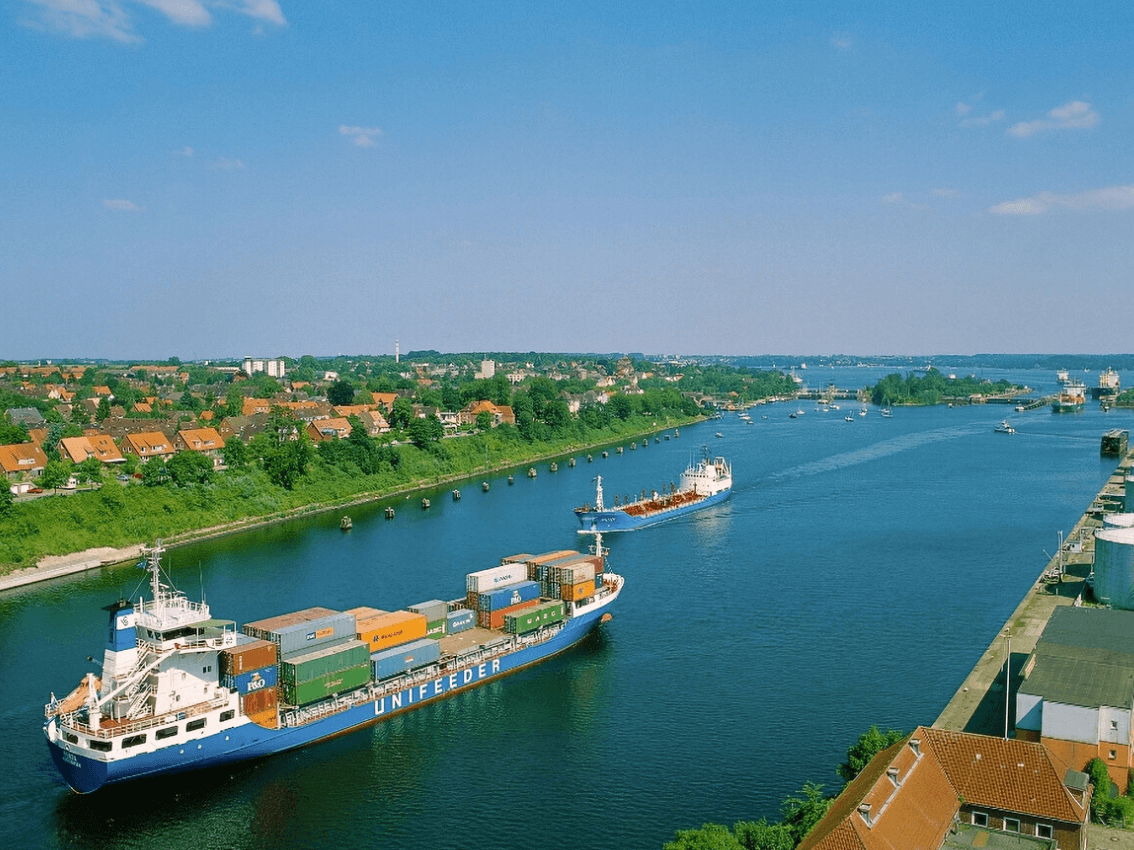
Kiel Canal, dzen.ru
The Kiel Canal was officially opened on 20 June 1895 by German Emperor Wilhelm II. Upon its opening, the canal allowed ships to pass through in approximately 13 hours. However, increasing trade volumes and larger ship sizes eventually rendered the canal inadequate.
The canal was modernized through various projects between 1907 and 1914, and again between 1965 and 2001. These projects improved the following areas:
Following the end of the First World World War, the Kiel Canal acquired an international status under the Treaty of Versailles. Article 380 of the treaty mandated that the canal be open to all states’ commercial and military vessels.
In 1923, the Permanent Court of International Justice issued a ruling affirming the international status of the Kiel Canal. This decision guaranteed equal access to the canal for commercial and transit vessels.
In 1936, Nazi Germany declared it no longer recognized the Versailles Treaty provisions concerning the Kiel Canal. After the end of the Second World War, the canal reverted to its current status and remained under German control.
The Kiel Canal is a critical component of both German and global trade. Its key features include:
Corpus Sigorta Blog. "Dünyadaki Kanalların Hikayesi." Accessed [Date]. Accessed Linki.
Die Küste: Archiv für Forschung und Technik an der Nord- und Ostsee.
Çamyamaç, Anıl. "Kiel Kanalının Hukuki Rejimine Dair Bir Değerlendirme."

History
The Eider Canal Period
The Birth of the Kaiser Wilhelm Canal
Construction Process
Technical and Logistical Details
Opening and Early Use
Expansion and Modernization
Legal Status
The Treaty of Versailles (1919)
The Wimbledon Case (1923)
Second World War and Aftermath
Economic and Strategic Importance