
+2 More


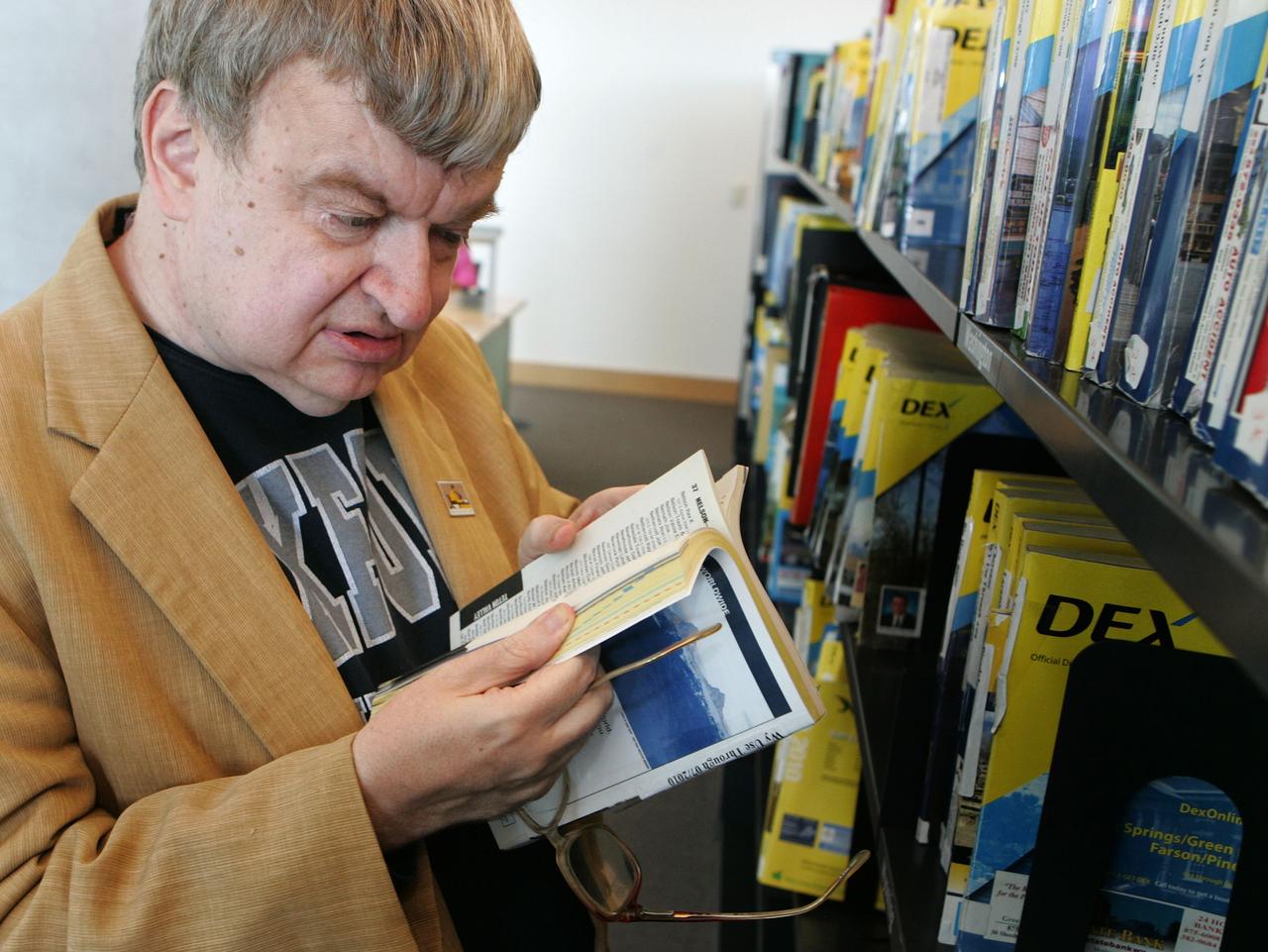
Laurance Kim Peek
Father(s) | Fran Peek | ||||||||
|---|---|---|---|---|---|---|---|---|---|
Mother(s) | Jeanne W. Buchi | ||||||||
Place of Birth(Text) | Salt Lake City, Utah | ||||||||
Date of Death(Text) | December 12, 2009 | ||||||||
Date of Birth(Text) | November 11, 1951 | ||||||||
Cause of Death | Heart Attack | ||||||||
Age | 58 | ||||||||
Kim Peek (1951–2009) was an American savant with an extraordinary memory due to congenital neurological differences. Despite structural brain anomalies such as the congenital absence of the corpus callosum and cerebellar abnormalities, he attracted attention with his exceptional performance, particularly in verbal and declarative memory. Throughout his life, he memorized thousands of books and acquired encyclopedic knowledge in various fields, including history, geography, literature, music, and religious texts. Although his numerical processing abilities were limited, he exhibited a unique cognitive profile thanks to his speed-reading and long-term learning capacity. His life story inspired research into the neuroscientific dimensions of savant syndrome and, through cinema, contributed to raising public awareness in this field.
Kim Peek was born on November 11, 1951, in Salt Lake City, Utah. At birth, he had severe anomalies in the development of his central nervous system. His brain lacked the corpus callosum, the structure that connects the two hemispheres. Additionally, there were structural abnormalities in his cerebellum. As an infant, his head was significantly larger than that of his peers (macrocephaly), and he had very weak muscle tone. Doctors informed his family that Kim was permanently intellectually disabled, would never be able to walk, and should be institutionalized. However, his family did not follow this advice and instead chose to raise Kim at home with love and care.
Kim Peek had virtually no formal schooling. His weak motor skills and lack of social interaction made it difficult for him to participate in the traditional education system. However, his extraordinary memory was recognized at an early age. His father, Fran Peek, chose to support his learning at home. From a very young age, Kim was able to read and memorize books at an incredible speed. This demonstrated that accessing knowledge through non-traditional educational methods was far more suitable for him.
Kim’s life changed dramatically with the release of the 1988 film Rain Man. Screenwriter Barry Morrow, after meeting Kim, was inspired by his story and created the character of Raymond Babbitt. Although the character played by Dustin Hoffman was not a direct representation of Kim Peek, it was clearly influenced by him in many ways. As the film achieved global success, Kim also drew widespread public attention. Together with his father, he gave presentations in more than 250 cities across the United States, appeared on television programs, and connected directly with millions of people.
Official trailer of the film Rain Man (1988) Rotten Tomatoes Classic Trailers
Throughout his life, Kim Peek memorized more than 12,000 books. He possessed deep knowledge in over 15 fields, including history, geography, music, biblical studies, sports statistics, postal and area codes. He could instantly and flawlessly answer questions on a wide range of topics—from classical music to American presidents, from Shakespeare to space exploration. NASA conducted detailed neuroimaging studies to examine his brain. He was referred to as a “mega-savant” by the American public.
Kim Peek’s most significant contribution was to the understanding of savant syndrome. Scientists such as Dr. Darold Treffert studied his brain structure to explore the neurological foundations of savantism. The absence of his corpus callosum revealed that other parts of the brain had formed compensatory connections. This provided scientists with new perspectives on memory and information processing capacity.
Although Kim Peek did not author any written works, the public lectures he gave and interviews conducted with him were featured in documentaries and scientific publications. The film The Real Rain Man focuses on his life and abilities.
Kim Peek - The Real Rain Man Movie, ChristianG
Kim’s daily life was largely centered around acquiring knowledge and reading. He would read books for hours every day, follow television broadcasts, and discuss what he had learned with his father. He had a particular interest in calendar calculations, music, and American history. Peek never married and lived with his father, Fran Peek, throughout his life. Fran was not only Kim’s caregiver but also his closest friend. Their bond became an example of a deeply meaningful relationship admired by many. Fran played the most significant role in sharing Kim’s extraordinary abilities with the world.
In the later years of his life, Kim showed noticeable improvements in his social skills. He began to make eye contact with people and became more open to conversation. He also developed a greater interest in music—not only expanding his knowledge but also learning to play the piano.
Kim Peek passed away on December 19, 2009, at the age of 58, due to a sudden heart attack. His death was felt as a great loss by his family and the millions of people who knew of him.
After his death, interest in savant syndrome grew even further among both the scientific community and the general public. Many scientists had conducted MRI scans of Kim’s brain, suggesting that the lack of any connection between the two hemispheres may have allowed him to process information more rapidly. However, when compared with similar past cases, researchers observed that Kim’s brain developed unique alternative neural connections. Data related to his brain structure continues to be used in neuroscientific studies today.
Kim Peek was not just a “treasure trove of knowledge” but also a symbol of the value of neurodiversity. He helped break down stereotypes about disability and demonstrated the power of a family’s belief in their child. Many students, teachers, and researchers have drawn—and continue to draw—inspiration from his life to explore topics such as savantism, memory studies, and human potential.
Aruma. “Get to Know the Real Rain Man - Kim Peek.” Aruma.com.au. Accessed March 28, 2025. https://www.aruma.com.au/about-us/blog/get-to-know-the-real-rain-man-kim-peek/
Christian G. “Kim Peek - The Real Rain Man [Full Film].” Video. YouTube, December 22, 2012 https://www.youtube.com/watch?v=DLpCfHH1OVU&ab_channel=ChristianG
Gururangan, Kapil. "Savant Syndrome: Growth of Empathy and Creativity." Berkeley Scientific Journal 15, no. 1 (2012). https://escholarship.org/uc/item/3c9157k2
Rotten Tomatoes Classic Trailers. “Rain Man Official Trailer #1 - Tom Cruise, Dustin Hoffman Movie (1988) HD.” Video. YouTube, October 5, 2012 https://www.youtube.com/watch?v=mlNwXuHUA8I&ab_channel=RottenTomatoesClassicTrailers
Treffert, Darold A. “Kim Peek: The Real Rain Man.” Wisconsin Medical Journal 109, no. 2 (2010): 61–62 https://wmjonline.org/wp-content/uploads/2010/109/2/61.pdf

Laurance Kim Peek
Father(s) | Fran Peek | ||||||||
|---|---|---|---|---|---|---|---|---|---|
Mother(s) | Jeanne W. Buchi | ||||||||
Place of Birth(Text) | Salt Lake City, Utah | ||||||||
Date of Death(Text) | December 12, 2009 | ||||||||
Date of Birth(Text) | November 11, 1951 | ||||||||
Cause of Death | Heart Attack | ||||||||
Age | 58 | ||||||||
Childhood and Youth
Education
Career and Achievements
Career Path
Notable Achievements
Major Contributions and Impact
Works and Projects
Personal Life
Final Years and Death
Legacy and Impact
Source of Inspiration
This article was created with the support of artificial intelligence.