


This article was automatically translated from the original Turkish version.
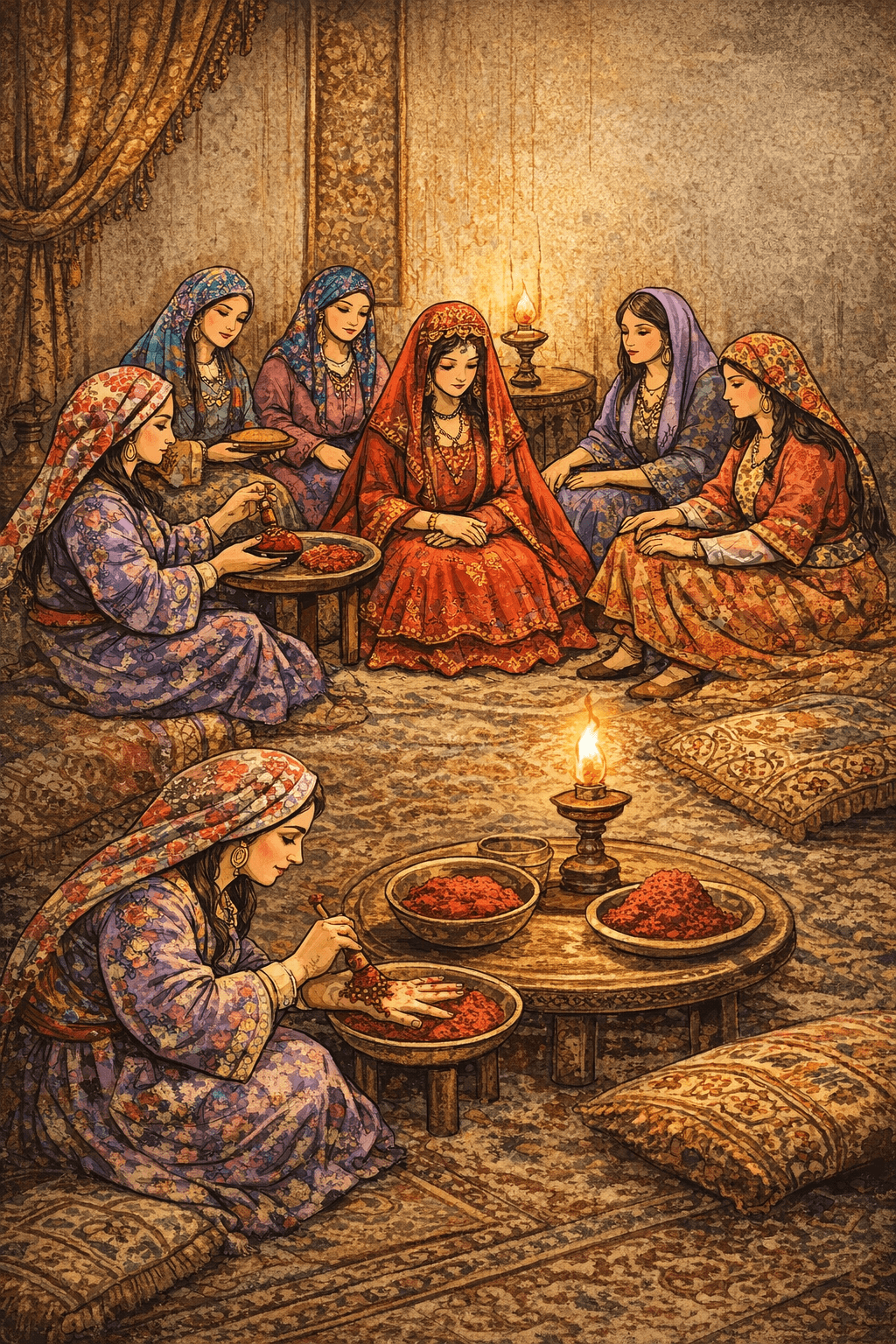
Generated with artificial intelligence
Kınası Karılır Tasta
Type(s) | Folk song | ||||||||
|---|---|---|---|---|---|---|---|---|---|
Narrative Feature | Lament-style oral cultural product | ||||||||
Execution Environment | Ceremonial gatherings among women conducted in the home | ||||||||
Subject(s) | Bridal separation pre-wedding transition process | ||||||||
Context | Henna night (pre-wedding ritual) | ||||||||
Subtype | Henna folk song / ceremonial song | ||||||||
Kınası Karılır Tasta is one of the oral cultural products associated with the henna night tradition within Turkish folk culture. The song is interpreted within the context of transition rituals, centering its narrative on the bride’s departure from her parental home. Such works form part of the expressive forms performed during ceremonial practices that render visible the emotional dimensions of marriage rituals in collective memory.
Henna night is one of the rituals performed before marriage and represents a socially significant transition process. This ritual carries the character of a collective practice that acquires meaning within the social structure, extending beyond an individual event.
Songs performed during henna nights function as elements that express the emotional dimensions of this transition process through oral culture.

A representative visual depicting the traditional practice of applying henna to the bride by women around her, as part of the henna night ritual. (Generated by artificial intelligence).
In songs sung during henna nights, themes of separation, longing, and emotional intensity come to the fore. These themes articulate through oral narrative the spatial and social changes accompanying marriage. The song Kınası Karılır Tasta is linked to this narrative tradition, focusing on the bride’s process of leaving her family circle. Such works resemble laments in content, enabling emotional expression within the ceremonial context.
Henna nights are among the ceremonial practices in which women occupy a central role. The songs performed in this setting are regarded as cultural expressions through which women convey their emotions and experiences via oral culture.
In this context, henna songs are recognized as carrying meaning in relation to female identity, social roles, and cultural representation.
The transmission of henna night songs from generation to generation occurs within the tradition of oral culture. This process allows for changes and diversification in the content and performance styles of these songs over time.
Kınası Karılır Tasta is thus regarded as part of the cultural memory shaped within the framework of marriage rituals.
Accessed November 26, 2025.
Accessed November 26, 2025.
Adar, Çağhan and Beyza Yetim. "Sanatta Kadın Algısı: Afyonkarahisar Türküleri Örneklemi." Iğdır Üniversitesi Sosyal Bilimler Dergisi 24 (2020): 163–187. Accessed February 6, 2026.
Kaya, Ümit Ünsal and Şerife Burcu Kaya. "Bayat–Afyonkarahisar Yöresi Ağıtları." Karadeniz Uluslararası Bilimsel Dergi 57 (2023). Accessed February 6, 2026.
Mutlu, Kubilay. Halkın Değişen Müziksel Temsilleri: Osmanlı’dan Günümüze Müziğin Siyasal Tahayyülü. Accessed February 6, 2026.

Generated with artificial intelligence
Kınası Karılır Tasta
Type(s) | Folk song | ||||||||
|---|---|---|---|---|---|---|---|---|---|
Narrative Feature | Lament-style oral cultural product | ||||||||
Execution Environment | Ceremonial gatherings among women conducted in the home | ||||||||
Subject(s) | Bridal separation pre-wedding transition process | ||||||||
Context | Henna night (pre-wedding ritual) | ||||||||
Subtype | Henna folk song / ceremonial song | ||||||||
No Discussion Added Yet
Start discussion for "Kınası Karılır Tasta (Folk Song)" article
Henna Night and the Context of Transition Rituals
Thematic Structure and Narrative Features
Female-Centered Ceremonial Structure
Cultural Transmission and Continuity