


This article was automatically translated from the original Turkish version.
+1 More
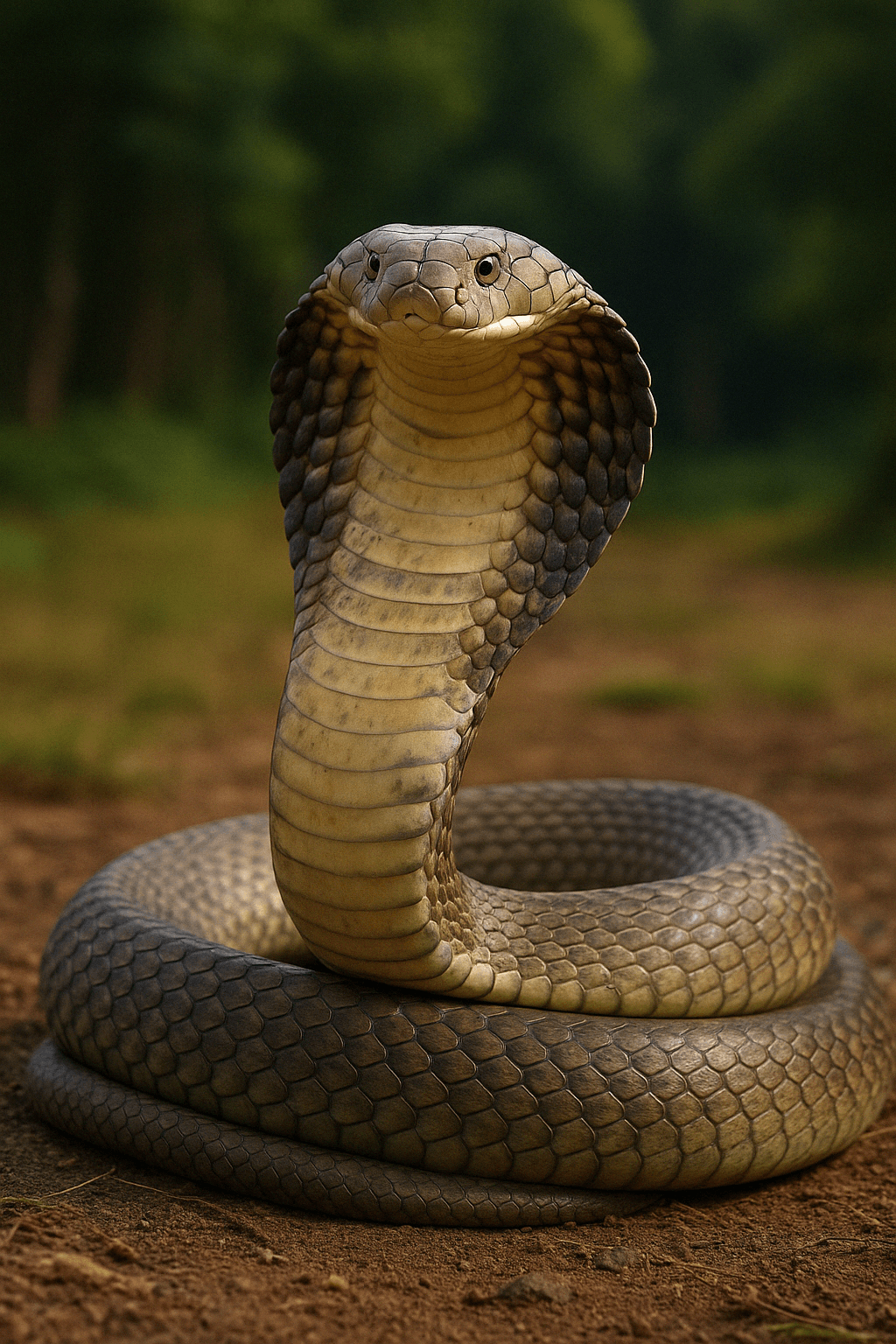
King Cobra (Ophiophagus hannah)
Kingdom(s) | Animalia | ||||||||
|---|---|---|---|---|---|---|---|---|---|
Division | Chordata | ||||||||
Subdivision | Vertebrata | ||||||||
Class | Reptilia | ||||||||
Order | Squamata | ||||||||
Suborder | Serpentes | ||||||||
Family | Elapidae | ||||||||
Genus | Ophiophagus | ||||||||
Specie(s) | Ophiophagus hannah | ||||||||
King the king cobra (Ophiophagus hannah) is the world's most long venomous snake, inhabiting forested areas in the southern and southeastern regions of Asia. It typically reaches lengths of 3 to 4 metres, with some individuals growing up to 5.85 metres. This species is particularly known for preying on other snakes.
The king cobra was first described in 1836 by T. E. Cantor based on specimens from the Indian subcontinent under the name Hamadryas hannah. However, in 1864, famous herpetologist Albert Günther reclassified the snake, placing it in the genus Ophiophagus, derived from the Greek word meaning “snake-eater.” Over time, observations of differences among populations in various geographic regions have suggested that the king cobra likely constitutes a species complex and may encompass multiple subspecies.
The king cobra has a distinctive structure characterized by a long, cylindrical body covered in scales.
The king cobra’s distinctive behaviors and nutrition habits position it as a predator within the food chain.
Despite its potent venom, the king cobra generally avoids humans and does not display aggression unless provoked. Its venom is composed primarily of neurotoxins and cytotoxins, which paralyze prey by disrupting the nervous system. In the wild, factors such as stress hunger and environmental conditions significantly influence an individual’s health. Studies conducted in captivity have shown that, under optimal feeding and environmental conditions, this species can live up to approximately 20 years.
The king cobra is a creature known for its biological complexity and cultural symbolism. Its defensive mechanisms, hunting techniques, and reproductive behaviors define it as a unique species in the natural world. Studied extensively by researchers, the king cobra has featured prominently in human history, mythology, and folklore. Occupying specific ecological roles in natural ecosystems, it has been perceived by humans in diverse ways.
"Ophiophagus hannah." *Animal Diversity.* Accessed April 16, 2025. https://animaldiversity.org/accounts/ophiophagus_hannah/.
Das, Indraneil, P. Gowri Shankar, P. Swamy, R. C. Williams, H. T. Lalremsanga, P. Prashanth, G. Sahoo, S. P. Vijayakumar, J. Höglund, K. Shanker, S. K. Dutta, S. Ganesh, and W. Wüster. “Taxonomic Revision of the King Cobra Ophiophagus hannah (Cantor, 1836) Species Complex (Reptilia: Serpentes: Elapidae), with the Description of Two New Species.” European Journal of Taxonomy 961, no. 1 (2024): 1–51. https://doi.org/10.5852/ejt.2024.961.2681.

King Cobra (Ophiophagus hannah)
Kingdom(s) | Animalia | ||||||||
|---|---|---|---|---|---|---|---|---|---|
Division | Chordata | ||||||||
Subdivision | Vertebrata | ||||||||
Class | Reptilia | ||||||||
Order | Squamata | ||||||||
Suborder | Serpentes | ||||||||
Family | Elapidae | ||||||||
Genus | Ophiophagus | ||||||||
Specie(s) | Ophiophagus hannah | ||||||||
No Discussion Added Yet
Start discussion for "King Cobra (Ophiophagus hannah)" article
History
Physical Characteristics
Behavioral Traits and Feeding Habits
General Biology and Reproductive Behavior
Reproductive Behavior