


This article was automatically translated from the original Turkish version.
Kırkyama is a traditional craft formed by assembling fabric pieces of different sizes, textures, colors, and patterns into a unified composition. This technique, also known as “patchwork,” evolved from the historical practice of “mending,” which emerged during periods of poverty and gradually transformed into an artistic expression. Initially used to repair worn or damaged clothing, the mending process later became a meticulous craft requiring patience and skill, adorned with aesthetic considerations.

Kırkyama (Go Konya)
The Kırkyama tradition has been passed down through generations in Anatolia as a form of production shaped primarily by women’s labor. Traces of Kırkyama can be found in the geometric inlay work of wooden crafts from the Seljuk period, and it is known to have been used across various domains within Ottoman court culture, from sultans’ quilts to trunks. The Banja Luka region of Bosnia is also one of the significant centers of this tradition. Throughout history, the high cost and limited availability of fabric compelled individuals to make the most of existing materials, giving rise to the art of Kırkyama.
Kırkyama is typically created by assembling fabric pieces—often triangular, square, or rectangular—into a geometric arrangement. Traditionally sewn by hand, this technique is now practiced both manually and with the aid of machines. Kırkyama can be used to design a wide range of products, including bedspreads, quilts, prayer mats, bags, trunks, pillowcases, garments, blankets, and even furniture upholstery. In Anatolia, these items are also known by names such as “kırkpare” or “hanım dilendi bey beğendi,” and they serve as cultural documents reflecting the fashion sensibilities and personal emotions of their time.
Kırkyama is not only functional but also an artistic production. The harmonious combination of diverse fabrics creates aesthetic unity and visual richness. Resembling contemporary art techniques such as collage, mosaic, and assemblage, Kırkyama occupies a unique position due to its fabric-based nature. In recent years, artists have integrated Kırkyama with other materials such as ceramics, giving rise to new interpretations. Methods such as the “confetti technique” developed by Japanese artist Noriko Endo have added a contemporary dimension to the art of Kırkyama.

Kırkyama (AA)
The Kırkyama tradition aligns with today’s prominent environmental policies, particularly the zero-waste approach. Reusing discarded fabrics to create new products offers both economic and ecological benefits. Women-led Kırkyama production not only contributes to household economies but also supports the preservation of cultural values. In many provinces of Türkiye, this tradition is being revitalized through community education center courses, and the resulting Kırkyama works are incorporated into social responsibility initiatives.
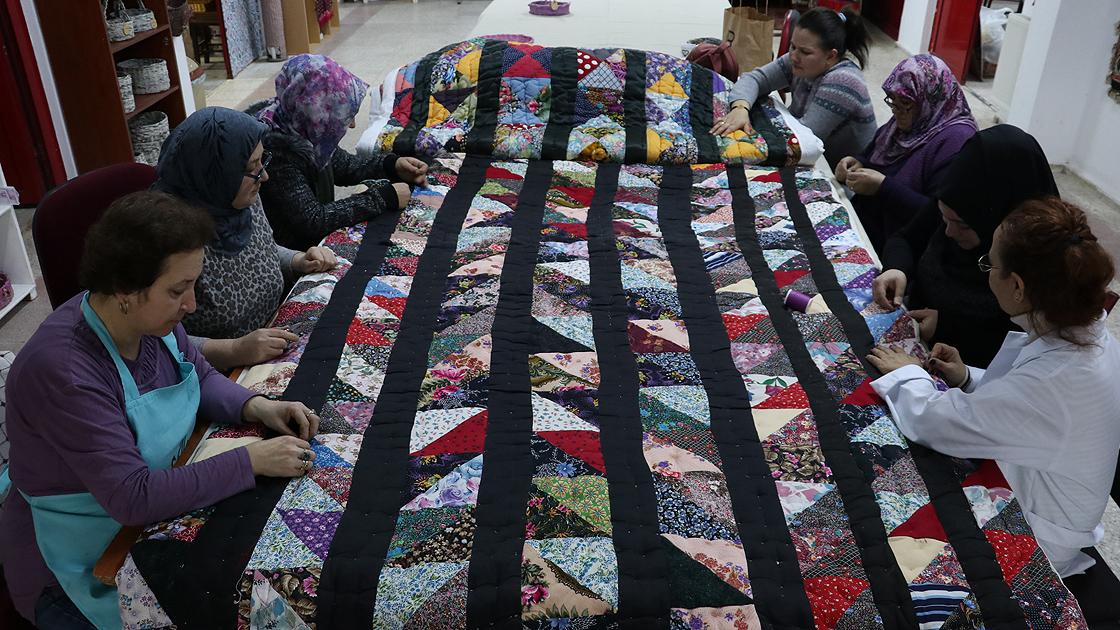
Kırkyama (AA)
Kırkyama is not merely a craft; it is also a vehicle for social exchange and cultural transmission. Strengthening solidarity among women, this art holds an important place in dowry culture, trunk traditions, and everyday practices. Moreover, the maker’s emotional state and lifestyle are reflected in the colors and patterns chosen for each piece. In this sense, Kırkyama is a unique form of cultural production that embodies individual expression.
Anadolu Ajansı. “Ninelerinden Kalan Parça Kumaşlarla ‘Kırkyama’ Yorgan Yaptılar.” Anadolu Ajansı, February 9, 2020. Accessed June 30, 2025. https://www.aa.com.tr/tr/yasam/ninelerinden-kalan-parca-kumaslarla-kirkyama-yorgan-yaptilar/1728599.
Anadolu Ajansı. “Yokluktan Doğan Sanat: Kırkyamayı Gelecek Kuşaklara Aktarıyor.” Anadolu Ajansı, March 13, 2018. Accessed June 30, 2025. https://www.aa.com.tr/tr/kultur-sanat/yokluktan-dogan-sanat-kirkyamayi-gelecek-kusaklara-aktariyor-/1074388.
Dede, Ayşegül. “Toplumsal Yaşamda Bir Gelenek Olarak Kırkyama.” *MECMUA - Uluslararası Sosyal Bilimler Dergisi* 9, no. 17 (2024): 24–36. Accessed June 30, 2025. https://dergipark.org.tr/en/download/article-file/3635882.
GoKonya. “Kırkyama – Kırkpare.” GoKonya. Accessed June 30, 2025. https://gokonya.com/tr/kirkyama-kirkpare-1.
Karatay, Semra Kılıç. “Kırkyama Geleneği ve Kullanım Alanları.” *Journal of Arts* 2, no. 3 (2019): 141–150. Accessed June 30, 2025. https://dergipark.org.tr/tr/download/article-file/796084.


Cultural Origins and Historical Development
Technique and Application Areas
Artistic Dimension
Zero Waste and Sustainability
Social and Cultural Function