

This article was automatically translated from the original Turkish version.
Registration Number | 1648 | ||||||||
|---|---|---|---|---|---|---|---|---|---|
Registration Date | 10.10.2024 | ||||||||
Application Number | C2022/000123 | ||||||||
Application Date | 07.04.2022 | ||||||||
Name of the Geographical Indication | Kışlacık Pırasası | ||||||||
Product / Product Group(s) | Pırasa / Processed and unprocessed fruits vegetables and mushrooms | ||||||||
Type of Geographical Indication | Trademark | ||||||||
Applicant/Registrant(s) | Mecitözü District Directorate of Agriculture and Forestry | ||||||||
Address of the Registrant | Tutluk Mah. Şht. Mustafa Eker Cad. Mecitözü ÇORUM | ||||||||
Geographical Boundary | Kışlacık Village Çorum Province Mecitözü District | ||||||||
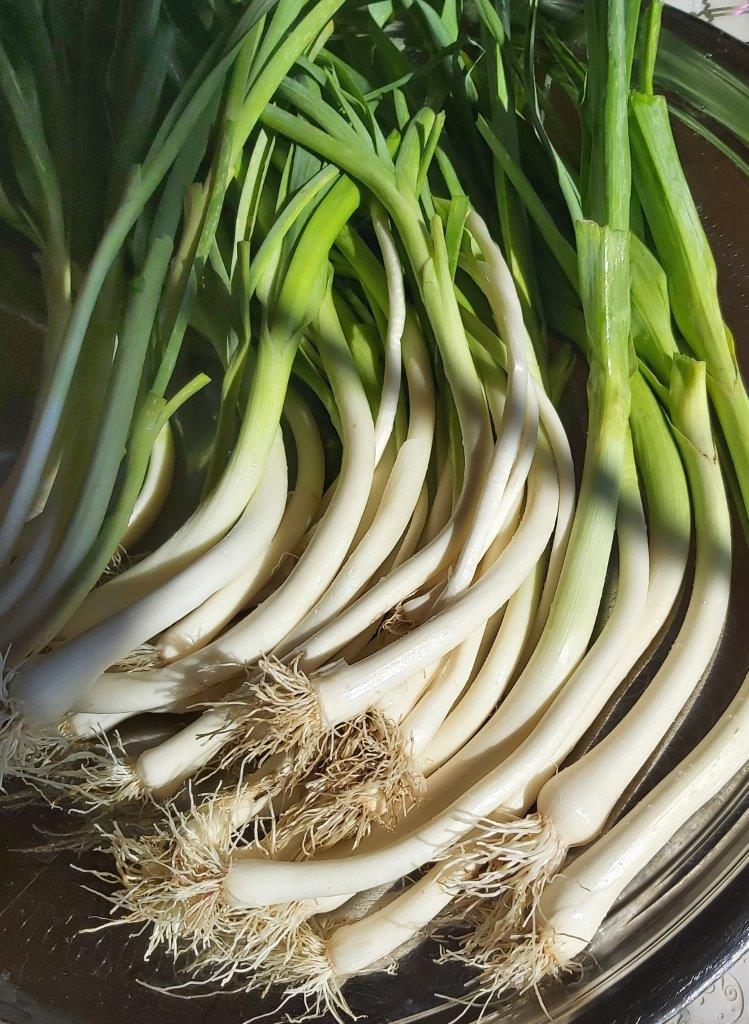
Kışlacık leek is a variety of leek cultivated for many years in the village of Kışlacık, within the Mecitözü district of Çorum, distinguished by its unique morphological structure and nutritional composition. This product features a white, slightly curved, and crisp stem, which stands out due to its elongated white portion and intense aroma resulting from etiolation. Its content of calcium, iron, magnesium, sodium, and protein is higher than that of similar varieties. The quality of the product is significantly enhanced by the region’s clay-loam soil with high water retention capacity and irrigation using local spring water.
Kışlacık leek is differentiated from similar varieties by its stem structure, the length of its white edible portion, and its aromatic profile. Because the stem grows buried in the soil, it develops a slightly curved shape. The white portion of the stem is notably long due to etiolation, contributing to its crisp texture and pronounced aroma. The stem diameter ranges between 1.5–2.5 cm, while the leaf stalk length is approximately 18–25 cm. The stalk is soft in texture, and the white portion extends along this length or slightly below it.
In terms of nutritional content, Kışlacık leek contains higher levels of protein, calcium, iron, magnesium, and sodium compared to similar products. This characteristic enhances both its nutritional value and gastronomic utility. The region’s soil structure supports this high nutritional profile. The soils of Kışlacık Village are clay-loam with slight alkaline properties and exhibit high water retention capacity, directly influencing the yield and quality of the product.
The production process of Kışlacık leek is based on traditional knowledge. In February–March, seeds are sown after applying animal manure (4–5 tons/ha) and 20–25 kg/ha of DAP (diammonium phosphate) fertilizer. After the seedlings develop, maintenance operations such as irrigation, weeding, and weed removal are carried out in May–June. In July, the seedlings are uprooted and transplanted into prepared beds that have been enriched with animal manure. When manure application is insufficient, an additional 15 kg/ha of DAP fertilizer is applied. Planting density is planned at 10 cm between rows and 2–3 cm within rows. Seedlings are covered and buried with soil.
Harvesting takes place between October and March for market sale. During harvest, the leeks are washed, outer leaves are removed, and they are bundled and packed in bags. Products not intended for sale are stored by bundling and burying them at a 45-degree angle, with roots and stems remaining underground, spaced 5–10 cm apart and at a depth of 20–30 cm. This method allows easy retrieval during subsequent harvests. Local spring water from the village is used for irrigation and washing. This water exhibits cool flow during summer and warm flow during winter. Although modern irrigation systems are widely used, limited amounts of flood irrigation are also applied.
The cultivation of Kışlacık leek is exclusively carried out in Kışlacık Village, within the Mecitözü district of Çorum Province. This restriction is essential to preserve the product’s unique quality and characteristics, which are directly tied to the local soil, water, and climate conditions. This strict geographical linkage is one of the fundamental elements underlying the reputation of Kışlacık leek. For a long time, Kışlacık leek has held an important place in the village’s agricultural economy and local culinary culture.
The protection and monitoring of Kışlacık leek as a geographical indication product are coordinated by the Çorum Provincial Directorate of Agriculture and Forestry. The monitoring commission consists of a three-member team representing the Çorum Provincial Directorate of Agriculture and Forestry, the Mecitözü District Directorate of Agriculture and Forestry, the Mecitözü Union for Rural Services, and the Mecitözü Social Assistance and Solidarity Foundation. In addition to annual routine inspections, inspections may also be conducted as needed or in response to complaints.
During monitoring, compliance with production methods, planting and harvesting dates, physical characteristics, and the correct use of the geographical indication label and emblem are verified. Expert personnel from public or private institutions may be consulted during the inspection process. The registering authority holds the legal authority to undertake procedures for protecting the product’s name and rights.
Turk Patent and Trademark Office. "Kışlacık Pırasası - Tescil Belgesi ve Teknik Şartname (PDF)." Accessed July 20, 2025. https://ci.turkpatent.gov.tr/Files/GeographicalSigns/080f0306-6085-4549-b5d6-96950e97d257.pdf.
Turk Patent and Trademark Office. "Kışlacık Pırasası." *Coğrafi İşaret ve Geleneksel Ürün Adı Bülteni*. Accessed July 20, 2025. https://ci.turkpatent.gov.tr/cografi-isaretler/detay/6523.

Registration Number | 1648 | ||||||||
|---|---|---|---|---|---|---|---|---|---|
Registration Date | 10.10.2024 | ||||||||
Application Number | C2022/000123 | ||||||||
Application Date | 07.04.2022 | ||||||||
Name of the Geographical Indication | Kışlacık Pırasası | ||||||||
Product / Product Group(s) | Pırasa / Processed and unprocessed fruits vegetables and mushrooms | ||||||||
Type of Geographical Indication | Trademark | ||||||||
Applicant/Registrant(s) | Mecitözü District Directorate of Agriculture and Forestry | ||||||||
Address of the Registrant | Tutluk Mah. Şht. Mustafa Eker Cad. Mecitözü ÇORUM | ||||||||
Geographical Boundary | Kışlacık Village Çorum Province Mecitözü District | ||||||||
Morphological Characteristics and Distinguishing Features
Production Process
Geographical Boundaries and Production Dependency
Monitoring and Registration Process