


This article was automatically translated from the original Turkish version.
+2 More
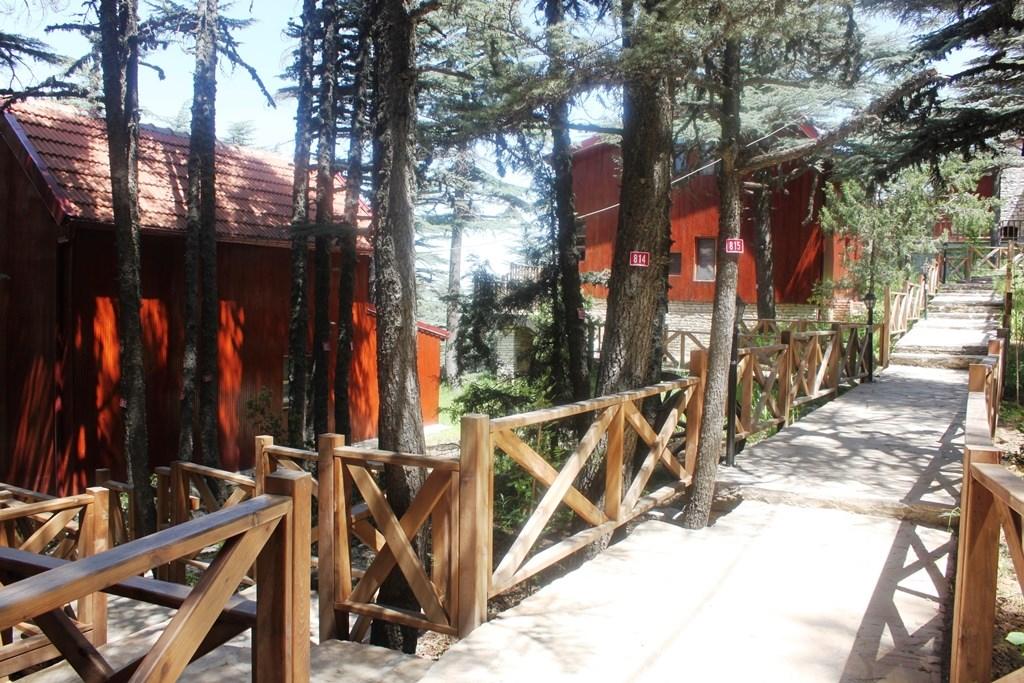
Kızıldağ National Park
Area(s) | Approximately 59 600 hectares | ||||||||
|---|---|---|---|---|---|---|---|---|---|
Location | Şarkikaraağaç Türkiye Isparta | ||||||||
Elevation(s) | 1 400 m 900–2 | ||||||||
Administration | Ministry of Agriculture and Forestry, General Directorate of DKMP | ||||||||
Protection Status | National Park | ||||||||
Kızıldağ National Park is a natural conservation area located within the boundaries of Şarkikaraağaç district in Isparta Province, Türkiye, and was declared a national park in 1969. Covering an area of approximately 59,600 hectares, the park is particularly notable for its forests of Lebanese cedar (Cedrus libani). Situated about 6 km from the Şarkikaraağaç district center, the park has an elevation ranging between 1,900 and 2,400 meters and is adjacent to Lake Beyşehir. Dominant wind patterns in the region influence the park’s microclimate and ecosystem characteristics.
The park features a limestone geological structure with widespread karst formations. This structure provides the foundation for underground water sources and cave systems. Kızıldağ National Park is described as an area where aquatic and terrestrial ecosystems coexist, supporting high biological diversity.
Kızıldağ National Park possesses a rich structure in terms of plant and animal diversity. Its flora includes tree species such as Lebanese cedar, oak, juniper, and black pine, as well as herbaceous and endemic plants. The fauna includes mammals such as wild goat, bear, wolf, badger, lynx, and chamois, along with bird species like partridge, falcon, eagle, griffon vulture, and owl. According to data from the Ministry of Culture and Tourism, 181 bird species have been recorded in the park. Additionally, freshwater fish and crayfish species inhabit the park’s inland water bodies.

Kızıldağ National Park (Culture Portal)
Research on biological diversity is ongoing in Kızıldağ National Park. In 2023, a new fungal species, Melanogaster anatolicus, was identified within the park boundaries. Additionally, projects supported by the Western Mediterranean Development Agency are investigating the impact of the park’s atmosphere on asthma and chronic obstructive pulmonary disease. The Melikler Plateau, with its low levels of light pollution, is regarded by skywatchers as one of the suitable areas for astronomical observation.
Kızıldağ National Park offers infrastructure for activities such as hiking, camping, birdwatching, and nature photography. Day-use areas and picnic sites are also open to visitors. The region’s natural landscape and clean air provide an ideal environment for recreational activities.

Kızıldağ National Park in Winter (AA)
The park is managed by the General Directorate of Nature Conservation and National Parks under the Ministry of Agriculture and Forestry. Various planning and monitoring activities are carried out to protect the ecosystem. Visitor density and activity zones are regulated in accordance with the principle of sustainability.
Kızıldağ National Park Introduction Video (Şarkikaraağaç Municipality)
Anadolu Ajansı. "Beyaza Bürünen Kızıldağ Milli Parkı Havadan Görüntülendi." Accessed June 6, 2025.
Isparta Valiliği. "Kızıldağ Milli Parkı." Accessed June 6, 2025.
Kültür Portalı Turizm Bakanlığı. "Doğa Yürüyüşü (Trekking) Kızıldağ Milli Parkı Yürüyüş Parkurları." Accessed June 6, 2025.
Kültür Portalı Turizm Bakanlığı. "Kızıldağ Milli Parkı." Accessed June 6, 2025.
Kızıldağ Milli Parkı Şarkikaraağaç. "Kızıldağ Milli Parkı Tanıtım Videosu - 2018." Kızıldağ Milli Parkı Şarkikaraağaç Youtube Kanalı. Accessed June 6, 2025. https://www.youtube.com/watch?v=H1z71qy7wrw

Kızıldağ National Park
Area(s) | Approximately 59 600 hectares | ||||||||
|---|---|---|---|---|---|---|---|---|---|
Location | Şarkikaraağaç Türkiye Isparta | ||||||||
Elevation(s) | 1 400 m 900–2 | ||||||||
Administration | Ministry of Agriculture and Forestry, General Directorate of DKMP | ||||||||
Protection Status | National Park | ||||||||
No Discussion Added Yet
Start discussion for "Kızıldağ National Park" article
Geological and Ecological Structure
Biological Diversity
Scientific Research and Conservation Projects
Tourism and Recreation
Management and Conservation