


This article was automatically translated from the original Turkish version.
+2 More
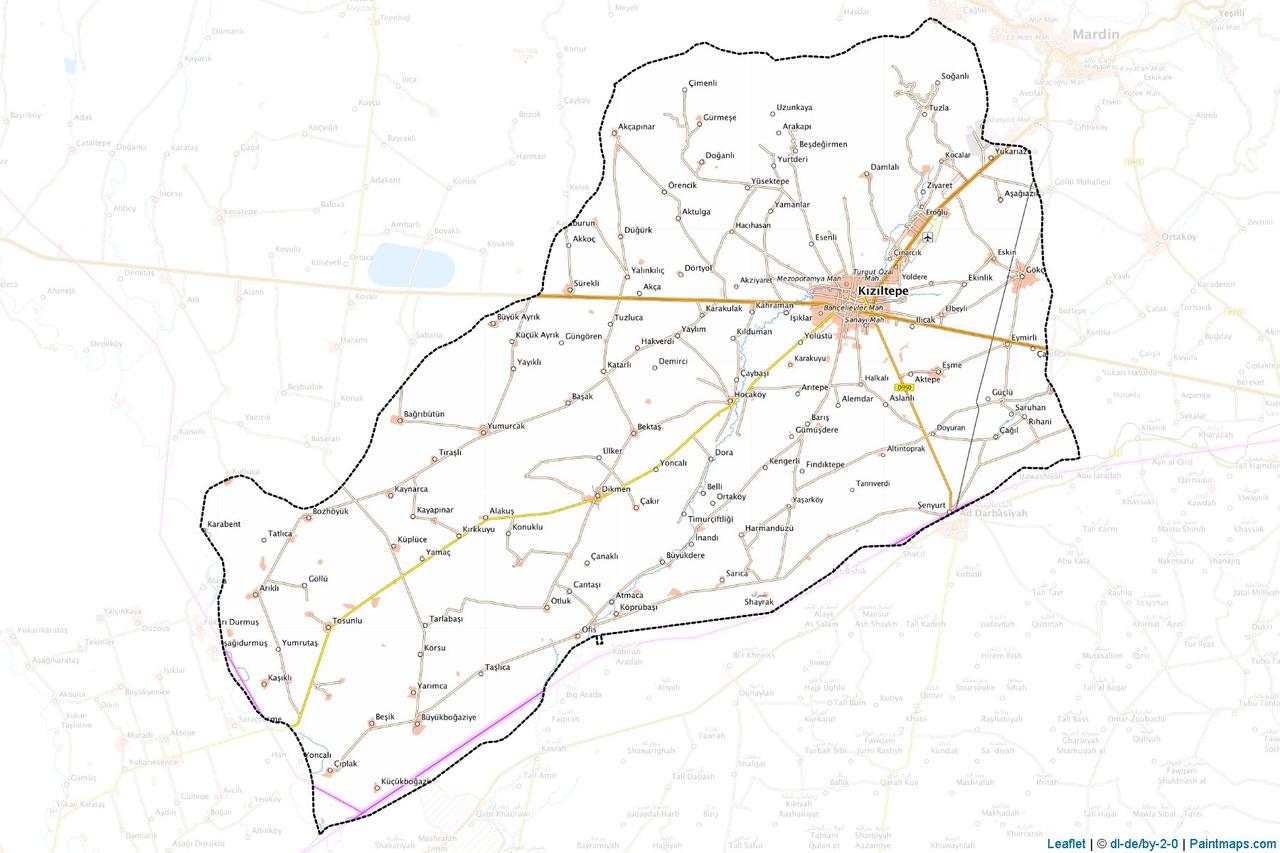
Kızıltepe (District)
Kızıltepe (District)
Location | Mardin Province Türkiye Southeastern Anatolia Region | ||||||||
|---|---|---|---|---|---|---|---|---|---|
Geographic Coordinates | Located in the southwest of Mardin; bordered by Mardin and Nusaybin to the east, Derik and Ceylanpınar to the west, Mazıdağı to the north, and the Syrian Arab Republic to the south | ||||||||
Area(s) | 1 400 dekars 218 | ||||||||
Elevation(s) | 400 meters | ||||||||
Year of Establishment | 1931 (district status) | ||||||||
Former Name(s) | Dunaysır Koçhisar (Mardin Koçhisarı) | ||||||||
Kızıltepe is a district of Mardin Province in the Southeastern Anatolia Region of Türkiye. Located on the fertile lands of Mesopotamia, the district is notable for the dominant hue of its stony terrain and the vibrant abundance of its grain spikes. It is one of the key settlement centers in the region due to its historical significance, geographic position, and economic potential. It gained district status in 1931 under the name “Kızıltepe”.
The earliest known name of Kızıltepe is Dunaysır. With a history extending back to prehistoric times, it became one of the significant settlement sites in Mesopotamia. During the Artuqids period, it developed as a major stopping point and trade center along the Diyarbakır-Mosul and Urfa-Mosul routes. In the early 13th century, it was plundered several times by the Ayyubids, before coming under the rule of the Seljuks, Ilkhanids, Mamluks, Kara Koyunlu, Ak Koyunlu, and Timurids. Between Kara Koyunlu and Akkoyunlu, control of the town changed hands multiple times, and in the 16th century it passed under Safavid dominance. In 1515, Kızıltepe was conquered by the Ottoman army under the command of Bıyıklı Mehmet Pasha; at the time, it was under Iranian control and governed by Karahan, the brother-in-law of Ismail Shah. In 1517, following the Ottoman campaign in Egypt, Kızıltepe was incorporated into Ottoman territory. Although it possessed a rich urban fabric from the Artuqid period—including a bazaar, inn, bathhouse, mosques, and madrasas—it entered Ottoman rule as a ruined settlement due to repeated wars and plundering. After the proclamation of the Republic, it became a district of Mardin in 1929 under the name “Koçhisar”, and in 1931 its name was changed to “Kızıltepe”. The main historical structures in the district include the Kızıltepe Ulu Camii from the Artuqid period, the Harzem Tacettin Mesud Medresesi (in Ziyaret village), the Tarihi Taşköprü, the Tarassut Kulesi, and the Şahkulubey Kümbeti.
Kızıltepe is located in the southwest of Mardin Province. It is bordered by Mardin and Nusaybin to the east, Derik and Ceylanpınar to the west, Mazıdağı to the north, and the Syrian Arab Republic to the south. It is 52 kilometers from the Syrian border and 27 kilometers from the provincial center of Mardin. The district covers an area of 1,218,400 decares and has an elevation of 400 meters. Its soil structure has clay-silt characteristics. Situated on the fertile plains of Mesopotamia, Kızıltepe is also known as the “Land of Grain Spikes”.
The climate of Kızıltepe combines characteristics of Mediterranean and continental climates. Summers are very hot and dry, while winters are mild and rainy. Annual average rainfall ranges between 300 and 350 mm³; due to this low precipitation, periodic droughts occur. The Moisture rate is quite low. The vegetation cover is shaped by agricultural crops grown on the fertile soils of Mesopotamia, with wheat, cotton and other cereals being the most prominent. The geographically protected situation wheat is the district’s most important plant product.
Kızıltepe has a dynamic social structure. According to 2013 data, its population was 225,888, of which 50.15% (113,278) were male and 49.85% (112,610) were female. However, more recent figures indicate that the population of the district center is 135,145 and the total population is 212,905. The district has five municipal administrations, one of which is the center, located in the towns of Dikmen, Gökçe, Şenyurt, and Yüceli. It also includes 159 villages. Kızıltepe is notable for its unique kitchen culture, with dishes such as bulgur pilaf made from local wheat, içli köfte, ırok, sembusek, şanbörek, and kaburga dolması standing out. Due to internal migration, the population has grown significantly, doubling the population of Mardin’s central district.
The economy of Kızıltepe is primarily based on agriculture and trade. Ninety-four percent of its land is suitable for agriculture; cotton farming has seen significant growth in recent years. The geographically protected wheat is recognized in Türkiye and worldwide as a valuable variety for pasta production. Bulgur production also holds an important place in the district’s agricultural economy. The arrival of the GAP Project is expected to stimulate industry based on agriculture. Its location along the E-24 Highway and the commissioning of its airport have strengthened the trade sector. Agricultural enterprises and factories across Mardin are generally located between Kızıltepe and the central district. Kızıltepe has one of the highest development potentials among all districts of Mardin.
Kızıltepe holds tourism potential through its historical structures dating from the Artuqid period. Monuments such as the Kızıltepe Ulu Camii, the Tarihi Taşköprü, and the Şahkulubey Kümbeti reflect the district’s historical richness. The Harzem Tacettin Mesud Medresesi and the Tarassut Kulesi are also among the sites open to visitors. Its location on the Mesopotamian plain and the visual aesthetic created by its yellow stones give it the potential to become a natural and cultural gravity center. However, continuous war and plundering have caused it to lose part of its former wealth, hindering the development of tourism in a meaningful yet complete sense.
As of 2013, Kızıltepe had a population of 225,888, with a balanced gender distribution (50.15% male, 49.85% female). More recent data records a total population of 212,905 and a district center population of 135,145. The district has five municipalities and 159 villages. Growing through internal migration, Kızıltepe has become one of the most populous districts of Mardin. Population growth has influenced its economic and social structure, establishing it as one of the key recording centers in the region.
Kızıltepe Belediyesi. "Coğrafi Durum." Accessed April 8, 2025. https://www.kiziltepe.bel.tr/cografi-durum.
Kızıltepe Belediyesi. "Tarihçe." Accessed April 8, 2025. https://www.kiziltepe.bel.tr/tarihce.
Kızıltepe Belediyesi. "Yemekler." Accessed April 8, 2025. https://www.kiziltepe.bel.tr/yemekler.
Kızıltepe Belediyesi. “İlçemiz.” Accessed April 8, 2025. https://www.kiziltepe.bel.tr/ilcemiz.
Kızıltepe Kaymakamlığı. "Coğrafi Durum." Accessed April 8, 2025. http://kiziltepe.gov.tr/cografi-durum.
Mardin Valiliği. “Kızıltepe.” Accessed April 8, 2025. http://www.mardin.gov.tr/kiziltepe.
Mardin İl Kültür ve Turizm Müdürlüğü. “Kızıltepe İlçesi.” Accessed April 8, 2025. https://mardin.ktb.gov.tr/TR-56496/kiziltepe-ilcesi.html.

Kızıltepe (District)
Kızıltepe (District)
Location | Mardin Province Türkiye Southeastern Anatolia Region | ||||||||
|---|---|---|---|---|---|---|---|---|---|
Geographic Coordinates | Located in the southwest of Mardin; bordered by Mardin and Nusaybin to the east, Derik and Ceylanpınar to the west, Mazıdağı to the north, and the Syrian Arab Republic to the south | ||||||||
Area(s) | 1 400 dekars 218 | ||||||||
Elevation(s) | 400 meters | ||||||||
Year of Establishment | 1931 (district status) | ||||||||
Former Name(s) | Dunaysır Koçhisar (Mardin Koçhisarı) | ||||||||
No Discussion Added Yet
Start discussion for "Kızıltepe (District)" article
History
Geographical Structure
Climate and Vegetation
Social Structure
Economic Structure
Tourism Potential
Demographic Structure