


This article was automatically translated from the original Turkish version.
+1 More
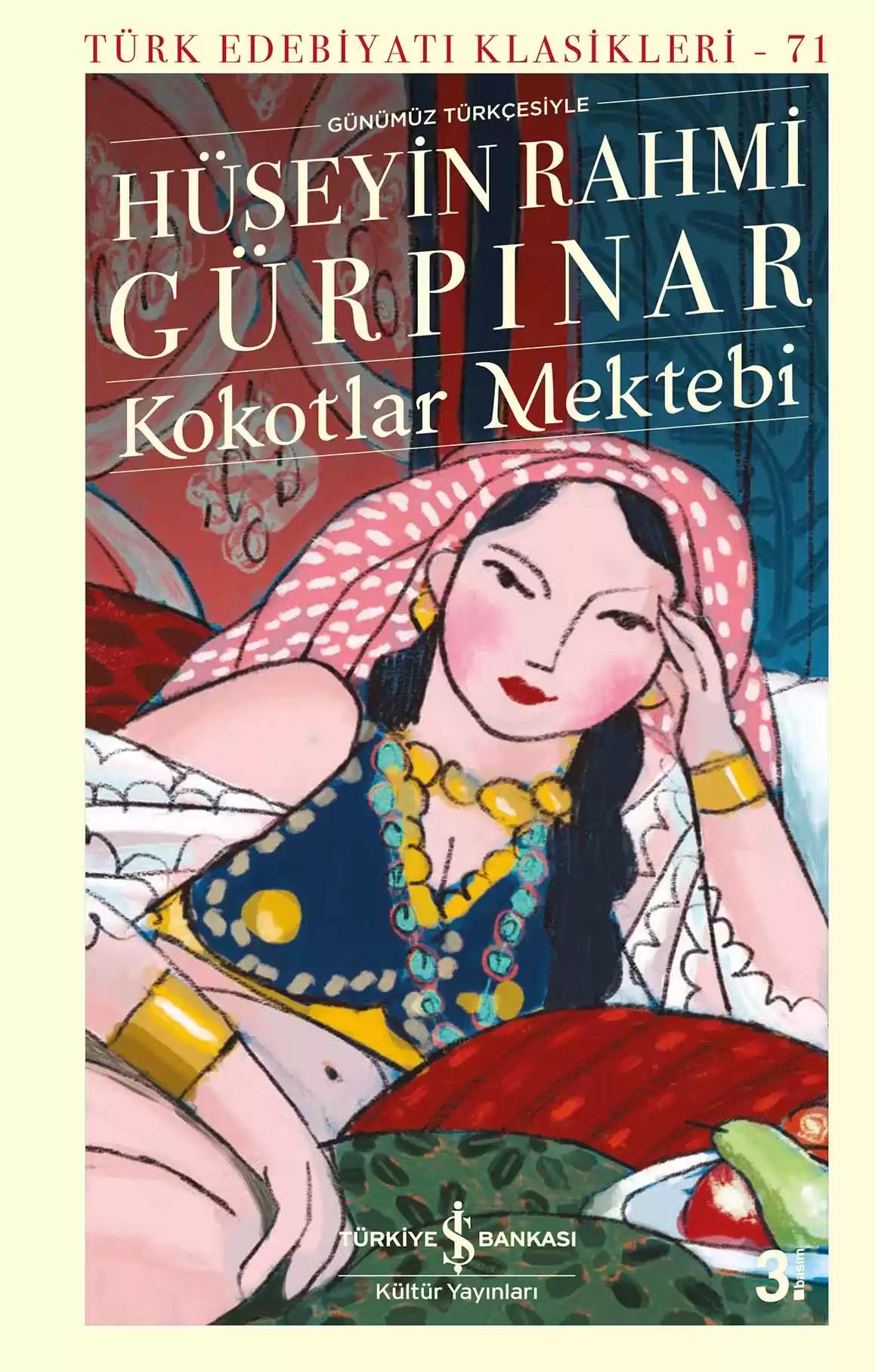
Kokotlar School
Author(s) | Hüseyin Rahmi Gürpınar | ||||||||
|---|---|---|---|---|---|---|---|---|---|
Year of Publication | 1899 | ||||||||
Type(s) | Novel | ||||||||
Subject(s) | Questioning women's social position through educational institutions | ||||||||
Theme(s) | Women's education social hypocrisy criticism of Westernization moral decay | ||||||||
Kokotlar Mektebi is a novel written by Hüseyin Rahmi Gürpınar and first published in 1899. The work addresses debates in Ottoman society regarding women’s education and moral understanding. Social critique elements frequently found in Hüseyin Rahmi Gürpınar’s writings are shaped in this novel around women’s social position traditional values and the process of modernization. The novel offers rich material for observing the different social classes of Istanbul and the societal structure of its time.
The novel is set in Istanbul and centers on the contradictory conditions women experienced within the societal framework of the period. In particular the educational approaches toward women during the Westernization process clashed with traditional moral norms. The protagonists of the work represent this conflict through individuals from diverse social backgrounds. As its title suggests the novel examines the impact of so-called educational institutions on women and offers social criticism of these structures.
Kokotlar Mektebi is a work that places education and morality at its core. Throughout the novel themes such as female education moral decay misunderstanding of Westernization and societal hypocrisy are explored. Gürpınar draws attention in the work to the effects of women’s education on society and questions the relationship between educational institutions and the social moral structure. The transformations experienced by traditional structures during the modernization process and their impact on individuals are emphasized in the novel. Class differences and gender relations are also among the novel’s other important thematic elements.
The novel is written from a third-person narrative perspective. In keeping with Hüseyin Rahmi Gürpınar’s characteristic style the narrative favors a language close to everyday speech. Descriptive passages are frequently used to reflect the inner worlds of the characters. Dialogues serve as arenas for exchanges of ideas that mirror the social debates of the period. The author aims to portray the social life street culture and vernacular language of the time.
The novel serves as a source for academic circles studying Ottoman societal structure women’s education and the process of modernization. It also holds significance for readers interested in late 19th and early 20th century Turkish novels and the tradition of social critique. Kokotlar Mektebi which stands out among Hüseyin Rahmi Gürpınar’s works for its social criticism possesses a textual structure well suited for sociological and literary analysis.
Kuzgun, H. Şeyma. “Peyami Safa’nın Sözde Kızlar Romanı ile Hüseyin Rahmi Gürpınar’ın Kokotlar Mektebi Romanında Kadına Bakış.” AHBV Edebiyat Fakültesi Dergisi, no. 4 (Year): 33–42. Accessed June 11, 2025. https://dergipark.org.tr/en/download/article-file/1800887
Türkiye İş Bankası Kültür Yayınları. "Kokotlar Mektebi." Accessed June 11, 2025. https://www.iskultur.com.tr/kokotlar-mektebi.aspx

Kokotlar School
Author(s) | Hüseyin Rahmi Gürpınar | ||||||||
|---|---|---|---|---|---|---|---|---|---|
Year of Publication | 1899 | ||||||||
Type(s) | Novel | ||||||||
Subject(s) | Questioning women's social position through educational institutions | ||||||||
Theme(s) | Women's education social hypocrisy criticism of Westernization moral decay | ||||||||
Subject
Thematic Analysis
Style
Target Audience