


This article was automatically translated from the original Turkish version.
Köstek Kesme (commonly known by other names such as duşak kesme, köstek kırma, tuşoo kesüü, tusav keser) is a traditional practice in Turkish folk culture aimed at strengthening the steps of children who have just begun to walk, walk late, experience balance difficulties, or frequently fall. It is performed to help them overcome physical obstacles and symbolically remove impediments from their life path. This tradition is preserved across a vast geographical area stretching from Central Asia to Anatolia, with rich ritual diversity.
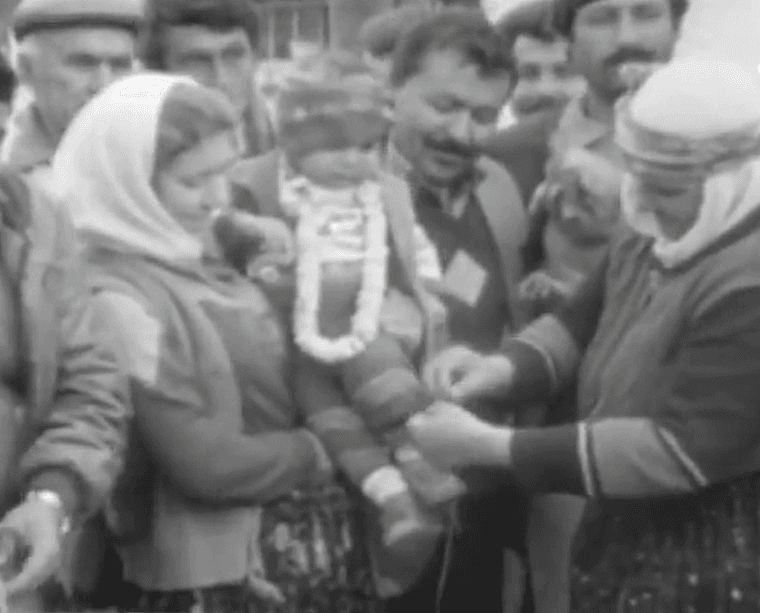
Köstek Kesme (TRT Archive)
The köstek kesme tradition is based on the belief that a child’s inability or delay in walking is caused by a symbolic obstacle called a “köstek.” This obstacle is represented by a string, ribbon, or similar binding tied around the child’s feet. It is believed that cutting this binding removes the impediment to the child’s walking.
This practice is not viewed solely in terms of physical development; it also embodies wishes for the child’s life path to be clear, for them to walk without falling, to become self-confident and a strong individual.
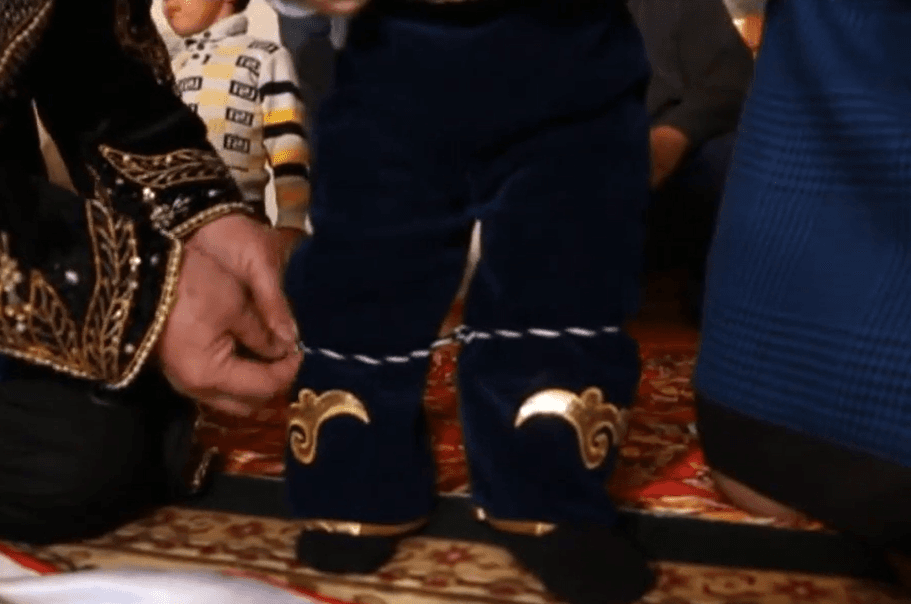
Köstek Kesme (TRT Avaz)
The köstek kesme tradition resembles the “Koy Göçö” festival among the Altai Turks. As part of the ritual, a string tied around the child’s feet upon reaching one year of age is cut, symbolizing the wish that the child will one day stand firmly on their own feet. A distinctive feature of this ritual in Altai culture is the role assumed by the child’s paternal uncle. During the ceremony, the uncle cuts a lock of the child’s hair and keeps it. When the child turns 14, the uncle presents the hair to the family and receives a gift in return; in exchange, he gifts the child a horse. The horse is the most valued gift in Altai Turk culture.
This deeply rooted tradition is reenacted during the “War Scene” segment of the “El Oyın” festival, held twice annually by the Altai Turks.
The tradition is known by different names among Turkic communities:
The köstek kesme ceremony is typically performed when the child reaches one year of age or begins to take their first steps. In some practices, specific days such as Friday are preferred, adding a religious dimension to the ritual.
Köstek Kesme - Kyrgyzstan (TRT Avaz)
Ceremonies may be held in homes, village squares, around mosques, or as part of communal events. Today, this tradition is also maintained within cultural activities and celebrations.
Köstek Kesme - Kazakhstan (TRT Avaz)
Köstek kesme is a shared cultural element across a broad geographical area of the Turkic world. Known as “tusau keser” among Kazakhs and “tuşoo kesüü” among Kyrgyz, these rituals transform a child’s first steps into a communal celebration.
In these ceremonies, the string tied to the child’s foot is usually cut by a respected individual, and the child is then guided toward a specific target. The purpose is to ensure the child’s life path remains clear, that they progress without falling, and grow into a successful individual.
Köstek Kesme - Türkiye (TRT Archive)
In various regions of Anatolia, the köstek kesme tradition is practiced alongside diverse beliefs and customs. In some areas, it is combined with other rituals for children who struggle to walk, such as visiting tombs, offering prayers, making vows, or similar practices.
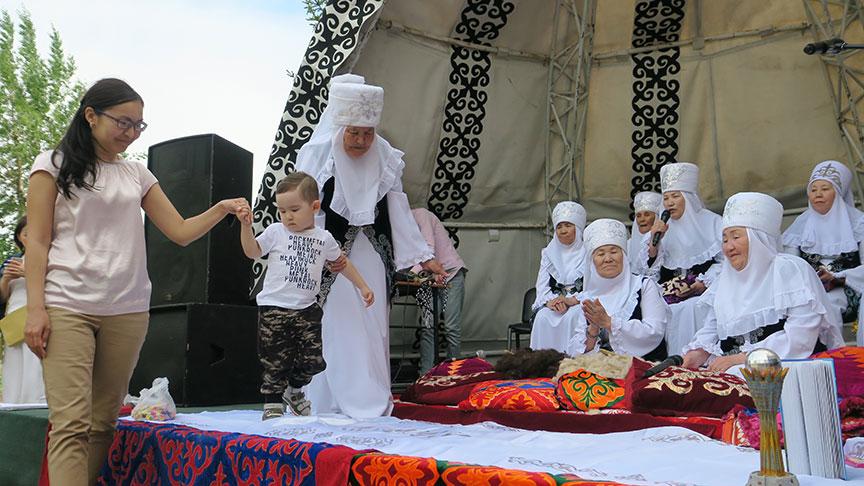
Child Guided on White Cloth After String Cutting - Kazakhstan (AA)
While the köstek kesme ceremony is practiced across the Turkic world and various regions of Anatolia with similar intentions, it takes on different ritual forms.
In the most common form, the child’s two feet are bound with a string or ribbon. This binding is typically cut by a person believed to walk gracefully or who is respected in the community. In some areas, this person is chosen from within the family; in others, it is a child who wins a competition.
Kyrgyz culture features a practice in which a race is held among children over a set distance, and the winner cuts the string tied to the child taking their first steps. This is associated with the symbolic transfer of speed and agility to the child.
In some variations, two children run toward each other from opposite directions and attempt to reach a specific point; the first to arrive breaks the string tied to the child who walks late. This ritual expresses the wish for the child to walk quickly and with balance.
Mosque-based practices are also significant examples of köstek kesme. In this version, a child at the stage of beginning to walk is brought to the side of a mosque on a Friday by a close family member. The child’s feet are bound with a string, and the first man to emerge from Friday prayers cuts the string. Afterwards, the child is gently tapped symbolically, as it is believed this will encourage them to walk faster and better.
In some places, the task of cutting the string is given to a selected agile and quick child after Friday prayers. These practices reflect both the use of religious time and space and the belief in transferring positive qualities to the child.
The köstek kesme ceremony is not merely an individual developmental rite but also a social event. Family members, relatives, and neighbors gather for this occasion. The sharing and hospitality offered during the ceremony strengthen social solidarity.
This tradition reflects the importance placed on childhood and the collective hopes for a child’s healthy development. It continues to exist as a cultural heritage passed from generation to generation.

No Discussion Added Yet
Start discussion for "Köstek Cutting Tradition" article
Definition and Belief Foundation
Koy Göçö Ritual
Regional Names
Time and Place
Köstek Kesme in the Turkic World
Köstek Kesme in Anatolia
Ritual Practice and Common Elements
Variations in Practice
Cultural and Social Function