

This article was automatically translated from the original Turkish version.
+2 More
Location | Şimşirli (Kuştul) Neighborhood, Esiroğlu Village, Maçka, Trabzon, Türkiye | ||||||||
|---|---|---|---|---|---|---|---|---|---|
Other Names of the Building | Güvercinli Monastery, Peristera Monastery, Hızır İlyas Monastery | ||||||||
Year of Establishment | Approximately AD 752 | ||||||||
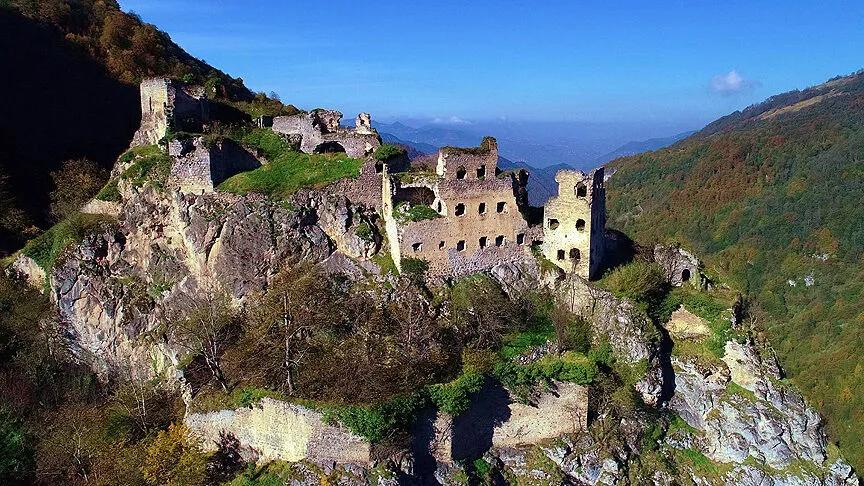
Kuştul Monastery is a religious and cultural structure built on a steep rock formation approximately 250 meters above the base of the Galyan Valley in the Maçka district of Trabzon.【1】 Its history extends back to the 8th century.【2】
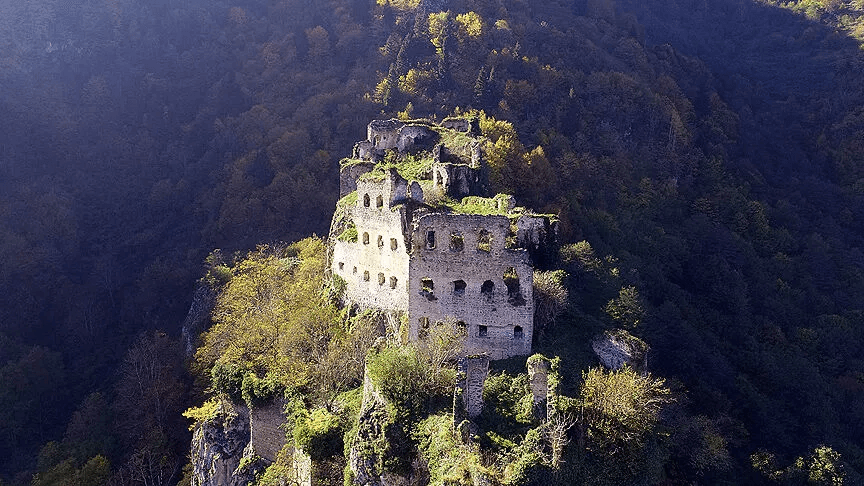
Kuştul Manastırı (Anadolu Ajansı)
The full name of the structure is Ayios Yorgiosta Peristera; it is also known among the local population as the Dove Monastery, and in literature it is referred to as the Peristera Monastery and Hızır İlyas Monastery. Located at a distance from the center of Trabzon province, the monastery lies within the boundaries of Esiroğlu village, Şimşirli (Kuştul) neighborhood, approximately 32 kilometers from the center of Maçka district.【3】
Built on a rocky platform jutting out like a balcony on the eastern slope of the Galyan Valley, the structure offers a commanding view of the entire valley due to its strategic location, and from its highest point the sea is visible.【4】
Historical sources and records indicate that the monastery became operational in 752 AD. The structure served for nearly 400 years until it was looted and burned in 1203 due to sectarian conflicts within Christianity. Following this event, the monastery remained closed and abandoned for approximately 190 to 200 years until it was reopened after restoration works carried out in 1393, regaining its former grandeur by the early 15th century.【5】
Suffering severe damage in a major fire in 1904, the structure was rebuilt for the third time in 1906 during the reign of Sultan Abdülhamid II. The monastery was completely evacuated and abandoned following the population exchange of 1923.【6】
The monastery complex consists of five floors and contains 72 large rooms along with various chapels. Within the internal architectural layout, the rooms on the right and left sides of the courtyard are designated as guest rooms if located to the north and as monk cells if located to the south.【7】
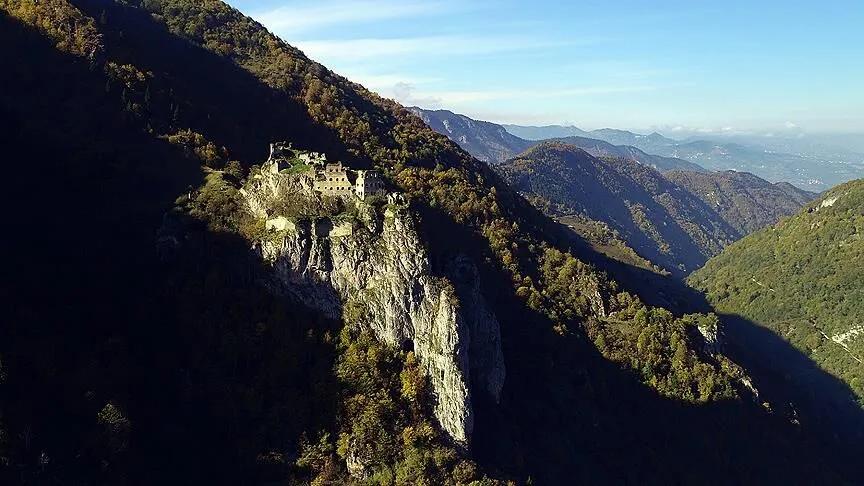
Kuştul Manastırı (Anadolu Ajansı)
Historical photographs from 1903 document that the monastery consisted of a large church, a second church with a cross plan, and other supporting structures; however, the cross-plan church has since been completely destroyed.【8】
A small church adjacent to the northern section of a cave within the monastery is known to have been constructed at a later date than the main building. Additionally, a garden with walnut trees is located at the lower part of the monastery and is accessible via a five-story staircase system.【9】
Access to the monastery is provided by a 72-step staircase on the western facade, which is steep and partially collapsed. The interior contains large halls and salons, and numerous passageways extending from the monastery toward the valley have been identified, though these passageways are currently unusable. In the mountainous area where the monastery is located, there are many caves known as “ayazma” where sacred waters flow.【10】
Three different footpaths have been used by local residents for many years to reach the structure. Among these, the most frequently chosen route, which is also the shortest at 1.5 kilometers, passes through a forested area. Visitors encounter rock tombs, remains of other churches, and a fountain in the immediate vicinity of the monastery.【11】
Anadolu Ajansı. "Vadinin zirvesindeki manastır: Kuştul." Accessed July 31, 2026.https://www.aa.com.tr/tr/kultur-sanat/vadinin-zirvesindeki-manastir-kustul/1302343
Maçka Belediyesi. "Kuştul Manastırı." Accessed July 31, 2026.https://macka.bel.tr/pages/kustul-manastiri
T.C. Ministry of Culture and Tourism. "Kuştul - Hızır İlyas Manastırı (Gregorius Peristera)." Accessed July 31, 2026.https://trabzon.ktb.gov.tr/TR-57644/kustul---hizir-ilyas-manastiri--gregorius-peristera.html
Yeni Şafak. "8. yüzyıldan beri zirvede: Kuştul Manastırı." Accessed July 31, 2026.https://www.yenisafak.com/foto-galeri/hayat/8-yuzyildan-beri-zirvede-kustul-manastiri-2032051/4
Şahin, Sibel. "Kuştul Manastırı." Türkiye Turizm Ansiklopedisi. Accessed July 31, 2026.https://turkiyeturizmansiklopedisi.com/kustul-manastiri
[1]
Sibel Şahin. "Kuştul Manastırı." Türkiye Turizm Ansiklopedisi. Erişim Tarihi 31 Temmuz 2026. https://turkiyeturizmansiklopedisi.com/kustul-manastiri
[2]
T.C. Kültür ve Turizm Bakanlığı. "Kuştul - Hızır İlyas Manastırı ( Gregorius Peristera)." Erişim Tarihi 31 Temmuz 2026. https://trabzon.ktb.gov.tr/TR-57644/kustul---hizir-ilyas-manastiri--gregorius-peristera.html
[3]
Şahin. "Kuştul Manastırı."
[4]
Şahin. "Kuştul Manastırı."
[5]
Şahin. "Kuştul Manastırı."
[6]
Şahin. "Kuştul Manastırı."
[7]
Yeni Şafak. "8. yüzyıldan beri zirvede: Kuştul Manastırı." Erişim Tarihi 31 Temmuz 2026. https://www.yenisafak.com/foto-galeri/hayat/8-yuzyildan-beri-zirvede-kustul-manastiri-2032051/4
[8]
Maçka Belediyesi. "Kuştul Manastırı." Erişim Tarihi 31 Temmuz 2026. https://macka.bel.tr/pages/kustul-manastiri
[9]
Yeni Şafak. "8. yüzyıldan beri zirvede: Kuştul Manastırı."
[10]
Anadolu Ajansı. "Vadinin zirvesindeki manastır: Kuştul." Erişim Tarihi 31 Temmuz 2026. https://www.aa.com.tr/tr/kultur-sanat/vadinin-zirvesindeki-manastir-kustul/1302343
[11]
Anadolu Ajansı. "Vadinin zirvesindeki manastır: Kuştul."

Location | Şimşirli (Kuştul) Neighborhood, Esiroğlu Village, Maçka, Trabzon, Türkiye | ||||||||
|---|---|---|---|---|---|---|---|---|---|
Other Names of the Building | Güvercinli Monastery, Peristera Monastery, Hızır İlyas Monastery | ||||||||
Year of Establishment | Approximately AD 752 | ||||||||
Naming and Geographic Location
Historical Development
Architectural Structure and Complex Features
Technical Details and Access