

This article was automatically translated from the original Turkish version.
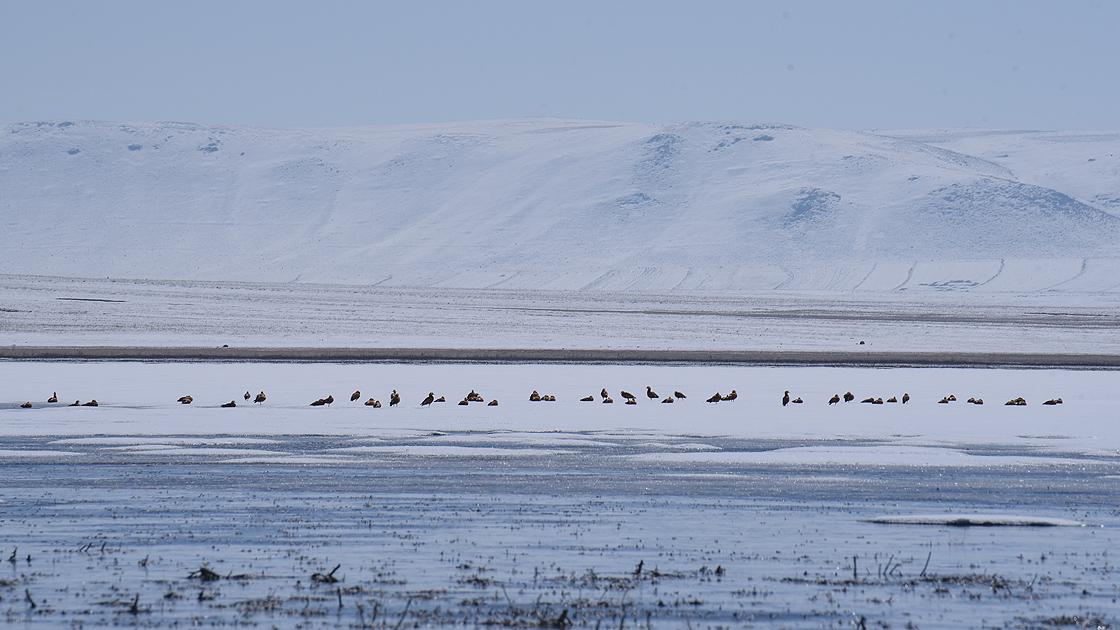
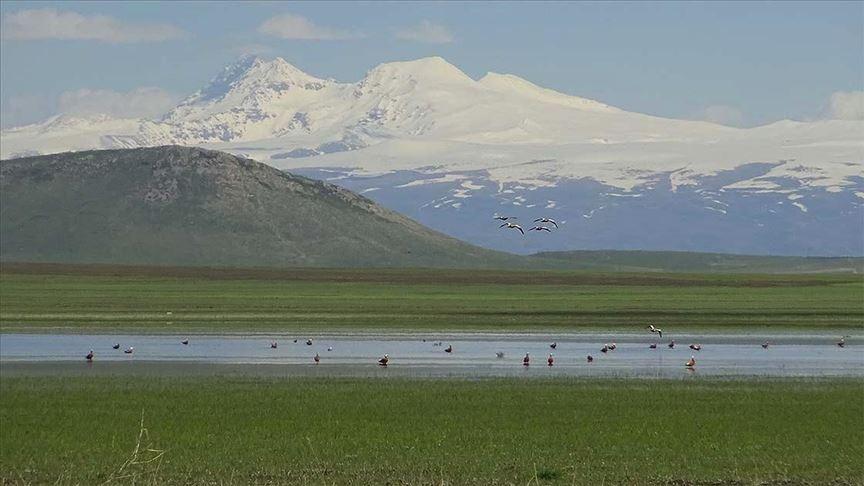
Kuyucuk Gölü is a wetland ecosystem of international importance located within the boundaries of the Arpaçay district of Kars province in Türkiye’s Eastern Anatolia Region. Due to its position along the main bird migration routes between Africa and Eurasia, its rich biological diversity, and the presence of endemic species, it is recognized as one of the region’s most important ornithological sites. The area is protected under national legislation as a Wildlife Development Area and has been officially designated under the international Ramsar Convention. The region is also popularly known among the public as Kuyucuk Bird Paradise due to its rich bird populations and natural beauty.
Kuyucuk Gölü (AA)
Kuyucuk Gölü is situated approximately 37 to 41 kilometers northeast of the city center of Kars and 18 kilometers southeast of the Arpaçay district center. The lake is a shallow body of water located on volcanic plateaus at an elevation of 1,627 meters above sea level.【1】 Its formation is of tectonic origin and has been shaped by structural and sedimentary processes in its surroundings. The lake’s water surface area varies seasonally between 216 and 245 hectares due to precipitation and evaporation rates. The total Ramsar-protected area amounts to 416 hectares.【2】
Limnologically, the lake’s maximum depth is estimated at 13 meters.【3】 The lake waters are freshwater but exhibit alkaline characteristics with a pH level of approximately 9.5. The lake is rich in dissolved oxygen and nutrient salts, and during summer months, increased evaporation and nutrient concentration can lead to eutrophication processes, including algal blooms.【4】 In this region characterized by a harsh continental climate, the lake surface freezes completely during winter months, with ice thickness reaching up to 40 centimeters in places; however, this does not interrupt the lake’s ecological cycle.
Kuyucuk Gölü exhibits high levels of flora and fauna diversity due to its location at the intersection of the Caucasus and Iran-Anatolia biodiversity hotspots. Although the lake has no fish populations, its rich zooplankton, phytoplankton, benthic invertebrate fauna, and aquatic vegetation provide an ideal feeding and breeding habitat for waterbirds. The surrounding vegetation consists of steppe formations characteristic of the Iran-Turan phytogeographical region, including the endangered plant species Elymus sosnowskyi, which is also found in this area.
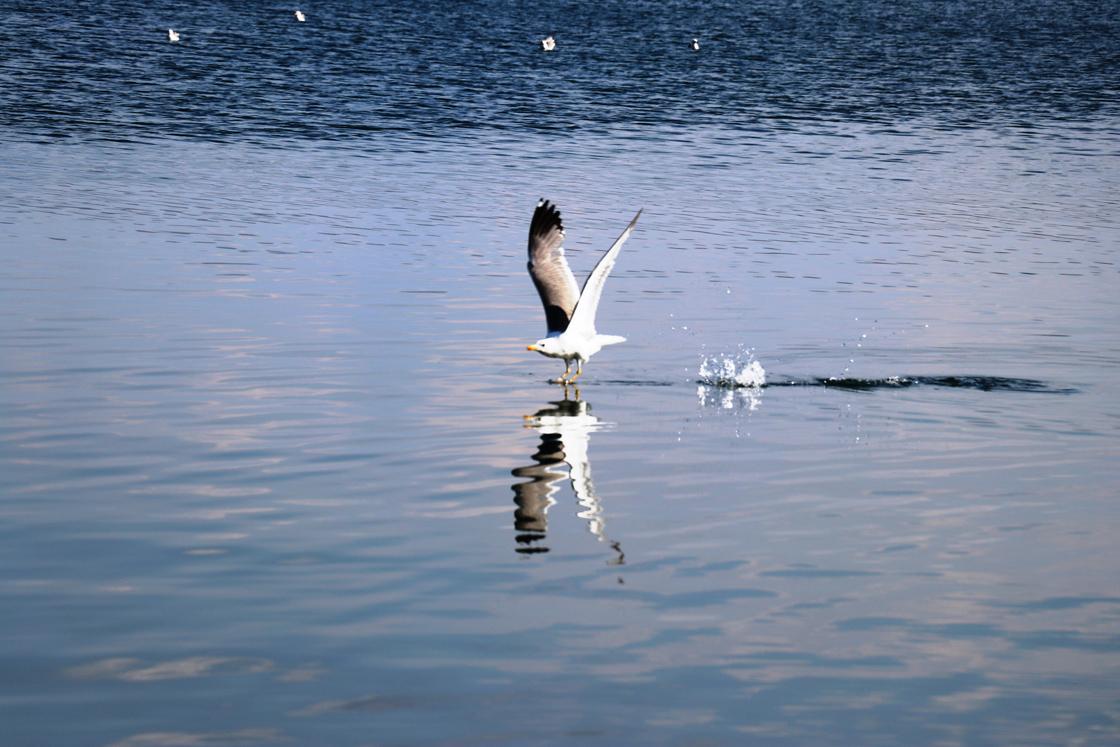
Ornithological studies have documented over 200 bird species (some sources report 211 to 233) in the area. Among these are globally threatened species such as the white-headed duck (Oxyura leucocephala) and the Egyptian vulture (Neophron percnopterus), both classified as Endangered (EN) on the International Union for Conservation of Nature (IUCN) Red List, as well as the endangered Dalmatian pelican (Pelecanus crispus) and the eastern imperial eagle (Aquila heliaca), classified as Vulnerable (VU). Additionally, species such as the ferruginous duck, steppe buzzard, and black-winged stilt are categorized as Near Threatened (NT).【5】 The lake is of critical importance for the ferruginous duck (Tadorna ferruginea) population; it has been determined that approximately 10 to 12 percent of the global population uses the area during migration and post-breeding periods.【6】
Kuyucuk Gölü Kuşları (AA)
The ecological value of Kuyucuk Gölü has been formally recognized through national and international conservation designations. The area was declared a Wildlife Development Area on 7 September 2005.【7】 Following scientific studies conducted by KuzeyDoğa Derneği, the Kars Provincial Directorate, and relevant ministries, the site was designated on 20 June 2009 as Türkiye’s 13th Ramsar Site and the first in the Eastern Anatolia Region. The area is also classified as an Important Bird Area (IBA) and an Important Natural Area (INA).【8】
Under the management plan, the area is divided into three zones: Absolute Protection Zone, Ecological Impact Zone, and Buffer Zone. These zoning measures aim to protect breeding and resting areas of waterbirds from human pressure and ensure sustainability. Successful conservation projects in the area have received international recognition; the project was awarded the Whitley Gold Award for Nature Conservation in 2008, and the region was included in the European Destination of Excellence (EDEN) network in 2009.【9】
Various restoration projects have been implemented to eliminate threats to the lake’s ecosystem. The most significant of these was the removal of the former Russian highway that divided the lake and disrupted its ecological integrity. Using remnants of this road, an artificial island was constructed within the lake to provide isolated, predator-free breeding grounds for birds. This project, the first artificial island initiative in Türkiye for nature conservation purposes, has led to a marked increase in breeding success for the ferruginous duck (Tadorna ferruginea) and the black-winged stilt (Himantopus himantopus).【10】
Kuyucuk Gölü (AA)
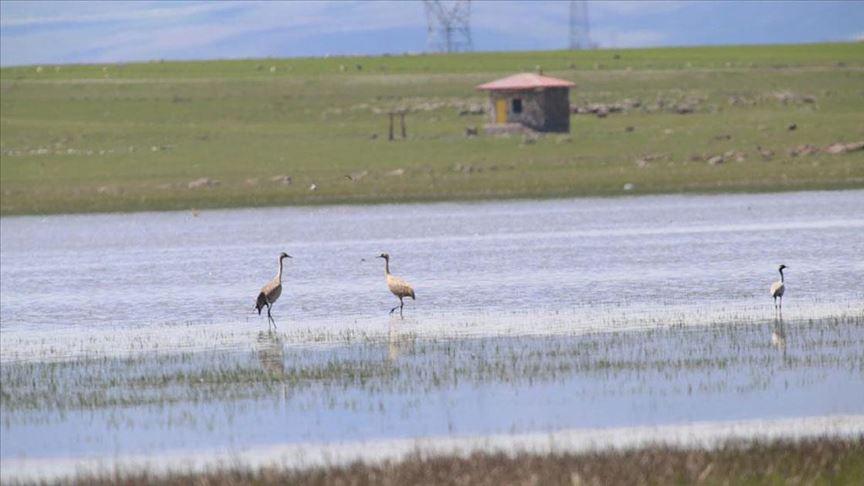
Factors such as global climate change, irregular precipitation patterns, and water resource use have negatively affected the hydrological balance of Kuyucuk Gölü. The lake largely dried up in 2014 and 2019, risking the loss of its ecological functions. In response, the Kars Provincial Directorate launched the “Water of Tomorrow” and “Can Suyu” projects.【11】 Water extracted from underground aquifers (at a flow rate of 27 liters per second) has been pumped into the lake to restore water levels. Thanks to these interventions and favorable rainfall, the lake’s surface area has recovered to 70–80 percent of its former extent, and thousands of birds from the 110 species that had abandoned the area during its dry phase have returned.【12】
Kuyucuk Gölü serves as a natural laboratory for scientific research and nature-based tourism (ecotourism). Established in 2007, the bird ringing station provides critical data on migratory routes and population dynamics of migratory birds.【13】 Each year during spring and autumn migration periods, the region hosts local and international birdwatchers, nature photographers, and researchers. The visitor center and birdwatching tower constructed in the area enable controlled tourism activities that minimize environmental impact. Organized birdwatching festivals and educational programs contribute to raising environmental awareness among local communities and support the integration of ecotourism into the regional economy.
[1]
Cüneyt Çelik, “Eski günlerine dönen Kuyucuk Gölü 110 kuş türünü ağırladı,” Anadolu Ajansı, Erişim tarihi: 11 Şubat 2026.
https://www.aa.com.tr/tr/turkiye/eski-gunlerine-donen-kuyucuk-golu-110-kus-turunu-agirladi/2046309
[2]
Cüneyt Çelik, “Eski günlerine dönen Kuyucuk Gölü 110 kuş türünü ağırladı,” Anadolu Ajansı, Erişim tarihi: 11 Şubat 2026.
https://www.aa.com.tr/tr/turkiye/eski-gunlerine-donen-kuyucuk-golu-110-kus-turunu-agirladi/2046309
[3]
T.C. Arpaçay Kaymakamlığı, “Kuyucuk Kuş Cenneti,” arpacay.gov.tr, Erişim tarihi: 11 Şubat 2026.
[4]
Cemal Sevindi, “Ekoturizm ve Kuş Gözlemciliği Açısından Kuyucuk Gölü Kuş Cenneti (Arpaçay-Kars),” Türk Coğrafya Dergisi, s. 67, Erişim tarihi 11 Şubat 2026.
[5]
T.C. Arpaçay Kaymakamlığı, “Kuyucuk Kuş Cenneti,” arpacay.gov.tr, Erişim tarihi: 11 Şubat 2026.
[6]
T.C. Arpaçay Kaymakamlığı, “Kuyucuk Kuş Cenneti,” arpacay.gov.tr, Erişim tarihi: 11 Şubat 2026. https://www.arpacay.gov.tr/kuyucuk-kus-cenneti
[7]
Mehmet Ali Kirpik, Emrah Çoban ve Çağan Hakkı Şekercioğlu, “Kuyucuk Kuş Araştırma ve Eğitim Merkezi,” 21. Yüzyılda Fen ve Teknik, s. 48, Erişim tarihi: 11 Şubat 2026.
[8]
T.C. Arpaçay Kaymakamlığı, “Kuyucuk Kuş Cenneti,” arpacay.gov.tr, Erişim tarihi: 11 Şubat 2026.
[9]
Mehmet Ali Kirpik, Emrah Çoban ve Çağan Hakkı Şekercioğlu, “Kuyucuk Kuş Araştırma ve Eğitim Merkezi,” 21. Yüzyılda Fen ve Teknik, s. 48, Erişim tarihi: 11 Şubat 2026. https://dergipark.org.tr/en/download/article-file/2016606
[10]
Mehmet Ali Kirpik, Emrah Çoban ve Çağan Hakkı Şekercioğlu, “Kuyucuk Kuş Araştırma ve Eğitim Merkezi,” 21. Yüzyılda Fen ve Teknik, s. 48, Erişim tarihi: 11 Şubat 2026.
https://dergipark.org.tr/en/download/article-file/2016606
Cemal Sevindi, “Ekoturizm ve Kuş Gözlemciliği Açısından Kuyucuk Gölü Kuş Cenneti (Arpaçay-Kars),” Türk Coğrafya Dergisi, s.74, Erişim tarihi: 11 Şubat 2026.
[11]
Cüneyt Çelik, “Tamamen kuruyan Kuyucuk Gölü can suyu ile yeniden 'kuş cenneti' oldu,” Anadolu Ajansı, Erişim tarihi: 11 Şubat 2026.
[12]
Cüneyt Çelik, “Eski günlerine dönen Kuyucuk Gölü 110 kuş türünü ağırladı,” Anadolu Ajansı, Erişim tarihi: 11 Şubat 2026.
https://www.aa.com.tr/tr/turkiye/eski-gunlerine-donen-kuyucuk-golu-110-kus-turunu-agirladi/2046309
[13]
Ömral Ünsal Özkoç, “Kars ilinde üreyen ve geçit yapan kuş türleri,” Türkiye Ormancılık Dergisi, Erişim tarihi: s. 179, 11 Şubat 2026.

No Discussion Added Yet
Start discussion for "Kuyucuk Bird Paradise (Kars)" article
Geographical Location and Physical Characteristics
Flora and Fauna Diversity
Conservation Status and Management Plan
Restoration Efforts and Artificial Island Project
Hydrological Threats and Interventions
Scientific Research and Tourism Potential