

This article was automatically translated from the original Turkish version.
+1 More
Author(s) | Imam al-Ghazali | ||||||||
|---|---|---|---|---|---|---|---|---|---|
Publisher(s) | Çelik Yayınevi | ||||||||
Year of Publication | 2016 | ||||||||
Number of Pages | 248 | ||||||||
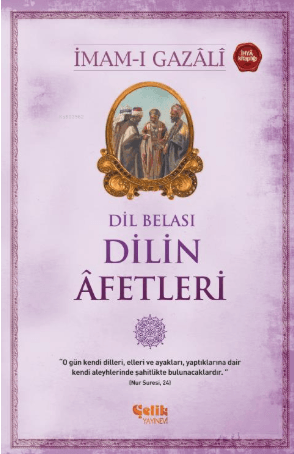
The Plague of Language: The Evils of Speech examines the dangers individuals may encounter in the use of language and their moral, religious, and social consequences. Al-Ghazali emphasizes that the misuse of language can lead individuals into sin and harm. The work provides detailed analyses of linguistic pitfalls such as backbiting, lying, slander, excessive talk, and idle speech, and offers guidance on avoiding these based on Islamic sources.
The work extensively explores the individual and societal consequences arising from language use. Supported by verses from the Qur’an, hadiths, and the statements of Islamic scholars, the text underscores the responsibility inherent in speech.
The language of the work reflects classical Sufi discourse. Alongside the spiritual intensity characteristic of Sufi thought, the text includes simplified examples drawn from everyday life. Al-Ghazali’s style is didactic and instructional, employing expressions of counsel and warning. The book frequently cites Qur’anic verses, hadiths, and the pronouncements of major scholars to establish its scholarly and religious foundations. In certain sections, a literary flow is cultivated to reinforce the spiritual content of the work.
The central theme of the work is the positive and negative effects of language on human beings. Al-Ghazali defines language as both a blessing and, when misused, a potential source of the greatest calamities. The book elucidates the spiritual and social problems resulting from uncontrolled speech and underscores the necessity of linguistic discipline for achieving moral maturity and spiritual perfection.
The Plague of Language: The Evils of Speech is not a narrative work and does not contain characters in the classical sense. The primary subject is humanity itself, with focus placed on the impact of language on the individual and society. The concept of “language” is treated as a central element in human behavior within a moral framework. The reader is directly addressed, with the errors caused by speech and the means of avoiding them clearly explained.
The Plague of Language – Imam Al-Ghazali – Audiobook – Chapter 1(Kaf)
The work establishes the theoretical framework through which classical Sufis regarded control of speech as one of the fundamental pillars of spiritual maturity. Al-Ghazali noted that the misuse of language does not lead merely to individual failings but also to social discord and moral decay, systematically categorizing the constructive and destructive dimensions of speech in human relationships.
Today, The Evils of Speech holds significance on two levels. Academically, it is regarded as a primary source in courses on Sufism, ethics, and Islamic thought. In modern research, it is linked to communication studies and media ethics that focus on the negative effects of language on individuals and society. With the proliferation of social media, phenomena such as misinformation, slander, insult, and hate speech are increasingly viewed as contemporary manifestations of Al-Ghazali’s warnings.【1】
Aydın, Garip. “İMAM GAZZÂLÎ’NİN KİMYÂ-YI SA‘ÂDET ADLI ESERİNDE KULLANDIĞI HADİSLERİN MANEVÎ DESTEK AÇISINDAN DEĞERLENDİRİLMESİ.” Diyanet İlmî Dergi 59, no. 3 (July–August–September 2023): 1001–1040. https://doi.org/10.61304/did.1345671
Gazâlî, İmam. Dil Belası: Dilin Âfetleri. İstanbul: Çelik Yayınevi, 2016.
Kaf. "Dil Belası - İmam Gazali - Sesli kitap - 1. Bölüm." YouTube video. Accessed September 20, 2025. https://www.youtube.com/watch?v=P4f-r73yi_w
Çelik Yayınevi. Dil Belâsı: Dilin Âfetleri – İmam-ı Gazâlî. İstanbul: Çelik Yayınevi. Accessed September 20, 2025. https://www.celikyayinevi.com.tr/urun/dilin-afetleri-dil-belasi-imam-i-gazali-9786059844765
Özervarlı, M. Sait. “Gazzâlî.” Türkiye Diyanet Vakfı İslâm Ansiklopedisi, Volume 13, 1996, pp. 425–448. İstanbul: TDV Yayınları. Accessed September 16, 2025. https://islamansiklopedisi.org.tr/gazzali
[1]
Garip Aydın, “İmam Gazzâlî’nin Kimyâ-yı Sa‘âdet Adlı Eserinde Kullandığı Hadislerin Manevî Destek Açısından Değerlendirilmesi,” Diyanet İlmî Dergi 59, no. 3 (Temmuz–Ağustos–Eylül 2023): 1001–40.

Author(s) | Imam al-Ghazali | ||||||||
|---|---|---|---|---|---|---|---|---|---|
Publisher(s) | Çelik Yayınevi | ||||||||
Year of Publication | 2016 | ||||||||
Number of Pages | 248 | ||||||||
No Discussion Added Yet
Start discussion for "Language Plague: Disasters of Language (Book)" article
Language and Stylistic Features
Theme
Characters
Relevance Today