
This article was automatically translated from the original Turkish version.
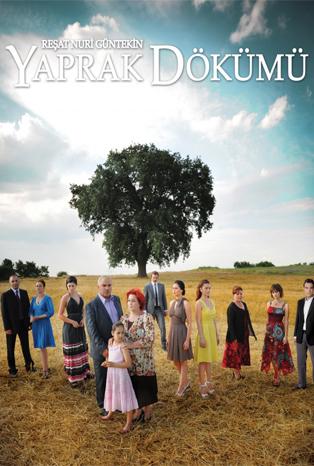
Leaf is a television series adapted from Reşat Nuri Güntekin’s 1930 novel of the same name and aired on Canal between 2006 and 2010. Produced by Ay Yapım, the series was produced by Kerem Çatay and written by Ece Yörenç and Melek Gençoğlu. Directed by Mesude Eraslan, the series spanned five seasons and 174 episodes and became one of the most watched and discussed productions in Turkish television history.
The series explores the struggles of Ali Rıza Bey as he fights to preserve his family and values amid changing social and economic conditions, and the conflicts his children face with this new world. Filmed in the Beylerbeyi neighborhood of Istanbul, the series reveals the transformation not just of a family but of an entire society.
Ali Rıza Bey is an honest civil servant who dedicates his life to providing his children with a good morality and refuses to compromise on integrity. When pressured to turn a blind eye to an injustice, he resigns from his position as district governor. Following this event, when his daughter Necla gains admission to university in Istanbul, the family decides to relocate to the big city. However, the new life they encounter in Istanbul proves far more challenging than they anticipated.
Ali Rıza Bey gradually loses not only his economic power but also his authority over his family. His son Şevket falls in love with Ferhunde, a married woman, and marries her, plunging the family into crisis. His daughters Leyla and Necla make mistakes in their personal lives and choices, while his eldest daughter Fikret sacrifices her own happiness to support the family.
Economic crises, internal family conflicts, and personal ambitions drive the family into a profound crisis. The tragedies within the family are conveyed through the metaphor of “leaves falling one by one.”
Main themes addressed in the series include:
The series presents the conflict between traditional and modern female identities through its diverse female characters.
The representation of female characters has drawn criticism for reinforcing traditional gender roles. For instance, the emphasis on women gaining status primarily through marriage rather than economic independence reflects the reproduction of conventional social norms.
The 2006 adaptation of Yaprak Dökümü preserves the core structure of the original novel but introduces several changes to strengthen its dramatic impact. These include:
These changes have also drawn criticism. While the original novel addresses a broader societal disintegration, the television adaptation focuses more intensely on individual dramas. This shift has led some viewers to argue that the adaptation fails to preserve the spirit of the original work.
The series Yaprak Dökümü has received the following awards:
Yaprak Dökümü is a landmark production in Turkish television history that achieved great success as an adaptation of a literary work. Through its narratives on family structure, social values, and female identity on, it reached a wide audience while also generating criticism. Its continued reruns years after its original broadcast demonstrate that the universal themes it presents on social issues have retained their still relevance.
Ay Yapım Official Website. "Yaprak Dökümü." Accessed February 13, 2025. https://www.ayyapim.com/tr-tr/yaprak-dokumu
Ay Yapım Official Website. "Ödüllerimiz." Accessed February 13, 2025. https://ayyapim.com/tr-tr/odullerimiz
Aytekin, Pelin Erdal. "Yerli Dizilerde Kadın Kimliğinin Temsili Üzerine Bir Örnek: 'Yaprak Dökümü' Dizisi." Erciyes İletişim Dergisi 5, no. 4 (July 2018): 447-463.
Habertürk. "Yaprak Dökümü hangi yıl çekildi? Yaprak Dökümü dizisi ne zaman, hangi tarihte yayınlandı?" Accessed June 25, 2024. https://www.haberturk.com/yaprak-dokumu-hangi-yil-cekildi-yaprak-dokumu-dizisi-ne-zaman-hangi-tarihte-yayinlandi-3697843/2
Milliyet. "Yaprak Dökümü oyuncuları kimler? Yaprak Dökümü nerede, ne zaman çekildi?" Accessed December 14, 2020. https://www.milliyet.com.tr/cadde/yaprak-dokumu-oyunculari-kimler-yaprak-dokumu-nerede-ne-zaman-cekildi-6379235

No Discussion Added Yet
Start discussion for "Leaf Fall (Series, 2006–2010)" article
Plot Summary
Representation of Female Characters
Adaptation Process and Criticisms
Awards
Main Characters and Cast