


This article was automatically translated from the original Turkish version.
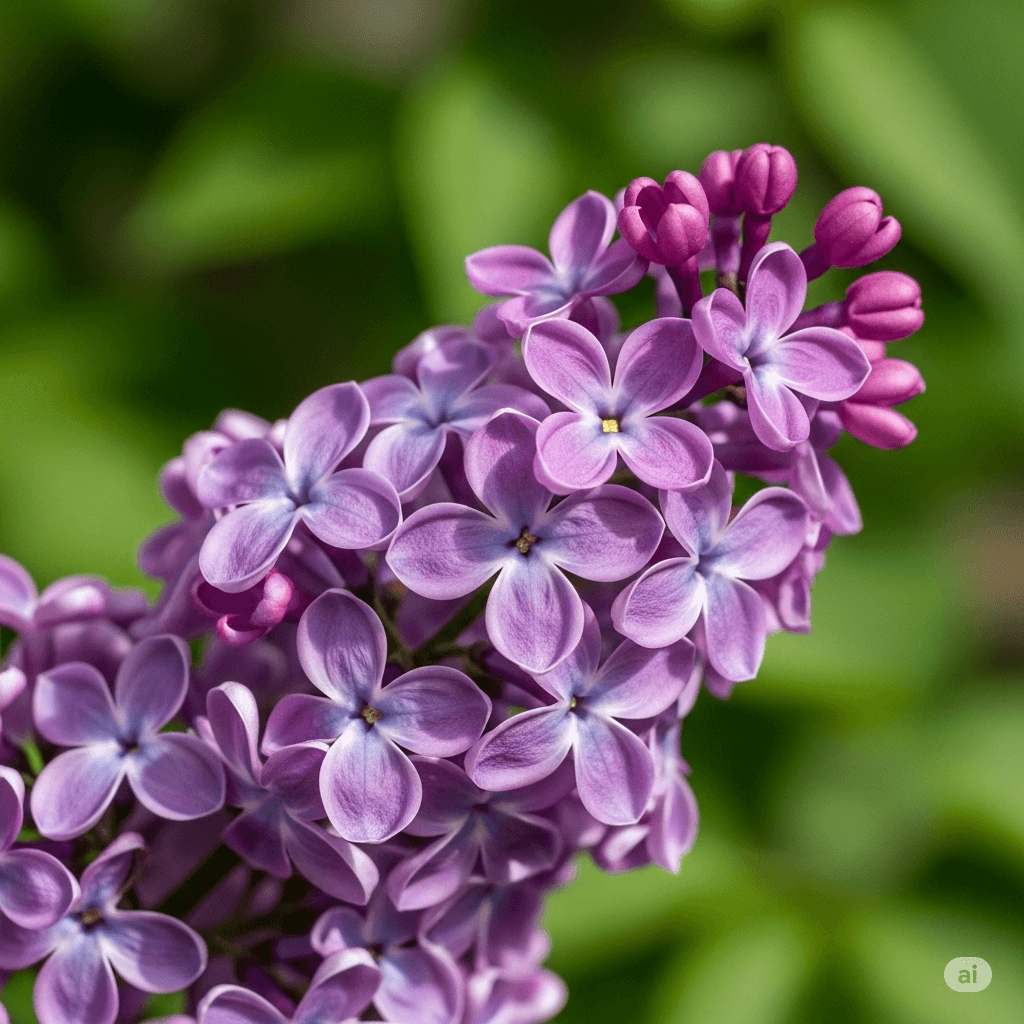
Lilac
Scientific Name(s) | Syringa vulgaris L. | ||||||||
|---|---|---|---|---|---|---|---|---|---|
Distribution(s) | widely cultivated as an ornamental plant worldwide Eastern Europe and the Balkans | ||||||||
Habitat | shrublands slopes rocky areas Open woodland areas | ||||||||
Flowering Period | Spring | ||||||||
Cultivation | Full sun, well-drained soil; USDA hardiness zones | ||||||||
Lilac (Syringa vulgaris) is a shrub species belonging to the Oleaceae family, known for its showy and fragrant flowers, especially during spring. Native to Eastern Europe and the Balkans, this plant has been widely cultivated for centuries as an ornamental species across Europe and North America, becoming an integral part of cultural landscaping. Lilac, with its morphological characteristics, ecological adaptations, and biological components, is a subject of scientific research and holds significance both botanically and pharmacologically.
Family: Oleaceae (Olive family)
Genus: Syringa
Species: Syringa vulgaris
Syringa vulgaris was first described by Carl Linnaeus in 1753. The specific epithet "vulgaris," meaning "common" in Latin, reflects the plant's wide geographic distribution.
Lilac is typically a multi-stemmed, deciduous shrub reaching heights of 3 to 6 meters. Its leaves are opposite, simple, oval or heart-shaped, measuring 5–13 cm in length and 2–6 cm in width. The leaves are glossy green and glabrous. Flowers are arranged in terminal panicles and are commonly purple, lavender, white, or pink, with a strong fragrance. Each flower contains a four-lobed corolla and two stamens. The fruit is a 1–2 cm long, brown, smooth capsule that splits into two halves upon maturity, releasing two-winged seeds.
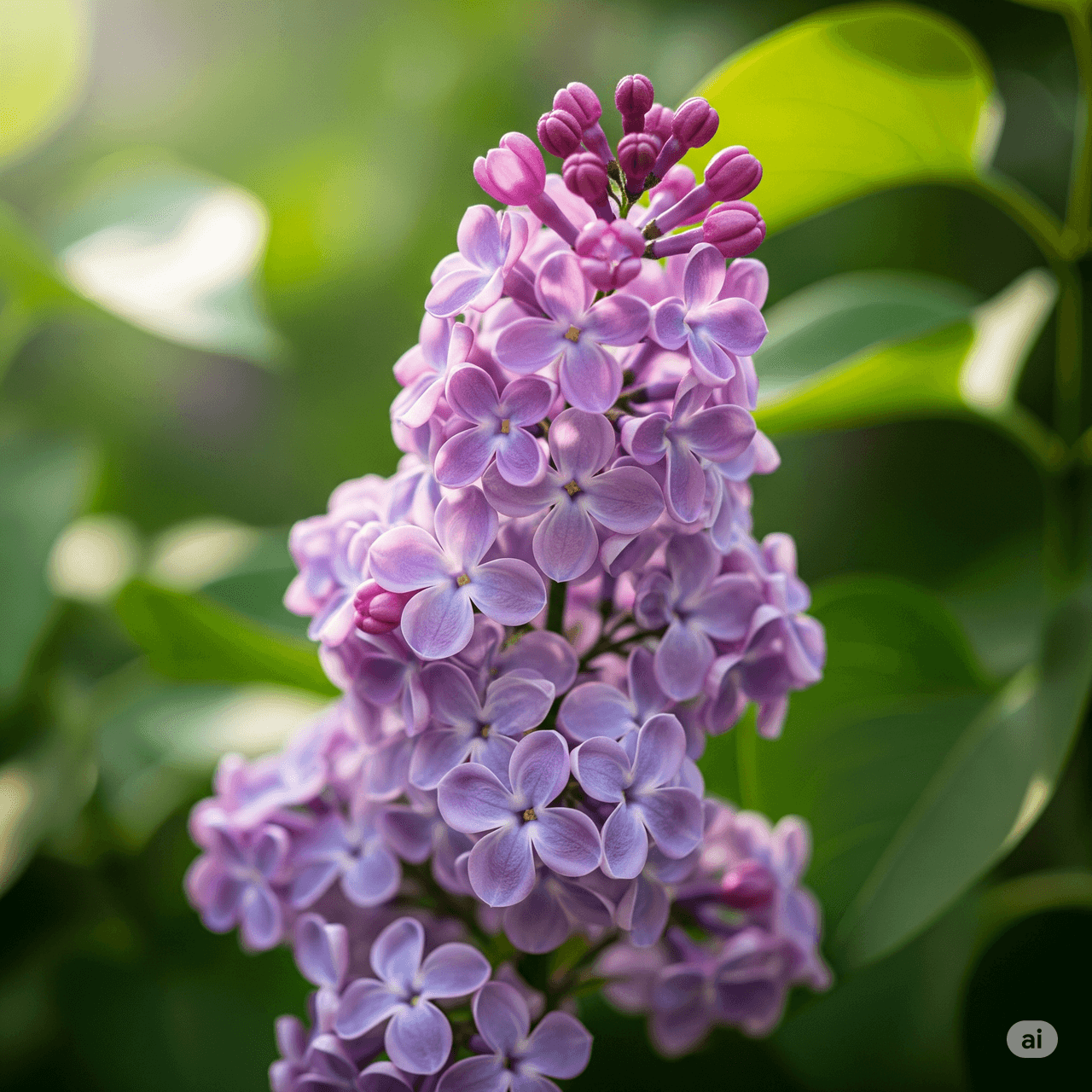
Lilac flower (generated by artificial intelligence)
Syringa vulgaris naturally occurs in open forested areas, rocky slopes, and shrublands of the Balkans and Southeastern Europe. However, due to its extensive cultivation as an ornamental plant, it has become naturalized in many regions across Europe, North America, and parts of Asia. This widespread distribution demonstrates the plant’s adaptability to diverse climatic and soil conditions.
Lilacs thrive best in full sun and well-drained soils. The soil pH should range from slightly acidic to slightly alkaline. The plant is hardy in USDA zones 3 to 7 and performs better in cooler climates. Regular watering and pruning are required during the first few years after planting. Pruning should be carried out immediately after flowering, with removal of older stems to rejuvenate the shrub.
Syringa vulgaris contains various biologically active compounds, including phenylpropanoid glycosides, flavonoids, and iridoid glycosides. These compounds contribute to the plant’s pharmacological activities and are under investigation for potential therapeutic applications.
Research has demonstrated that lilac extracts exhibit antioxidant, anti-inflammatory, antinociceptive, and antiallergic properties. These effects support the plant’s traditional medicinal uses and provide a foundation for modern pharmacological studies. However, further research is needed to translate these effects into clinical applications.
"Lilacs - VCE Publications." Virginia Tech, 2023. Accessed May 24, 2025. https://www.pubs.ext.vt.edu/3010/3010-1493/3010-1493.html
"Morphological and Anatomical Study of Underground Organs of Syringa vulgaris." Archives of Morphology, 2024. Accessed May 24, 2025. https://journals.uran.ua/ami/article/view/316902
"Traditional Uses, Phytochemistry and Pharmacology of Genus Syringa." ScienceDirect, 2020. Accessed May 24, 2025. https://www.sciencedirect.com/science/article/abs/pii/S0378874120333511
Growing lilacs for Minnesota landscapes. (n.d.). UMN Extension. Accessed May 24, 2025. https://extension.umn.edu/trees-and-shrubs/lilacs
Hanganu, D., Niculae, M., Ielciu, I., Olah, N., Munteanu, M., Burtescu, R., Ștefan, R., Olar, L., Pall, E., Andrei, S., Vodnar, D. C., Benedec, D., & Oniga, I. (2021). Chemical Profile, Cytotoxic Activity and Oxidative Stress Reduction of Different Syringa vulgaris L. Extracts. *Molecules*, *26*(11), 3104. Accessed May 24, 2025. https://doi.org/10.3390/molecules26113104
Woźniak, M., Michalak, B., Wyszomierska, J., Dudek, M. K., & Kiss, A. K. (2018). Effects of Phytochemically Characterized Extracts From Syringa vulgaris and Isolated Secoiridoids on Mediators of Inflammation in a Human Neutrophil Model. *Frontiers in Pharmacology*, *9*. Accessed May 24, 2025. https://doi.org/10.3389/fphar.2018.00349

Lilac
Scientific Name(s) | Syringa vulgaris L. | ||||||||
|---|---|---|---|---|---|---|---|---|---|
Distribution(s) | widely cultivated as an ornamental plant worldwide Eastern Europe and the Balkans | ||||||||
Habitat | shrublands slopes rocky areas Open woodland areas | ||||||||
Flowering Period | Spring | ||||||||
Cultivation | Full sun, well-drained soil; USDA hardiness zones | ||||||||
Taxonomy and Morphological Characteristics
Taxonomic Classification
Morphological Characteristics
Ecological Distribution and Cultivation Conditions
Natural Range and Habitat
Cultivation Requirements
Biological Characteristics and Pharmacological Potential
Phytochemical Components
Pharmacological Effects