


This article was automatically translated from the original Turkish version.
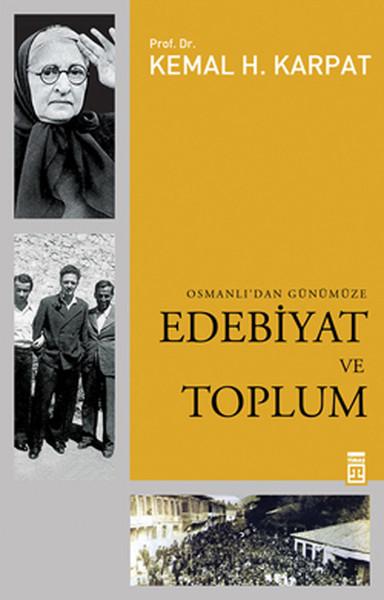
Author(s) | Prof. Dr. Kemal H. Karpat | ||||||||
|---|---|---|---|---|---|---|---|---|---|
Publisher(s) | Timaş Yayınları | ||||||||
Translator(s) | Güneş Ayas | ||||||||
Language(s) | Turkish | ||||||||
Country | Türkiye | ||||||||
Number of Pages | 312 | ||||||||
Kemal Karpat’s work Literature and Society is a study that examines how literature can be approached from a sociological perspective and the role literature plays in its analysis. This work demonstrates that literature is not merely an artistic pursuit but also an effective vehicle for understanding a society’s historical cultural and sociological dynamics.
Karpat structures the book into six main sections. It begins with an introductory section that addresses social themes in modern Turkish literature; this section is based on a lecture Karpat delivered at Harvard University in 1959. The subsequent sections explore the relationship between literature and society throughout history under various headings. For instance, chapters such as "Social Issues in Modern Turkish Literature" and "Social Environment and Literature" focus on the sociological dimensions of literature, while the like chapter "Ahmet Mithat, Chekhov and Middle-Class Literature" provides more specific analyses within the context of the work.
Other sections of the work analyze the impact of social changes on literature, particularly discussing the evolution of Turkish literary texts from the 19th century onward and literature’s role in the modernization process. Karpat draws attention to the rise of the novel genre and views the novel as a medium reflecting the social transformations of the middle class.
While treating literature as a sociological mirror of society, Karpat emphasizes that literary texts reflect how authors perceive and interpret their society. According to him, literature can serve as a source for understanding and addressing social issues. In particular, Karpat examines the transformation of language and literature from the Ottoman Empire to the Republican period and highlights the impact of this transformation on Turkish identity.
The book also addresses concepts such as the impact of rural-to-urban migration on literature and the emergence of gecekondu literature in this context. According to Karpat, rural-to-urban migration has not only influenced sociocultural patterns but also shaped literary expression and contributed to the development of the Turkish novel.
In his work Literature and Society, Kemal Karpat adopts a interdisciplinary approach, examining literature within the contexts of history, sociology and cultural studies. In this sense, the work can be regarded not only as a literary analysis but also as a social analysis.
Karpat, Kemal H. Osmanlı'dan Günümüze Edebiyat ve Toplum. İstanbul: Timaş Yayınları, 2020.

Author(s) | Prof. Dr. Kemal H. Karpat | ||||||||
|---|---|---|---|---|---|---|---|---|---|
Publisher(s) | Timaş Yayınları | ||||||||
Translator(s) | Güneş Ayas | ||||||||
Language(s) | Turkish | ||||||||
Country | Türkiye | ||||||||
Number of Pages | 312 | ||||||||
No Discussion Added Yet
Start discussion for "Literature and Society from the Ottoman Empire to the Present (Book)" article
Content and Sections of the Work
Key Emphases and Sociological Perspective