

This article was automatically translated from the original Turkish version.
+2 More
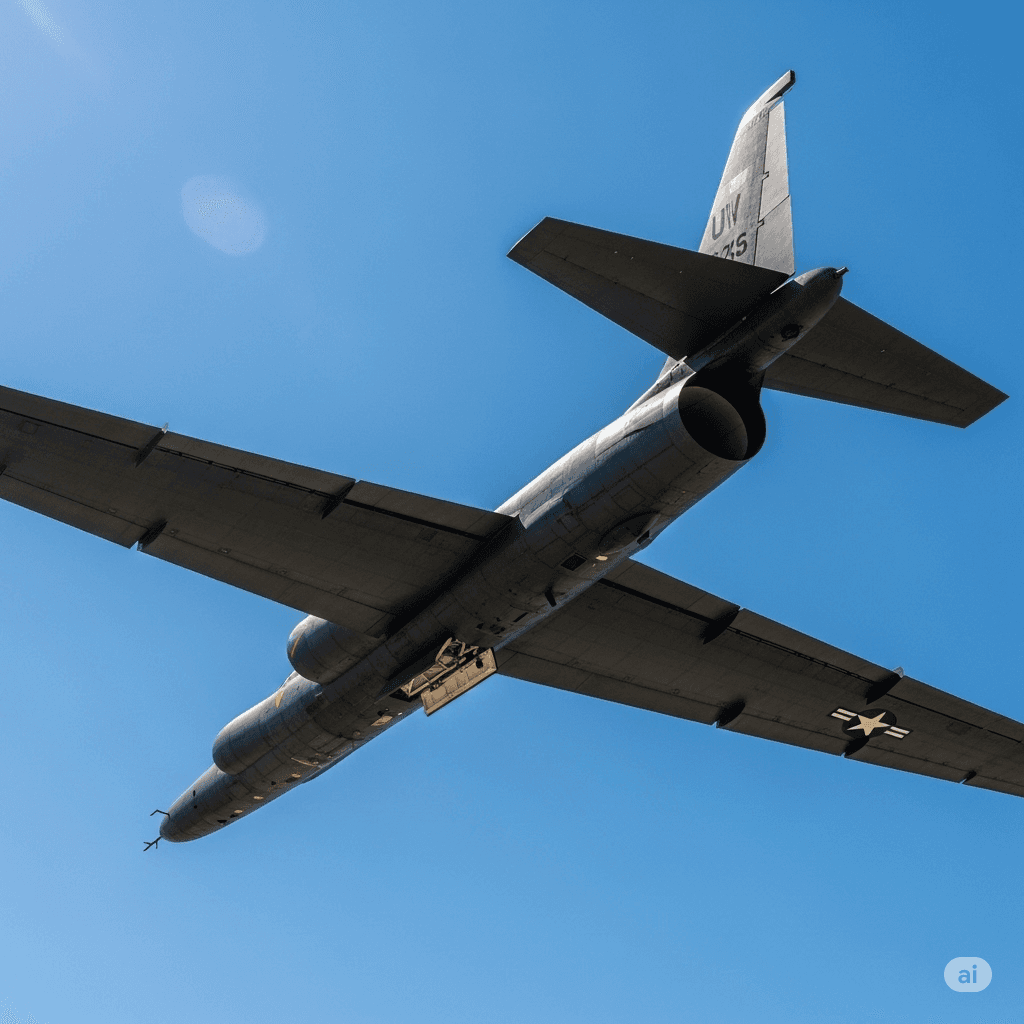
Lockheed U-2
Category | Strategic High-Altitude Reconnaissance Aircraft | ||||||||
|---|---|---|---|---|---|---|---|---|---|
Origin(s) | United States (Lockheed Corporation / Skunk Works) | ||||||||
First Flight and Entry into Service Year | First U-2 Flight: 1 August 1955 Entry into Service: 1956 | ||||||||
Number Produced | Total U-2 Produced: Approximately 104 units | ||||||||
Engine and Power System | 1 × General Electric F118-101 turbofan engine | ||||||||
Users | United States Air Force (USAF) Central Intelligence Agency (CIA) – formerly | ||||||||
Dimension(s) | Length: 19.2 metres Wingspan: 31.4 metres Height: 4.6 metres | ||||||||
Weight(s) | Empty Weight: Approximately 7 000 kg 000 kg Maximum Takeoff Weight: 18 | ||||||||
Performance | 000 ft) 300 metres (70 Service Ceiling: 21 300 km Range: Approximately 10 Maximum Speed: 805 km/h (Mach 0.63) | ||||||||
Lockheed U-2 (NATO reporting name: "Dragon Lady") is a single-engine, high-altitude reconnaissance aircraft developed by the United States. Designed during the Cold War for intelligence gathering, it continues to be used today for various intelligence, surveillance, and reconnaissance (ISR) missions. The aircraft is known for its operational altitude and long range.
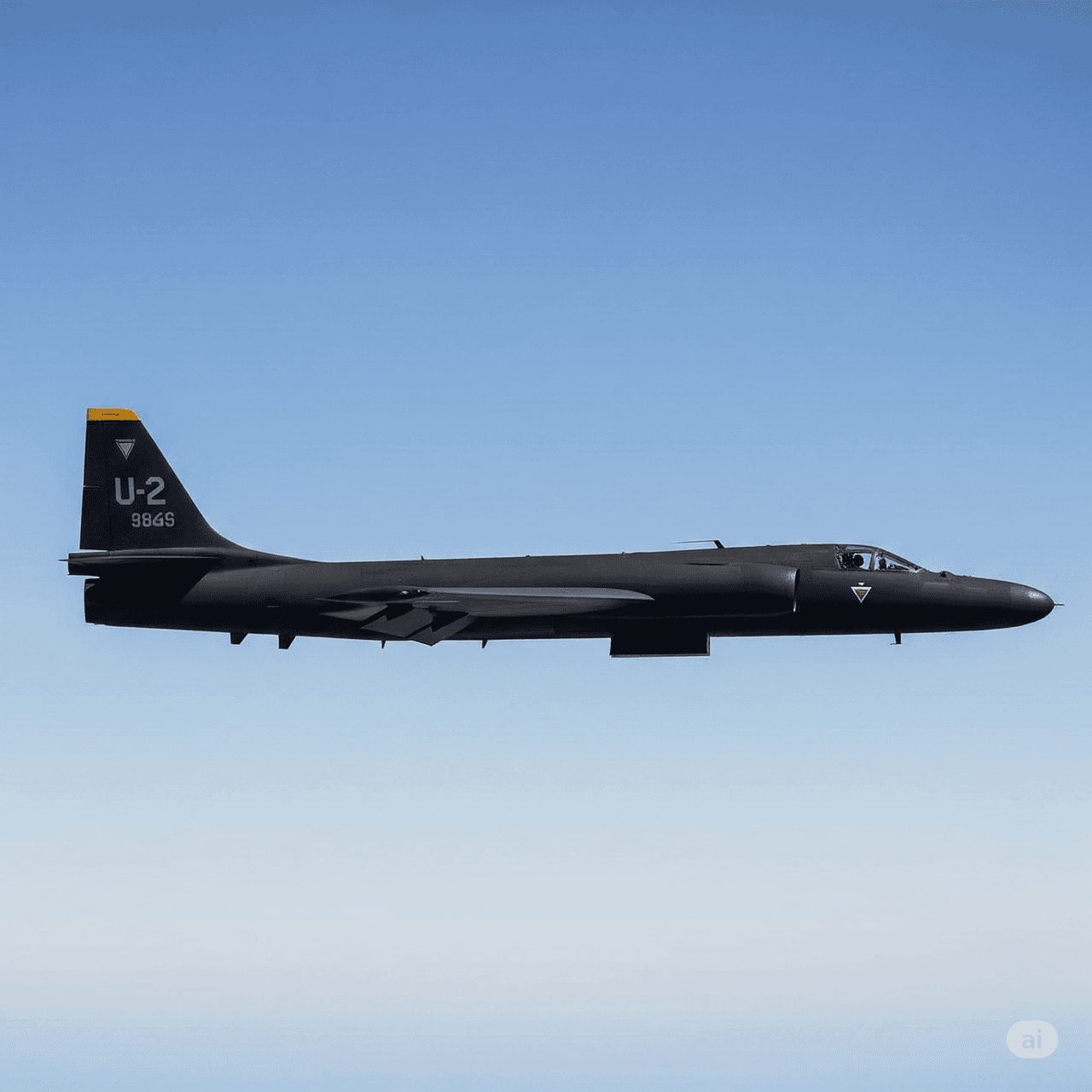
Lockheed U-2 Generated by Artificial Intelligence
The development of the U-2 arose in the early 1950s from the need for a high-altitude, long-range aircraft capable of conducting reconnaissance flights over the Soviet Union. Secretly developed by Lockheed’s Skunk Works division under the leadership of Clarence “Kelly” Johnson, the aircraft’s first flight took place in 1955. The U-2 was able to conduct photo-reconnaissance and electronic intelligence collection by flying above the range of Soviet air defenses.
One of the most significant events in the aircraft’s history was the shootdown of a U-2 piloted by Francis Gary Powers over the Soviet Union on 1 May 1960. This incident triggered a diplomatic crisis during the Cold War. Over the years, the U-2 has undergone numerous upgrades to adapt to evolving threat environments and has had its service life extended.
Lockheed U-2 (Dafydd Phillips)
The Lockheed U-2 features distinctive design and technical characteristics optimized for high-altitude operations:
The U-2 has been used globally for strategic reconnaissance missions throughout the Cold War and beyond. It provided critical intelligence, such as photographs taken during the Cuban Missile Crisis. Today, it remains actively employed by the United States Air Force for critical ISR missions.
The U-2’s continued relevance stems from its ability to perform high-altitude, long-endurance operations despite advances in satellite and unmanned aerial vehicle (UAV) technology. It is continuously modernized with new sensors and communication systems to integrate into evolving combat environments.
Air Force Technology. "U-2 High-Altitude Reconnaissance Aircraft." Air Force Technology. Accessed May 31, 2025. https://www.airforce-technology.com/projects/u2/.
Air Force. "U-2S/TU-2S." Air Force. Accessed May 31, 2025. https://www.af.mil/About-Us/Fact-Sheets/Display/Article/104560/u-2stu-2s/.
Air Tattoo. "Lockheed U-2, USA." Air Tattoo. Accessed May 31, 2025. https://www.airtattoo.com/riat-2023/aircraft/lockheed-u-2-usa/.
Dafydd Phillips. "U2 SPY PLANE AND DODGE CHARGER CHASE CAR - 4K." YouTube. Accessed May 31, 2025. http://www.youtube.com/watch?v=gohD6W_uyO8.
Lockheed Martin. "History of the U-2 Dragon Lady." Accessed May 31, 2025. https://www.lockheedmartin.com/en-us/news/features/history/u2.html
Şahin, Anıl. "U-2 Dragon Lady Is Being Integrated into the Future Battlefield." Savunma Sanayist. Accessed May 31, 2025. https://www.savunmasanayist.com/u-2-dragon-lady-gelecegin-muharebe-ortamina-entegre-oluyor/.

Lockheed U-2
Category | Strategic High-Altitude Reconnaissance Aircraft | ||||||||
|---|---|---|---|---|---|---|---|---|---|
Origin(s) | United States (Lockheed Corporation / Skunk Works) | ||||||||
First Flight and Entry into Service Year | First U-2 Flight: 1 August 1955 Entry into Service: 1956 | ||||||||
Number Produced | Total U-2 Produced: Approximately 104 units | ||||||||
Engine and Power System | 1 × General Electric F118-101 turbofan engine | ||||||||
Users | United States Air Force (USAF) Central Intelligence Agency (CIA) – formerly | ||||||||
Dimension(s) | Length: 19.2 metres Wingspan: 31.4 metres Height: 4.6 metres | ||||||||
Weight(s) | Empty Weight: Approximately 7 000 kg 000 kg Maximum Takeoff Weight: 18 | ||||||||
Performance | 000 ft) 300 metres (70 Service Ceiling: 21 300 km Range: Approximately 10 Maximum Speed: 805 km/h (Mach 0.63) | ||||||||
Development Purpose and History
Design and Technical Specifications
Operational Use and Significance