

+2 More

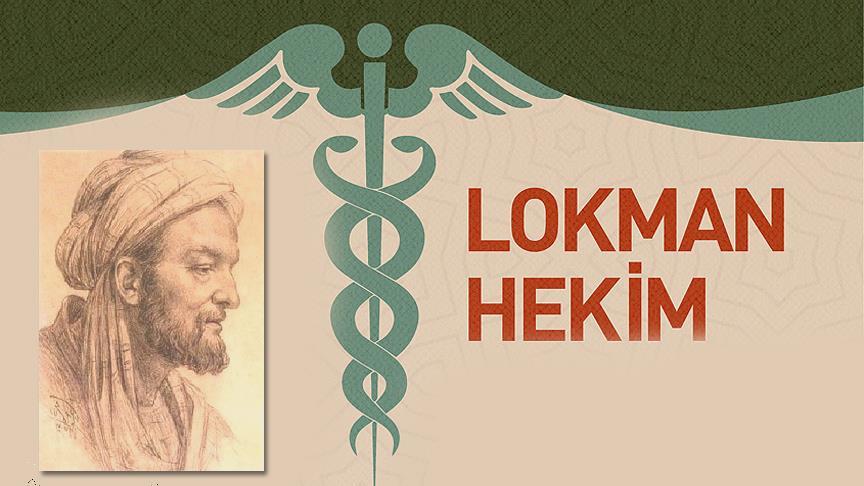
Lokman Hekim
Name(s) | Lokman Hekim | ||||||||
|---|---|---|---|---|---|---|---|---|---|
Place in the Quran | Surah 31 | ||||||||
Lessons | Monotheism, parental rights, worship, ethics | ||||||||
Origin(s) | Syriac or Hebrew | ||||||||
Narrations | Lived during the time of Prophet David; carpenter, tailor, shepherd; Black, slave | ||||||||
Character | Wise, moral, healer | ||||||||
Turkish Culture | Patron of physicians; folk hero who heals with herbs | ||||||||
Place in Medicine | A symbolic, not historical, figure | ||||||||
Artistic Representation | In the Falnama, depicted riding a leopard, holding a medicine vessel | ||||||||
Modern Influence | Medicine names, folk expressions, symbol of healing | ||||||||
Lokman Hekim is described in Islamic tradition as a wise individual, deriving his name from the 31st chapter of the Qur’an, known as “Surah Luqman.” This chapter states that wisdom was granted to Lokman and records the advice he gave to his son. The Qur’an does not explicitly state whether Lokman was a prophet; however, many commentators and Islamic scholars hold the view that he was not a prophet but a righteous and wise servant of God. The admonitions in this chapter emphasize monotheism, respect for parental rights, the importance of worship, and moral virtues. In this context, Lokman is not merely an individual figure but also emerges as a moral exemplar.
The name “Lokman” is not of Arabic origin. Research suggests it may have Syriac or Hebrew roots. Throughout history, various interpretations have been offered regarding Lokman’s identity. In Islamic literature, he is referred to as Lokman ibn Ba’ura or Lokman ibn Anka’ ibn Sirrun. Some sources claim he was the son of the sister or aunt of Prophet Job, and that he lived during the time of Prophet David, serving as his vizier and issuing legal rulings even before David’s prophethood. It is reported that after David became a prophet, Lokman ceased issuing rulings.
Some traditions state that Lokman practiced trades such as carpentry, tailoring, and shepherding; he is also described as having been a slave and identified as a Black individual. Physically, he is portrayed as short in stature, with dark skin, large lips, and split feet. One interpretation among scholars suggests that Lokman may have been conflated with one of the ancient philosophers and physicians—such as Alcmaeon of Croton, Hippocrates, Galen, or Aesop. Consequently, some academic circles argue that Lokman is not a historical person but a symbolic figure formed by the convergence of various wisdom and healing narratives.
Lokman was already a recognized figure in pre-Islamic Arab society, known for his wise sayings. Arabs would refer to him when describing a wise situation and would recount stories about him. After the spread of Islam, these narratives merged with the Qur’anic depiction of Lokman and acquired a more systematic form.
In Turkish culture, Lokman has been interpreted differently and is particularly associated with medicine. Within Turkish society, Lokman is regarded as the patron saint of physicians. Folk tradition portrays him as someone who bestows healing upon the sick, possesses a profound connection with nature, understands the language of plants, and even seeks remedies for death. This belief merged with the Anatolian myth of Şahmaran, elevating Lokman’s image to a mythological dimension endowed with extraordinary knowledge.
From the standpoint of medical history, no clear biography of Lokman Hekim appears in classical written sources. For instance, biographical works such as the 13th-century Tabakâtü’l-Etıbbâ, which holds an important place in medical history, make no mention of Lokman. This absence strengthens the view that he is less a historical medical figure and more a symbolic personality shaped by popular memory.
Some stories attributed to Lokman bear resemblance to those of other ancient figures. For example, the tale of “the best and worst organs,” commonly ascribed to Aesop, is also attributed to Lokman. When his master asked him to bring the best and worst parts of a sheep, Lokman brought the tongue and heart in both cases—a classic example conveying wisdom and moral instruction. This similarity also reflects the cross-cultural mobility of such narratives.
In Turkish culture, the figure of Lokman has emerged not only as a symbol of wisdom but also as the direct emblem of folk medicine and healing. In Anatolia, expressions such as “Lokman’s herb” and “Lokman’s notebook” symbolize his wisdom and medical authority. According to popular belief, Lokman knew which plants cured which illnesses and recorded this knowledge in a notebook. However, God did not wish for this knowledge to be used without limit, so He caused the notebook to disappear. One version of the myth recounts that the angel Gabriel dropped the notebook into a river, thereby destroying it.
Lokman’s portrayal as the ideal physician in folk medicine is frequently emphasized in these narratives. He is depicted not merely as a healer of physical ailments but also as a guide who imparts lessons on spiritual balance and social morality. The advice attributed to him includes recommendations for healthy living: eat little, rise early, maintain cleanliness, cultivate good character, and never abandon worship or patience.
In a 17th-century Falnâme housed in Topkapı Palace, Lokman Hekim is depicted riding a leopard, holding a vessel of healing. This miniature reflects his elevated status in popular belief as a dispenser of cure. The commentary accompanying the page where Lokman appears in the fortune-telling book states that one’s wishes will be fulfilled, illnesses will be overcome, and auspicious beginnings will be made. Such representations demonstrate that he was regarded not only as a medical figure but also as a folk hero endowed with metaphysical qualities.
The legends attributed to Lokman are not confined to images and stories alone. During the Ottoman period, certain medicines and healing methods were named after him, and even some pharmaceutical companies adopted “Lokman” as a brand name. This reflects the persistence of his identity as a symbol of healing into modern times.
Lokman Hekim is both a wise servant mentioned in the Qur’an and a figure who has lived for centuries across various cultures as a symbol of medicine, health, and counsel. Although it remains uncertain whether he was a historical person, he has become, especially within the Islamic world, a symbolic name embodying religious, cultural, and medical values. Through the stories, admonitions, and legends associated with him, he has served as a transmitter of the people’s ideal understanding of the physician, moral values, and principles of healthy living from generation to generation. Even today, in many parts of Anatolia, plants, remedies, and idioms bearing the name of Lokman Hekim remain in use, clearly demonstrating his enduring significance within cultural continuity.
Gül, Ahmet. "Lokman Hekim ve Öğütleri." Erciyes Üniversitesi İlahiyat Fakültesi Dergisi, no. 2 (1985): 387–406. Accessed July 11, 2025.
Gültekin, Elif. "Türk Kültüründe Lokman Hekim." Türk Kültürü ve Hacı Bektaş Veli Araştırma Dergisi 88 (2018): 123–134. Accessed July 11, 2025.
İntepe, Nazım, and Fahrettin Er. "Lokman Hekim Gerçek Kişi midir, Kült müdür?" Lokman Hekim Journal 4, no. 2 (2014): 27–31. Accessed July 11, 2025.

Lokman Hekim
Name(s) | Lokman Hekim | ||||||||
|---|---|---|---|---|---|---|---|---|---|
Place in the Quran | Surah 31 | ||||||||
Lessons | Monotheism, parental rights, worship, ethics | ||||||||
Origin(s) | Syriac or Hebrew | ||||||||
Narrations | Lived during the time of Prophet David; carpenter, tailor, shepherd; Black, slave | ||||||||
Character | Wise, moral, healer | ||||||||
Turkish Culture | Patron of physicians; folk hero who heals with herbs | ||||||||
Place in Medicine | A symbolic, not historical, figure | ||||||||
Artistic Representation | In the Falnama, depicted riding a leopard, holding a medicine vessel | ||||||||
Modern Influence | Medicine names, folk expressions, symbol of healing | ||||||||
Origin and Historical Identity
Cultural Narratives Before and After Islam
Evaluation from the Perspective of Medical History
The Figure of Lokman in Turkish Culture
Legends and Miniature Depictions